- Blue-Chip Index Drops to Six-Week Low: Britain’s benchmark FTSE 100 index closed down 0.9% (98.49 points) at 10,452.68 points on Thursday, 19 November 2026, marking its lowest closing level in six weeks amid broad risk-off sentiment.
- Mid-Cap Index Extends Losing Streak: The domestically focused FTSE 250 index fell 0.7%, recording its sixth consecutive session of declines—its longest string of daily losses in a year.
- Defensive and Heavyweight Stocks Drag Market: Losses were led by defensive equities including Vodafone Group (-4.0%), National Grid (-2.6%), and Unilever (-2.2%), alongside index heavyweights GSK (-1.7%), HSBC Holdings (-0.9%), and Shell (-0.6%).
- Anthropic’s $2.1 Trillion Nasdaq Debut: Following the close of London trading, artificial intelligence company Anthropic surged in its Nasdaq debut, reaching a market valuation as high as $2.1 trillion after pricing its initial public offering (IPO) at $83 per share.
- Divergent Corporate Movers in London: Defence engineering group Babcock International surged 9.4% to lead FTSE 100 gainers after posting a 13% rise in first-half underlying operating profit, whereas merchant banking group Close Brothers dropped 7.7% after warning of further net interest margin compression in fiscal year 2027.
- Trade Policy Watch: Investors are closely monitoring discussions surrounding a proposed UK-EU “trusted partnership”, viewed as vital for securing “Made in Europe” status for British-manufactured vehicles.
London (The Londoner News) November 19, 2026 – Britain’s benchmark FTSE 100 index retreated to a six-week low on Thursday, 19 November 2026, closing 0.9% lower at 10,452.68 points as broad risk-off sentiment weighed heavily on defensive and heavyweight shares. The mid-cap FTSE 250 declined 0.7% to notch its sixth straight losing session—its longest consecutive drop in twelve months—with decliners outnumbering advancers by a 2.0-to-1 margin across London. While UK equities traded cautiously ahead of Wall Street’s high-profile artificial intelligence listing, Anthropic surged in its Nasdaq debut after London markets closed, briefly touching a $2.1 trillion valuation. In corporate news, defence contractor Babcock International jumped 9.4% on strong operating profit growth, while merchant bank Close Brothers slid 7.7% following cautious margin guidance.
- Which Sectors and Blue-Chip Stocks Dragged the London Market Lower?
- How Did Anthropic’s Nasdaq Debut Influence Investor Sentiment?
- Which UK Companies Stood Out in Corporate Trading News?
- How Do Thursday’s Key Index and Stock Performances Compare?
- Background of the Particular Development After the News
- How This Development Can Affect UK Equity Investors, London-Listed Corporates, and Industrial Stakeholders
As reported by Reuters financial correspondents and Alliance News market dispatches, Britain’s FTSE 100 index fell to a six-week low on Thursday, 19 November 2026, in a broad risk-off move led by losses in defensive stocks, while artificial intelligence developer Anthropic surged in its hotly anticipated Nasdaq debut.
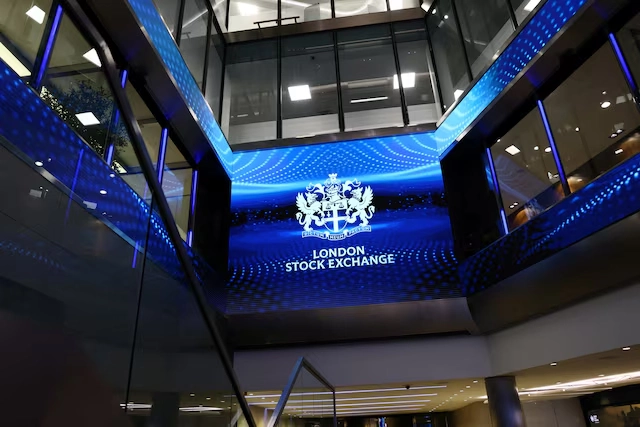
The blue-chip FTSE 100 ended the session down 0.9%—or 98.49 points—at 10,452.68 points. Meanwhile, the mid-cap FTSE 250 index closed 0.7% lower, marking its sixth straight session of declines and representing its longest string of losses in a year. Across the broader London market digest, declining shares outnumbered advancing stocks by a decisive 2.0-to-1 margin.
Which Sectors and Blue-Chip Stocks Dragged the London Market Lower?
Losses across the London Stock Exchange were concentrated in defensive sectors and multinational heavyweights that carry substantial weighting on the benchmark index:
- Defensive Equities Lead Declines: Typically favoured during periods of economic uncertainty, defensive corners of the market acted as the primary drag on Thursday. Telecommunications group Vodafone Group dropped 4.0%, electricity and gas utility National Grid lost 2.6%, and consumer goods giant Unilever fell 2.2%.
- Banking, Healthcare, and Energy Pressure: Index heavyweights also retreated across key sectors, with pharmaceutical maker GSK losing 1.7%, banking group HSBC Holdings falling 0.9%, and energy major Shell easing 0.6%.
- Broader European Context: As noted in Alliance News market close coverage, broader continental European equities experienced parallel downward pressure on Thursday, with the CAC 40 in Paris falling 0.8% and Frankfurt’s DAX 40 declining 1.1%.
How Did Anthropic’s Nasdaq Debut Influence Investor Sentiment?
Global equity traders closely tracked the landmark public listing of Anthropic, the developer of the Claude artificial intelligence models, which debuted on the Nasdaq stock exchange after London trading hours concluded:
- Record Valuation Milestone: As reported by Reuters and financial technology correspondent Epil Bodra, Anthropic soared in its Nasdaq debut, with its market valuation hitting as high as $2.1 trillion as institutional and retail investors rushed to acquire shares in the world’s first publicly traded frontier AI company. Having sold 980 million shares at $83 apiece—above its marketed range of $70 to $78—Anthropic shares opened at $111.50, representing an initial jump of 34%.
- Persistent Caution Over AI Valuations: London stocks had traded lower throughout Thursday’s session ahead of the listing, and analysts observed that even Anthropic’s stellar debut failed to fully quell underlying investor worries regarding the sustainability of capital expenditure across the broader artificial intelligence trade. As reported by Reuters and Daily Sabah, IPOX associate Lukas Muehlbauer stated: “Some of the demand may simply reflect investors not wanting to miss out on the rare opportunity to gain exposure to a leading AI company, even if its long-term profitability remains uncertain”.
Which UK Companies Stood Out in Corporate Trading News?
Despite the broader market downturn, individual UK-listed firms posted sharp, earnings-driven price movements alongside ongoing attention to bilateral trade developments:
- Babcock International Surges on Defence Profits: Defence engineering group Babcock International jumped 9.4% to claim the top spot among FTSE 100 gainers after reporting a 13% increase in first-half underlying operating profit, supported by heightened defence spending demand.
- Close Brothers Slides on Margin Outlook: Merchant banking group Close Brothers tumbled 7.7% to lead mid-cap decliners on the FTSE 250 after the lender stated that it expects a further modest decline in its net interest margin for the remainder of fiscal year 2027.
- UK-EU Automotive Trade Developments: Market participants are also monitoring diplomatic developments surrounding a proposed UK-EU “trusted partnership”, which industry observers view as essential to securing “Made in Europe” status for British-manufactured vehicles.
How Do Thursday’s Key Index and Stock Performances Compare?
A structured overview summarizes the closing figures and percentage movements across London indices and notable corporate movers on Thursday, 19 November 2026:
| Index / Listed Company | Ticker / Identifier | Closing Figure / Change | Primary Market Driver |
| FTSE 100 Index | .FTSE | Closed at 10,452.68 (-0.9%) | Six-week low driven by broad risk-off selling in defensive equities. |
| FTSE 250 Index | .FTMC | Closed down 0.7% | Sixth consecutive daily drop—longest losing streak in 12 months. |
| Babcock International | BAB.L | +9.4% (Top FTSE 100 riser) | Posted a 13% rise in first-half underlying operating profit. |
| Vodafone Group | VOD.L | -4.0% | Led declines among defensive telecommunications stocks. |
| National Grid | NG.L | -2.6% | Pressured by broad risk-off rotation out of utility shares. |
| Unilever | ULVR.L | -2.2% | Declined alongside consumer staples and defensive equities. |
| Close Brothers | CBRO.L | -7.7% (Top mid-cap decliner) | Guided for further modest net interest margin decline in FY 2027. |
Background of the Particular Development After the News
Thursday’s retreat on the London Stock Exchange reflects a convergence of global capital rotation and domestic sector-specific pressures in late 2026. The FTSE 100—heavily weighted toward traditional “old economy” sectors such as consumer staples, utilities, banking, energy, and pharmaceuticals rather than high-growth technology—frequently experiences capital outflows when global institutional liquidity concentrates on landmark Wall Street technology listings such as Anthropic’s historic IPO.
Domestically, mid-cap British equities on the FTSE 250 have faced sustained headwinds from elevated sovereign bond yields and cautious corporate forward guidance regarding net interest margins and consumer demand heading into 2027. Meanwhile, the UK automotive and manufacturing sectors remain closely attuned to UK-EU regulatory alignment talks, as rules-of-origin thresholds and “Made in Europe” designations directly govern tariff-free access and supply chain integration across European markets.
How This Development Can Affect UK Equity Investors, London-Listed Corporates, and Industrial Stakeholders
The market movements recorded on Thursday, 19 November 2026, carry several near-term implications for financial market participants and corporate sectors:
1. Portfolio Rebalancing Pressures for UK Equity Fund Managers
For institutional investors and retail fund managers tracking London benchmarks, the combination of a six-week low on the FTSE 100 and a year-long record losing streak on the FTSE 250 may prompt heightened scrutiny of defensive valuations versus selective cyclical resilience in sectors such as aerospace and defence.
2. Heightened Earnings Sensitivity for British Banks and Lenders
For UK mid-tier lenders and financial institutions, the sharp market reaction to Close Brothers’ net interest margin forecast underscores that investors remain highly sensitive to interest rate trajectories and lending profitability heading into fiscal year 2027.
3. Strategic Stakes for British Automotive Manufacturers
For UK vehicle producers and component suppliers, progress on the proposed UK-EU “trusted partnership” will serve as a key market catalyst, directly influencing export competitiveness and investment decisions across British manufacturing plants.