Key Points
- The London Metal Exchange (LME) has officially approved the Red Sea port city of Jeddah in Saudi Arabia as an authorised warehouse delivery point for copper and zinc.
- As reported by Reuters of Arab News, the listing will become active three months after the first warehouse company receives official approval in the designated new location.
- Typically, LME-registered warehouses are situated in high net metals consumption regions or major global transit hubs like Rotterdam, Netherlands.
- The strategic inclusion of Jeddah aligns with Saudi Arabia’s sweeping Vision 2030 reform plan, which seeks to establish the Kingdom as a dominant global force across the energy, mining, logistics, and industrial sectors.
- The move follows an earlier March consultation by the LME regarding technical framework adjustments, alongside a separate regulatory notice amending policy clauses concerning warehouse insolvency following consultations.
- The London Metal Exchange itself is owned by Hong Kong Exchanges and Clearing.
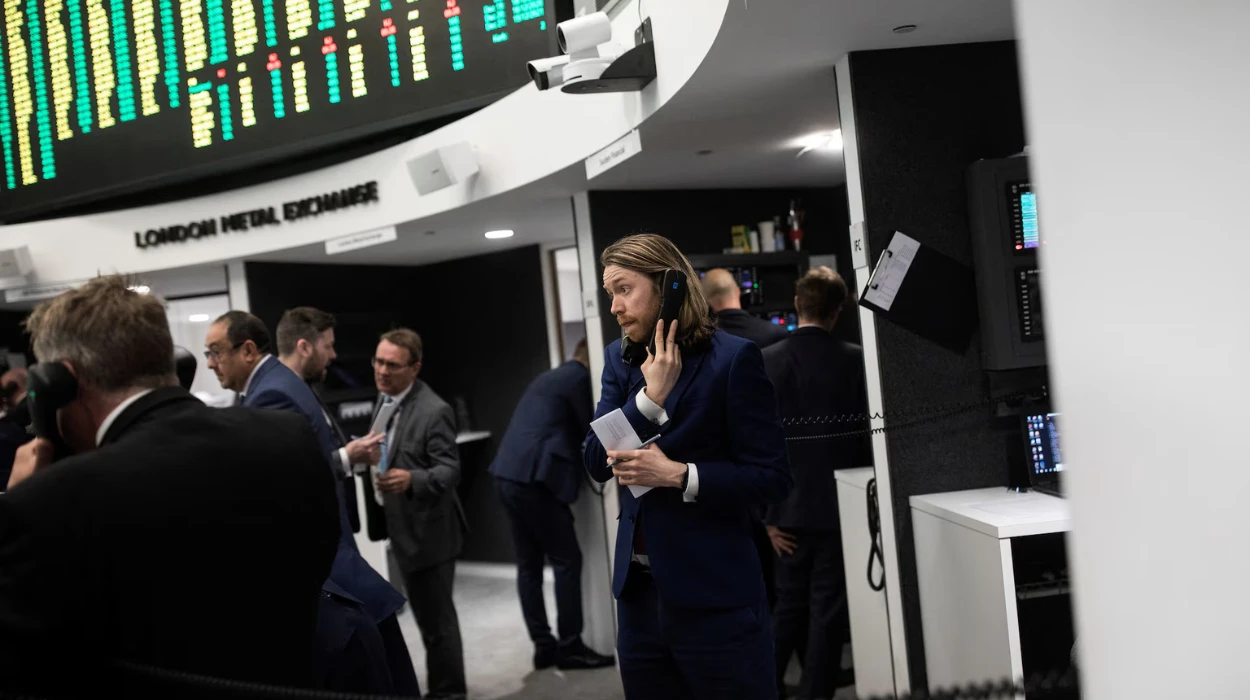
London (The Londoner News) September 5, 2026 — The London Metal Exchange has officially approved the Red Sea port city of Jeddah in Saudi Arabia as a warehouse delivery point for copper and zinc, marking a milestone in the Kingdom’s industrial expansion. According to details published by Reuters of Arab News, the world’s largest and oldest metals trading venue confirmed that the new listing will become active three months after the initial warehouse company is approved within the new location. Industry analysts note that this strategic integration reflects Saudi Arabia’s growing prominence in global supply chains, propelled by state-backed economic transformation initiatives.
Why Did the London Metal Exchange Choose Jeddah?
To understand the significance of this designation, one must examine where LME warehouses are traditionally stationed. As outlined by Reuters of Arab News, warehouses registered with the LME are typically located in regions characterised by high net metals consumption or within top-tier international transit hubs such as Rotterdam. By extending this privilege to Jeddah, the exchange acknowledges the strategic geographic and logistical advantages offered by the Saudi port city.
In earlier statements reported by Arab News regarding the initial proposal, LME Chief Executive Officer Matthew Chamberlain highlighted the operational readiness of the Saudi hub. As quoted by Arab News, LME CEO Matthew Chamberlain stated that
“Saudi Arabia is an increasingly important global metals hub, and Jeddah fully meets with the operational and logistical criteria for new warehouse locations — such as being an important area of net consumption and having an effective transport network”.
Furthermore, regional stakeholders expressed strong support for the decision. Farooq Shaikh, CEO of LogiPoint—a key firm operating integrated management parks within the Kingdom—welcomed the integration. As reported by Arab News, LogiPoint CEO Farooq Shaikh stated that
“We very much welcome the LME intention to list Jeddah as a new LME Delivery Point for copper and zinc, and we are very pleased that the Jeddah Islamic Port and the Bonded Re-Export Zone meets the LME’s exacting standards”.
Shaikh further added, as noted by Arab News, that
“We look forward to a long future of cooperation with LME and to further developing our relationships with the international metals community to make Jeddah and the Kingdom of Saudi Arabia a major metals logistics hub servicing the Middle East, North and East Africa regions”.
How Does This Support Saudi Arabia’s Vision 2030?
The approval of Jeddah as an LME delivery point does not happen in a vacuum; it is deeply intertwined with national economic restructuring. As highlighted by Reuters of Arab News, Saudi Arabia is currently executing an ambitious industrial development and logistics program functioning as a core pillar of its broader Vision 2030 reform framework. This multifaceted strategy aims to transform the Kingdom into a major international player spanning the energy, mining, logistics, and heavy industry sectors.
The National Industrial Development and Logistics Program focuses explicitly on converting Saudi Arabia into a primary industrial powerhouse and supply chain nexus. By integrating global exchange mechanisms like the LME into domestic infrastructure at Jeddah Islamic Port and its bonded zones, the Kingdom bridges local mining output with international market demands, enhancing investor confidence and ensuring seamless material flows across the Middle East, North Africa, and East Africa corridors.
Explore more Central London News:
Stabbing in Mayfair, Berkeley Square: London Incident 2026
St John’s Wood Street Garden Dispute in London, 2026
What Regulatory Changes Accompanied the LME Decision?
The path toward finalising Jeddah as a delivery point required careful regulatory alignment between international commodity standards and local operational frameworks. As detailed by Reuters of Arab News, the LME initially announced plans in March to add Jeddah subject to comprehensive consultations regarding technical changes to the exchange’s warehouse framework.
Adding legal clarity to the process, Reuters of Arab News reported that in a separate notice issued alongside the announcement, the LME confirmed it had successfully amended a specific clause within its policy on approving delivery locations. This particular amendment relates directly to warehouse insolvency regulations following a public market consultation. By updating these provisions—ensuring that metal owners maintain absolute and transparent access to their assets even in scenarios involving depot operator insolvency—the LME paved the way for smooth cross-border integration.
What Is the Background and Scale of the London Metal Exchange?
To grasp the magnitude of this structural inclusion, it is essential to look at the scale of the exchange itself. Established in 1877, the London Metal Exchange remains the undisputed international center for industrial metals trading, managing the vast majority of global non-ferrous alloy futures transactions.
Operational data underscores the immense liquidity and economic activity moving through the venue. As documented in market reviews covered by Arab News, the exchange saw a staggering 149 million lots traded in a single recent comparative year, accounting for a notional value of $15 trillion across roughly 3.5 billion tonnes of volume, with open interest peaking at 1.9 million lots. Owned currently by Hong Kong Exchanges and Clearing, the LME’s decision to incorporate Jeddah firmly anchors the Saudi port into this trillion-dollar global financial and physical supply architecture.