
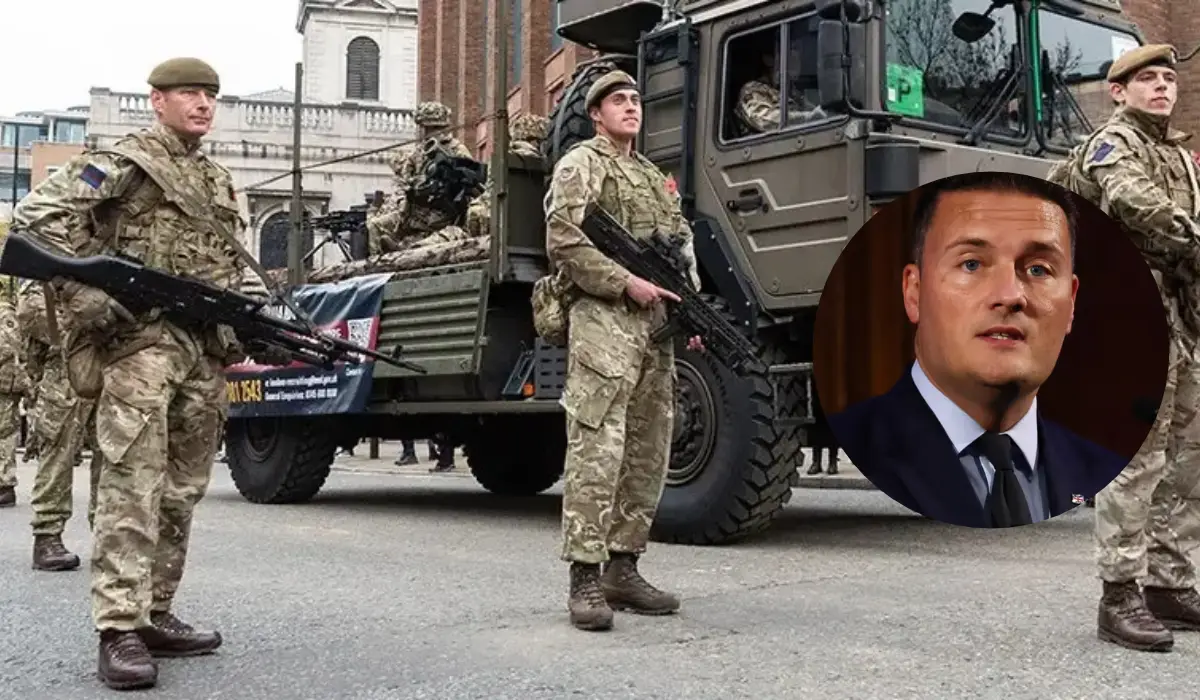
Key Points
- RAF Operational Expansion: Defence Secretary Wes Streeting announced that Royal Air Force (RAF) Typhoon fighter jets will conduct defensive counter-air operations over Saudi Arabia to intercept Houthi missiles and drones.
- Non-Strike Mandate: British air patrols will strictly focus on shooting down airborne threats to protect Saudi cities and critical infrastructure; RAF forces will not conduct ground strikes against Houthi targets inside Yemen.
- Logistical & Personnel Support: The United Kingdom is deploying a military transport aircraft, an unspecified number of military advisers, and extending an in-air refuelling mission for Saudi aircraft by an additional 90 days.
- Regional Coalition Assistance: Egypt confirmed plans to deploy air defence systems and aircraft to support Saudi Arabia, following requests sent by Riyadh to international partners including Britain, France, Egypt, and Pakistan.
- Political Position: Downing Street and Defence Secretary Wes Streeting reiterated that the UK deployment is proportionate and defensive, maintaining that there is no long-term military solution to the conflict in Yemen.
London (The Londoner News) October 20, 2026 – Britain announced on Tuesday an expansion of its military support for Saudi Arabia to defend the kingdom against continuing drone and missile attacks launched by Houthi forces from Yemen. Under the new deployment, Royal Air Force (RAF) Typhoon fighter jets will conduct defensive counter-air operations over Saudi Arabian airspace, aiming to intercept aerial threats targeting civilian populations and national infrastructure. Defence Secretary Wes Streeting emphasised that the British military presence remains strictly defensive, confirming that RAF aircraft will not engage in air strikes against Houthi targets on the ground in Yemen.
- Key Points
- What Strategic Military Assets Is the UK Deploying to Saudi Arabia?
- Why Has Saudi Arabia Requested International Air Defence Support?
- How Are Regional Allies Like Egypt Contributing to Saudi Arabia’s Defence?
- What Is the Background of the Yemen Conflict and Houthi Strikes on Saudi Arabia?
- How Will This Development Affect Regional Security and UK Defense Commitments?
What Strategic Military Assets Is the UK Deploying to Saudi Arabia?
The operational expansion announced by the British government introduces both air combat and support capabilities to bolster Saudi Arabia’s air defence architecture.
As reported by Jill Lawless of the Associated Press, Defence Secretary Wes Streeting outlined the primary objectives of the RAF deployment in an official statement to Parliament.
As reported by Jill Lawless of the Associated Press, Wes Streeting stated that Royal Air Force Typhoon jets will:
“conduct defensive counter-air operations over Saudi Arabia, helping to protect Saudi cities, civilian populations and critical national infrastructure.”
Under this mandate, British Typhoon jets will patrol Saudi airspace to identify and shoot down incoming armed drones and ballistic missiles launched from Houthi-controlled regions of northern Yemen.
Beyond fighter aircraft, the UK commitment includes:
- Refuelling Operations: A 90-day extension of aerial refuelling support for Saudi Air Force fighter jets, a mission initially established in previous weeks.
- Transport Capabilities: The deployment of an RAF military transport aircraft to coordinate logistics and equipment transport.
- Advisory Personnel: An unspecified number of British military advisers sent to assist Saudi defence authorities with air defence integration.
Why Has Saudi Arabia Requested International Air Defence Support?
The expansion of international military support follows a escalation in cross-border drone and missile strikes directed by Houthi forces toward major urban centers and energy infrastructure within Saudi Arabia. Earlier this month, multiple strikes hit Riyadh’s main international airport, causing operational disruptions and highlighting vulnerabilities in regional air defence networks.
As reported by Jill Lawless of the Associated Press, Defence Secretary Wes Streeting condemned the attacks on civilian facilities, calling them “despicable” and noting:
“targeting the airport showed the lengths the Houthis are going to to escalate the situation in the region.”
In response to the mounting attacks, Saudi officials formally requested air-defence assistance from key international allies, including France, Britain, Pakistan, and Egypt. While previous United States administrations conducted direct bombing campaigns against Houthi military sites, Washington has declined to launch new offensive strikes during the current escalation.
Responding to concerns regarding Britain’s growing involvement in the regional theater, Prime Minister Andy Burnham’s official spokesperson, Tom Wells, denied that the UK was being drawn deeper into a long-term conflict.
As reported by Jill Lawless of the Associated Press, Tom Wells stated:
“Our support for Saudi Arabia is considered, proportionate and focused on helping them defend themselves from relentless Houthi attacks.”
Furthermore, Wes Streeting stressed the necessity of a diplomatic resolution, writing in a formal statement to Parliament that:
“the government remains clear that there is no long-term military solution to the conflict in Yemen. We continue to support a U.N.-led political process as the best route to a durable peace.”
How Are Regional Allies Like Egypt Contributing to Saudi Arabia’s Defence?
Alongside the United Kingdom, Egypt has confirmed a major commitment to bolster Saudi security infrastructure following the regional escalation.
As reported by the Associated Press, the Egyptian government formally pledged to provide “all possible forms of support” to assist Saudi Arabia in defending its security and national stability.
According to a regional official briefed on the security arrangements who spoke on condition of anonymity, Egyptian support will focus entirely on interception capabilities.
As reported by the Associated Press, the regional official stated that Egypt’s intervention:
“would be defensive and would not include deploying ground troops to Yemen.”
The planned deployment includes Egyptian air defence missile systems and fighter aircraft sent directly to Saudi territory to assist in destroying incoming aerial projectiles.
Egyptian President Abdel-Fattah el-Sissi declared on Saturday that his administration would take “any measure” necessary to safeguard Saudi security, requesting the Egyptian Parliament to convene and authorize the deployment of troops and military hardware abroad. The Egyptian legislature held two days of initial deliberations and is scheduled to hold a formal authorization vote next week.
What Is the Background of the Yemen Conflict and Houthi Strikes on Saudi Arabia?
The conflict in Yemen originated in 2014 when Iran-backed Houthi rebels seized control of the capital, Sanaa, along with large portions of northern Yemen, forcing the internationally recognized government into exile. In 2015, a Saudi-led military coalition intervened to restore the government, triggering a long civil war that produced one of the world’s most severe humanitarian crises and resulted in more than 150,000 deaths.
While a UN-brokered truce in 2022 brought a temporary reduction in cross-border violence, recent regional instability has reignited hostilities between Houthi forces and the Saudi-backed administration. The resurgence of long-range Houthi drone and missile technology—frequently targeted at Saudi municipal infrastructure and international transport hubs—has forced Riyadh to seek multi-national air defence coverage to protect key economic centers.
How Will This Development Affect Regional Security and UK Defense Commitments?
This international deployment carries distinct implications for defense operators, international aviation, and diplomatic observers:
- For British Military Operations and Defense Strategy: The deployment tests the RAF’s quick-reaction air defence integration alongside allied nations in the Middle East. By limiting RAF participation strictly to defensive aerial interceptions, the British government aims to reduce direct exposure to long-term military entanglement inside Yemen.
- For Saudi Arabian Municipalities and Commercial Logistics: The arrival of RAF Typhoon patrols alongside Egyptian air defence batteries provides layered air defense coverage over major cities like Riyadh, helping safeguard critical energy networks, commercial shipping corridors, and international airports.
- For Diplomatic Peace Frameworks in Yemen: While defensive deployments mitigate the immediate impact of aerial strikes, peace advocates warn that military containment must be paired with active political negotiations through the United Nations to prevent a full-scale regional escalation.