Key Points
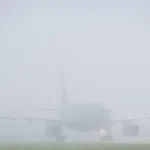
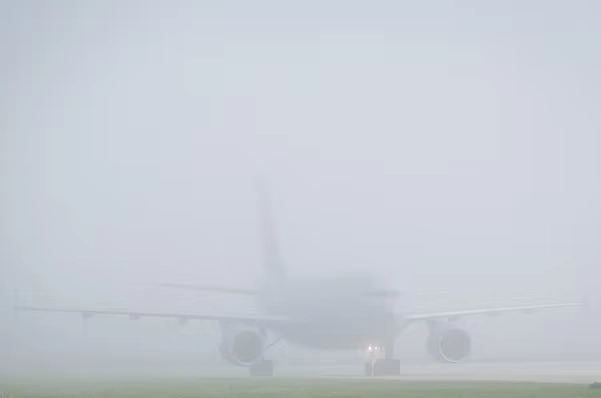
- Airport Flight Cancellations: Dense morning fog forced cancellations at London’s major hubs, including seven flights affected at Heathrow Airport and three at London City Airport by early Monday morning.
- Met Office Weather Warnings: The Met Office issued an active yellow weather warning for London and the South East until 11am, cautioning that local visibility could plunge to just 50 metres.
- Meteorological Conditions: Operational meteorologist Niamh Murray explained to the Press Association that clear skies, light winds, and extended overnight cooling created the “perfect recipe” for dense autumn radiation fog.
- Major Multi-Vehicle Collision: The hazard was underscored by a severe pile-up involving more than 30 vehicles on the M20 motorway in Kent on Saturday evening, leaving two people seriously injured and closing the highway for nearly 12 hours.
- Motoring Safety Guidance: AA President Edmund King urged motorists to reduce speeds, increase following distances, and avoid relying solely on the rear lights of preceding vehicles in low visibility.
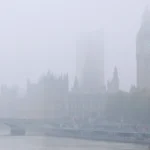
London (The Londoner News) November 9, 2026 – Dense autumn fog blanketed the British capital on Monday morning, forcing flight cancellations at major air terminals and triggering widespread transport warnings as visibility dropped to hazardous levels across Southern England. As reported by weather and transport correspondents for the Press Association, flight operations at Heathrow and London City airports experienced immediate disruptions, with multiple departures and arrivals cancelled before 6:30am under an active Met Office yellow weather warning. The severe low-visibility event, driven by calm autumnal conditions, followed closely behind a major 30-vehicle motorway collision in Kent, prompting transport authorities and motoring organizations to urge extreme caution among drivers navigating morning commute corridors.
- Why Did London Airports Face Flight Cancellations Due to Thick Fog?
- What Meteorological Factors Caused the Thick Fog Across London and the South East?
- How Did the Serious M20 Motorway Pile-Up Highlight Driving Risks in Low Visibility?
- Background of the Particular Development After the News
- How This Development Can Affect Airline Passengers, Motorists, and Regional Transport Logistics
Why Did London Airports Face Flight Cancellations Due to Thick Fog?
As reported by news wire correspondents for the Press Association, the sudden descent of thick morning fog severely impacted scheduling at two of London’s primary aviation facilities.
Low cloud ceilings and restricted runway visibility forced air traffic controllers and airline operators to implement safety spacing procedures:
- Heathrow Airport Disruption: Britain’s busiest aviation hub recorded at least seven flight cancellations across scheduled departures and arrivals by early Monday morning.
- London City Airport Impact: Close-in urban operations at London City Airport experienced three flight cancellations as thick river mist reduced horizon visibility across the docklands precinct.
- Passenger Advisory Actions: Airlines advised all travelers booked on morning flights to verify operational status directly with carriers before departing for the terminals.
According to meteorological statements cited by the Press Association, while the official Met Office yellow weather warning was scheduled to expire at 11am, persistent low temperatures in sheltered pockets threatened to keep visibility suppressed well into the afternoon.
What Meteorological Factors Caused the Thick Fog Across London and the South East?
According to reporting by the Press Association, the heavy fog was generated by classic autumn radiational cooling patterns across the region.
Niamh Murray, an operational meteorologist at the Met Office, described the atmospheric setup to the Press Association as the “perfect recipe” for fog development.
As reported by Niamh Murray of the Met Office, conditions combined several key meteorological elements:
- Extended Night-Length: Seasonal progression toward winter creates longer nights, allowing prolonged radiative heat loss from the earth’s surface.
- Clear Skies and Light Winds: Unclouded skies permit heat to escape rapidly into the upper atmosphere, while light surface winds prevent turbulent mixing of warm and cold air layers.
- Dew Point Saturation: Prolonged cooling lowers ambient air temperatures close to the dew point, causing atmospheric moisture to condense into dense suspended water droplets.
As reported by Niamh Murray of the Press Association: “We just have the perfect recipe at the moment: light winds, clear skies, long nights, to allow that fog to develop.”
How Did the Serious M20 Motorway Pile-Up Highlight Driving Risks in Low Visibility?
As reported by the Press Association, the transport disruptions in London coincided with heightened public safety awareness following a serious multi-vehicle collision on the M20 motorway in Kent over the preceding weekend.
The major incident involved more than 30 vehicles in a chain-reaction pile-up on Saturday evening, resulting in two people sustaining serious injuries.
Key details of the motorway incident and subsequent road safety responses include:
- Highway Closure Duration: Emergency services required nearly 12 hours to clear wreckage and inspect infrastructure, closing the M20 in both directions between junctions eight and nine near Maidstone.
- Driver Behavior Warnings: Motoring authorities warned that drivers frequently fail to adjust speeds adequately when entering sudden patches of dense fog on high-speed routes.
- AA Expert Guidance: Edmund King, president of the AA, cautioned motorists against relying on unsafe driving habits during poor visibility.
As reported by Edmund King of the AA, drivers must fundamentally alter their road habits: “Fog can transform a familiar road in a matter of minutes, so drivers need to be prepared to adapt their speed and leave more room between themselves and the vehicle ahead.”
King further warned that following another vehicle’s rear lights too closely creates a false sense of security, reducing reaction times if the lead car brakes suddenly. As reported by Edmund King of the AA: “Ultimately, there’s no prize for arriving a few minutes early. Give yourself extra time, slow down and drive to what you can actually see ahead.”
Background of the Particular Development After the News
Autumn and early winter in the United Kingdom frequently bring low-visibility weather events as seasonal temperatures drop and moist air masses interact with stable high-pressure systems. Radiation fog, which forms under clear skies and light winds, is a recurring meteorological feature across southern and eastern England, particularly in low-lying river valleys, rural motorway corridors, and open airport perimeters.
While modern aviation utilizes advanced Instrument Landing Systems (ILS) that allow commercial aircraft to land in near-zero visibility, sudden ground-level density spikes can still saturate apron operations, requiring air traffic control to increase aircraft spacing intervals and causing rolling delays. Similarly, high-speed motorway networks such as the M20—which connects London to the Channel Tunnel ports—remain vulnerable to sudden fog banks rolling off agricultural fields or marshlands, occasionally leading to severe multi-vehicle collisions when drivers fail to reduce speeds promptly.
How This Development Can Affect Airline Passengers, Motorists, and Regional Transport Logistics
The recurrence of dense seasonal fog across London and Southeast England carries direct operational consequences for travelers, commercial freight operators, and transport authorities.
Impact on Airline Passengers and Aviation Scheduling
For air travelers departing from or connecting through Heathrow and London City airports during the autumn and winter months, sudden fog events will continue to introduce schedule uncertainty. Passengers must anticipate rolling flight delays and potential cancellations when low-visibility procedures are enforced. Travelers are advised to monitor airline notifications closely and build flexible connection buffers into their itineraries during periods of high meteorological fog risk.
Impact on Motorists and Commercial Freight Drivers
For daily commuters and long-distance freight operators navigating major arterial roads and motorways like the M20, seasonal fog underscores the critical need for defensive driving. Adhering to extended stopping distances, reducing speed below posted limits during low-visibility warnings, and avoiding tailgating will remain essential to preventing major multi-vehicle pile-ups. Road transport logistics companies will need to factor potential weather delays into delivery timetables.
Impact on Transport Infrastructure Managers and Highway Authorities
For highway agencies and airport operators, the persistent vulnerability of transport networks to sudden weather shifts highlights the importance of intelligent transportation systems. Expanding automated fog-detection sensors, dynamic variable speed limit signs, and enhanced overhead warning signals on high-risk motorway corridors will be vital to improving driver reaction times and safeguarding public safety during future low-visibility events.