Key Points
- McCormick & Co Inc announced plans on Thursday to seek a secondary share listing on the London Stock Exchange (LSE) following its $45 billion (£33.8 billion) combination with Unilever PLC’s food business.
- The strategic move serves as a welcome boost for London’s equity markets, which have recently faced a scarcity of major listings and an increase in international takeovers.
- McCormick will maintain its primary listing on the New York Stock Exchange (NYSE), while aiming for the secondary London admission to enhance capital flows and improve liquidity for shareholders.
- The mega-deal, initially announced in March and anticipated to close by mid-2027, targets rising global demand for flavor-rich, healthier food to counter a maturing U.S. market.
- Under the transaction terms, Unilever will receive approximately $15.7 billion in upfront cash and equity, while Unilever and its shareholders will retain a 65% stake in the combined foods business (55.1% held by Unilever shareholders and 9.9% retained by Unilever itself).
- The combined entity expects to secure approximately $600 million in annual cost efficiencies.
- McCormick unveiled a new operating structure dividing the post-merger company into four distinct commercial segments: Americas Consumer ($8 billion in 2025 sales), International Consumer ($7 billion), Global Food Service ($4 billion), and Global Flavor ($2.5 billion).
- The announcement follows scrutiny from the UK competition watchdog, the Competition and Markets Authority (CMA), which recently began seeking market views regarding the transaction.
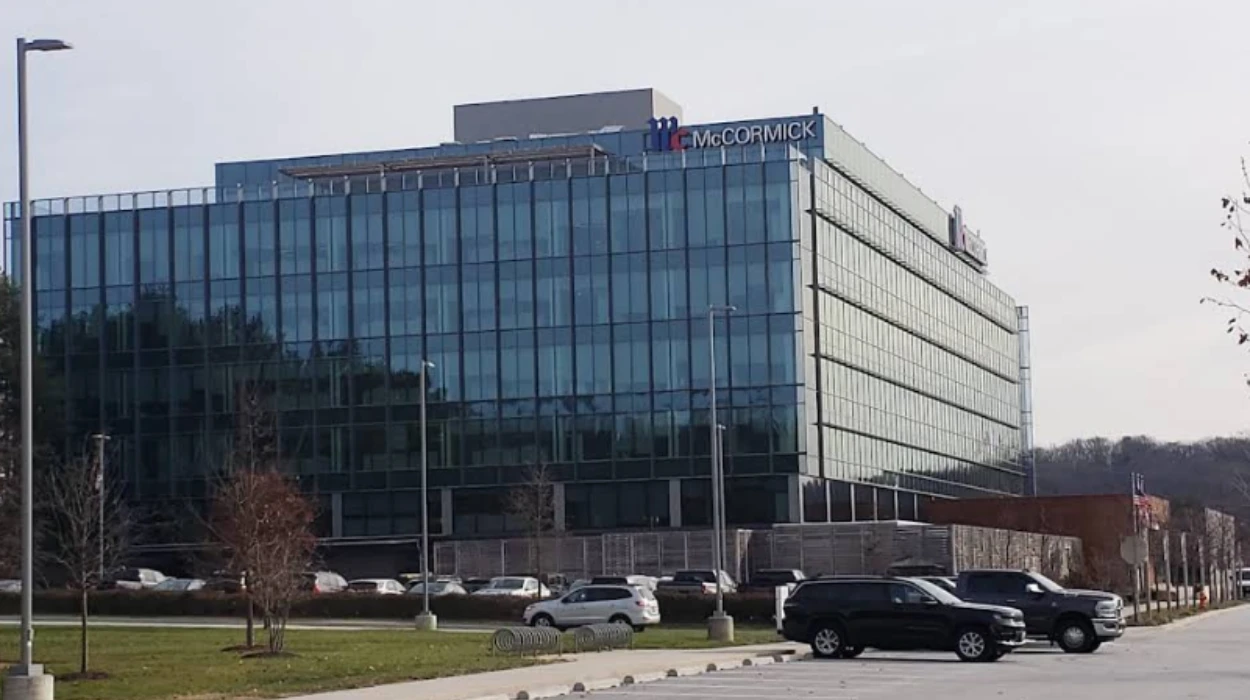
London (The Londoner News) July 23, 2026 — Condiment and spice titan McCormick & Company officially announced on Thursday that it will pursue a secondary share listing on the London Stock Exchange, running parallel to its primary posting on the New York Stock Exchange, as part of its monumental $45 billion merger with Unilever PLC’s food division. As reported by Reuters staff, the structural blueprint and operating model for the future combined entity were unveiled alongside the listing details, addressing a transaction first disclosed in March that is projected to reach completion by mid-2027. The strategic pivot is designed to capitalize on accelerating global appetites for healthier, flavor-dense foods to offset a maturing domestic U.S. market, though it arrives amidst lingering industry discussions regarding structural complexities, antitrust hurdles, and a prolonged runway toward final closing.
What Are the Core Financial and Structural Terms of the Merger?
According to details outlined by financial news services, the blockbuster transaction carries an enterprise valuation estimated at approximately $45 billion (£33.8 billion), combining McCormick’s heavy-hitting flavor portfolio—including brands like French’s mustard and Frank’s Red Hot sauce—with Unilever’s premier food assets, such as Hellmann’s, Marmite, and Colman’s.
As detailed by Alliance News, Unilever is set to receive roughly $15.7 billion in upfront cash combined with equity in McCormick. Furthermore, Unilever and its existing shareholders will maintain a substantial 65% ownership stake in the newly formed Unilever Foods apparatus.
Breaking down this retained interest, individual Unilever shareholders will own 55.1% of the combined business, while Unilever corporate will retain a 9.9% holding.
As reported by Dow Jones Newswires journalist Aimee Look, the transaction shifts Unilever further along in its major corporate strategy overhaul, allowing the British consumer goods giant to zero in tightly on its core domains of beauty, personal-care, and home products.
Conversely, the merger transforms McCormick from a focused spice-and-flavor specialist into an expansive, multi-billion-dollar global food conglomerate.
Why Is McCormick Pursuing a Secondary Listing in London?
As highlighted by Press Association Deputy Business Editor Henry Saker-Clark, writing for Alliance News, the decision by the Hunt Valley, Maryland-based condiment firm to seek admission on the London Stock Exchange delivers a timely and much-needed psychological and capital boost to London’s equity markets. In recent periods, the London exchange has weathered a notable dearth of high-profile public listings alongside a steady wave of international buyouts taking domestic firms private.
In an official corporate statement covered by PR Newswire, Brendan Foley, Chair, President, and Chief Executive Officer of McCormick, explained the strategic rationale behind the geographic footprint of the listing:
“This, in combination with our International Headquarters and commitment to Unilever’s world-leading research & development facilities in the Netherlands and our global headquarters in Hunt Valley, Maryland, reinforces the global nature of the combined operations and positions us for ongoing success.”
Market analysts cited by Finimize noted that keeping New York as the primary trading venue preserves continuity for legacy American shareholders, whereas adding London widens the pool of prospective institutional investors who favor UK trading hours and local market infrastructure.
Additionally, the dual-listing structure honors initial commitments made by both McCormick and Unilever during the March announcement to accommodate Unilever’s deeply entrenched European shareholder base.
Explore More Local Businesses
Frank Khalid OBE Receives UWL Honorary Doctorate, West London, 2026
SpaceX Stock Surges as Historic IPO Boosts Market Valuation in London
How Will the Combined Company Be Organised Operationally?
Effective upon the formal closing of the transaction, McCormick intends to completely reorganize its operational framework into four distinct commercial divisions that will function as the reportable operating segments of the combined enterprise. Financial disclosures released via StreetInsider outline the following division of scale based on combined 2025 net sales data:
- Americas Consumer: Projected to account for $8 billion in annual sales, spanning retail herb, spice, seasoning, and condiment operations across North, Central, and South America.
- International Consumer: Estimated at $7 billion in annual sales, managing retail consumer brands outside of the Americas.
- Global Food Service: Expected to bring in $4 billion, uniquely bridging Unilever’s heavy back-of-house culinary and chef expertise with McCormick’s brand-driven front-of-house strengths.
- Global Flavor: Forecasted at $2.5 billion, targeting specialized business-to-business flavor solutions.
Leadership assignments for these core segments have also been designated to draw evenly from the talent pools of both legacy organizations.
Andrew Foust is slated to head Americas Consumer, Heiko Schipper will take charge of International Consumer, Nuria Hernandez will lead Global Food Service, and Suzanne Roy will oversee Global Flavor.
Executive control at the very top will remain anchored by Brendan Foley as Chairman, President, and CEO, alongside Marcos Gabriel as Executive Vice President and Chief Financial Officer.
Furthermore, an Integration Management Office will be maintained post-closing, backed by dedicated transition services agreements projected to run for up to 24 months to ensure seamless operational harmonization.
What Are the Market Reactions and Regulatory Hurdles Ahead?
Despite the grand scale of the structural roadmap, the announcement arrives against a backdrop of complex regulatory scrutiny and market caution.
As reported by Reuters and echoed across financial bulletins, the transaction path has previously generated investor anxiety regarding execution risks, the extended timeline required to reach final closing by mid-2027, and potential antitrust obstacles.
Adding to these administrative layers, the UK’s competition watchdog—the Competition and Markets Authority (CMA)—recently confirmed that it is actively reviewing the transaction landscape and seeking formal market views regarding the merger’s competitive implications.
Financial markets reacted moderately to Thursday’s updates; in afternoon trading in London, Unilever shares dipped 1.8% to 4,532.50 pence, while McCormick shares had previously closed slightly lower by 0.6% at $52.02 in New York.
As financial markets digest the newly unveiled divisional architecture and London listing logistics, McCormick leadership has indicated that further granular details regarding anticipated revenue and cost synergies—projected to hit approximately $600 million annually—will be formally released to investors before the conclusion of the third quarter.