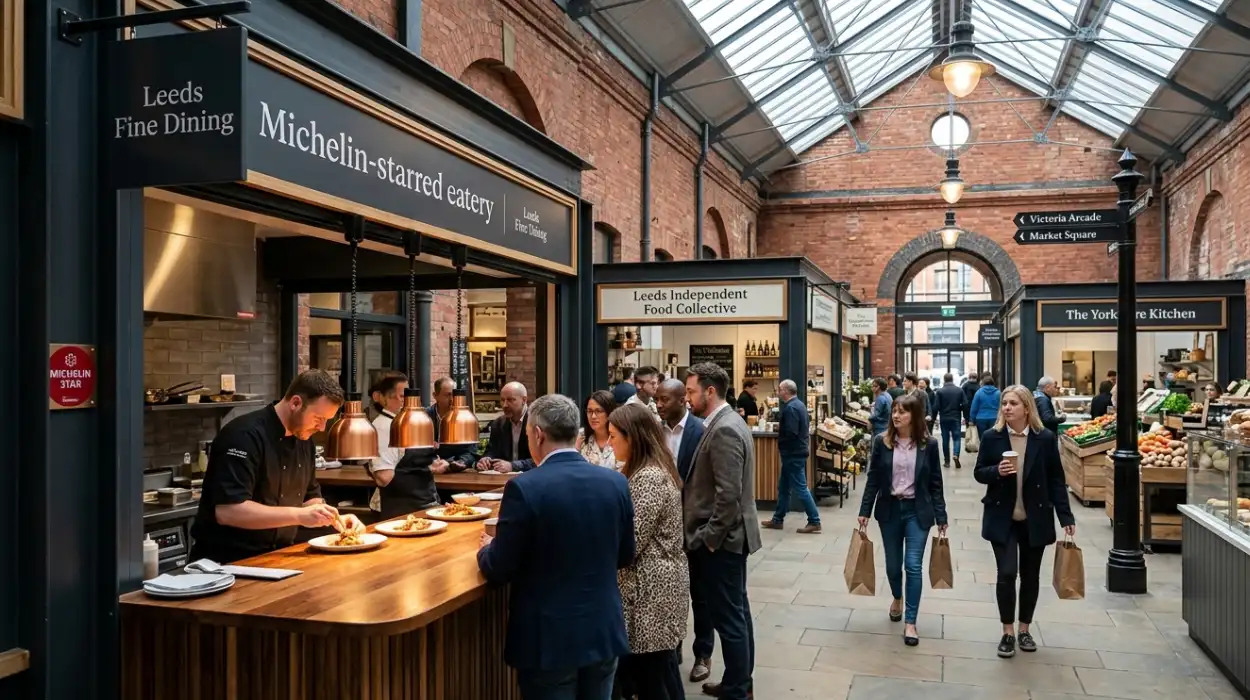
The transformation of Leeds into a premier culinary destination across the United Kingdom stems from a long sequence of agricultural, architectural, and commercial shifts within West Yorkshire. Historically defined by its textile production, engineering infrastructure, and heavy manufacturing during the Industrial Revolution, the city has successfully re-engineered its urban core and post-industrial architecture to support an expansive, modern hospitality sector. By utilizing industrial brick warehouses, historical indoor markets, and Victorian shopping arcades, Leeds provides a dense ecosystem where fine-dining concepts, Michelin-starred culinary talent, and community-driven independent food hubs operate alongside each other.
- How has the history of Leeds shaped its modern food scene?
- Which Michelin star developments are occurring in Leeds in 2026?
- Where are the emerging independent food hubs located in Leeds?
- What role does sustainable agriculture play in the 2026 restaurant supply chain?
- How do digital media platforms influence the success of new Leeds restaurants?
- What are the long-term economic implications of this culinary expansion?
The historical timeline of the hospitality sector in Leeds demonstrates how industrial spaces transition into cultural assets:
Establishment of the Kirkgate Market Facility
1857
The opening of the initial Victorian ironwood and glass structure established the central trading hub for fresh produce, game, and livestock in West Yorkshire, laying the groundwork for regional food distribution frameworks.
Completion of the County Arcade Complex
1897
Architect Frank Matcham completed the luxury shopping district, featuring marble structures, mosaic tiling, and glass domes, which centralized upscale commercial hospitality in the urban center.
The Tetley Brewery Expansion and Industrial Peak
1931
The construction of the landmark art deco headquarters for Joshua Tetley & Son finalized the domination of industrial food and beverage production in the Hunslet district.
De-industrialisation and Waterfront Re-use Frameworks
1996
The relocation of the Royal Armouries Museum to Leeds Dock initiated the conversion of derelict canalside grain warehouses and industrial mills into mixed-use commercial properties.
Launch of the Trinity Leeds Indoor Food Hub
2013
The opening of a centralized shopping complex introduced the concept of permanent indoor street-food incubation spaces, lowering commercial barriers for independent traders.
The 2026 Culinary Regeneration Peak
2026
The complete rehabilitation of the South Bank and Kirkgate quarters establishes a network of Michelin-grade culinary institutions and agroecological dining hubs.
How has the history of Leeds shaped its modern food scene?
The industrial expansion of Leeds established complex transportation infrastructure, municipal market spaces, and dense brick architectures that modern restaurateurs utilize to house high-density hospitality venues, turning historical working-class spaces into specialized culinary landscapes for fine dining and independent food cultivation.
The historical configuration of Leeds as a mercantile hub directly dictates the layout of its contemporary food scene. During the 19th century, the construction of the Leeds and Liverpool Canal and the expansion of the North Eastern Railway network allowed for the rapid transport of raw goods, agricultural yields, and sea produce into the city center. This network focused heavily on the River Aire waterfront and the surrounding South Bank district, where grain silos, flax mills, and iron foundries dominated the landscape. When these industries declined during the late 20th century, the city inherited vast stocks of unreinforced brick masonry, exposed cast-iron columns, and timber-beamed warehouses.
Rather than demolishing these structures, municipal regeneration frameworks from the 1990s onward prioritized adaptive reuse. Modern culinary enterprises use these large interior spaces to accommodate heavy kitchen equipment, open-fire hearths, and extensive guest seating without modifying the historic facades. To experience this historic landmark in person today, consult our comprehensive [Leeds Visitor Guide for Historic Districts and Dining Itineraries] for itineraries and visiting parameters. This structural layout keeps real estate overhead viable for independent operators while preserving the architectural heritage of West Yorkshire.
Which Michelin star developments are occurring in Leeds in 2026?
Elite culinary operations in 2026 are establishing high-concept, multi-course fine dining establishments within renovated Victorian city-center complexes, utilizing local Yorkshire produce and advanced gastronomy methods to secure prestigious international acknowledgments and expand the luxury tourism economy of the region.
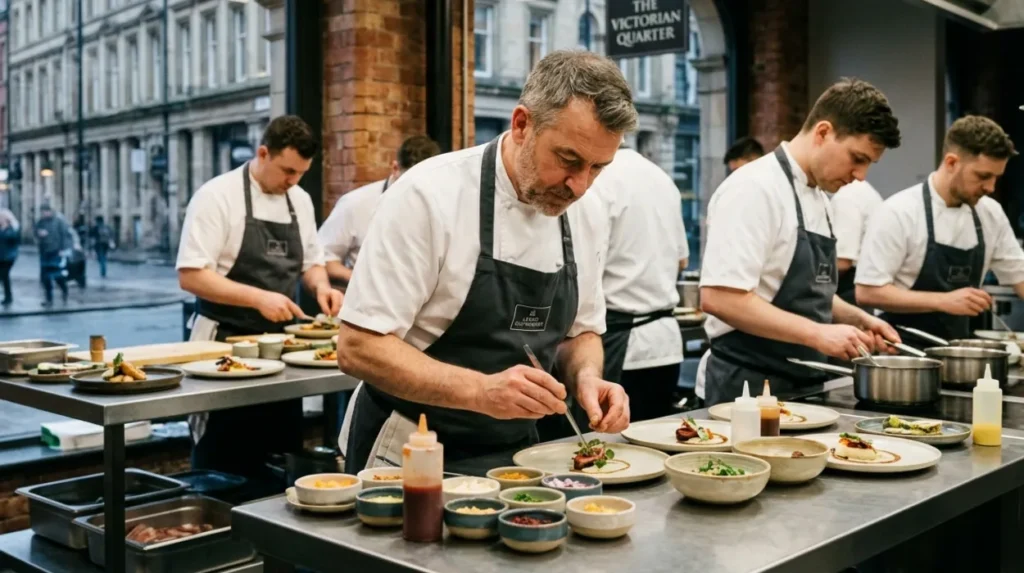
The year 2026 marks a major expansion of elite gastronomy within the city center, driven by the arrival of Michelin-starred culinary teams seeking to escape the saturated real estate markets of London and the South East. These professional chefs are opening venues within historic structures like the Grand Arcade and the Victoria Quarter. The architectural framework of these locations, which feature ornate ironwork and original stone masonry, matches the premium branding required by high-end restaurateurs.
The culinary strategy deployed by these modern kitchens focuses on extreme regionalism and technical complexity. Chefs utilize local ingredients sourced from the nearby Wharfe and Aire valleys, including Yorkshire rhubarb, foraged woodland botanicals, and dry-aged Dexter beef. These ingredients are transformed using precise culinary techniques such as multi-stage clarification, vacuum-pression infusion, and low-temperature thermal circulation.
Kitchen operations are also increasingly adopting formal frameworks to manage resource allocation, carbon impacts, and raw ingredient throughput. Recent hospitality studies show that modern professional kitchens are turning to co-created, lower-waste menu strategies to optimize their supply chains (Zick, 2026). This integration of high kitchen precision with sustainable planning allows these fine-dining institutions to maintain excellent consistency while reducing carbon outputs and operating margins.
Where are the emerging independent food hubs located in Leeds?
Independent culinary hubs are concentrating within the historical industrial zones of the South Bank, the neglected retail spaces of the Kirkgate Quarter, and the dense suburban corridors of Chapel Allerton and Headingley, revitalizing dilapidated structures through collective retail models.
The growth of independent food hubs in Leeds relies on cooperative space utilization. The South Bank district, particularly within the Holbeck Urban Village conservation area, houses a dense concentration of micro-breweries, artisanal sourdough bakeries, and low-intervention wine bars. These businesses occupy former brass foundries and locomotive machine shops, sharing delivery docks, waste management facilities, and outdoor seating yards to mitigate rising utility fees and property taxes.
Concurrently, the Kirkgate Quarter is undergoing a major commercial transformation. The historic indoor market area operates as an incubator space for first-time operators. By offering flexible stall leases and pre-installed grease traps, the city allows street-food vendors to transition into permanent boutique bistros. This spatial arrangement creates an attractive environment for culinary consumers, who can sample diverse culinary traditions within a single covered space.
Outside the immediate city center, suburban clusters in neighborhoods like Chapel Allerton and Headingley have developed distinct neighborhood dining ecosystems. These suburban hubs rely heavily on local foot traffic and daily repeat custom, shielding them from the macroeconomic fluctuations that impact city-center commercial real estate.
Explore More Local Businesses
How Digital Business Grants Drive Tech Economy Growth: Leeds
What role does sustainable agriculture play in the 2026 restaurant supply chain?
Restaurateurs are forming direct, contract-backed supply networks with West Yorkshire agroecological producers to source organic vegetables, heritage grains, and grass-fed meats, bypassing centralized industrial wholesale networks to guarantee ingredient quality and structural food resilience.
The culinary landscape of Leeds in 2026 is increasingly shaped by direct agricultural integration. High-volume restaurants and independent bistros are moving away from globalized, just-in-time logistics networks due to systemic supply chain vulnerabilities, climate disruptions, and rising transit tariffs. Kitchens instead rely on local agroecological food production networks operating within the Leeds and Bristol regional supply frameworks (Tornaghi et al., 2026). These agricultural systems emphasize soil health, chemical-free fertilization, and biodiversity, providing fresh food crops that are more resilient to regional climate disruptions (Tornaghi et al., 2026).
This direct sourcing infrastructure changes how menus are designed across the city. Chefs adjust their menu offerings daily or weekly based on the immediate output of local farms, rather than demanding fixed ingredients year-round. This operational model reduces food waste and cuts down transport-related greenhouse gas emissions. Furthermore, by committing to fixed-price purchasing contracts with regional growers, Leeds restaurants help secure the financial stability of the local rural economy while protecting themselves from sudden food commodity price spikes.

How do digital media platforms influence the success of new Leeds restaurants?
Digital media channels, specifically highly engaged food influencer networks on Instagram and TikTok, act as primary marketing systems that dictate initial customer volumes and brand verification through visually appealing documentation and peer-to-peer sharing.
The commercial viability of new restaurant openings in Leeds is closely linked to digital visibility. Modern culinary consumers rely less on traditional print journalism or legacy critique formats, turning instead to localized online food communities. Research shows that digital food influencer networks operate as active communities of practice where creators share insights, collaborate on events, and cross-promote new culinary venues (Miguel et al., 2022). While London maintains the largest total volume of digital food media output, regional cities like Leeds are developing highly concentrated digital spaces that drive fast local engagement (Miguel et al., 2022).
To capture this digital traffic, 2026 restaurant designs specifically incorporate visual elements that translate well to smartphone cameras. Kitchen teams design signature dishes with dramatic presentation styles, such as table-side sauce pours, vibrant natural color contrasts, and open-flame cooking displays. Dining room layouts also feature targeted spot-lighting and minimalist backdrops to optimize user-generated content creation.
This digital promotion model accelerates the customer acquisition pipeline for new restaurants, allowing independent venues to reach full capacity within weeks of opening without traditional, expensive advertising campaigns. However, this relies on maintaining consistent food and service standards; if a venue’s real-world execution fails to match its online presentation, negative reviews can spread through the same digital networks just as quickly, impacting long-term customer retention.
What are the long-term economic implications of this culinary expansion?
The growth of the fine-dining and independent food sector diversifies the post-industrial economy of Leeds, creating skilled hospitality jobs, increasing municipal business tax revenue, and driving cultural tourism from across the United Kingdom.
The expansion of the restaurant sector has clear positive effects on the broader economy of Leeds. By transforming empty, non-productive industrial buildings into high-yield commercial real estate, the hospitality boom expands the city’s commercial tax base. The revenue generated from these properties helps fund municipal infrastructure maintenance, public transport enhancements, and historic preservation projects across West Yorkshire.
Furthermore, the hospitality industry produces an economic multiplier effect across secondary supply chains. Restaurants require specialized commercial services, including custom kitchen fabrication, interior design work, artisanal pottery production, and professional laundry logistics. The demand for premium ingredients also provides stable revenue for local farms, butcheries, and fisheries.
As Leeds strengthens its position as a major culinary destination, it draws an increasing volume of weekend leisure tourists. These visitors spend money not just in restaurants, but across local hotels, retail districts, and public transport systems. This inflow of external capital reduces the city’s dependence on traditional financial and administrative service sectors, building a more balanced and resilient urban economy.
Why has Leeds become a major culinary destination?
Leeds has transformed former industrial buildings, Victorian markets, and historic arcades into hospitality spaces, creating a vibrant mix of fine dining, independent eateries, and street food venues.