

Key Points
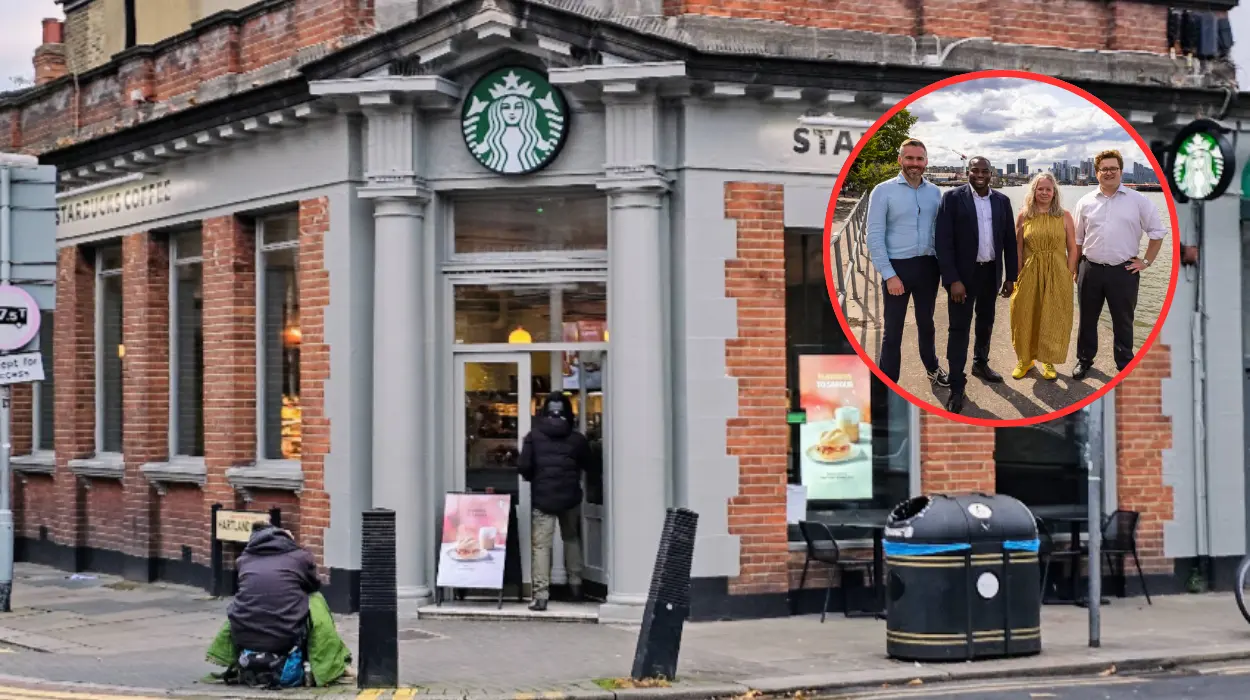
- The Incident: Sally Kenyon, a 44-year-old professional cellist and music teacher from Wells, Somerset, was visiting a Starbucks branch in London’s Embankment in 2022 alongside her two daughters, aged 10 and 11, when a large wooden fridge surround collapsed and fell directly onto her head.
- The Injuries: As reported by Shaun Wilson of The Evening Standard, Mrs Kenyon sustained a laceration near her right eyebrow requiring hospital stitches, subsequent concussion, chronic migraines occurring up to 15 times a month (sometimes confining her to bed for days), fatigue, sleepiness, facial paralysis, sensory loss, and cognitive difficulties involving memory, planning, and organisation.
- Career Impact: Mrs Kenyon stated that the injuries effectively ended her professional career as a classical cellist and her position teaching music at Millfield School, one of the UK’s leading private educational institutions, leaving her unable to perform, engage normally in social interactions, or comfortably manage housework and childcare.
- Legal Action & Damages: Represented by her legal team, Mrs Kenyon is suing the multinational coffeehouse chain for over £2 million at the High Court in Bristol, arguing that the accident has profoundly and permanently disrupted her personal and professional life.
- Starbucks’ Defense: Starbucks has admitted that Mrs Kenyon was struck by the wooden frame, according to The Evening Standard and The Mail on Sunday coverage, but the corporate giant rejects allegations of negligence, contests liability, and maintains that many of her health complications pre-dated the accident.
- Medical Counter-Claims: Starbucks argues that Mrs Kenyon had already taken 68 days off work prior to the incident due to anxiety, panic attacks, and headaches. Citing its own medical expert witnesses, the firm asserts she would have experienced health issues regardless, with a consultant neurologist characterising her reported symptoms as the “worst end of the outcome spectrum following a minor head injury”.
London (The Londoner News) August 4, 2026 — A professional classical musician and prominent cello educator has initiated a multi-million-pound high court compensation claim against global coffee titan Starbucks, contending that severe and disabling neurological injuries sustained from a falling piece of shop furniture terminated her livelihood.
Sally Kenyon, a 44-year-old resident of Wells in Somerset, launched legal proceedings exceeding £2 million following a freak accident inside a Starbucks branch located in London’s Embankment district back in 2022. At the time of the incident, Mrs Kenyon was enjoying a routine day out during school holidays accompanied by her two young daughters, aged 10 and 11. Without warning, a heavy wooden surround encasing a commercial refrigerator detached from its fixings and crashed down onto her head.
The impact inflicted an immediate, deep laceration around her right eyebrow, necessitating emergency hospital treatment and surgical stitches. However, what initially appeared as a localized physical wound quickly evolved into a debilitating cascade of chronic neurological complications, transforming the accomplished musician’s existence into an ongoing battle against severe, persistent health deterioration.
What Happened During the 2022 Starbucks Incident in Central London?
As detailed in initial reports by The Mail on Sunday and expanded upon by The Evening Standard, the accident occurred inside a busy metropolitan Starbucks outlet where structural fittings failed unexpectedly. Mrs Kenyon was struck by heavy timber framing designed to house a store refrigerator.
While corporate liability and safety standards governing commercial interior architecture are central pillars of public liability law in the United Kingdom, the immediate aftermath focused on emergency medical intervention. Mrs Kenyon was rushed to a local hospital where medical professionals treated her facial laceration. Yet, the physical trauma inflicted by the falling timber went far deeper than skin and soft tissue, triggering an insidious onset of post-concussion syndrome and chronic neurological distress that would fundamentally alter her daily routine and halt her professional ambitions.
Explore More Central London News
Commonwealth Gold Medallists Return to London 2026
Banksy Statue Reviewing Permanent Status in London 2026
How Has the Accident Impacted Sally Kenyon’s Career and Personal Life?
As reported by Shaun Wilson of The Evening Standard, Mrs Kenyon’s legal representation argues that the accident has profoundly and irrevocably fractured every aspect of her personal and professional autonomy. Prior to the 2022 catastrophe, Mrs Kenyon maintained a thriving career as a professional classical cellist and served as a valued music instructor at Millfield School, widely recognised as one of the United Kingdom’s leading private educational establishments.
Testifying to the profound emotional and professional toll, Mrs Kenyon stated through court documents that music and live performance constituted the cornerstone of her identity. Finding deep personal fulfilment in passing down her mastery of the cello to the next generation of students, she has nonetheless been entirely unable to play, practice, or teach since sustaining the head injury.
The physical aftermath expanded into an array of chronic symptoms. According to court filings highlighted by The Evening Standard, Mrs Kenyon reported suffering from chronic, unrelenting migraines striking up to 15 times a month. Certain migraine episodes manifest with such vicious intensity that she is confined strictly to bed for days at a time. Furthermore, she experiences pervasive chronic fatigue, excessive sleepiness, localized facial paralysis, and sensory loss.
Cognitive impairments have also severely hindered her functional capacity. Mrs Kenyon noted struggles with memory retention, structural planning, and executive organisation. Daily environmental inputs—ranging from casual social interactions to routine bright lighting—frequently act as neurological triggers, exacerbating her symptoms. Consequently, her ability to independently manage basic household chores or adequately look after her young daughters has been severely impaired.
What Is Starbucks’ Legal Defense and Position on Liability?
While Starbucks has formally acknowledged the factual occurrence that Mrs Kenyon was indeed struck by the falling wooden frame within their Embankment branch, the corporation firmly rejects all allegations of negligence. Legal representatives for the multi-national coffee chain maintain that the claimant must legally substantiate any claims of corporate breach of duty or operational oversight.
Furthermore, Starbucks’ legal and medical strategy challenges the direct causation linking the entire scope of Mrs Kenyon’s current medical profile exclusively to the falling fridge surround. According to corporate disclosures cited in national reporting, Starbucks asserts that Mrs Kenyon possessed an extensive prior medical history involving psychological and physical vulnerabilities. Specifically, the defense highlights that she had already taken 68 days of absence from her professional duties due to chronic anxiety prior to the accident—a period during which she reportedly experienced overlapping symptoms including severe tension headaches and acute panic attacks.
What Do Medical Experts Say About the Extent of the Injuries?
The High Court litigation has increasingly centered on complex medical testimonies and neurological evaluations intended to disentangle pre-existing medical conditions from acute trauma induced by the accident.
Starbucks has brought forward independent expert medical evaluations arguing that Mrs Kenyon would likely have suffered ongoing health complications irrespective of whether the retail store accident had occurred. Highlighting this perspective, a consultant neurologist giving expert evidence on behalf of the corporate coffee titan characterized Mrs Kenyon’s extensive and long-lasting post-incident presentation as sitting at the
“worst end of the outcome spectrum following a minor head injury”.
Conversely, Mrs Kenyon’s medical and legal team maintains that the catastrophic acceleration of her symptoms directly stems from the physical trauma of the impact, invoking legal principles surrounding the exacerbation of latent vulnerabilities. As the high-stakes legal battle continues to unfold at the High Court in Bristol, the proceedings underscore critical questions regarding corporate premises safety, accountability for structural integrity in public hospitality venues, and the intricate legal valuation of career-ending personal injuries in the performing arts sector.