Key Points
- East London’s historic pie and mash revival.
- Longstanding family-run shops retain traditional recipes.
- Newcomer venues reinvent classics with modern twists.
- Locals highlight atmosphere as important as flavour.
- 2026 sees renewed interest in Cockney heritage.
East London (The Londoner News) 16 March 2026 – Once the fuel of dockers, market porters and factory workers, traditional pie and mash is enjoying a notable revival across east London in 2026, with century‑old family businesses and newer contenders competing for the loyalty of locals and food‑curious visitors alike.
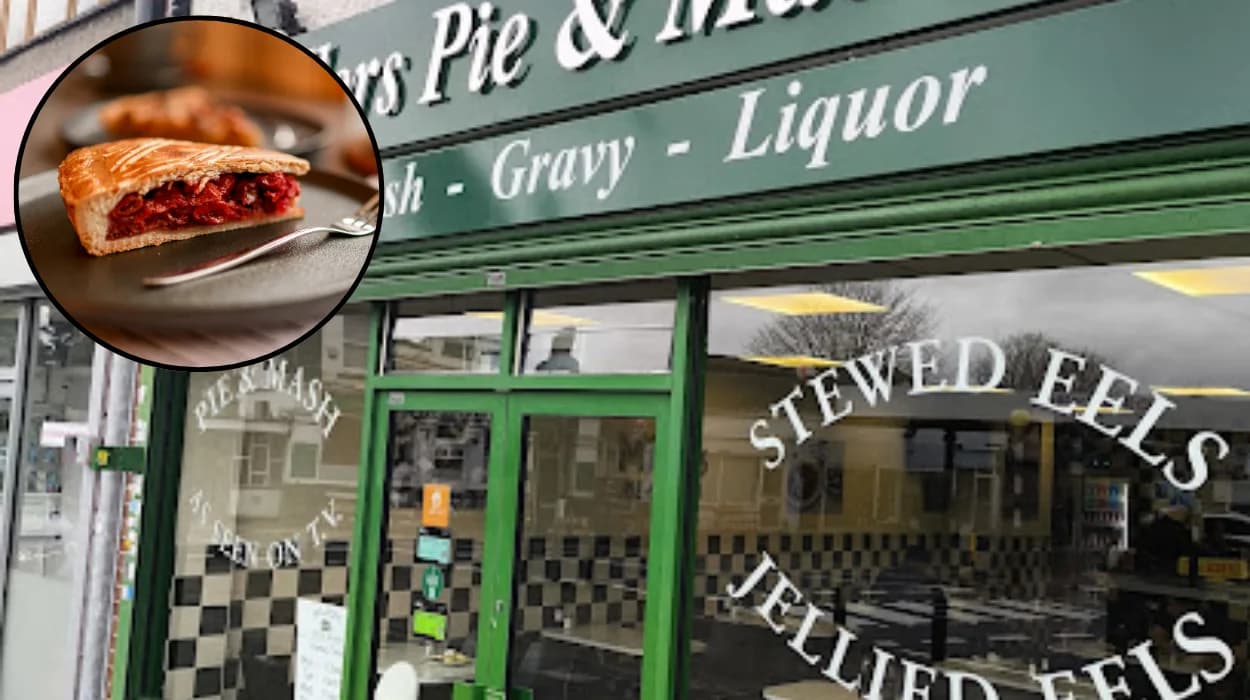
The dish minced beef pie with mash, parsley liquor and often jellied or stewed eels has become both a symbol of Cockney heritage and a surprisingly resilient part of the capital’s changing food culture, prompting debate over which shops truly deserve to be called the best this year.
Why does pie and mash still matter in east London in 2026?
Pie and mash has long been more than a cheap, hearty meal; it has been a social ritual that connects generations across neighbourhoods from Bow and Bethnal Green to Canning Town and East Ham. The shopfronts, tiled interiors and simple menus embody a working‑class history that many residents feel is under pressure from gentrification and rising commercial rents.
Food writers and local historians regularly note that a visit to a traditional pie and mash shop offers a rare continuity in districts where housing estates have been redeveloped, markets reshaped and demographic patterns transformed.
Regulars often speak of “going for pie” as shorthand for meeting friends, catching up with family or sharing memories of relatives who worked in the docks or factories and ate similar plates decades ago. In that sense, the debate about the “best” shop is also a debate about whose version of east London’s past and future is preserved.
How are newer pie and mash shops changing the scene in 2026?
While traditional shops continue to attract loyal trade, the last several years have seen the emergence of newer venues that reinterpret pie and mash for different audiences. These businesses commonly operate with more flexible menus, later opening hours and additional offerings such as vegetarian or vegan pies, craft beers, desserts and coffee, seeking to appeal to younger customers and mixed groups.
Contemporary operators often experiment with fillings such as chicken and mushroom, steak and ale, lamb and rosemary or vegetable-based combinations, while sometimes offering gluten‑free pastry or alternative gravies alongside the classic liquor. Interiors may replace the Victorian‑style tiling and benches with exposed brick, modern lighting and communal tables. Supporters argue that these moves keep the tradition alive by adapting it to present tastes, while critics claim that the essence of pie and mash risks being diluted if the liquor and eels become optional novelties rather than centrepieces.
Some of these newer establishments also use social media extensively to promote daily specials, photographs of steaming plates and historical notes about the origins of the dish. As a result, visitors to east London in 2026 can now discover pie and mash through online recommendations, influencer posts and food‑focused digital maps that highlight both the old‑guard shops and the relative newcomers in equal measure.
How do customers judge the quality of pie, mash and liquor?
When regulars describe what makes a particular east London shop stand out, they frequently start with the pie itself. Diners look for a crisp but not overly dry pastry top, a base that holds together without becoming soggy, and a filling that balances seasoning, texture and temperature. The minced beef should be neither fatty nor bland, and the gravy inside the pie is expected to be rich enough to mingle with the liquor without turning the plate into a soup.
The mash is often judged on its smoothness and consistency; lumps are rarely forgiven, but a completely puréed texture can be criticised as too processed. Many enthusiasts also pay close attention to how the mash is arranged on the plate – whether it forms neat scoops or a broader bed under the pie. The liquor attracts perhaps the most detailed scrutiny: customers discuss its colour, thickness and herbal notes, with some preferring a lighter, more delicate flavour and others insisting on a stronger, stock‑heavy taste reminiscent of older recipes.
Eels remain a divisive point: while some east Londoners consider jellied or stewed eels an essential part of any authentic experience, others admit they have never tried them and instead focus purely on the pie and mash. Nevertheless, the presence of eels on the menu is frequently seen as a marker that a shop takes tradition seriously, regardless of how many portions are sold in a given day.
How do opening hours, service influence which shops feel ‘best’ to different people?
Beyond food quality, several practical and emotional factors influence people’s choice of favourite shop. Opening hours make a significant difference: workers on early shifts value those that open in the late morning, while families and visitors often prefer shops that stay open into the evening or operate on Saturdays and sometimes Sundays. A venue that closes mid‑afternoon on weekdays may suit retirees and local residents, but risk missing out on office workers and commuters.
Décor plays an important role in shaping expectations. Some diners actively seek out the old‑fashioned tiled walls, fixed benches and enamelled plates associated with Victorian and early‑20th‑century shops, considering them part of the experience. Others, especially first‑time visitors, may feel more comfortable in spaces with brighter lighting, softer seating and clear signage explaining the menu.
The “best” shops, in the eyes of many customers, manage to combine efficient service with a sense of warmth and familiarity. Regulars often praise staff who remember how they like their order served, or who greet elderly patrons by name. Visitors, for their part, frequently mention whether they felt welcome asking basic questions such as how to eat jellied eels without being made to feel foolish.
How is the debate about tradition versus innovation likely to develop after 2026?
As east London continues to change, the tension between preserving traditional pie and mash practices and allowing for innovation is unlikely to disappear. Advocates for strict tradition argue that the dish’s identity lies in beef pies, mash, liquor and eels, served in no‑nonsense surroundings where the menu has barely changed in decades. They worry that an over‑reliance on experimentation for example, by focusing on non‑traditional fillings while relegating liquor and eels to footnotes may erode what makes the meal distinctive.
Others believe that adaptation is essential for survival, especially in areas where commercial pressures and changing dietary preferences are strong. They point to shops that have introduced vegetarian, vegan or gluten‑free options without abandoning the core dish, or that have updated their décor and payment systems while keeping the same recipes in the kitchen.
There are also suggestions that collaborations with local breweries, markets or cultural festivals could help maintain visibility and relevance, particularly among younger audiences who may encounter pie and mash for the first time at such events rather than on the high street.
How are pie and mash shops connecting with broader conversations about identity?
For many east Londoners, the act of sitting down to a plate of pie and mash in 2026 is intertwined with questions of belonging, memory and identity. People who grew up in the area often link specific shops to particular life stages: going for pie with grandparents after a Saturday market, stopping in for lunch after a shift on a construction site, or meeting friends there before a football match. These memories can be stirred powerfully by familiar smells, the scrape of metal cutlery on enamel plates or the sound of staff calling out orders.
At the same time, newer residents and visitors sometimes experience pie and mash as an entry point into the stories of the area they now live in or are exploring. Guided walks, heritage projects and local exhibitions occasionally highlight pie and mash shops alongside pubs, churches, markets and former industrial sites as landmarks of working‑class London.
The continuing visibility of these businesses, therefore, has implications beyond the food itself: they act as living reminders that the history of east London is not only written in official archives and grand buildings, but also in small, family‑run dining rooms where everyday life has unfolded for generations.