
Key Points
- Tower Hamlets approves CPO for Teviot Estate sales.
- Poplar Harca plans demolition of 1960s blocks 2026.
- Leaseholders offered full market value first.
- Regeneration delivers nearly 2000 new homes 2041.
- CPO used only as last resort, says council.
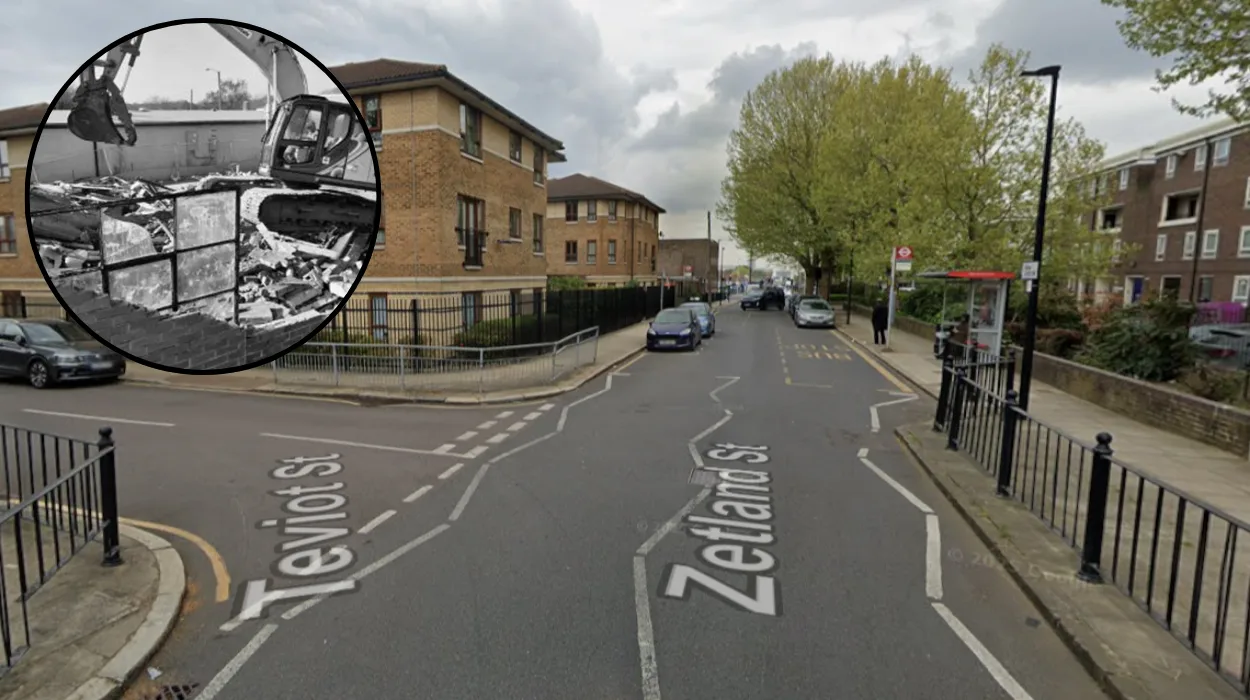
Tower Hamlets (The Londoner News) February 26, 2026 – Owners on the Teviot Estate in Poplar face the prospect of being compelled to sell their homes to Tower Hamlets Council should they refuse voluntary relocation, as part of a major regeneration scheme led by housing association Poplar Harca. The council’s cabinet has unanimously approved compulsory purchase order (CPO) powers, which will be deployed only as a “last resort” to demolish ageing 1960s-era blocks on streets including Chadbourn Street, Zetland Street, Ullin Street, and Spey Street. This decision, reported amid East London’s ongoing housing crisis, aims to unlock nearly 2,000 new homes by 2041, quadrupling the current supply in the area.
The move underscores Tower Hamlets Council’s determination to address substandard housing in Poplar, a densely populated ward in Bromley-by-Bow, where outdated estates have long plagued residents with maintenance issues. Cllr Kabir Ahmed, Aspire Party councillor and cabinet member for housing, stated that these powers are “crucial to maintain the feasibility of the redevelopment,” as detailed in cabinet proposals. Of the 45 leaseholders affected in phase one, 12 remain in negotiations with Poplar Harca, which must prove active pursuit of voluntary deals at full market value before CPO activation.
Why Has Tower Hamlets Council Approved CPO Powers in 2026?
Tower Hamlets Council’s cabinet resolution on February 18, 2026, empowers the authority to acquire land “by agreement or compulsorily” for Poplar Harca’s masterplan, as reported by East London Times journalists. Cllr Asma Islam, Deputy Mayor and Cabinet Member for Housing, emphasised during the meeting: “CPOs will only be used as a last resort,” a phrase repeated in official documentation to assuage fears among leaseholders. Council officers justified the indemnity covering potential legal costs as vital to “unlock stalled regeneration schemes,” citing parallels with interventions in other London boroughs like Newham’s Carpenters Estate.
This includes adjacent sites like Aberfeldy Street, where prior phases proceeded without CPOs, thanks to robust resident engagement including funded relocation advisors and legal aid for leaseholders. The £800 million project, partnered with The Hill Group, received outline planning consent in July 2025 from Tower Hamlets’ Strategic Development Committee, replacing 535 existing homes with 1,928 new ones—44% for social rent and shared ownership in phase one.
Historical data shows CPOs seldom reach full confirmation; over 90% resolve via settlements pre-inquiry, with holdouts often claiming expenses if successful at public inquiry stage notified to the Secretary of State for Levelling Up, Housing and Communities. The Teviot ballot in prior years saw 81% turnout with 86% approval from 617 residents, shaping designs via the Residents’ Steering Group.
What Does the Teviot Estate Regeneration Entail?
Poplar Harca’s vision transforms the 1950s Teviot Estate into a modern neighbourhood with 1,928 homes, green spaces, shops, a purpose-built mosque, community centre, and enhanced public realm including reimagined Langdon Park. Phase one, already detailed planning-approved, delivers 475 units starting 2026, quadrupling capacity while tackling overcrowding in one of London’s most deprived areas.
Andy Hill OBE, Founder and Group Chief Executive of The Hill Group, described it as “a landmark moment for Teviot… prioritising high-quality homes and improved communal spaces.”
Improvements extend to cycling hubs, canal enhancements with Tower Hamlets Council and Manorfield Primary School, and better walking routes to boost health and connectivity. Completion is eyed for 2042, aligning with Tower Hamlets’ draft Housing Strategy 2025–2035, which targets acute crises through evidence-led roadmaps.
Yet challenges persist; the estate’s aging blocks, built post-war, suffer decay unfixable by refurbishment, as prior attempts failed. Poplar Harca invests in engagement, but the CPO shadow looms over phase one streets: Chadbourn, Zetland, Ullin, and Spey. This forms part of broader council efforts, like demolishing Albert Jacob House in Bethnal Green for 53 council homes or approving 1,928 Teviot units.
How Are Residents Reacting to the Forced Sale Threat?
Resident sentiments vary, as captured in on-the-ground reporting by Tower Hamlets Slice journalists.
One unnamed Teviot Street leaseholder lamented: “We’ve nowhere affordable to go; Poplar’s changed, but not for us.”
Opposition focuses on compensation transparency, with niche groups questioning formulae despite majority ballot backing.
Tenant associations endorse the scheme, citing quality-of-life gains from new facilities. Poplar Harca’s process includes independent ballots by Electoral Reform Services, ensuring community-led design. In related developments, councillors like Gulam Kibria Choudhury expressed stakeholder engagement concerns in past meetings, while Ahmodur Khan supported for affordable housing needs. Paul Buckingham, Head of Development Management, clarified social rent provisions as “the most affordable level.”
Executive Mayor Lutfur Rahman has championed such initiatives, stating for similar projects: “We are determined to meet the urgent demand for social housing… too many families in overcrowded conditions.”
Leaseholders receive full market value offers, relocation support, but anxiety persists over London’s inflated property market.
What Is a Compulsory Purchase Order and How Does It Work?
A CPO allows local authorities to acquire private land for public benefit under the Town and Country Planning Act 1990, section 226(1)(a), as in Tower Hamlets’ Harriott House order. Process: Poplar Harca negotiates voluntarily; failure prompts council notification to the Secretary of State, potentially triggering public inquiry where objectors present cases. Costs burden the acquiring body, but winners may recover expenses.
Precedents like Stratford’s Carpenters Estate show 90%+ pre-confirmation resolutions, minimising disruption. Tower Hamlets’ February 18, 2026, cabinet webcast detailed the indemnity for Teviot land matters. Critics argue it pressures vulnerable leaseholders, but proponents see it as essential for stalled schemes amid housing shortages.
Phase one demolition post-2026, with construction ramping to 475 homes initially. Full rollout to 2041/2042 spans four phases, £800m investment. Planning milestones: July 2025 approval by Strategic Development Committee for 1,928 homes. Delays risk substandard living; CPO ensures momentum.
Broader Implications for Tower Hamlets Housing in 2026
This fits Tower Hamlets’ 10-year Housing Strategy, launched December 2025, tackling London’s worst crisis via 4,000 social homes. Similar to Bethnal Green’s 53-unit rebuild or Stepney Green CPOs. Socioeconomic trends: Addresses deprivation in Poplar, boosting urban development. Yet, questions linger on leaseholder protections versus public good.
Neutral observers note resident ballots’ strength, but affordability gaps in relocation remain contentious. As 2026 unfolds, Teviot exemplifies East End tensions between regeneration imperatives and individual rights, with council balancing via “last resort” pledges. Ongoing consultations via Residents’ Steering Group aim to refine impacts.