Key Points
- Industrial Rebirth: Stratford has evolved from a post-industrial wasteland dominated by derelict warehouses, contaminated soil, railway sidings, and a literal “fridge mountain” into a highly connected, primary metropolitan centre.
- Massive Housing Yield: The former Athletes’ Village has been rebranded as East Village, establishing thousands of residential units. The wider masterplan targets 24,000 homes in and around the parkland by 2031.
- Transport Super-Hub: Infrastructure investments exceeding £9 billion have established Stratford as the second-most connected transit hub in London, trailing only King’s Cross.
- The East Bank Cultural Shift: A major cultural and educational district is materialising on site, introducing institutions like University College London (UCL), the Victoria and Albert Museum (V&A East), and the London College of Fashion.
- Gentrification Controversies: Academic research highlights a complex legacy, showing sharp rises in localized property prices and rents that risk displacing the original, historically disadvantaged local communities.
Stratford (The Londoner News) June 8, 2026 – The East London district of Stratford has completed a monumental decade-long transformation, morphing from a fragmented industrial backwater into one of the capital’s fastest-growing, primary commercial and cultural urban centres. Driven entirely by the legacy framework of the London 2012 Olympic and Paralympic Games, the multi-billion-pound regeneration project has systematically replaced contaminated brownfield sites, rail yards, and decaying factories with sustainable residential neighbourhoods, state-of-the-art sporting facilities, and an emerging multibillion-pound educational district known as East Bank. While public authorities celebrate the rapid influx of corporate headquarters, world-renowned museums, and highly integrated transport networks, independent research cautions that the hyper-acceleration of property markets has triggered deep demographic shifts, raising critical social questions regarding who truly benefits from this modern urban blueprint.
- Key Points
- How Did the 2012 Olympics Catalyst Urban Regeneration in Stratford?
- What Changes Happened to the Original Olympic Venues?
- How Has the Housing Market Shifted in East London?
- Is the Olympic Legacy Benefiting the Local Community?
- What Role Does Transport Play in Stratford’s Growth?
- What is the Future of the International Quarter and East Bank?
How Did the 2012 Olympics Catalyst Urban Regeneration in Stratford?
Prior to the structural investments catalyzed by the International Olympic Committee’s (IOC) 2005 announcement, the Lower Lea Valley acted essentially as London’s industrial backyard. The area spanning the borough of Newham was bisected by heavily polluted waterways, disrupted by massive overhead electrical pylons, and burdened by immense waste storage zones, including a notorious, multi-storey heap of abandoned appliances colloquially dubbed the “fridge mountain.”
To establish the structural foundation required for the global sporting event, the newly formed Olympic Delivery Authority (ODA) had to consolidate 560 acres of fractured land under unified public ownership. As detailed in historical structural reviews by urban planning consultancies Allies and Morrison, the masterplan required the systematic demolition of roughly 200 industrial buildings, the burial of 52 massive overhead electricity pylons into 13 kilometres of deep underground tunnels, and the painstaking environmental remediation of over 110 hectares of highly contaminated soil.
The immediate result was the creation of the Queen Elizabeth Olympic Park, the largest new urban parkland constructed in Western Europe in over a century and a half. The area has transitioned through distinct phases: from a high-capacity, heavily paved global sporting venue capable of accommodating 250,000 daily visitors during the summer of 2012, to a highly naturalized, bio-diverse public asset featuring 100 hectares of open green spaces, thousands of newly planted trees, and restored wetland habitats along the River Lea.
What Changes Happened to the Original Olympic Venues?
A primary metric of success for modern mega-events rests on the long-term utility of their architectural footprints. Rather than allowing permanent structures to deteriorate into fiscal liabilities, the London Legacy Development Corporation (LLDC)—the mayoral development corporation tasked with managing the park’s post-Games maturation—oversaw the adaptive reuse of all major permanent sports venues.
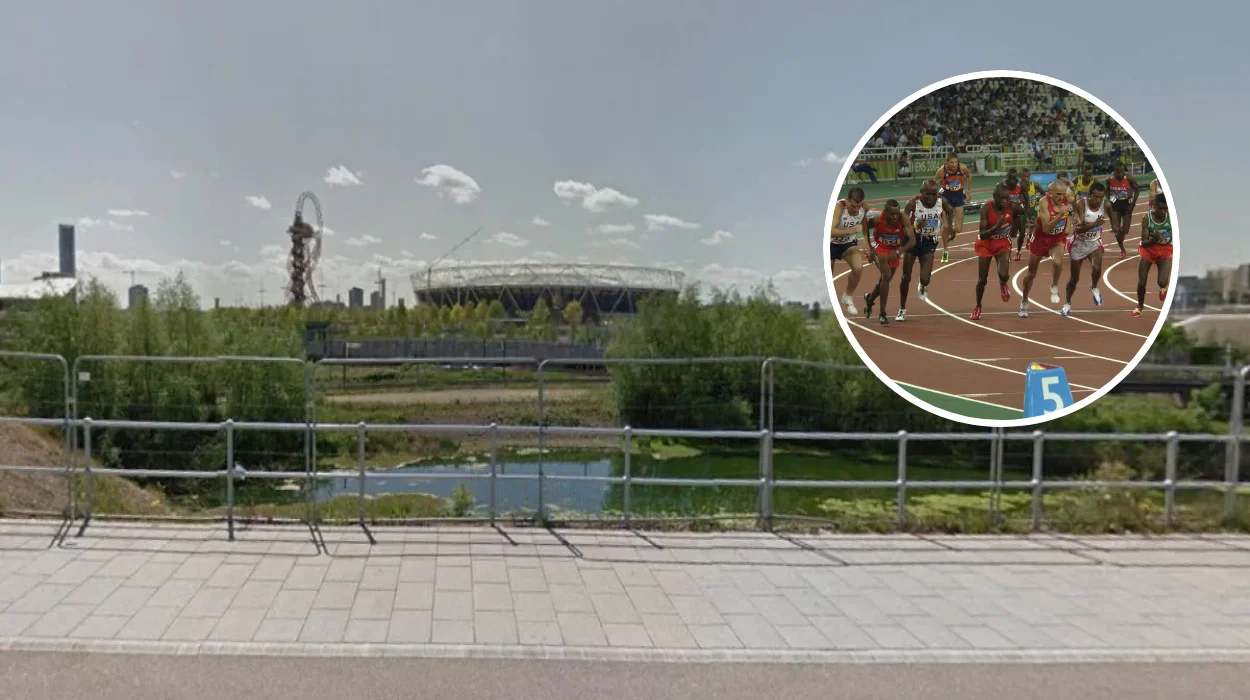
The crown jewel of the park, the 80,000-seat Olympic Stadium, underwent a controversial and costly retrofitting process to transition into a multi-use civic arena. Renamed the London Stadium, the venue secured a long-term tenancy agreement to serve as the official home ground for Premier League football club West Ham United, whilst concurrently maintaining its capacity to host international athletics championships and large-scale commercial music concerts.
Simultaneously, the architectural masterpieces designed for the Games have transitioned successfully into popular public assets. The London Aquatics Centre, famed for its sweeping wave-like roof structure, and the Lee Valley VeloPark are actively shared between elite British athletic training programmes, local school swimming initiatives, and the general public. Additionally, the multi-use Copper Box Arena functions consistently as a major indoor sports and entertainment venue, providing a permanent home for professional basketball and netball franchises while drawing over six million cumulative visitors to the parkland annually.
Explore More East London News
Shania Twain to Perform Intimate Pub Show: East London 2026
McDonald’s Plans High Street Takeover of Shuttered Poundland: Hornchurch 2026
How Has the Housing Market Shifted in East London?
The physical conversion of the residential quarters that once housed more than 17,000 international athletes and sporting officials represents one of the most visible elements of Stratford’s real estate evolution. Rebranded immediately after the closing ceremonies as the East Village, the former athletes’ quarters were retrofitted with fitted kitchens and optimized internal layouts to deliver an initial batch of 2,818 residential units.
The broader residential development strategy managed by the LLDC aims to erect five distinct, interconnected neighbourhoods along the fringes of the parklands—including Chobham Manor and Sweetwater—with an ultimate target of delivering 24,000 highly sustainable homes by 2031. These properties feature advanced, multi-generational architectural layouts and are seamlessly connected to the largest free public Wi-Fi network established in an urban parkland environment.
Is the Olympic Legacy Benefiting the Local Community?
The socioeconomic impacts of the Olympic transformation remain a subject of intense academic scrutiny and local debate. While the physical changes are undeniable, researchers argue that the financial benefits have been unevenly distributed across the historically disadvantaged boroughs of East London.
In an exhaustive, multi-decade data analysis spanning from 2001 to 2022, Associate Professor Dr Christina Philippou of the School of Accounting, Economics, and Finance at the University of Portsmouth examined the long-term economic realities of the Olympic Park wards.
“Our research found that the Olympic Park wards experienced only a slight, short-lived boost in property values and sales after the IOC announcement in 2005 and the 2012 Games,” Dr Christina Philippou stated in the University of Portsmouth research ledger. “The bigger question is who actually benefited from these changes. The data points to patterns of gentrification and migration, suggesting the original local community may have been left out of the equation.”
Furthermore, Dr Philippou noted that while public investments undeniably increased the visibility and accessibility of Stratford, the long-term legacy remains a cautionary tale for future global host cities. She emphasized that:
“The 2012 London Olympics serve as both an example of the potential legacy of the Games and a cautionary tale. While there were successes in urban regeneration, the benefits did not necessarily extend to the original local community. Future host cities must ensure their legacy promises are inclusive and measurable.”
The commercial realities of the land acquisition process also drew significant criticism from local business operators during the foundational phases of construction. To clear the 560-acre footprint, hundreds of established local firms were legally forced to relocate under compulsory purchase orders.
As reported in the extensive regional economic impact studies compiled by academic geographers at Internet Geography, prominent local entities like H. Forman and Sons—a historic, family-owned salmon-smoking factory employing dozens of local specialists—faced immediate displacement from their original riverside premises. Additionally, the demolition of existing housing association flats to facilitate the initial site clearance drew sharp condemnation from housing advocates, who argued that the immediate destruction of affordable properties exacerbated localized housing crises.
What Role Does Transport Play in Stratford’s Growth?
The rapid commercial ascension of Stratford is structurally tied to a massive, front-loaded public investment in transport infrastructure, exceeding £9 billion in total allocations. Prior to the games, transport links were highly localized and fragmented, creating an effective physical barrier between the core of inner London and its eastern extensions.
The coordinated expansion of Stratford Station—undertaken in conjunction with Transport for London (TfL) and the London Thames Gateway Development Corporation—effectively transformed the area into a premier national transport super-hub. The station seamlessly integrates two primary underground lines (the Central and Jubilee lines), the Docklands Light Railway (DLR), extensive London Overground networks, and national rail lines.
The accessibility of the district was further amplified by the introduction of high-speed rail services, which drastically reduced travel times between Stratford and central London’s King’s Cross to less than seven minutes. This immense logistical connectivity was reinforced by the subsequent completion of the multi-billion-pound Elizabeth line, which firmly locked Stratford into a high-capacity transit axis running directly from Reading and Heathrow Airport through the West End to the heart of the financial district.
What is the Future of the International Quarter and East Bank?
Beyond sports and housing, the contemporary economic profile of Stratford is anchored by commercial business districts and ambitious educational masterplans. The International Quarter London (IQL) has emerged as a high-rise commercial hub designed to accommodate over 25,000 corporate employees, successfully attracting the global headquarters of major regulatory institutions, including the Financial Conduct Authority (FCA) and Transport for London.
Adjacent to these commercial high-rises sits the massive Westfield Stratford City shopping complex. Attracting nearly 50 million visitors annually, the retail destination serves as an economic anchor for the area, generating thousands of entry-level and managerial service-sector jobs for the population of Newham and surrounding boroughs.
The final phase of Stratford’s post-Olympic evolution centers on the realization of the East Bank project, widely regarded as the most significant public investment in British cultural infrastructure since the Victorian era. Representing a critical component of the LLDC’s long-term legacy strategy, East Bank brings a formidable collection of world-class educational and artistic institutions directly to the population of East London.
Reflecting on the scale of this physical transformation during his tenure as administrative head of the development corporation, David Goldstone, the former Chief Executive of the London Legacy Development Corporation, underscored the rapid execution of the post-Games strategy.
“So much has changed at Queen Elizabeth Olympic Park,” David Goldstone stated in an official review of the corporate legacy. “Since London 2012, homes have been built, thousands of jobs have been created and millions of people have visited the venues and events at the Park. There will be 40,000 jobs on the Park and 24,000 homes will be built on and around the Park. Development will continue with the new Cultural and Education District which will bring world-class institutions to east London.”
The institutional anchors of this new district include the sprawling UCL East campus, marking the largest single expansion of University College London in its two-century history, alongside a consolidated, state-of-the-art campus for the University of the Arts London’s London College of Fashion. These educational spaces are structurally paired with major new performance venues, including a 550-seat theater for Sadler’s Wells East, a dedicated symphonic recording studio for the BBC Symphony Orchestra, and the highly anticipated V&A East museum, ensuring that Stratford’s industrial past is permanently eclipsed by its future as a global epicenter of education, art, and corporate enterprise.