

Key Points
- Major Capital Investment: Hitachi Energy, a subsidiary of Japanese multinational industrial giant Hitachi, has officially broken ground on a $479-million manufacturing facility in London, Ontario.
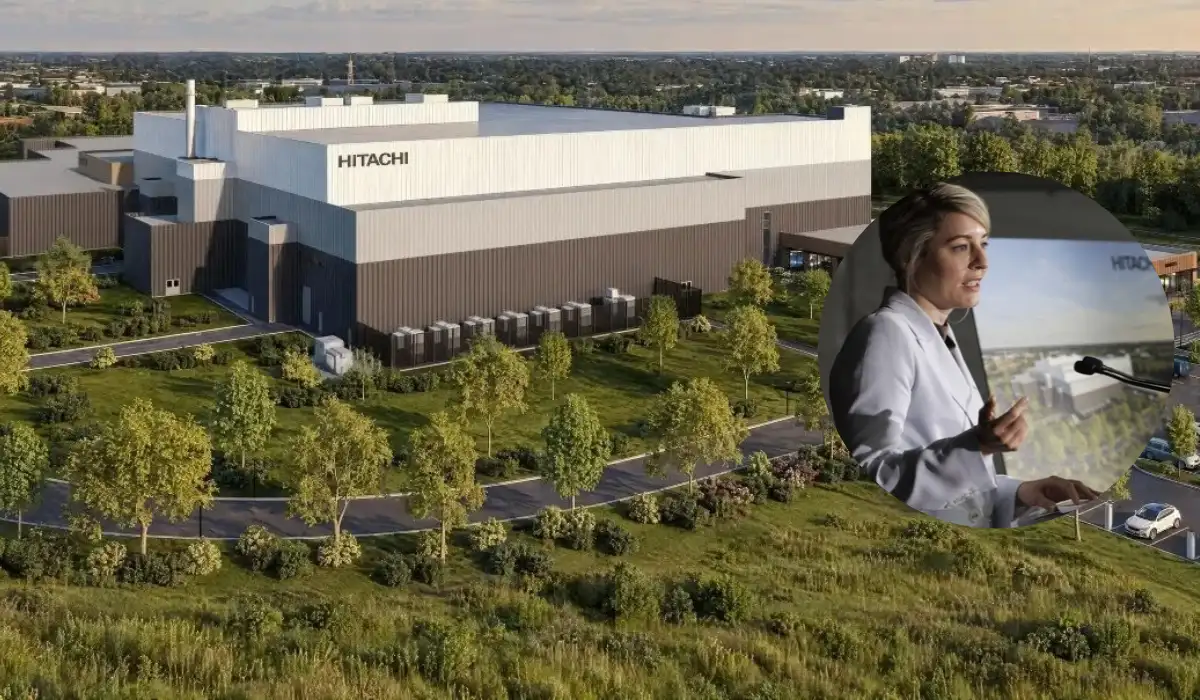
- Domestic Energy Capability: The 21,000-square-metre (226,000-square-foot) facility located at Huron Street and Veterans Memorial Parkway will be the first plant in Canada capable of manufacturing specialized transformer insulation components currently imported from Europe.
- Government Support and Job Creation: The project is backed by $30 million in federal grants and $20 million in provincial funding from Ontario, creating approximately 100 direct manufacturing jobs when operations begin in 2028.
- Supply Chain Integration: The facility will process roughly 20,000 tonnes of wood fibre annually from the Canadian pulp and paper industry to produce laminate boards, working in direct synergy with Hitachi Energy’s Canduct Group facility on Blakie Road.
- Economic Diversification and Trade Resilience: The groundbreaking forms part of a broader surge in London’s industrial expansion and aligns with national strategic efforts to build electrical grid resiliency amidst ongoing trade and tariff tensions with the United States.
London (The Londoner News) October 16, 2026 – Hitachi Energy has officially initiated construction on a $479-million advanced manufacturing facility in London, Ontario, designed to produce critical electrical transformer components and reinforce Canada’s domestic power grid. As reported by news journalist Norman De Bono of the London Free Press, the landmark development saw federal, provincial, and municipal officials gather on Friday at a 14-hectare (35-acre) site at 2079 Huron Street and Veterans Memorial Parkway. Supported by $50 million in combined public subsidies from Ottawa and Queen’s Park, the 21,000-square-metre factory will employ approximately 100 workers when production commences in 2028. The operation will mark the first time transformer insulation boards—currently sourced from European suppliers—are manufactured on Canadian soil, directly supporting national goals to double electrical grid capacity by 2050 amidst broader North American trade and tariff uncertainties.
- Key Points
- Why Is the $479 Million Hitachi Energy Facility Critical for Canada’s Energy Sovereignty?
- How Will the London Plant Integrate Local Industry and the North American Supply Chain?
- How Does This Investment Fit Into London’s Wider Industrial Expansion Strategy?
- Background of Canada’s Electrical Grid Expansion and Transformer Supply Chain Bottlenecks
- How This Development Will Affect North American Utilities, Forestry Producers, and the Local Workforce
Why Is the $479 Million Hitachi Energy Facility Critical for Canada’s Energy Sovereignty?
As reported by Norman De Bono of the London Free Press, the establishment of the Hitachi Energy plant represents a structural shift toward domestic energy self-reliance at a time when Canada is navigating ongoing trade friction and tariff disputes with the United States.
Attending the groundbreaking ceremony, Federal Industry and Economic Development Minister Melanie Joly stressed that manufacturing electrical grid infrastructure at home is essential to maintaining national economic independence.
Echoing these sentiment on behalf of the provincial administration, Ontario Minister of Job Creation and Economic Development Vic Fedeli pointed out that the facility will stand as the largest transformer pressboard manufacturing plant globally.
How Will the London Plant Integrate Local Industry and the North American Supply Chain?
As documented in the reporting by Norman De Bono of the London Free Press, the new manufacturing hub at Huron Street and Veterans Memorial Parkway will integrate directly with existing industrial assets in London. In July, Hitachi Energy acquired the Canduct Group plant on Blakie Road, which manufactures specialized insulation kits for electrical transformers.
The new 21,000-square-metre facility will produce laminate pressboards using wood pulp, providing the essential raw material required for Canduct’s insulation kits. The operation will utilize approximately 20,000 tonnes of wood fibre annually, offering a steady domestic outlet for the Canadian pulp and paper sector.
As reported by Norman De Bono of the London Free Press, Carla Vicente, Managing Country Director for Hitachi Energy Canada, explained the strategic rationale behind localizing the manufacturing process:
Vicente further noted that the London plant will supply utilities and equipment manufacturers across North America, addressing an urgent bottleneck as power authorities prepare to expand grid capacity.
How Does This Investment Fit Into London’s Wider Industrial Expansion Strategy?
As reported by journalist Norman De Bono of the London Free Press, the Hitachi Energy groundbreaking represents the latest in a series of high-profile industrial acquisitions secured by the city of London, Ontario. Kapil Lakhotia, Chief Executive of the London Economic Development Corp. (LEDC), confirmed that site preparation work at the 14-hectare property is already underway after Hitachi purchased the land earlier this year.
The announcement follows several major economic developments for the region in quick succession, including a new 70-job Pharmaline pharmaceutical facility, plans by the Canada Rocket Company to establish a rocket engine test site in east London, and Porter Airlines expanding service from London International Airport to five cities.
Background of Canada’s Electrical Grid Expansion and Transformer Supply Chain Bottlenecks
The construction of Hitachi Energy’s $479-million plant in London addresses a long-standing vulnerability in North American infrastructure development. High-voltage transformers serve as the foundational backbone of electrical transmission, stepping voltage up or down to move electricity safely over long distances. Historically, North American utilities have faced severe supply chain delays for transformers and their specialized sub-components, with lead times extending up to three to four years for high-voltage units.
A major element in high-voltage transformer construction is pressboard insulation made from specialized, high-density cellulose wood pulp. Until now, Canadian and North American manufacturers relied heavily on imports from European producers for raw laminate boards and insulation sub-components. As Canada pursues statutory commitments to achieve a net-zero electricity grid and double national generating capacity by 2050 through clean power projects—ranging from small modular nuclear reactors to offshore wind and hydroelectric developments—securing an onshore supply chain for transformer components has become a matter of national security and industrial policy. The joint public funding provided by Ottawa ($30 million) and Ontario ($20 million) reflects a broader continental shift toward “friend-shoring” and re-shoring critical manufacturing infrastructure to mitigate foreign supply disruptions.
How This Development Will Affect North American Utilities, Forestry Producers, and the Local Workforce
The commencement of construction and eventual 2028 operational rollout of the Hitachi Energy London facility is expected to bring measurable consequences for multiple economic sectors across North America:
- For North American Electric Utilities and Power Developers: Electrical utilities and renewable energy developers across Canada and the United States will benefit from reduced lead times and greater supply chain predictability for high-voltage transformer insulation kits. By establishing domestic pressboard manufacturing in Ontario, utilities will be less exposed to transatlantic shipping disruptions and foreign currency fluctuations when upgrading grid infrastructure.
- For the Canadian Forestry and Pulp Industry: Forestry producers will secure a stable, high-value industrial customer capable of absorbing roughly 20,000 tonnes of wood fibre annually. This domestic demand provides valuable revenue diversification for Canadian forestry workers and pulp mills as traditional paper product markets continue to shift globally.
- For the London Skilled Labour Market and Local Economy: Local workers in southwestern Ontario will gain access to approximately 100 high-skilled manufacturing jobs when production begins in 2028, alongside substantial construction employment during the site build-out over the next two years. Furthermore, London’s positioning as an advanced manufacturing and clean-technology hub is likely to attract auxiliary suppliers and specialized industrial vendors to the region.