

Key Points
- A new museum: Trent Park, formerly a stately home in North London, officially opened as “Trent Park House of Secrets” on 21 July 2026, unveiling its secret past as a center for intelligence during World War II.
- “The Secret Listeners”: The museum exhibits the activities of the secretive group of people – mostly German Jewish refugees – who eavesdropped on the senior Nazi prisoners of war using a basement control room.
- Deceptive Strategy: The British Intelligence officials, headed by Lieutenant Colonel Thomas Kendrick of MI19, treated the German prisoners as guests in the mansion to make them talk without knowing that they were being recorded.
- Strategic Intelligence: This project produced several strategic secrets such as the war operations of the Germans and early information about the Holocaust, which according to the director of the museum Dr. Giuseppe Albano contributed to ending the war.
- Technology: The house was equipped with a sophisticated system of microphones embedded within the walls, furniture, garden benches, plant pots in 12 different rooms.
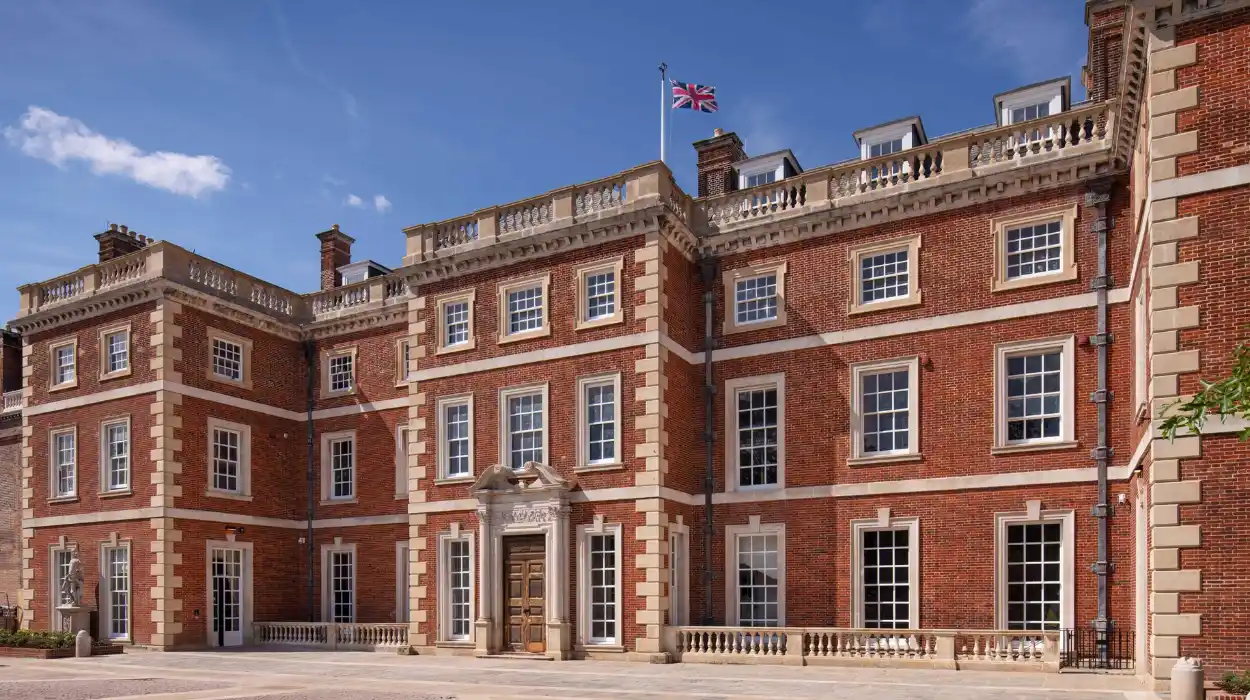
Enfield (The Londoner News) August 12, 2026 – A grand, neo-Georgian mansion in North London, once the site of high-society weekend retreats for the 20th century’s elite, has reopened its doors to the public, this time as a monument to one of the most sophisticated espionage operations of the Second World War. Known as the “Trent Park House of Secrets,” the newly established museum invites visitors to uncover a history that remained classified for over seven decades: the systematic “bugging” of captured Nazi generals to extract the secrets of the Third Reich.
The mansion, formerly the estate of the wealthy politician and art collector Sir Philip Sassoon, was requisitioned by the British War Office in 1939. By 1940, it had been transformed by Lieutenant Colonel Thomas Kendrick of MI19 into a state-of-the-art surveillance centre. While German prisoners of war were encouraged to relax in the mansion’s opulent upper rooms, believing they were being held in comfortable detention, a team of “Secret Listeners” hidden in the basement was capturing their every word to alter the course of the global conflict.
How Did British Intelligence Transform a Country House into a Spy Trap?
The transformation of Trent Park was a masterpiece of intelligence engineering. According to documents provided by the Trent Park Trust, Lieutenant Colonel Thomas Kendrick oversaw the installation of a complex network of “Type 88A” pressure microphones. These devices were concealed throughout the house, including within fireplaces, skirting boards, light fittings, and even in outdoor features such as garden benches and trees.
As reported by The Smithsonian Magazine, the strategy was a “brilliantly devious” form of psychological warfare. By treating the captured officers with a degree of luxury—providing them with high-quality food, books from a library “borrowed” from the abandoned German Embassy, and the services of a tailor—the British intelligence officers sought to dismantle the prisoners’ defences. The captives, believing they were being treated as gentlemen, were often lulled into a false sense of security, which, in turn, led them to discuss their military strategies and internal political divisions with startling candour.
Who Were the “Secret Listeners” and What Was Their Role?
The backbone of the operation was a group of roughly 100 individuals known as the “Secret Listeners.” Many of these operatives were German or Austrian-Jewish refugees who had fled the rise of the Nazis and later offered their linguistic skills and cultural knowledge to the Allied cause.
As explained by the Trent Park House of Secrets museum curators, these listeners worked in shifts within the basement “M-Rooms” (the “M” standing for “Miked”). They monitored the audio captured by the microphones in real-time, cutting the conversations onto blank acetate discs. These discs were then transcribed, providing the British command with an unparalleled insight into the German High Command’s thinking.
The significance of these recordings cannot be overstated. According to The Japan Times, museum director Dr. Giuseppe Albano noted that the intelligence gathered at Trent Park was “on a par” with that generated at Bletchley Park, the famous code-breaking centre. Albano stated that the information obtained was instrumental in helping the British government shorten the duration of the Second World War.
What Secrets Did the Nazi Generals Spill?
The prisoners, which included 59 German generals during the height of the operation, were unaware of the eavesdropping. They were not only recorded discussing military tactics but also revealing internal rifts within the German army, between those who remained loyal to the Nazi regime and those who were increasingly critical of the leadership.
Perhaps most significantly, the transcripts produced by the “Secret Listeners” provided some of the earliest and most harrowing accounts of the Holocaust. As noted by the Statons report on the mansion’s history, Winston Churchill himself commented on the value of the operation, remarking that: “The records of conversations between enemy prisoners-of-war afford an excellent insight into the German character and the results of the Nazi regime.”
Explore more North London News:
Arriva Bus Strikes Disruption in North London 2026
Canopy Children’s Nursery Scathing Ofsted Report, Wembley Park, 2026
Why Is the Site Considered of “National and International Significance”?
Following years of campaigning by the Trent Park Trust—established in 2016 following the launch of the “Save Trent Park” initiative—the restoration of the mansion has finally brought this chapter of history to light. Historic England has recognised the site as having national and international significance, placing it in the same category as Bletchley Park.
The museum, which officially opened on 21 July 2026, aims to preserve the stories of both the victims of the war and the refugees who risked their lives in the shadows to defeat the Nazi regime. As stated by museum director Dr. Giuseppe Albano in comments shared with The Japan Times, the museum allows visitors to be “right in the middle of living, breathing history,” showcasing both the “extraordinary layers” of the house’s past as a socialite hub and its later, grittier role in wartime espionage.
What Can Visitors Expect at the New Museum?
The museum offers a dual perspective on the mansion’s past. Guests can walk through rooms restored to their 1930s splendour—reflecting Sir Philip Sassoon’s penchant for neo-Georgian elegance—before descending to the basement level. There, they can view the original layout and operational spaces where the “Secret Listeners” sat in silence, transcribing the chatter of their enemies.
The project has been a long-term goal for the Trent Park Trust. After years of negotiations with developers and local councils, the successful conversion of the site into a public museum ensures that the history of the house, which had been used as a teacher training college and a campus for Middlesex University in the decades after the war, is preserved for future generations.
The opening of the museum marks the conclusion of a long-standing public campaign. As noted in archival materials from the Enfield Independent, the site had previously hosted dramatic re-enactments of the “Secret Listeners” story, which helped galvanise the public support necessary to secure the funding and planning permissions required for a permanent museum.
Through the meticulous work of the Trent Park Trust, the “House of Secrets” now stands as a testament to the power of human ingenuity during humanity’s darkest hour. It serves as a reminder that behind the elegant facade of a stately home, some of the most critical battles of the Second World War were fought not with weaponry, but with the quiet, persistent vigilance of a team of listeners hidden in the dark.