Key Points
- Unprecedented Expansion: The Royal Free London (RFL) NHS Foundation Trust has drastically widened its network, nearly doubling the size of its breast screening operations to become the single largest provider of the service in England.
- Massive Increase in Patient Cohort: The major structural reorganization brings an additional 310,000 eligible individuals under the trust’s care, elevating the total patient population served by the RFL to approximately 750,000 women.
- Widened Geographic Scope: The service now blankets a sweeping geographical footprint across north, east, west, and central London, alongside extending coverage into parts of West Hertfordshire.
- Significant Staffing Influx: To accommodate the logistical demands of the expansion, the trust has onboarded 80 new specialized staff members, boosting its overall departmental headcount to more than 220 professionals.
- Expanded Regional Portfolios: The trust has taken formal responsibility for the West of London and Outer North East London Breast Screening Services, integrating them into its pre-existing regional programs and administration hubs.
- Strategic Aims and Adaptations: Trust officials aim to provide patients with greater location choices and increased booking flexibility, coinciding with regional campaigns designed to counteract low historic breast screening uptake rates across the capital.
London (The Londoner News) June 17, 2026 — The Royal Free London NHS Foundation Trust has enacted a sweeping expansion of its clinical footprint by nearly doubling the capacity of its specialized diagnostic network, officially establishing itself as the largest provider of breast screening services anywhere in England. Through this strategic consolidation, the healthcare trust has absorbed extensive regional programs, extending its administrative and clinical oversight to provide essential preventative screening services to all eligible women aged 50 to 71 residing across the northern, eastern, and western corridors of the capital.
- Key Points
- How Did the Royal Free London Absorb Regional Screening Networks?
- What Benefits Will Eligible Patients Receive From This Service Expansion?
- Why Is Increasing Breast Screening Uptake Crucial for London?
- How Does Routine Screening Impact Real Patient Outcomes?
- What Medical Infrastructure Supports the Expanded Department?
The structural transition brings an additional 310,000 women directly into the trust’s expanded screening system, increasing its total patient population from its previous baseline to a massive cohort of 750,000 individuals. To insulate the regional clinical framework against the logistical strain of this sudden influx, the trust has executed a major recruitment drive, onboarding 80 new full-time healthcare employees. This staffing boost expands the breast screening department’s total headcount to more than 220 personnel, including specialized mammographers, diagnostic radiographers, clinical nurse specialists, and dedicated administrative professionals.
How Did the Royal Free London Absorb Regional Screening Networks?
The major expansion of the Royal Free London (RFL) NHS Foundation Trust has been facilitated by the formal transfer of multiple pre-existing geographical screening boundaries under its singular operational umbrella. Historically, the trust managed a localized framework, but it has now officially assumed clinical and administrative responsibility for both the West of London Breast Screening Service and the Outer North East London Breast Screening Service.
These newly acquired regional portfolios have been directly integrated into the trust’s pre-existing, highly established healthcare network. This existing foundation already featured the North London Breast Screening Service (NLBSS)—which accommodates residents living in West Hertfordshire—alongside the Central and East London Breast Screening Service (CELBSS) and the overarching London Breast Screening Programme Administration Hub.
This vast integration occurs alongside broader commercial procurement shifts within the region. According to public healthcare contract records published by the procurement analytics firm Care Sync Experts, NHS England (London Region) recently concluded a highly competitive tendering process for the overarching provision of the NHS Breast Screening Programme across the capital. Operating under the strict mandates of the Health Care Services (Provider Selection Regime) Regulations 2023, the formal procurement process resulted in an Intention to Award Notice for a comprehensive contract valued at £168,443,181 over an initial five-year term, with options for a further two-year extension. The multi-million-pound contract, which commenced service delivery on 1 April 2026, was explicitly designed to integrate both new and existing healthcare entities to manage large-scale health systems, positioning major institutional providers like the Royal Free London NHS Foundation Trust to absorb expansive regional populations efficiently.
What Benefits Will Eligible Patients Receive From This Service Expansion?
With hundreds of thousands of additional patients entering the newly consolidated clinical pipeline, the trust has emphasized that the primary objective of the restructuring is to enhance customer service, ease of booking, and diagnostic convenience for women across the capital.
In an official public briefing outlining the logistical transformation, an appointed spokesperson for the Royal Free London NHS Foundation Trust stated that the newly consolidated service model “would offer patients greater choice over locations and more flexibility when booking appointments.”
By operating a highly coordinated network that links multiple static hospital sites with dynamic mobile screening units, the trust aims to eliminate localized backlogs and lower the physical barriers to entry that frequently prevent busy or vulnerable demographics from attending routine diagnostic check-ups. The integration of the London Breast Screening Programme Administration Hub into this massive network allows for a more centralized, agile approach to scheduling, ensuring that diagnostic appointment slots across various boroughs can be distributed dynamically based on real-time community demand.
Why Is Increasing Breast Screening Uptake Crucial for London?
The aggressive expansion and modernization of the trust’s diagnostic capabilities come at a critical juncture for public health infrastructure in the capital, where screening attendance numbers have consistently lagged behind national targets.
As reported by Local Democracy Reporter Kumail Jaffer of the Waltham Forest Echo, public health experts have repeatedly sounded the alarm over London’s persistently low rates of breast cancer screening relative to the rest of the United Kingdom. Reporting on the regional data, Jaffer noted that the capital’s breast screening uptake reached just 62.8% in 2024, a figure that falls “significantly below” the National Health Service’s officially designated “acceptable level” of 70%.
According to the analysis published by Jaffer in the Waltham Forest Echo, health experts attribute these low figures to systemic urban challenges unique to the metropolis. These include a exceptionally high rate of population “churn” (the fluid movement of residents moving in and out of local boroughs, which complicates the maintenance of accurate GP records), elevated pockets of socioeconomic deprivation, and complex cultural diversity that requires highly targeted public health messaging. This ongoing deficit in attendance previously forced the NHS in London to launch its first-ever dedicated regional breast screening campaign in an urgent effort to drive up public participation and catch malignant tumors at an earlier, more treatable stage.
The structural pressure on London’s screening services has also been compounded by historic operational disruptions. According to a specialized clinical study published in a peer-reviewed report available via ResearchGate, the onset of the Covid-19 pandemic generated a severe backlog of women awaiting routine triennial invitations across the UK. In an effort to clear these backlogs quickly during the recovery phase, the NHS breast screening programme shifted away from its traditional protocol of issuing pre-booked timed appointments (TA) with two to three weeks’ notice, opting instead to issue open invitations (OI) that required women to proactively contact services to book a slot.
The findings of the study revealed that this operational shift inadvertently damaged attendance rates within the London region. The researchers concluded that “the use of open invitations in place of timed appointment invitations reduced the uptake of breast screening in the London region,” estimating that more than 12,000 women in London failed to attend screening during this recovery period simply because they received an open invite rather than a fixed, pre-booked slot. The study calculated that approximately 100 asymptomatic cancers went undetected during that specific window due to the lower uptake caused by the open invitation model. By expanding the administration hub and bringing 80 new personnel into the department, the Royal Free London is directly rebuilding the administrative capacity required to manage robust, pre-booked timed appointment systems across a much larger population.
Explore more Local London News:
London Fire Brigade Urges Water Safety Talks: London 2026
Man Arrested Over Infamous 2017 Bus Push Incident: Putney, 2017
How Does Routine Screening Impact Real Patient Outcomes?
The clinical significance of the Royal Free London’s expanded screening network is best illustrated by the individual accounts of patients whose lives were fundamentally altered by the existence of routine, asymptomatic diagnostic imaging.
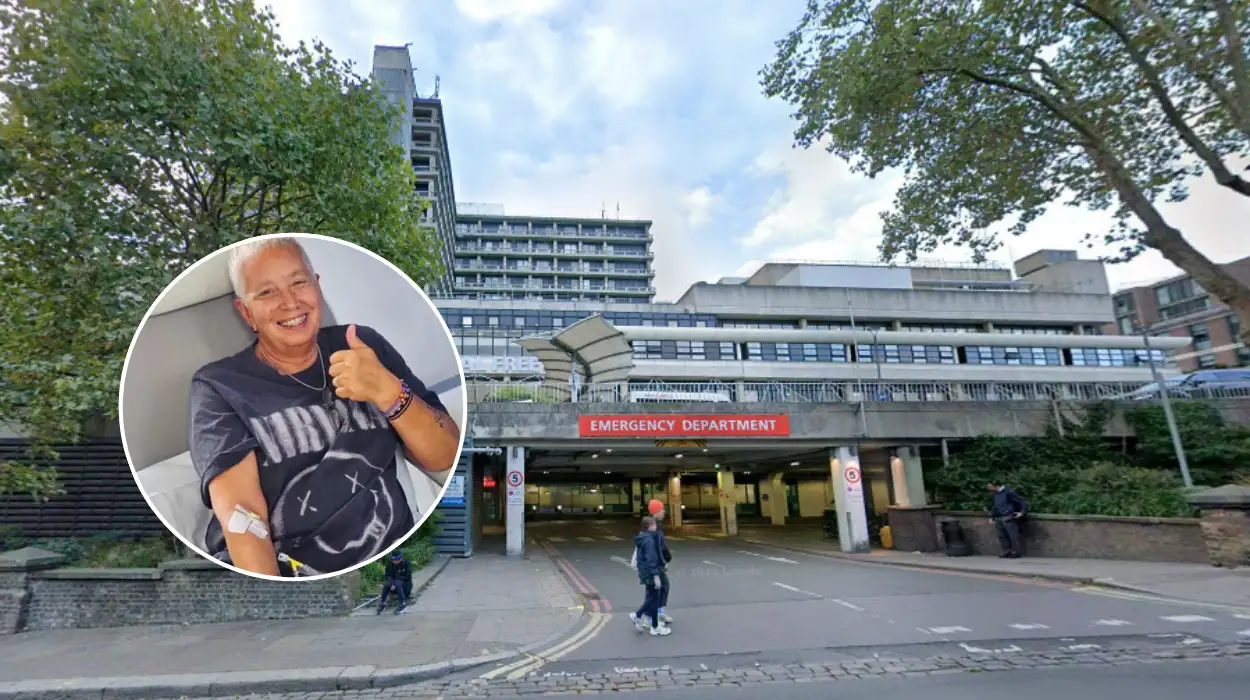
As documented in the official case briefing released by the Royal Free London NHS Foundation Trust, Marietta Martin, a local resident who began her intensive medical treatments for breast cancer four years ago, represents the vital demographic these services are engineered to protect. Martin was completely asymptomatic when she was contacted for her regular check-up, possessing no outward physical indications of localized malignant disease.
The trust’s official report underscores that Martin “was diagnosed after she went for a routine screening.” Because her localized breast cancer was caught early via routine mammography rather than waiting for physical symptoms to manifest externally, clinical teams were able to intervene rapidly, constructing a specialized care pathway that directly contributed to her ongoing recovery and long-term survival. Stories like Martin’s highlight why health officials view the expansion from 400,000 to 750,000 covered lives as a major victory for preventative medicine in the region.
What Medical Infrastructure Supports the Expanded Department?
Executing a healthcare program on this unprecedented scale requires a highly sophisticated division of clinical labor and a continuous presence across both fixed and mobile medical environments. The 80 new personnel injected into the Royal Free London’s breast screening team have been strategically distributed across various disciplines to ensure the clinical pipeline remains efficient and patient-focused from the initial invitation letter to post-screening care.
What Roles Do Specialized Staff Play in the Expanded Service?
- Diagnostic Radiographers and Mammographers: These highly trained technical specialists are responsible for executing the primary imaging. Working across a complex rota system, these specialists operate advanced digital mammography equipment within static hospital units and specialized mobile screening vans. These mobile units are deployed directly into community hubs, such as Mile End Hospital, Stratford Polyclinic, St Bartholomew’s Hospital, Leyton Mills, and Kentish Town, making the service physically accessible to hard-to-reach or highly deprived populations.
- Clinical Nurse Specialists (CNS): Acting as the essential human element in a high-volume diagnostic environment, Clinical Nurse Specialists serve as the primary key workers for patients who experience a traumatic milestone in the screening pipeline: being recalled for an assessment following an abnormal or inconclusive mammogram. As outlined in official NHS recruitment criteria for the Central and East London Breast Screening Service, the CNS role is designed to act as a direct patient advocate, coordinating the complex care pathway from initial recall through to final diagnosis, discharge, or immediate referral to oncology teams. These specialists provide essential holistic care, emotional counselling, and clinical education during a period of extreme psychological vulnerability for the patient.
- Administrative and Support Staff: Often operating behind the scenes, the expanded administrative team manages the massive logistical data streams processed by the London Breast Screening Programme Administration Hub. They ensure that hundreds of thousands of triennial invitation letters are dispatched accurately, track patient records across fluctuating borough boundaries, handle telephone and digital bookings, and manage the complex scheduling required to keep both static clinics and mobile vans running at maximum capacity.
To sustain this high-level operational standard, the Royal Free London NHS Foundation Trust continues to actively recruit top-tier clinical talent. According to recent employment listings posted directly to the official NHS Jobs network and The BMJ Health Careers portal, the trust has been actively seeking advanced leadership roles, including Band 8a Breast Advanced Nurse Practitioners and Band 7 Breast Screening Clinical Nurse Specialists.
As detailed in the formal job specifications authorized by Lead Clinical Nurse Specialist Claire Mabena via the NHS Jobs portal, these senior practitioners are required to act as “innovative and transformational leaders” who can practice at an advanced clinical level. These roles are pivotal to working collaboratively within multi-disciplinary teams (MDT), building localized capacity, and actively expanding nurse-led services. The long-term strategic vision, as outlined by the trust’s human resources division, is to continually shape and deliver a world-class, comprehensive breast service that handles everything from benign breast disease and community-based breast pain services to advanced genetics, family history tracking, and complex plastic reconstructive surgeries for oncological patients.
By combining this specialized workforce expansion with a centralized administrative hub and a vastly widened geographical reach, the Royal Free London NHS Foundation Trust is working to shift the paradigm of preventative women’s healthcare across the capital, creating an integrated, resilient framework capable of serving three-quarters of a million women.