
Key Points
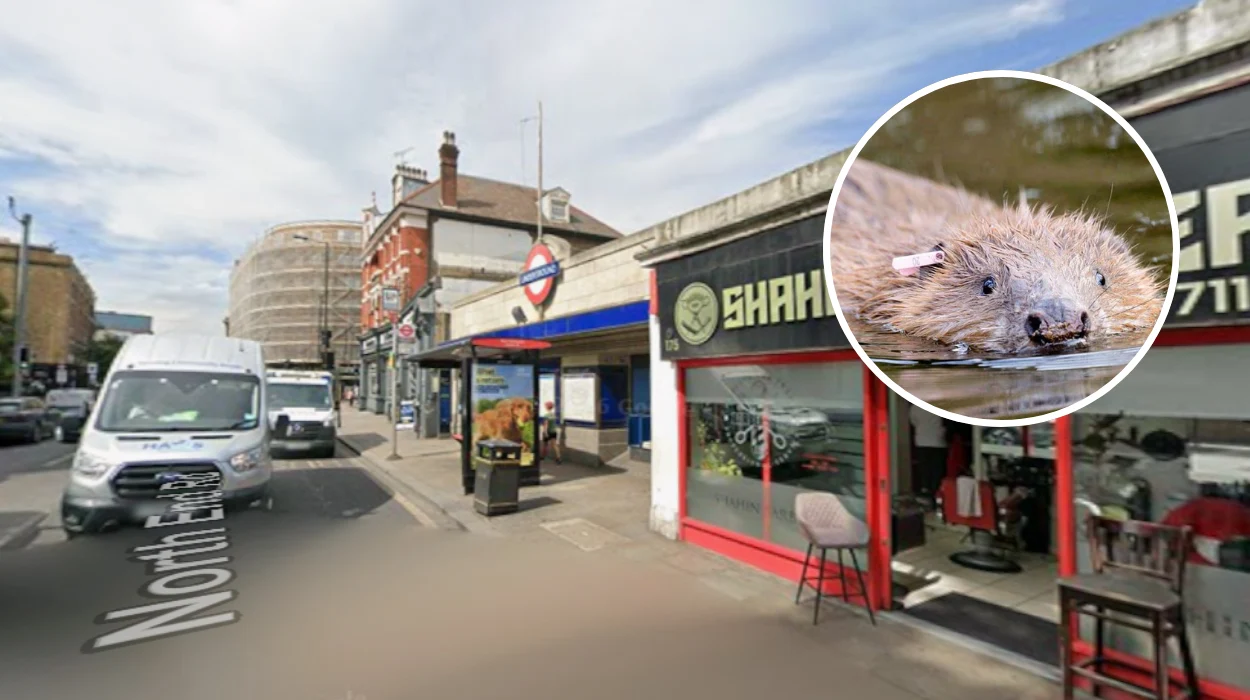
- Innovative Flood Mitigation: A West London Tube station suffering from chronic, climate-related flooding has been successfully protected using an unconventional nature-based solution: a family of Eurasian beavers.
- The Ealing Beaver Project: A family of five beavers was strategically released into the local ecosystem via the Ealing Beaver Project to act as natural hydrological engineers.
- Rapid Ecosystem Engineering: Within mere weeks of their introduction, the beaver family successfully constructed their first primary dam across the local creek, effectively pooling the flowing water into a managed containment pond.
- Extensive Infrastructure: Over the course of their first full year in the habitat, the industrious mammals expanded their network to include a total of seven distinct dams, alongside a series of new pathways and tributaries.
- Successful Water Diversion: The intricate network of dams and newly excavated channels successfully diverted excess stormwater away from the vulnerable London Underground infrastructure, mitigating flood risks effectively free of charge.
- Biodiversity and Ecological Boom: Beyond structural flood management, the presence of the beavers has dramatically revitalized the local environment, triggering a robust expansion of biodiversity within the nature reserve.
- Community and Economic Upside: The project has birthed a hyper-local ecotourism boost, with residents and international visitors now participating in guided “beaver safaris” to observe the animals in their reshaped habitat.
London (The Londoner News) June 6, 2026 – A vulnerable West London Tube station, which had long been plagued by persistent, climate-induced flooding, has been successfully safeguarded following the radical deployment of a family of Eurasian beavers. The five-strong beaver family, introduced into the area through a pioneering rewilding initiative known as the Ealing Beaver Project, has successfully re-engineered the local waterways. By establishing a complex network of dams and newly carved channels, the animals have effectively redirected critical volumes of stormwater away from vital public transport infrastructure, providing an entirely natural, cost-free solution to a modern urban engineering crisis.
- Key Points
- Why Were Beavers Introduced to a London Underground Catchment Area?
- How Quickly Did the Ealing Beaver Project Impact Local Flood Mitigation?
- What Did the Beavers Construct to Permanently Redirect the Stormwater?
- What Are the Ecological Benefits of the West London Beaver Introduction?
- How Has the Local London Community Reacted to the Beaver Safaris?
- Is Nature-Based Civil Engineering Cost-Effective for Modern Cities?
Why Were Beavers Introduced to a London Underground Catchment Area?
The decision to introduce large rodents into one of the world’s most sophisticated metropolitan transport networks stems from a growing desperation over climate-related infrastructure vulnerability. For years, heavy rainfall events in West London have routinely overwhelmed traditional drainage systems, leading to severe disruptions, track closures, and significant financial losses at local Tube stations.
Traditional civil engineering options, such as pouring concrete culverts, building artificial retention tanks, or installing industrial-grade pumping systems, were deemed either prohibitively expensive, disruptive to local communities, or environmentally damaging. Seeking a sustainable alternative, urban planners, environmental scientists, and transport authorities turned their eyes toward “nature’s engineers”—beavers.
As detailed extensively by investigative journalist Erik Barnes in a comprehensive report for Good, the project sought to harness the primal, instinctual behavior of these mammals to solve a distinctly human municipal problem. By releasing a family of five carefully selected beavers into the critical creek catchment area feeding toward the station, the Ealing Beaver Project aimed to slow the flow of water upstream before it could ever threaten the subterranean transit lines downstream.
How Quickly Did the Ealing Beaver Project Impact Local Flood Mitigation?
The hydrological transformation of the West London site occurred with a speed that astonished both local authorities and veteran environmental observers. Almost immediately upon their release into the designated nature reserve, the family of five beavers began surveying the local creek and gathering raw materials from the surrounding woodland.
Writing for Good, reporter Erik Barnes observed that the initial phase of the intervention yielded immediate structural results. In his published piece, Barnes noted that a family of five beavers was released through the Ealing Beaver Project to act as “nature’s engineers” and help solve London’s flooding problem. The speed of their labor caught many by surprise. Barnes explicitly documented that “within weeks, the beavers built a dam in the creek, causing it to pool into a pond.”
This initial ponding mechanism served as a vital ecological shock absorber. During sudden downpours, instead of water rushing unimpeded down the straight, urbanised creek channels and spilling directly onto the concrete surrounds of the London Tube station, the newly formed beaver pond acted as a natural retention basin. The pond absorbed the initial high-velocity surge of stormwater, holding it securely in place and allowing it to drain away at a gradual, non-threatening pace.
What Did the Beavers Construct to Permanently Redirect the Stormwater?
The initial dam was merely the foundation of a highly sophisticated, interconnected water-management system that the animals developed over the subsequent months. Beavers are inherently compelled to expand their watery domains to protect their lodges from predators, and this family proved exceptionally industrious in the West London clay and woodland.
According to the field observations compiled by Erik Barnes of Good, the mammals did not limit their efforts to a single blockage in the main channel. Barnes detailed that “along with that, the beavers created new pathways and tributaries that further diverted water from the main creek.”
By digging these intricate side channels and tracking pathways through the soil, the beavers effectively unbraided the single, vulnerable stream into a complex, multi-layered wetland network. This sophisticated environmental architecture distributed the total volume of water across a significantly wider surface area. When heavy rainfall struck the region, the rising waters were directed sideways into engineered natural buffer zones rather than downwards into the transport tunnels. Over the course of their first twelve months in the habitat, the beaver family successfully constructed seven distinct dams, creating a terraced water-staircase that drastically reduced the velocity and peak volume of the local river flow.
Explore More West London News
West London Takeaway Closed Over Severe Rodent Infestation Hounslow 2026
UWL Student Erica Schoebinger Reaches Sondheim Showcase Final: London 2026
What Are the Ecological Benefits of the West London Beaver Introduction?
While the primary catalyst for the Ealing Beaver Project was the defense of public transport infrastructure, the broader ecological ramifications of the reintroduction have extended far beyond simple flood control. The transformation of a fast-flowing, degraded urban creek into a vibrant, multi-layered wetland habitat has triggered an immediate and dramatic expansion of local biodiversity.
The creation of the seven dams and their associated tranquil ponds has established entirely new ecological niches that had been absent from West London for centuries. Still, deep water environments have allowed various aquatic plants to take root, which in turn have attracted an array of macroinvertebrates, dragonflies, and amphibians. The slowed water also filters out urban silt and agricultural runoff, resulting in visibly cleaner water flowing downstream.
As Erik Barnes directly reported in his coverage for Good, the environmental impacts of the project have been multi-faceted. Barnes emphasized that “this beaver introduction hasn’t just solved a climate-related flooding problem, but it has also brought other benefits.” Field biologists monitoring the site have noted the return of several rare bird species, increased bat activity feeding over the newly formed ponds, and a healthier distribution of native flora that thrives in managed, dynamic wetlands.
How Has the Local London Community Reacted to the Beaver Safaris?
Urban rewilding projects can occasionally face skepticism from local residents concerned about land use, safety, or the unpredictability of wild animals. However, the Ealing Beaver Project has achieved overwhelming popular success, transforming a previously overlooked patch of urban woodland into a major cultural and educational asset for the capital.
The visible transformation of the landscape has sparked immense public curiosity. Rather than viewing the nature reserve as a restricted engineering zone, Londoners have embraced the area as a living classroom and a place of tranquil recreation.
Reflecting on the societal and financial shift brought about by the project, Erik Barnes of Good reported that the human element of the story has been remarkably positive. In his analysis, Barnes stated that “visitors and residents enjoy the newly biodiverse nature reserves by going on ‘beaver safaris’ to see the creatures at work in person.” These guided evening walks have become highly sought-after experiences, allowing city dwellers to witness genuine wildlife conservation efforts firsthand within the boundaries of Greater London.
Is Nature-Based Civil Engineering Cost-Effective for Modern Cities?
The success of the West London beaver deployment raises profound questions about the future of urban civil engineering in an era increasingly defined by extreme weather and strained municipal budgets. Traditional flood defense schemes require millions of pounds in upfront capital, decades of bureaucratic planning, and continuous, costly maintenance schedules borne by taxpayers.
The economic reality of using biological solutions instead of grey concrete infrastructure is stark. Once the initial administrative, health-testing, and relocation costs of the Ealing Beaver Project were cleared, the ongoing maintenance of the entire flood barrier system was effectively outsourced to the animals themselves.
Compiling his final thoughts on the fiscal efficiency of the project, journalist Erik Barnes of Good highlighted the sheer economic upside of utilizing native species for infrastructure defense. As Barnes decisively concluded in his report: “Then there is the obvious benefit of the beavers solving these flooding problems effectively free of charge.” With cities worldwide facing escalating costs from climate breakdown, the West London experiment serves as a highly successful blueprint for how urban centers can collaborate with the natural world to protect critical infrastructure safely, cheaply, and beautifully.