
Key Points
- Incident and Offence: Former assistant headteacher and deputy safeguarding lead Catherine Stephenson has been handed an indefinite teaching ban after purchasing and consuming half a bottle of white wine during a single school morning.
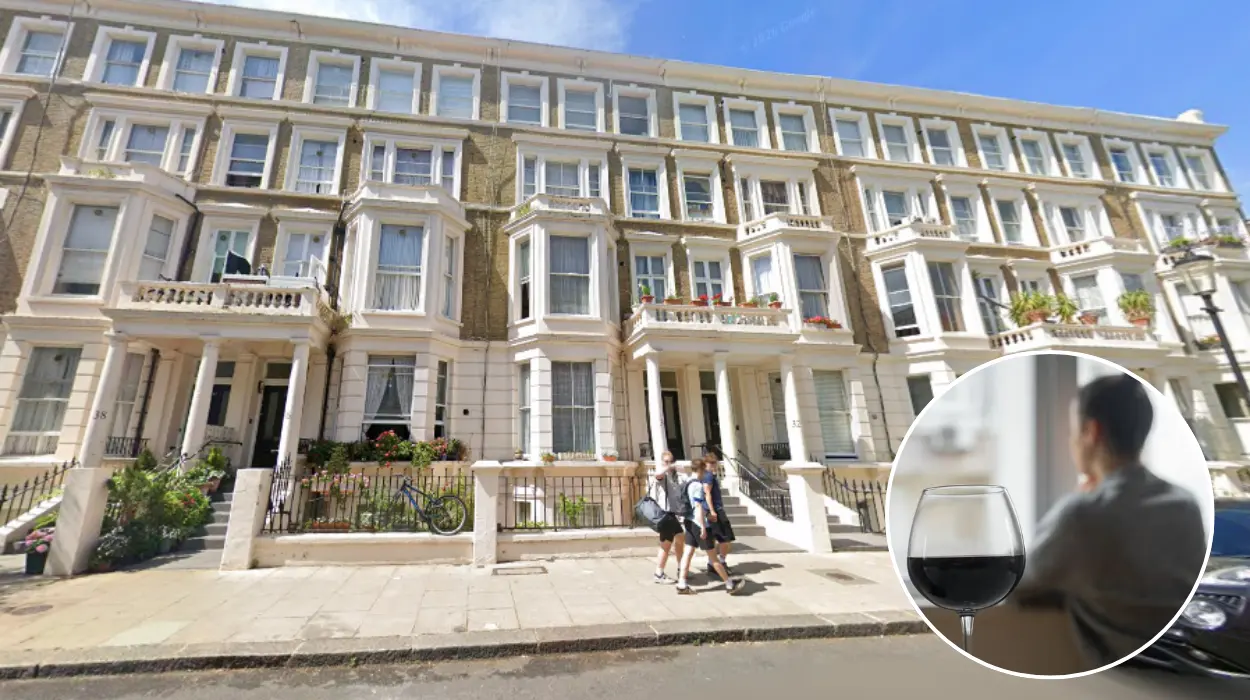
- The Setting: The misconduct occurred at Snowflake School in Kensington, West London, a specialized independent facility providing highly tailored education and care for vulnerable autistic children aged between 5 and 17.
- Timeline of Events: On April 16, 2024, Stephenson falsely reported via a staff WhatsApp group that she was running late, only to be spotted at 08:45 BST buying alcohol at a local off-licence before smuggling it into the school in her backpack.
- Discovery and Investigation: Colleagues became suspicious due to her erratic behavior, repetitive speech, and a strong smell of alcohol, noticing she visited the bathroom five times with her bag; a search at 11:52 BST revealed a screw-top white wine bottle stashed beneath clothing, more than half empty.
- Disciplinary Action: Stephenson was suspended immediately on the day of the incident and dismissed in May 2024. A Teaching Regulation Agency (TRA) panel in June 2026 finalized her indefinite ban, noting a total lack of insight, remorse, or active participation in the proceedings.
London (The London News) July 8, 2026 – A senior deputy headteacher who served at a prominent independent special educational needs school in West London has been banned from the classroom indefinitely after an official disciplinary panel proved she bought and consumed a significant portion of a bottle of white wine during a single morning session while on active duty. Catherine Stephenson, who held the critical dual responsibilities of Assistant Headteacher and Deputy Safeguarding Lead at Snowflake School in the Royal Borough of Kensington and Chelsea, was found guilty of unacceptable professional conduct following an exhaustive investigation by the Teaching Regulation Agency (TRA). The regulatory body determined that Stephenson’s actions on April 16, 2024, created a profound and unacceptable safeguarding risk within an educational environment specifically configured to serve highly vulnerable young people diagnosed with autism spectrum disorders.
- Key Points
- What Happened on the Morning of April 16, 2024?
- How Did Colleagues Uncover the On-Duty Alcohol Consumption?
- What Was Found During the Search of the Deputy Headteacher’s Bag?
- Why Did the Teaching Regulation Agency Deem Her Behaviour a Severe Safeguarding Risk?
- What Were the Final Sanctions Imposed by the Secretary of State?
- How Does This Case Reflect Broader Standards in Independent Special Schools?
As reported by Lu Williamson, Content Editor for MyLondon News, the comprehensive regulatory proceedings revealed that Stephenson attempted to conceal her activities from her colleagues by sending misleading electronic communications before smuggling the alcohol onto the secure school site. The independent panel, which concluded its formal review in June 2026, established that Stephenson had consumed approximately half of a screw-top bottle of white wine over a three-hour window while she was directly responsible for the oversight of pupils requiring an exceptionally high level of personalized care and constant supervision. Despite being confronted with clear evidence by school executives, Stephenson initially sought to minimize her behavior, presenting an explanation regarding her domestic arrangements that was subsequently disproved during a physical search of her personal effects conducted on the school grounds.
What Happened on the Morning of April 16, 2024?
The precise timeline of the events that led to the immediate suspension and ultimate professional downfall of Catherine Stephenson points to a highly calculated sequence of actions executed during a time when she was legally and contractually obligated to be on-site managing school operations. According to official findings published by the Teaching Regulation Agency and relayed by Lu Williamson of MyLondon News, Stephenson was scheduled to begin her administrative and supervisory duties early that morning but instead utilized a digital communication channel to obscure her physical whereabouts. While she was supposed to be actively present on the school premises preparing for the arrival of the student body, Stephenson broadcasted a message to a shared staff WhatsApp group claiming that she was experiencing external delays and would consequently be running late for her shift.
However, this explanation was rapidly undermined by an unexpected encounter in the immediate locality of the educational institution. As documented in the regulatory evidence reported by Lu Williamson of MyLondon News, a fellow member of the Snowflake School staff chanced to spot Stephenson at precisely 08:45 BST inside a local off-licence retail shop situated near the Kensington campus. Rather than rushing to fulfill her duties as an assistant headteacher, Stephenson was observed actively purchasing a full bottle of wine. Following this commercial transaction, she proceeded directly to the school grounds, successfully introducing the intoxicating beverage into the facility by concealing the glass bottle deep inside her personal blue backpack, thereby bypassing the standard observational scrutiny typically expected of senior staff members entering the specialized educational environment.
How Did Colleagues Uncover the On-Duty Alcohol Consumption?
Once inside the secure perimeter of Snowflake School, Catherine Stephenson’s subsequent conduct quickly triggered a series of alarms among the tight-knit faculty and support staff who operate the specialized institution. In an environment specifically engineered for children with complex neurodivergent conditions, staff members are trained to be exceptionally observant of environmental anomalies and behavioral shifts. As reported by Lu Williamson of MyLondon News, Stephenson’s immediate colleagues in their shared administrative workspace began to note distinct and highly concerning variations in her typical professional presentation almost immediately after her arrival. Staff members observed that she was behaving in a manner that was entirely out of character, exhibiting a noticeable tendency toward unusually repetitive verbal communication and demonstrating physical indicators consistent with intoxication, including a distinct smell of alcohol emanating from her person.
The suspicion of the school faculty deepened significantly as the morning progressed due to Stephenson’s frequent and unusual movements around the administrative floor. According to the case details compiled by Lu Williamson of MyLondon News, colleagues documented that the assistant headteacher exited her shared office space to visit the staff toilet facilities on more than five separate occasions within a truncated timeframe. Crucially, observers noted that on every single occasion she left her desk to visit the cubicles, she insisted on carrying her blue backpack with her, a behavioral pattern that was highly atypical for an administrative worker operating within a secure, self-contained suite. This repetitive relocation of her personal luggage, combined with her increasingly erratic demeanor, prompted senior staff to intervene and initiate a formal internal enquiry before the midday break.
What Was Found During the Search of the Deputy Headteacher’s Bag?
What Justification Did Catherine Stephenson Provide Face-to-Face?
When the mounting concerns regarding her state of sobriety could no longer be ignored by the school’s leadership team, a senior colleague initiated direct contact with Catherine Stephenson via a telephone call to address the specific report of her early morning off-licence visit. As reported by Lu Williamson of MyLondon News, when explicitly challenged regarding the retail sighting at 08:45 BST, Stephenson freely admitted that she had indeed purchased a bottle of wine prior to arriving at the school. However, she adamantly denied that any of the alcohol had been consumed on the premises. Instead, she offered a defensive explanation, asserting that the vintage had been bought exclusively for domestic consumption later that evening to be shared privately with her partner during dinner. Furthermore, Stephenson boldly insisted to her colleagues that if they were to inspect her personal belongings, they would discover that the bottle remained entirely factory-sealed and full to the brim.
This defensive narrative was conclusively shattered minutes later when the school’s management executed an immediate physical intervention to verify the safety of the site. According to the regulatory timeline recorded by Lu Williamson of MyLondon News, a designated staff member was formally instructed to conduct a thorough search of Stephenson’s personal blue backpack at precisely 11:52 BST. Upon opening the bag, the searching officer discovered a standard screw-top bottle of white wine stashed away deliberately underneath several items of personal clothing. Contrary to Stephenson’s explicit verbal assurances that the bottle was intact, the school official observed that the vessel was already more than half empty, confirming that a substantial quantity of the wine had been systematically decanted and consumed within the school walls since her arrival that morning.
Why Did the Teaching Regulation Agency Deem Her Behaviour a Severe Safeguarding Risk?
The exposure of a senior educator consuming spirits or wine while tasked with the care of vulnerable youths carries profound legal and regulatory implications under United Kingdom educational framework laws. In evaluating the severity of the infraction, the Teaching Regulation Agency panel focused intensively on the unique demographic served by the Kensington institution. As reported by Lu Williamson of MyLondon News, Snowflake School is a highly specialized independent institution providing bespoke educational packages for pupils aged between 5 and 17 who are diagnosed with severe autism. Such students frequently present complex communication challenges, sensory processing sensitivities, and heightened vulnerabilities that necessitate the absolute undivided attention, emotional stability, and cognitive acuity of every single adult present on the campus.
The professional standards panel determined that by voluntarily entering a state of alcohol-induced impairment, Catherine Stephenson had directly compromised the baseline safety mechanisms of the entire school. As documented by Lu Williamson of MyLondon News, the TRA panel emphasized that her chosen course of action introduced a severe, active safeguarding risk to the student body. This risk was compounded exponentially by the fact that Stephenson did not merely hold a standard classroom role, but instead occupied the dual apex positions of Assistant Headteacher and Deputy Safeguarding Lead. By virtue of these titles, she was the very individual legally responsible for designing, enforcing, and executing the emergency safety protocols meant to protect the children from external and internal harms, making her self-inflicted cognitive impairment a profound breach of statutory trust.
Explore more West London News:
Eden School Fined £45k by Home Office for Illegal Worker, West Drayton 2026
UWL and Hounslow Council Launch Free Skills Courses: Ealing 2026
What Were the Final Sanctions Imposed by the Secretary of State?
The disciplinary fallout for Catherine Stephenson was swift, progressive, and ultimately absolute, resulting in her permanent removal from the professional register. According to the institutional history reported by Lu Williamson of MyLondon News, the school administration moved immediately to suspend the assistant headteacher on the afternoon of April 16, 2024, immediately following the discovery of the half-empty wine bottle. This interim removal was followed by a formal internal disciplinary hearing convened by the school’s governing board in May 2024. Stephenson chose not to attend or offer a defense at this internal tribunal, an absence that culminated in her summary dismissal from her employment at Snowflake School for gross misconduct.
The matter was subsequently escalated to the national regulatory level, culminating in a definitive multi-day hearing conducted by the Teaching Regulation Agency in June 2026. As reported by Lu Williamson of MyLondon News, Stephenson maintained her pattern of total non-cooperation, failing to attend the federal panel or engage in any meaningful capacity with the regulatory investigators tasked with assessing her fitness to practice. The panel ultimately observed that the events of April 16, 2024, were not entirely isolated, noting that earlier professional concerns had been formally raised regarding her conduct prior to the wine incident. Because Stephenson failed to demonstrate even a rudimentary modicum of remorse, insight, or accountability for her actions, the panel concluded that she posed a continuing risk to the reputation of the profession and the safety of pupils. Acting on behalf of the Secretary of State for Education, the agency issued an indefinite prohibition order, legally banning Catherine Stephenson from teaching in any school, sixth-form college, relevant youth accommodation, or children’s home in England, with her earliest conditional opportunity to request a restoration review deferred until June 2028.
How Does This Case Reflect Broader Standards in Independent Special Schools?
The wider educational landscape within the United Kingdom maintains a zero-tolerance policy regarding the possession and consumption of recreational substances on active school grounds, a standard that is applied with even greater rigidity within the independent special education sector. Regulatory analysts note that independent institutions operating within affluent boroughs like Kensington are subjected to stringent oversight by both the Department for Education (DfE) and the Office for Standards in Education, Children’s Services and Skills (Ofsted). The revelation that a deputy safeguarding lead could successfully introduce and consume alcohol during operating hours underscores the critical reliance of the modern educational system on the internal whistleblowing actions and observational diligence of lower-tier teaching assistants and administrative staff.
The successful detection, internal investigation, and rapid suspension executed by the staff at Snowflake School have been cited by industry observers as a demonstration of robust internal compliance procedures in the face of a crisis involving executive leadership. By overriding professional hierarchies to search the personal effects of an Assistant Headteacher, the school prioritized its statutory safeguarding duties above administrative convenience. The subsequent indefinite prohibition handed down by the TRA serves as a stark legal precedent, reaffirming that senior leadership status offers no shield against total professional disqualification when the safety, dignity, and specialized care of vulnerable autistic children are compromised by personal misconduct.