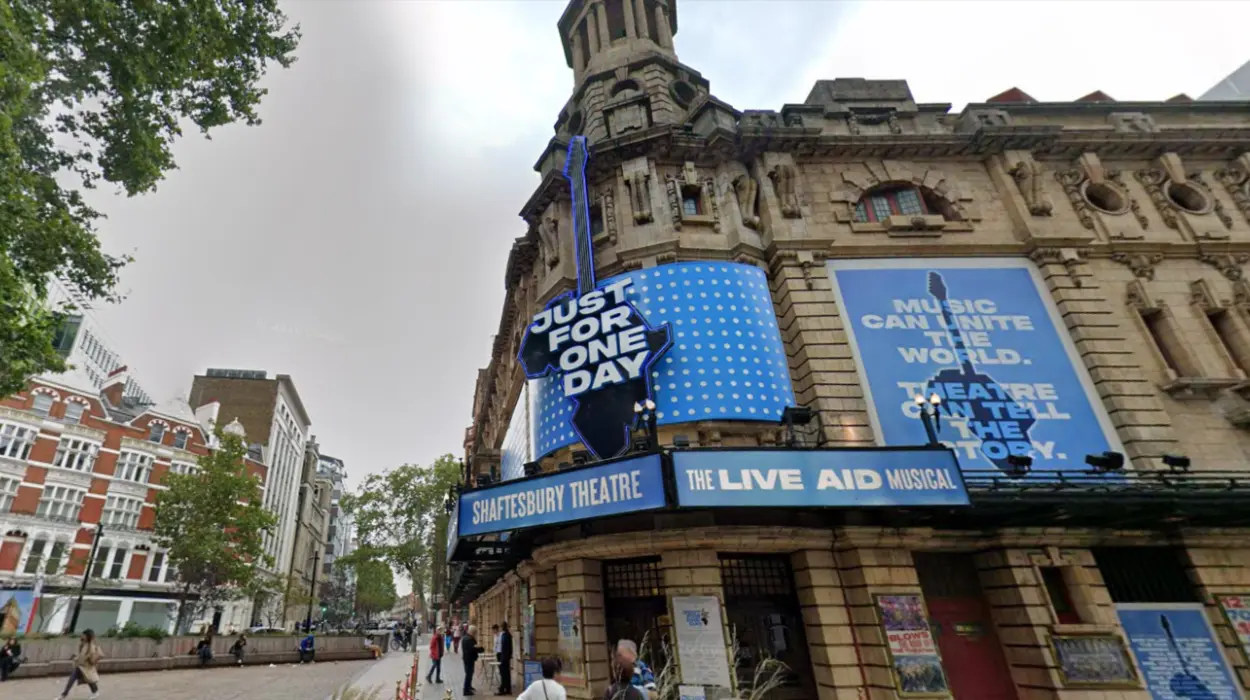
Key Points
- Historic Moniker Transition: The Shaftesbury Theatre, recognized as the largest independent theatrical venue in London’s West End, will officially change its name to the Judi Dench Theatre in February 2027.
- Celebration of a Living Legend: The historic rebrand directly honours the unparalleled seven-decade career of Dame Judi Dench, one of Britain’s most decorated and revered actresses across stage, television, and film.
- Deep Architectural and Comedic Roots: Dame Judi was a crucial founding member of the Theatre of Comedy collective, which directly stepped in to save the Shaftesbury Theatre from potential financial ruin and structural demolition during the 1980s and early 1990s.
- Taffner Family Connection: Her long-standing ties to the venue are closely intertwined with the late TV executive Don Taffner and his family. Dench starred for nine series as Jean Pargetter in the iconic BBC sitcom As Time Goes By, produced by the Taffner family’s production outfit, DLT Entertainment, which currently owns the freehold of the theatre.
- Addressing Gender Representation in Lights: Venue leadership explicitly emphasized that the transition addresses a long-standing historical imbalance, deliberately placing a brilliant woman’s name into the permanent marquee landscape of the West End.
- Structural Upgrades Accompanying the Shift: The Grade II listed building, famous for its unique openable ceiling dome, will undergo extensive internal auditorium and backstage renovations alongside the 2027 name change, all while continuing its active daily performance schedules.
London (The Londoner News) June 16, 2026 – The Shaftesbury Theatre, the largest independent theatrical venue operating in London’s iconic West End, has officially announced that it will undergo a historic rebranding to be permanently renamed the Judi Dench Theatre. Scheduled to take effect in February 2027, the structural christening celebrates the seven-decade artistic legacy of Dame Judi Dench, marking an unprecedented milestone for one of the capital’s most legendary stages. The decision, revealed jointly by the theatre’s executive leadership and its parent ownership group, DLT Entertainment, is designed to immortalise the 91-year-old actress’s profound visual and systemic contributions to British performance art. Beyond serving as a monument to her vast career across stage and screen, the venue’s leadership explicitly declared that the renaming aims to directly address a historical deficit of female representation among the commercial marquees of the West End.
- Why is the Shaftesbury Theatre changing its name to honour Dame Judi Dench?
- How did Dame Judi Dench react to the West End theatre announcement?
- What is Dame Judi Dench’s historical connection to the Shaftesbury Theatre?
- How did a beloved BBC sitcom cement the theatre’s ownership ties?
- Why is this renaming significant for female representation in the West End?
- What are the career achievements of Dame Judi Dench?
- What architectural changes are planned for the building during the rebrand?
Why is the Shaftesbury Theatre changing its name to honour Dame Judi Dench?
As reported by theatre reporter Matthew Hemley of The Stage, the comprehensive transition from the Shaftesbury Theatre to the Judi Dench Theatre is an artistic tribute designed to ensure that the actress’s multi-generational impact remains a permanent source of inspiration for future performers and audiences alike. Dame Judi’s professional career spans nearly 70 years, beginning with her acclaimed professional debut with the Old Vic Company in 1957. Since those early steps, she has risen to become a singular pillar of British cultural identity.
The physical renaming of the venue reflects the sheer breadth of her theatrical versatility, which seamlessly bridges classical Shakespearean drama, contemporary West End comedies, and grand musical theatre. This artistic range perfectly mirrors the historic programming portfolio of the Shaftesbury Theatre itself, which has served as a home for eclectic performance art for well over a century. By embedding her name directly into the physical geography of London’s theatre district, the owners intend to create a permanent monument to a living treasure whose work has defined the modern era of British acting.
How did Dame Judi Dench react to the West End theatre announcement?
The news of the renaming has deeply touched the legendary actress, who has maintained an intimate relationship with the venue for decades. As recorded in an official press release published by BroadwayWorld, Dame Judi expressed profound gratitude and humility regarding the upcoming architectural transformation. Dame Judi stated:
“The Shaftesbury Theatre has always held a special place in my heart. My relationship to the Theatre of Comedy and to the Taffner family goes back many years and to have this beautiful theatre renamed after me is truly overwhelming. Live theatre continues to be so important as a way of telling stories and entertaining audiences, something I have aimed to do all my working life.”
This emotional reflection underscores her enduring belief in the social and cultural necessity of live performance. Rather than viewing the moniker change as a standard lifetime achievement award, Dench explicitly framed the honour around the collective power of live storytelling—a craft to which she has dedicated her entire adult life.
What is Dame Judi Dench’s historical connection to the Shaftesbury Theatre?
To fully understand why this specific venue is transforming its identity, one must look back to the turbulent financial landscape of London’s theatre scene in the late 20th century. As detailed by the editorial team at Londonist, Dame Judi was not merely an occasional performer on the Shaftesbury stage; she was an essential institutional savior. She served as a foundational member of the Theatre of Comedy, an ambitious, collaborative collective of prominent British actors, directors, and authors spearheaded by the celebrated playwright Ray Cooney.
During the 1970s, the Shaftesbury Theatre faced severe existential threats, including realistic proposals for total structural demolition. The Theatre of Comedy collective stepped forward to acquire part shares in the building during the 1980s, effectively rescuing the physical structure from the wrecking ball. Throughout the 1980s and early 1990s, Dench and her contemporaries consistently produced and starred in a highly successful string of commercial comedies—including legendary West End productions like Run for Your Wife, Two into One, and Kiss of the Spider Woman. This collective effort stabilized the venue’s financial foundations, guaranteeing its long-term survival as an independent theatrical house.
Explore more West London News:
Pedestrian Fatally Struck by HGV on The Parkway: Hayes 2026
Man Arrested Over Infamous 2017 Bus Push Incident: Putney, 2017
How did a beloved BBC sitcom cement the theatre’s ownership ties?
The ties between the actress and the building were further solidified through a legendary television production that ran for nearly a decade. In 1986, the American television executive Don Taffner joined forces with the Theatre of Comedy, eventually taking complete operational control of the Shaftesbury Theatre by the early 1990s. As reported by the arts desk of Euronews, Dench’s professional relationship with the Taffner family reached new heights when she accepted the starring role of Jean Pargetter in the beloved BBC sitcom As Time Goes By.
The romantic comedy series, which co-starred Geoffrey Palmer, ran for nine immensely successful series and became a global television staple. The show was produced by DLT Entertainment, the independent production and distribution company founded and built by the Taffner family. Today, DLT Entertainment owns and operates the Shaftesbury Theatre. The decision to change the building’s name is therefore a deeply personal family matter, bridging decades of mutual affection, commercial television success, and shared theatrical investment between the actress and the venue’s corporate custodians.
In a poignant statement addressing this multi-decade lineage, the Taffner family expressed their immense pride in formalizing this connection. They noted that their parents would regularly recount the profound joy they experienced while spending personal time with Judi and her late husband, Michael Williams, in both New York and London. The family stated that they are absolutely delighted to recognize her extraordinary talent and extensive systemic contribution by permanently changing the face of their flagship theatre.
Why is this renaming significant for female representation in the West End?
Beyond the personal and historical connections, the transition carries profound political and cultural weight within the broader context of London’s theatrical industry. As reported by West End Theatre, Chief Executive Eleanor Lang spoke passionately about the deliberate social statement the venue’s leadership is making through this rebrand. Lang noted:
“We are so excited to rename the Shaftesbury Theatre in honour of Dame Judi. Not only does she play an important role in our history, but she is an iconic figure of the stage and screen landscape. We don’t celebrate brilliant women enough in our West End theatre names, so we are delighted that her name will be forever in lights above our doorway.”
An analysis of West End theatre names reveals an overwhelming historical bias toward male historical figures, royal patrons, or geographical landmarks. By explicitly choosing to place Dench’s name permanently in lights, the executive team is making a conscious, visible effort to disrupt this institutional landscape, ensuring that a premier commercial venue explicitly celebrates the historic achievements of a woman.
What are the career achievements of Dame Judi Dench?
The decision to elevate Dame Judi’s name to a permanent fixture of the West End landscape is a direct reflection of a career that ranks among the most decorated in the history of the performing arts. As compiled in historical archives by The Cambridge Union, Dench’s trophy cabinet represents the absolute pinnacle of global acting achievements. Her competitive accolades include:
- One Academy Award (Oscar): Won for her brief yet utterly commanding performance as Queen Elizabeth I in the 1998 film Shakespeare in Love.
- One Tony Award: Bestowed for her brilliant leading performance in the 1999 Broadway production of Amy’s View.
- Seven Laurence Olivier Awards: The absolute gold standard of British theatre validation, spanning diverse roles from classical tragedy to contemporary musical performance.
- Ten BAFTA Awards: Recognizing her immense, sustained excellence across both British television and major cinematic releases.
- Two Golden Globe Awards and Two Screen Actors Guild (SAG) Awards: Solidifying her profound cross-Atlantic appeal and commercial Hollywood respect.
In addition to her competitive accolades, her institutional contributions to British life were formally recognized by the state when she was appointed Dame Commander of the Order of the British Empire (DBE) in 1988. Furthermore, her 17-year tenure playing “M,” the steely, no-nonsense espionage chief to James Bond across seven blockbusters—starting with GoldenEye in 1995 and culminating in her character’s dramatic exit in Skyfall in 2012—introduced her extraordinary commanding presence to hundreds of millions of cinemagoers worldwide, cementing her status as an international pop-culture icon.
What architectural changes are planned for the building during the rebrand?
The historic renaming will not be a purely cosmetic change to the exterior signage. According to structural reports detailed by BroadwayWorld, the transition to the Judi Dench Theatre will coincide with the next major phase of an extensive, multi-million-pound renovation program designed to modernize the historic venue. Originally constructed in 1911 and initially christened the New Prince’s Theatre, the building holds a distinct place in London’s architectural history as the very first steel-frame theatre ever erected in the West End.
Furthermore, it remains the only theatrical venue in London to feature a massive structural roof dome designed to physically open to the sky to provide natural ventilation. The upcoming phase of development will focus heavily on the careful restoration of this historic auditorium dome. Specialized artisans have been commissioned to execute a comprehensive repainting of the ceiling space, taking direct aesthetic inspiration from the building’s original 1911 Edwardian decorative designs. Concurrently, the theatre will undergo extensive renovations to its seating layout, interior auditorium acoustics, and backstage facilities to optimize the environment for modern theatrical productions. Crucially, the theatre’s executive management confirmed that the venue will remain fully operational throughout the renovation period, maintaining its regular production schedules without disruption to the theatregoing public.