Key Points
- French President Emmanuel Macron is arriving in the UK for his two-day visit and becomes the first head of state of the EU to visit newly installed British Prime Minister Andy Burnham.
- The President, along with King Charles III and Prime Minister Andy Burnham, attended a private preview of the 950-year-old Bayeux Tapestry, which has come to the UK after nearly 1,000 years.
- The bilateral meeting at 10 Downing Street is about crucial issues related to security and foreign policy, such as preventing illegal crossings of the migrant channel, the Ukraine-Russia conflict, and Iran-related issues.
- British Prime Minister Andy Burnham is seeking to leverage this diplomatic meeting to build better economic ties and create an opportunity for resetting their relationship with the EU since Brexit before an important autumn summit.
- According to Downing Street, there will be an announcement of substantial security strengthening measures, including the deployment of French police on small boat launches, which will rise by one-fourth to nearly 1,050 officers.
London (The Londoner News) September 3, 2026 — French President Emmanuel Macron commenced a high-stakes diplomatic visit to the United Kingdom, intertwining historic cultural diplomacy with immediate geopolitical challenges. Marking his first official interaction with British Prime Minister Andy Burnham, the French leader joined forces with King Charles III at the British Museum to inspect the legendary Bayeux Tapestry. The 230-foot embroidery, insured for 960 million euros ($1.1 billion), represents a landmark cultural loan negotiated through delicate diplomatic channels. Following the exhibition preview, high-level political negotiations at 10 Downing Street are set to address pressing matters of irregular migration, European security, and post-Brexit trade integration.
What Happened During the Private Viewing of the Bayeux Tapestry at the British Museum?
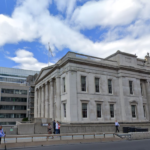
As reported by India Today staff correspondent, French President Emmanuel Macron joined King Charles III and British Prime Minister Andy Burnham at the British Museum to view the Bayeux Tapestry, marking its return nearly 1,000 years after it last came to Britain. Prime Minister Andy Burnham stated that
“the return of the Bayeux Tapestry to England is a landmark moment in the history of our two nations, and I want people everywhere in the country to be able to enjoy it”.
Culture Secretary Lisa Nandy added that
“Britain and France have a unique shared history and nothing symbolises it more than the Bayeux Tapestry,”
emphasizing that children from all backgrounds across every part of Britain will have the chance to experience it.
According to Reuters coverage, the 70-metre medieval masterpiece was moved from France to London in July under a clandestine, high-security operation utilizing air-conditioned, anti-vibration crates. The exhibition is scheduled to open publicly from September 10 and run until July. A French presidential official noted, as cited by Agence France-Presse (AFP) and reported via Bangkok Post, that President Macron was “very eager” to verify that the artifact would be displayed “in optimal conditions,” laid flat at full length on specialized high-tech horizontal tables rather than hung vertically as it is typically shown in Bayeux.
Explore more London Politics News:
Keir Starmer Resigns MP Seat in London 2026
London Council Leaders Debate Fiscal Reforms and Tax Rises, London 2026
How Are Prime Minister Andy Burnham and President Macron Tackling the Small Boats Crisis?
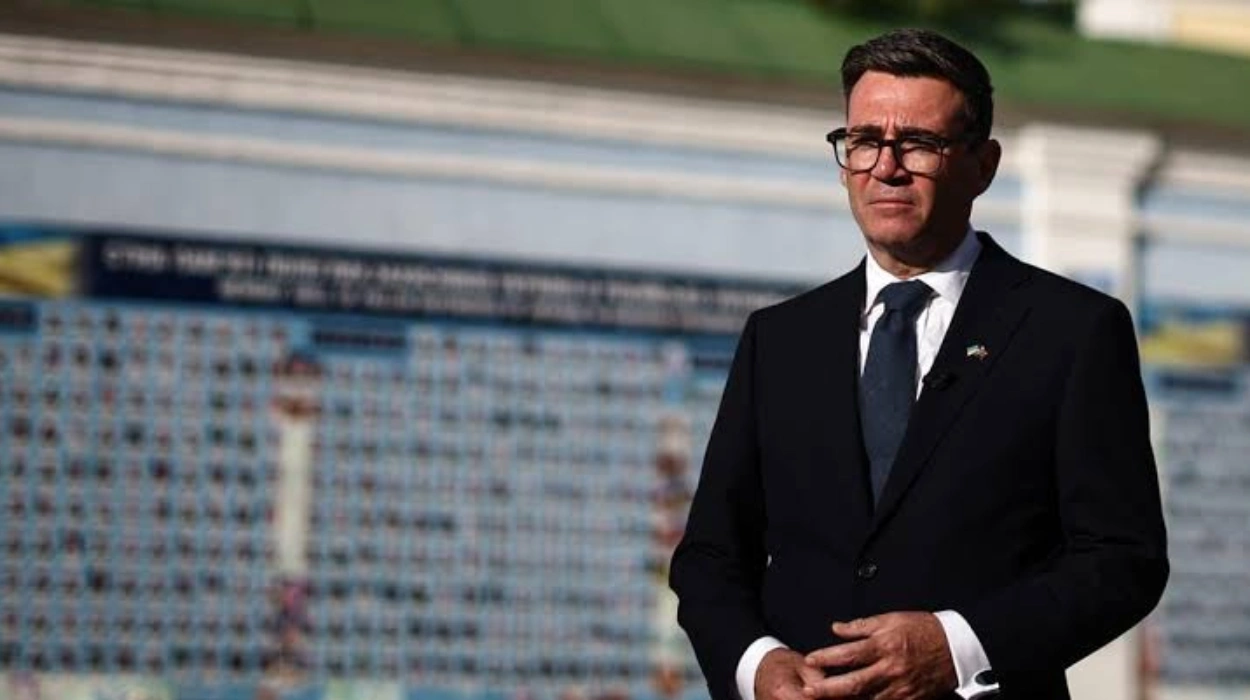
As detailed by Guardian political correspondent, Prime Minister Andy Burnham is hosting President Macron at No 10 Downing Street for his initial foray into foreign policy leadership. Prime Minister Andy Burnham stated in an official government release that
“the progress we have seen this summer [in bringing down the number of small boat crossings] shows what can be achieved when the UK and France work together”.
However, Prime Minister Andy Burnham cautioned that
“we cannot be complacent. Smuggling gangs are constantly adapting their tactics, and the UK and France need to respond quickly and stay one step ahead of the criminals facilitating the dangerous crossings”.
He added that
“the small boats crisis is a shared European challenge, and no country can solve it alone”.
According to Downing Street briefings cited by The Guardian, both leaders are announcing additional resource allocations to reinforce French law enforcement on the northern coast. The number of French officers dealing with irregular channel crossings is set to expand to nearly 1,050 personnel—a roughly 25 percent increase over a four-month span. This deployment includes a specialized 75-person tactical team focused on asset seizure and arrests, an expanded intelligence unit scaling from 18 to 30 operatives, and an additional contingent of 45 officers designated for western launch sites.
What Are the Broader Geopolitical and Post-Brexit Objectives on the Agenda?
As analyzed by Ratopati news correspondents, the diplomatic summit also focuses heavily on rebuilding broader economic and strategic alignment with the European Union. Having succeeded former leader Keir Starmer, Prime Minister Andy Burnham is looking to secure concrete outcomes regarding trade facilitation for electricity and agricultural sectors, alongside navigating negotiations on a revised youth mobility scheme.
A senior French presidential official told Agence France-Presse (AFP) that President Macron had previously forged a “very friendly and highly effective relationship” with former Prime Minister Keir Starmer, specifically regarding coordinated responses to the war in Ukraine and the Middle East. The official affirmed that coordination with Prime Minister Andy Burnham is expected to remain “just as important and regular”.
Weighing in on the political complexities, Professor Anand Menon of King’s College London noted to media outlets that “the devil will be in the detail”. Professor Anand Menon explained that
“you can have as much of a bromance as you want, but we need progress on the EU negotiations, and I suspect we won’t get any movement on that”.
Despite these legislative hurdles, President Macron continues to view post-Brexit Britain as an essential partner in fostering European strategic autonomy and maintaining united security frameworks against external threats.