Key Points
- Call for Collaborative Realignment: The newly elected Conservative Leader of Westminster City Council, Councillor Paul Swaddle OBE, has formally requested London Mayor Sir Sadiq Khan to “sit down with him” to restructure the current Oxford Street pedestrianisation plans into a model that functions practically for all local stakeholders.
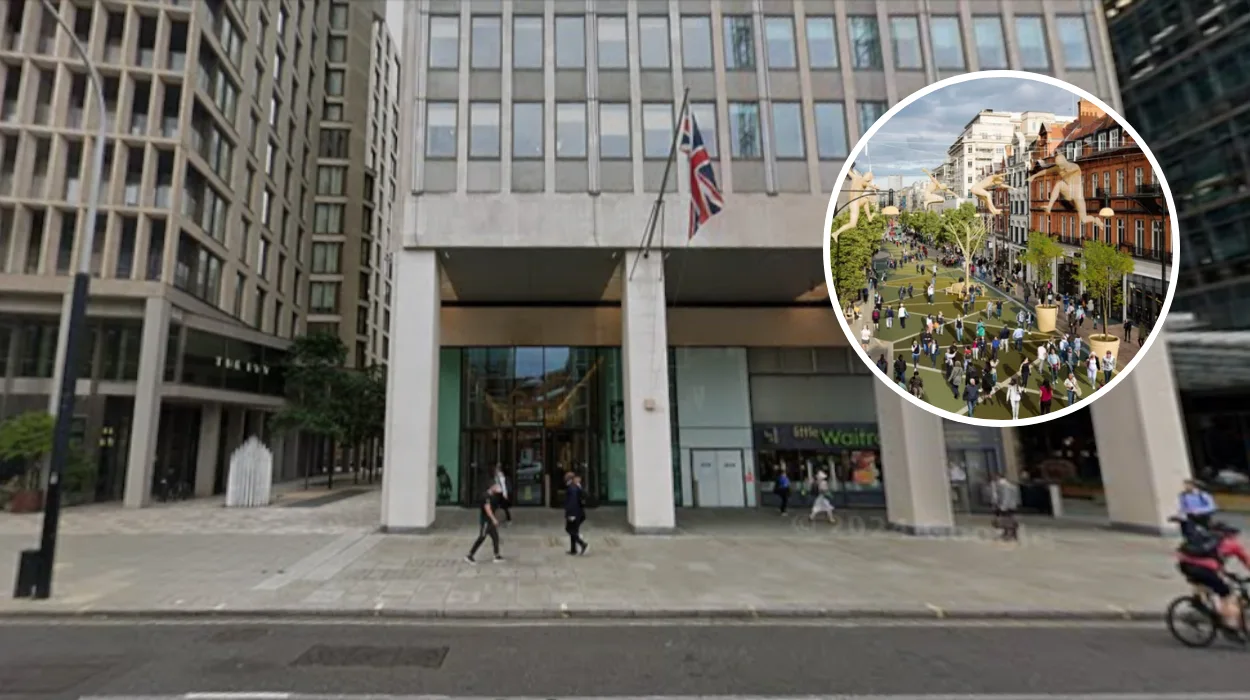
- Scope of Car-Free Proposal: The disputed multi-million-pound environmental initiative aims to completely pedestrianise the world-famous Central London retail thoroughfare stretching from Orchard Street to Great Portland Street.
- Operational and Safety Limitations: The local authority claims the current mayoral blueprint fails to safely deliver on fundamental urban requirements, highlighting major gaps in emergency services access, standard mobility access, residential safety, and basic public works such as municipal refuse collections.
- Severe Criticism and Alternative Labels: Local Conservative leadership has heavily criticised the aesthetic and structural substance of the Greater London Authority’s (GLA) designs, calling the current iteration a “budget Temu plan” that compromises infrastructural quality.
- Escalation to Legal Action: Following a significant shift in political control at the local council elections, the incoming Westminster administration has instructed its chief executive to obtain comprehensive legal advice and establish a dedicated legal fighting fund to challenge the mayoral directives in court.
- Mayoral Commitment to Timeline: A spokesperson representing the Mayor of London confirmed that Sir Sadiq Khan intends to move ahead rapidly with the pedestrianisation framework, projecting that the initial phase will be entirely traffic-free by the end of this summer.
London (The Londoner News) May 25, 2026 – The newly established Conservative leadership of Westminster City Council has forced a dramatic political standoff over the future of London’s premier retail district, demanding that the Mayor of London, Sir Sadiq Khan, halt and radically rethink his current £150 million proposals to pedestrianise Oxford Street. Councillor Paul Swaddle OBE, the newly sworn-in Leader of Westminster City Council, has publicly challenged the Greater London Authority’s (GLA) unilateral blueprint, urgently calling on the London Mayor to “sit down with him” to negotiate a restructured operational framework that addresses deep-seated local concerns. The municipal friction follows a pivotal shift in the local political landscape where the Conservative Party regained administrative control of Westminster City Council from Labour, running on an explicit platform to resist the sweeping traffic bans slated to alter the Orchard Street to Great Portland Street corridor.
- Key Points
- What Is the Core Conflict Surrounding the Oxford Street Pedestrianisation Proposals?
- Why Is the New Westminster Council Leader Calling It a “Budget Temu Plan”?
- How Does the Pedestrianisation Scheme Impact Public Transport and Mobility Accessibility?
- What Are the Key Safety and Public Crime Concerns Raised by Critics?
- What Is the Position of the Mayor of London Regarding the Council’s Demands?
- What Legal and Administrative Mechanisms Will Westminster Use to Fight the Scheme?
- How Does This Confrontation Align with Westminster’s Broader Governance Shift?
As reported by Katherine Gray, a Local Democracy Reporter for The Fitzrovia News, the freshly appointed Conservative administration has immediately escalatated the civic dispute by instructing the council’s chief executive officer to seek rigorous legal advice and establish a specialised legal fighting fund. This fund is explicitly designed to challenge the Mayor of London’s use of a Mayoral Development Corporation (MDC)—a powerful statutory mechanism activated earlier this year to bypass local council planning blockages and push the pedestrianisation project forward. While local authority leaders warn of systemic vulnerabilities regarding accessibility, public safety, and basic logistical practicalities like waste management, City Hall remains unyielding. A spokesperson for the Mayor of London countered the council’s pushback by asserting that the scheme is moving ahead rapidly, with firm aspirations to witness the first section of Oxford Street going completely traffic-free by the conclusion of this summer.
What Is the Core Conflict Surrounding the Oxford Street Pedestrianisation Proposals?
The fundamental disagreement centers on governance, executive overreach, and the balance between regional environmental goals and local infrastructural stability. Under the previous Labour-led Westminster administration, Sir Sadiq Khan successfully invoked a Mayoral Development Corporation (MDC) model. This specific legislative tool effectively transferred planning authority over the primary highway from the local borough directly to City Hall, an action that opposition politicians viewed as a constitutional bypass of local democratic accountability.
As documented by journalist Dave Hill in an analytical report for On London, Councillor Paul Swaddle claimed that “the consultation was fudged” by Transport for London (TfL) and stated that the London Mayor had “totally abused” the MDC model. Councillor Swaddle noted that this aggressive planning mechanism had historically been reserved for major, complex regional regenerations, such as the Olympic Park in Stratford under former Mayor Boris Johnson, rather than standard high-street modifications.
With the Conservatives securing 32 seats against Labour’s 22 in the recent local elections, the newly formed local government maintains that it possesses a clear public mandate from Westminster residents to dismantle the existing mayoral strategy. The local leadership argues that while the public supports the abstract concept of high-street improvement, the concrete technical details of the current plan remain fundamentally flawed.
Why Is the New Westminster Council Leader Calling It a “Budget Temu Plan”?
The rhetorical clash between City Hall and Westminster reached a new peak during an exclusive media interview with the Local Democracy Reporting Service (LDRS). In that exchange, as reported on the official Cities of London and Westminster platform, Councillor Paul Swaddle slammed the architectural and infrastructural integrity of the Mayor’s current layout, stating:
“At the moment we have a bit of a Temu plan. It’s very much budget. And it doesn’t deliver on a lot of things that are really needed.”
The comparison to the discount online retail platform underscores the council’s view that the GLA’s current designs lack structural durability and fail to integrate necessary modern urban technologies. According to the council leader, the plan prioritises rapid visual transformation over the complex operational realities required by a major international commercial zone. The council argues that the current budget allocations do not properly account for the long-term upkeep, high-quality materials, or secondary street adaptations needed when displacing massive volumes of urban transit.
How Does the Pedestrianisation Scheme Impact Public Transport and Mobility Accessibility?
One of the most intense debates within the ongoing dispute focuses on physical accessibility and the complete rerouting of Central London’s iconic red bus network. While private motor vehicles have faced strict prohibitions on Oxford Street for many years, the current mayoral pedestrianisation layout will fundamentally alter the corridor by entirely removing buses and traditional black taxis.
As detailed in an official policy statement published by the Westminster Conservatives in their campaign manifesto The Fight for Oxford Street, local representatives vowed to fiercely resist any changes that isolate vulnerable demographics. The statement noted:
“We will fight to protect the bus routes that less mobile people depend on to reach Oxford Street, ensuring no routes are removed until step-free access is guaranteed at Oxford Circus.”
Councillor Paul Swaddle expanded on this accessibility gap during his address to the political business community, highlighting that Oxford Street spans over a mile in length. He explained that a significant percentage of elderly and disabled visitors rely heavily on surface-level bus routes to travel between shops, especially given that the heavily congested Oxford Circus underground station currently lacks comprehensive step-free lift access. The council argues that removing these vital bus links without first upgrading the surrounding subterranean rail infrastructure creates a severe barrier to entry for disabled and less mobile individuals.
What Are the Key Safety and Public Crime Concerns Raised by Critics?
Beyond the immediate challenges of public transit and mobility, the council’s leadership has voiced serious anxieties regarding public safety, anti-social behaviour, and policing within a fully pedestrianised environment. The local authority points out that active vehicle traffic provides a form of natural surveillance and consistent ambient lighting during late-night hours.
In an exclusive investigative feature compiled by the Local Democracy Reporting Service (LDRS), Councillor Paul Swaddle outlined a stark vision of how a completely pedestrianised space could inadvertently worsen the area’s existing issues with retail crime and organized theft. Councillor Swaddle stated:
“At the moment if you go to Oxford Street at midnight, there are buses, there’re people getting night buses, people around, you would feel relatively safe. If you were crossing that on your own, well if one of my kids was crossing it on their own in the evening, I’d be concerned.”
The council leader also drew attention to the current wave of phone-snatching, sophisticated shoplifting operations, and highly organized begging rings that leverage human trafficking networks along the commercial strip. The borough’s leadership argues that turning a mile-long highway into an isolated pedestrian zone without a proportional increase in static police resources could turn the area into a hotspot for anti-social behavior once the retail shops close their doors for the evening.
Explore More London Politics News
Sadiq Khan to work with Reform, Green councils in London 2026
Labour Loses Control of Wandsworth and Brent: London West Elections 2026
What Is the Position of the Mayor of London Regarding the Council’s Demands?
Despite the fierce opposition brewing within the walls of the Old Marylebone Town Hall, the Mayor of London and his executive team at City Hall remain fully committed to their original timeline. They argue that the pedestrianisation project is an essential modernization effort needed to save the struggling high street from structural decline and severe competition from out-of-town shopping centers.
Responding directly to the critical comments from the newly elected council leadership, a spokesperson for the Mayor of London issued a clear statement defending the administration’s vision, declaring that the mayoral scheme would ultimately create a:
“…beautiful pedestrian-friendly public space that restores the nation’s high street to its former glory, making Oxford Street a place for all.”
The mayoral representative firmly dismissed any suggestions of an administrative pause or a formal policy shift, explicitly stating to the press:
“The mayor is moving ahead rapidly with the pedestrianisation of Oxford Street and hopes to see the first section going traffic free by the end of this summer.”
Supporters of the Mayor’s strategy point to clear data trends that contrast sharply with the council’s claims. As noted by journalist Dave Hill, consecutive London-wide public consultations managed by Transport for London have shown strong support for the environmental changes. Furthermore, a comprehensive YouGov polling study revealed that 63 per cent of everyday Londoners strongly favour turning Oxford Street into a dedicated pedestrian-only zone, compared to just 23 per cent who expressed open opposition.
What Legal and Administrative Mechanisms Will Westminster Use to Fight the Scheme?
The battle over the high street is now shifting from a purely rhetorical debate into a complex legal and administrative conflict. During his inaugural speech at the full council assembly, as recorded by editorial staff at Westminster Extra, Councillor Paul Swaddle confirmed that formal letters would be sent to City Hall demanding the immediate, transparent release of all postcode-level consultation data to expose the true geographic breakdown of local opposition.
In terms of direct legal action, the Conservative leadership plans to challenge the technical and statutory validity of the Mayoral Development Corporation’s formation. As reported by legal analyst Lottie Winson for the Local Government Lawyer publication, Westminster City Council intends to closely examine the procedural details of TfL’s public consultation process alongside the maintenance and repair liabilities of secondary roads within the borough.
If the council can prove in court that the consultation process was legally flawed, or that the traffic displacement onto surrounding residential streets breaches statutory air quality guidelines or safety duties, they could secure a judicial review to freeze the project. Furthermore, the council has pledged to leverage its remaining highways powers, local planning blockades, and intense public scrutiny to slow down or alter any development that does not have genuine local residential consent.
How Does This Confrontation Align with Westminster’s Broader Governance Shift?
The intense conflict over Oxford Street represents the first major policy test for Westminster’s new local government, setting the tone for how it plans to manage urban spaces, public order, and commercial infrastructure moving forward. The administration’s resistance to the Mayor’s pedestrianisation plan is tightly linked to a wider policy package focused on security and clean streets.
According to a political report published by Westminster Extra detailing the council’s new front-bench line-up, Councillor Caroline Sargent, the newly appointed Cabinet Member for Enforcement, has confirmed a wider crackdown on urban disorder. This initiative includes a rapid 100-day zero-tolerance graffiti removal program and a major upcoming summit with dockless e-bike operators to establish strict geofenced no-go zones and impound bikes blocking public footpaths.
By framing the Oxford Street pedestrianisation resistance as a defense of local residents against an unaccountable regional authority, the new Westminster leadership is attempting to show that it can deliver on its core promises of visible neighbourhood policing, accessible transport, and clean, safe streets. Whether this localized approach can successfully withstand the sweeping statutory powers of the Mayoral Development Corporation remains a critical question that will likely be decided by senior judges in the high courts.