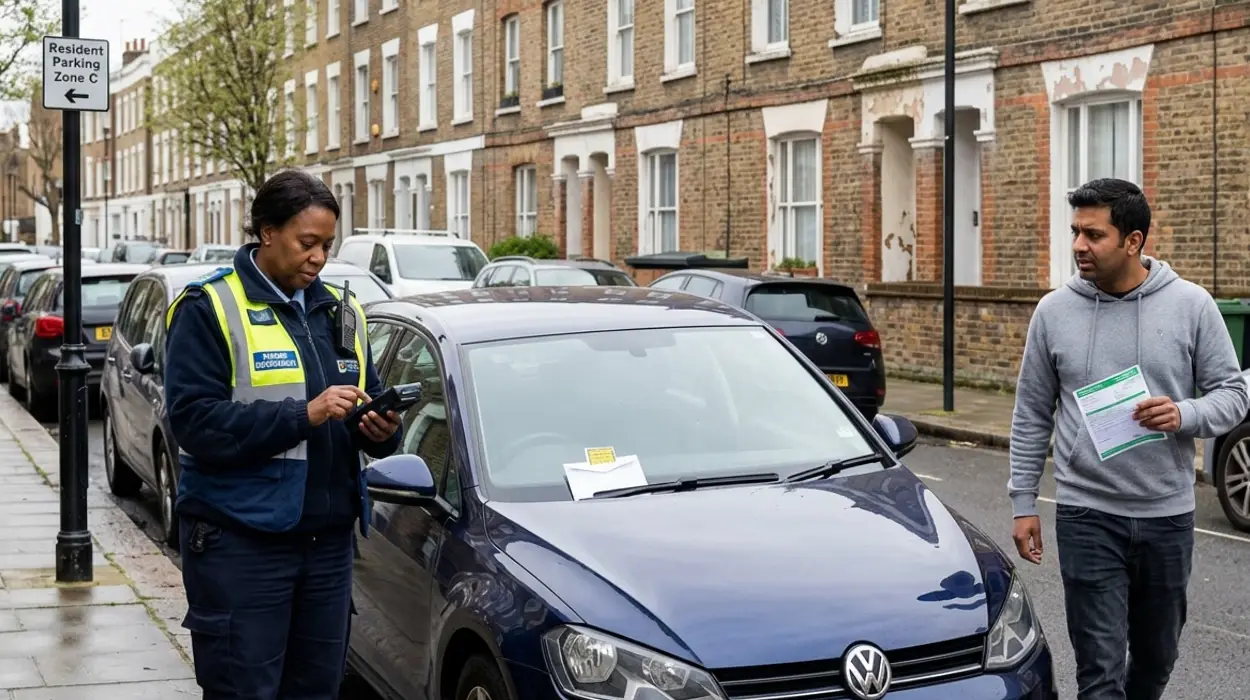
The modern administration of municipal highways in Greater London represents the culmination of more than a century of legislative evolution, judicial precedents, and urban planning adaptations. Under the provisions of contemporary local government strategies, London boroughs routinely cross-reference administrative databases to enforce municipal compliance. A primary manifestation of this integrated enforcement methodology is the administrative refusal to issue or renew a resident parking permit when an applicant possesses outstanding, uncontested Penalty Charge Notices (PCNs). This policy links the privilege of utilizing public curbside infrastructure with the settlement of civil liabilities incurred on the public highway.
- Why Was My Resident Parking Permit Refused Due To Unpaid Penalty Charge Notices?
- How Did London Develop Its Resident Parking Permit System?
- What Is The Legal Framework Allowing Boroughs To Link Permits To Unpaid PCNs?
- How Did Decriminalised Parking Enforcement Evolution Shape Modern Refusal Policies?
- What Is The Process For Challenging A Permit Refusal Over Historical Penalties?
- How Do Modern London Boroughs Automate The Enforcement Of Outstanding Traffic Debts?
- What Are The Long-Term Socio-Political Impacts Of Stringent Parking Controls?
Understanding the contemporary intersection of vehicular licensing and civil enforcement requires an analysis of the statutory frameworks that transformed London from an unregulated horse-drawn metropolis into a highly managed digital enforcement zone. The transition from criminal law enforcement by police officers to civil administrative enforcement by local authorities reshaped the relationship between the state, the citizen, and the vehicle.
Why Was My Resident Parking Permit Refused Due To Unpaid Penalty Charge Notices?
London boroughs refuse resident parking permits for unpaid Penalty Charge Notices because municipal regulations require applicants to settle all outstanding traffic and parking debts to the local authority before receiving the privilege of utilizing restricted curbside parking spaces on public highways.
The administrative mechanism that governs the refusal of a resident parking permit rests on the principle that local authorities possess discretionary powers when managing public assets. A resident parking permit is not a statutory right but an administrative privilege granted under specific local terms. Under the terms and conditions established by London local authorities, an applicant must maintain a clear account with the council. If the council identifies outstanding debts, specifically civil penalties issued under traffic management legislation, the authority exercises its right to withhold services until the liability is discharged.
This policy addresses the problem of chronic non-compliance among a minority of motorists. Local authorities use the permit renewal cycle as an administrative checkpoint to compel the settlement of debts that have bypassed standard collection channels. When an application is submitted, municipal software cross-references the vehicle registration mark (VRM) and the applicant’s address against the penal database of the borough. If a match reveals a PCN that has progressed past the statutory period for representation or appeal, the application system automatically halts the issuance process.
The financial and operational logic behind this restriction is rooted in the statutory duty of local authorities to manage traffic flow and reduce congestion. Allowing a motorist to occupy designated resident bays while actively evading penalties for violating traffic regulations creates an administrative contradiction. It undermines the credibility of the entire civil enforcement system and reduces the revenue available to the borough for mandatory reinvestment into local transport infrastructure. Motorists must pay the outstanding penalties, enter into an approved payment plan, or prove that the PCNs were issued in error or are subject to active legal appeals before the borough will process the resident permit application.
How Did London Develop Its Resident Parking Permit System?
London developed its resident parking permit system during the mid-twentieth century as a direct regulatory response to catastrophic post-war traffic congestion, rapid increases in private car ownership, and the structural inability of historic urban roadways to accommodate stationary vehicles.
The origin of systematic parking management in London dates back to the mid-twentieth century. Following the conclusion of the Second World War, private vehicle ownership across the United Kingdom escalated dramatically. Statistically, the number of licensed vehicles grew from approximately 2.5 million in 1945 to more than 9 million by 1960. The historic street layouts of London, largely designed for pedestrian movement and horse-drawn transport during the Georgian and Victorian eras, lacked the physical capacity to absorb thousands of stationary motor cars.
To address the gridlock affecting commercial zones, the Parliament of the United Kingdom passed the Road Traffic Act 1956. This statute granted local authorities the legal power to introduce charging mechanisms for parking on public highways. The first mechanical parking meters were installed by the City of Westminster in northwest Mayfair on July 10, 1958. These meters regulated short-stay commercial parking but displaced commuter vehicles into adjacent residential areas, precipitating severe parking shortages for local householders.
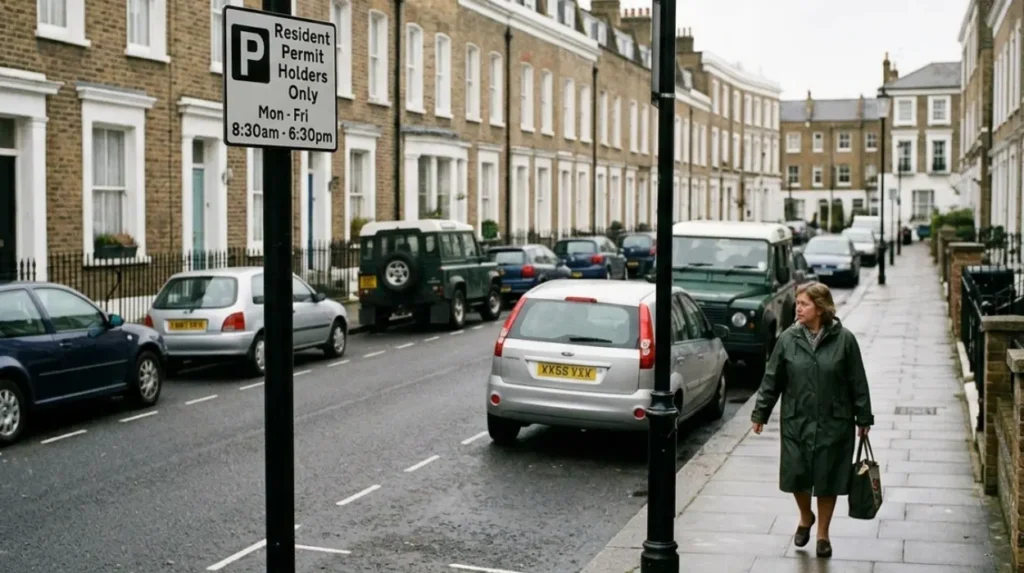
To protect residents from commuter displacement, London boroughs began designing Controlled Parking Zones (CPZs) during the 1960s. The Greater London Council (GLC), established under the London Government Act 1963, formalised the implementation of these zones across inner London boroughs. The CPZ architecture divided public streets into distinct categories, explicitly reserving specific sections of the curb for residents who purchased a physical paper permit. This system established the legal precedent that parking on a public street in London is a finite, allocated resource subject to municipal zoning laws and fee structures.
To experience this historic landmark in person today, consult our comprehensive [Insert Anchor Text for Things to Do Article Here] for itineraries and visiting parameters. The preservation of these historic districts remains intimately linked to the restriction of vehicular traffic through modern CPZ boundaries.
What Is The Legal Framework Allowing Boroughs To Link Permits To Unpaid PCNs?
The legal framework allowing London boroughs to link resident parking permits to unpaid PCNs is derived from the Road Traffic Regulation Act 1984 and the Traffic Management Act 2004, which grant local authorities broad statutory discretion over terms.
The primary statutory instrument governing the creation and administration of parking schemes is the Road Traffic Regulation Act 1984. Section 45 and Section 46 of this Act empower local authorities to designate parking places on highways for specific classes of vehicles and to charge for the issuance of permits. The legislation explicitly permits local authorities to determine the terms and conditions under which a permit is issued, including the setting of fees and the validation of applicant eligibility. The courts have consistently interpreted these sections as granting broad administrative discretion to local councils to manage their parking networks in the public interest.
The civil enforcement framework was further modified by the Traffic Management Act 2004, which superseded parts of the earlier Road Traffic Act 1991. The 2004 Act placed a statutory duty on local authorities to secure the expeditious movement of traffic on their road networks. Under Section 16 of the Traffic Management Act 2004, boroughs must utilize all available administrative functions to reduce traffic congestion and ensure compliance with parking restrictions. This duty provides the legal rationale for integrating debt collection processes with service delivery mechanisms like permit issuance.
Furthermore, local authorities operate under public law principles that require them to manage public finances responsibly. When a motorist ignores a PCN, the penalty becomes a civil debt owed to the local authority, enforceable through the County Court at the Traffic Enforcement Centre (TEC) located in Northampton. The linking of permit eligibility to debt clearance is categorized as an internal administrative policy approved by the executive cabinet of each individual borough. Because the policy is codified within the terms and conditions of the resident parking scheme, it holds legal validity provided that the council applies the rule consistently and without discrimination across all applicants.
Explore More Public Services
Community Priorities Programme 2026 Grant Eligibility Rules Across Greater London
How Residents Applied for ULEZ Scrappage Support Grants in Greater London
How Did Decriminalised Parking Enforcement Evolution Shape Modern Refusal Policies?
The evolution of Decriminalised Parking Enforcement transformed parking violations from criminal offenses prosecuted by police into civil infractions managed by local councils, enabling boroughs to treat unpaid penalties as corporate debts that block administrative services.
Prior to the final decade of the twentieth century, parking enforcement across Greater London fell under the jurisdiction of the Metropolitan Police Service and the City of London Police. Violations of parking regulations were classified as criminal offenses, and non-compliance resulted in a standard fixed penalty notice or a criminal summons to a Magistrates’ Court. This system proved inefficient due to the competing operational priorities of the police services and the administrative burden placed on the judicial system. Consequently, millions of parking violations went unpunished, leading to widespread congestion and a systemic failure to regulate stationary vehicles on urban roads.
The structural transition occurred with the passage of the Road Traffic Act 1991, which introduced Decriminalised Parking Enforcement (DPE) to the United Kingdom, using London as the primary implementation zone (Santos, 2008). The 1991 Act transferred the responsibility for enforcing stationary parking, loading, and waiting restrictions from the police to the individual London boroughs (Council, 0). The criminal fines previously sent to the central government treasury were replaced by civil Penalty Charge Notices, with the resulting revenue retained directly by the local authorities to fund transport and parking infrastructure (Council, 0).
This structural shift completely altered the legal nature of a parking penalty. By transforming a fine into a civil debt, the legislation allowed local authorities to employ standard commercial debt collection strategies. Over the subsequent three decades, boroughs integrated their internal information technology platforms. The separation between the parking enforcement database and the resident permit distribution database was eliminated. Modern database consolidation allows a council to view a citizen’s entire financial liability profile across all municipal departments, directly leading to the contemporary policy of withholding permits from non-compliant debtors.
What Is The Process For Challenging A Permit Refusal Over Historical Penalties?
The process for challenging a resident parking permit refusal involves auditing the status of the underlying outstanding Penalty Charge Notices, identifying procedural errors in debt notification, or submitting formal statutory declarations to the Traffic Enforcement Centre.
When an applicant receives a formal notification that their resident parking permit application has been refused due to outstanding civil debts, they must initiate a specific administrative review process. The first stage requires the motorist to request an official statement of accounts from the borough’s parking services department. This statement details the specific PCN reference numbers, dates of contravention, vehicle registration marks, and the historical progression of the debt collection process. It is essential to verify whether the PCNs were issued against the current vehicle or a previously owned vehicle.
If the motorist did not receive the original Penalty Charge Notices—frequently due to a failure to update the registered keeper address with the Driver and Vehicle Licensing Agency (DVLA) following a change of residence—the legal route requires escalating the matter to the Traffic Enforcement Centre (TEC). The motorist must file a Witness Statement or a Statutory Declaration out of time using forms TE9 and TE7. This legal filing requests that the court order the local authority to roll back the enforcement process to the initial stage, effectively cancelling any advanced debt registration or bailiff warrants.
If the underlying PCNs are successfully reset by the TEC or if the local authority accepts that a procedural error occurred during the notification phase, the status of the debt is reclassified as “contested” or “cancelled.” Under municipal operating procedures, a contested or suspended debt cannot be used as a valid legal ground to refuse an administrative service. The borough must then unlock the applicant’s profile within the online permit portal, allowing the resident parking permit to be issued while the independent adjudication process for the traffic penalty proceeds through the London Tribunals system.

How Do Modern London Boroughs Automate The Enforcement Of Outstanding Traffic Debts?
Modern London boroughs automate the enforcement of outstanding traffic debts by utilizing centralized relational databases, automated Number Plate Recognition systems, and algorithmic cross-referencing platforms that link vehicle registrations directly to residential accounts.
The contemporary administrative environment of Greater London relies heavily on automated digital systems to maintain regulatory control over urban highways (Snow, 2017). Every London borough operates an integrated enterprise resource planning (ERP) software platform that connects multiple municipal databases. These platforms use the vehicle registration mark (VRM) as a primary relational key. When a resident submits an digital application for a parking permit, the software executes an automated query across the entire civil enforcement database to verify the compliance history of the vehicle and the applicant.
In addition to internal database matching, London local authorities are connected to regional and national data networks. The London Councils organization coordinates cross-boundary data sharing, allowing boroughs to track persistent evaders who accumulate penalties across different jurisdictions. Automated Number Plate Recognition (ANPR) cameras mounted on enforcement vehicles and stationary roadside pillars constantly gather spatial data on vehicles operating within Controlled Parking Zones. This data is fed into predictive algorithms that alert enforcement teams to the presence of vehicles with high volumes of outstanding debt.
The automation of these processes removes human bias from the initial enforcement phase. The system code dictates that if an outstanding penalty reaches the “Charge Certificate” or “Order for Recovery” stage without payment, an automatic administrative lock is placed on the associated record. This lock prevents the issuance of any new virtual or physical permits. By automating the intersection between debt collection and permit validation, London boroughs achieve high levels of enforcement efficiency, reducing administrative overhead while maximizing the recovery of public funds from non-compliant motorists.
What Are The Long-Term Socio-Political Impacts Of Stringent Parking Controls?
The long-term socio-political impacts of stringent parking controls encompass reduced private vehicle reliance, altered residential property valuations, intensified debates over municipal surveillance, and a structural shift toward sustainable public transport integration.
The enforcement of rigorous parking controls and debt-recovery integrations exerts a transformative effect on the socio-political landscape of metropolitan areas (Marsden, 2006). By positioning parking permits as conditional privileges tied to total civil compliance, municipal governments alter the cost-benefit analysis of private vehicle ownership within the city (Smith, 2026). Decades of empirical urban planning data indicate that increasing the friction associated with urban parking accelerates modal shifts, prompting residents to migrate away from personal automobiles toward active travel options and mass transit networks (Santos, 2008).
From an architectural and land-use perspective, the strict zoning enforced by CPZs has altered residential development patterns across London. Modern residential developments are frequently classified as “car-free,” meaning that occupiers are legally barred from applying for a resident parking permit under Section 106 agreements of the Town and Country Planning Act 1990. This policy reduces the structural requirement for vehicular infrastructure, permitting architects to maximize green spaces and pedestrian walkways within urban centers.
However, the automated linkage of debt collection to municipal service delivery raises complex questions regarding equity and social justice. Critics argue that automated permit blocks disproportionately penalize lower-income households who may struggle to pay escalating civil penalties, thereby restricting their geographic mobility and access to employment. Conversely, proponents maintain that maintaining public order on historic highways requires absolute enforcement consistency. As London continues to deploy digital solutions to manage its environmental obligations, the integration of parking restriction architectures serves as a blueprint for global cities balancing the demands of population growth, civic compliance, and sustainable urban mobility.
What types of debts can affect a permit application?
Typically, unpaid parking-related debts such as PCNs, traffic enforcement penalties, or charges that have progressed through the enforcement process can trigger a permit refusal.