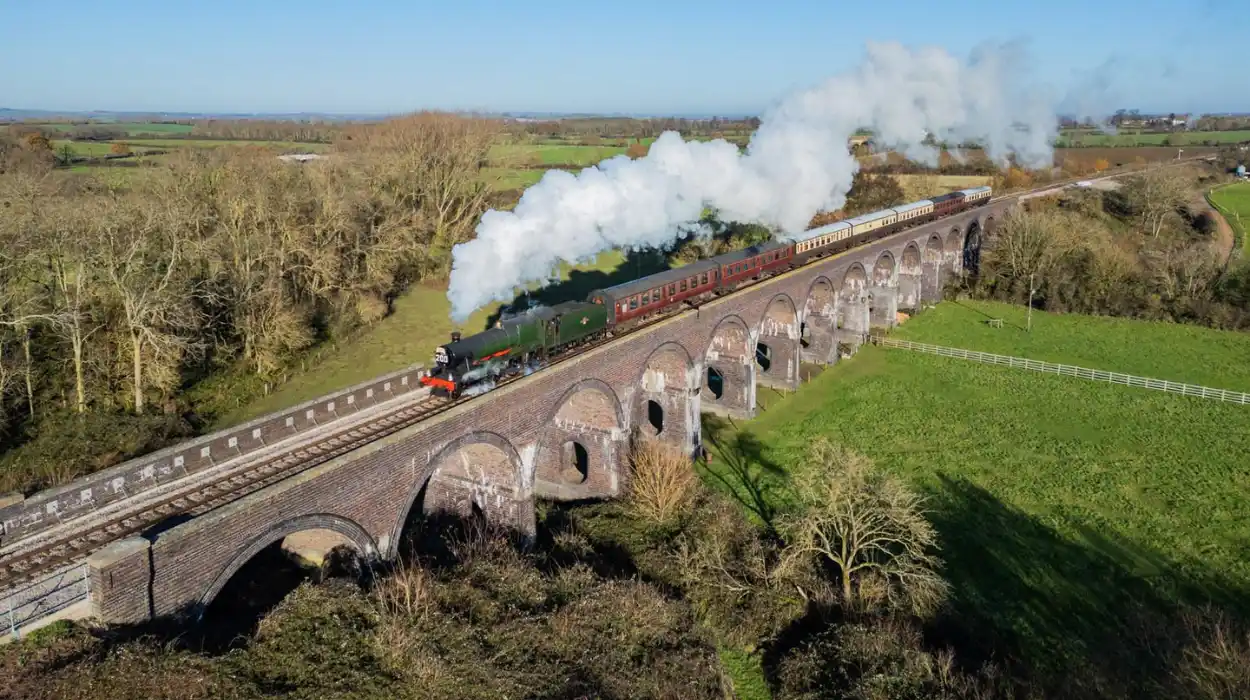
London’s extensive railway network makes it possible to reach some of England’s most historically significant towns and most beautiful countryside within two hours. These destinations preserve Roman settlements, medieval streets, Norman castles, royal palaces, cathedrals, market squares, and protected landscapes that illustrate more than 2,000 years of British history. Rail travel also reflects Britain’s own transport heritage, connecting Victorian engineering with modern sustainable tourism.
- Why are historic train day trips from London among the best ways to explore England?
- Which historic towns are the easiest day trips by train from London?
- Which university cities offer the richest historical experiences?
- Which cathedral cities make outstanding railway day trips?
- Which scenic countryside destinations combine natural beauty with history?
- What royal and military heritage can visitors explore by train?
- How have Britain’s railways shaped heritage tourism?
- What practical tips help visitors make the most of historic train day trips?
- Why do historic railway day trips remain an essential way to understand England’s past?
- Frequently Asked Question
Historic day trips by train offer more than sightseeing. They provide direct access to locations where national events unfolded, monarchs ruled, scholars transformed education, and merchants shaped Britain’s economy. Many railway stations themselves remain Victorian architectural landmarks built during the nineteenth-century railway expansion that changed travel across Britain.
Whether exploring university cities, medieval market towns, Roman settlements, or countryside designated for national protection, each destination contributes to understanding England’s cultural and historical development.
Why are historic train day trips from London among the best ways to explore England?
Historic train day trips from London combine efficient transport with access to nationally significant heritage sites, preserved architecture, cultural landscapes, and historic institutions. Rail routes connect visitors directly to Roman cities, medieval towns, cathedral cities, royal residences, and protected countryside without requiring a car.
Britain’s railway system transformed travel during the nineteenth century. Between the 1830s and 1870s, railway companies expanded rapidly, connecting London with major regional centres and smaller market towns. Many of today’s popular day-trip destinations became accessible during the Victorian era, encouraging domestic tourism long before modern highways existed.
Rail travel remains one of the most sustainable methods of exploring England’s heritage. Direct services depart from London’s major terminals including Paddington, King’s Cross, St Pancras International, Waterloo, Liverpool Street, Victoria, and Marylebone.
Many historic stations also possess architectural significance. London Paddington Station, designed with engineering input from Isambard Kingdom Brunel, opened in 1854 and remains one of Britain’s finest railway structures. St Pancras International, completed in 1868, represents Victorian Gothic architecture combined with modern international transport.
Travelling by train also allows visitors to arrive within walking distance of historic centres, reducing congestion around heritage sites while preserving historic streets.
Which historic towns are the easiest day trips by train from London?
Several historic towns lie within one hour of London by rail, including Windsor, Canterbury, Rochester, St Albans, and Cambridge. These destinations preserve castles, cathedrals, Roman remains, medieval streets, and royal landmarks that represent different periods of English history.
Windsor
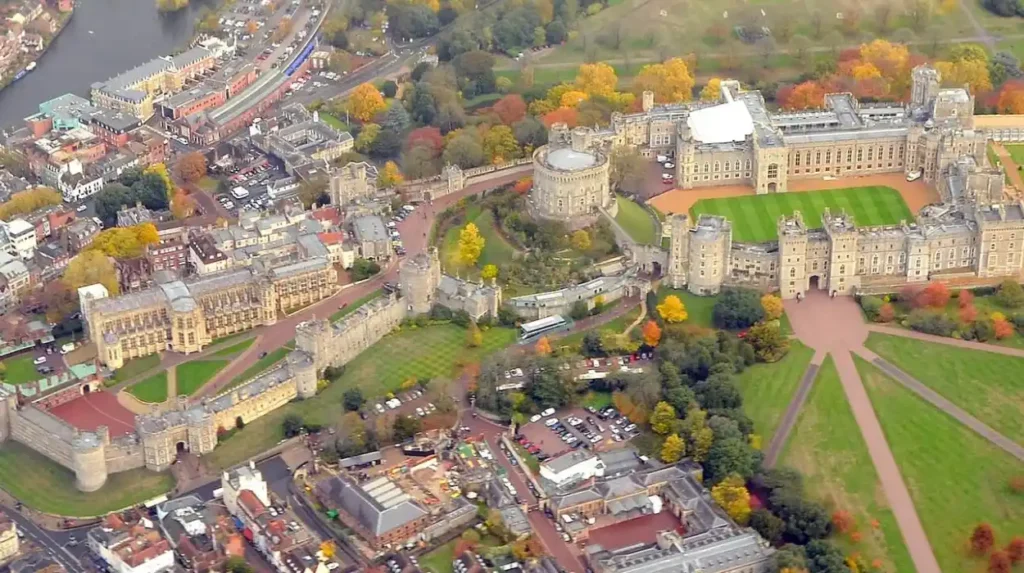
Windsor sits beside the River Thames approximately 40 kilometres west of central London.
Its defining landmark is Windsor Castle, founded by William the Conqueror around 1070 following the Norman Conquest of England in 1066. It remains the oldest continuously occupied royal castle in the world.
The castle has served successive monarchs including Henry II, Edward III, Charles II, Queen Victoria, Queen Elizabeth II, and King Charles III. St George’s Chapel contains royal tombs, including those of Henry VIII, Charles I, George VI, and Queen Elizabeth II.
Beyond the castle, Windsor preserves Georgian streets, medieval street layouts, and historic riverside walks.
To experience this historic landmark in person today, consult our comprehensive [History of London’s Royal Traditions and Their Influence on British National Identity] for itineraries and visiting parameters.
Canterbury
Canterbury developed from the Roman settlement of Durovernum Cantiacorum before becoming England’s principal ecclesiastical centre.
Canterbury Cathedral traces its origins to AD 597 when Augustine established Christianity in Anglo-Saxon England following his mission sent by Pope Gregory I.
The murder of Archbishop Thomas Becket inside the cathedral in 1170 transformed Canterbury into one of medieval Europe’s greatest pilgrimage destinations, inspiring Geoffrey Chaucer’s The Canterbury Tales.
The city walls, medieval streets, timber-framed buildings, and surviving gateways continue to illustrate centuries of urban development.
Rochester
Rochester occupies an important position along the River Medway in Kent.
Its Norman castle, begun shortly after 1087, contains one of England’s tallest surviving medieval keeps. Rochester Cathedral, founded in AD 604, ranks among England’s oldest cathedrals.
The town also maintains strong literary connections with Charles Dickens, who lived nearby and featured Rochester extensively in novels including Great Expectations and The Pickwick Papers.
St Albans
St Albans developed on the site of the Roman city of Verulamium.
Roman walls, mosaics, theatres, and archaeological remains demonstrate the importance of this settlement during Roman Britain.
St Albans Cathedral grew around the shrine of Saint Alban, traditionally recognised as Britain’s first Christian martyr. Medieval rebuilding created one of England’s longest cathedrals.
Which university cities offer the richest historical experiences?
Oxford and Cambridge preserve internationally recognised universities, medieval colleges, libraries, chapels, and scholarly traditions spanning more than 800 years. Their architecture and academic institutions shaped British education, science, literature, politics, and religious history.
Oxford
Oxford University developed gradually from teaching recorded during the late eleventh century.
Its colleges—including University College, Balliol College, and Merton College—represent centuries of educational development. Architectural styles include Norman, Gothic, Tudor, Baroque, Georgian, and Victorian.
The Bodleian Library, formally opened in 1602, ranks among Europe’s oldest research libraries.
The city’s streets preserve medieval planning while landmarks such as the Radcliffe Camera, Sheldonian Theatre, Christ Church College, and Bridge of Sighs attract visitors worldwide.
Oxford also played important roles during the English Civil War when King Charles I established the city as his wartime capital between 1642 and 1646.
Cambridge
Cambridge University was founded in 1209 following disputes involving Oxford scholars.
Its colleges, including Peterhouse, King’s College, Trinity College, and St John’s College, demonstrate nearly eight centuries of educational history.
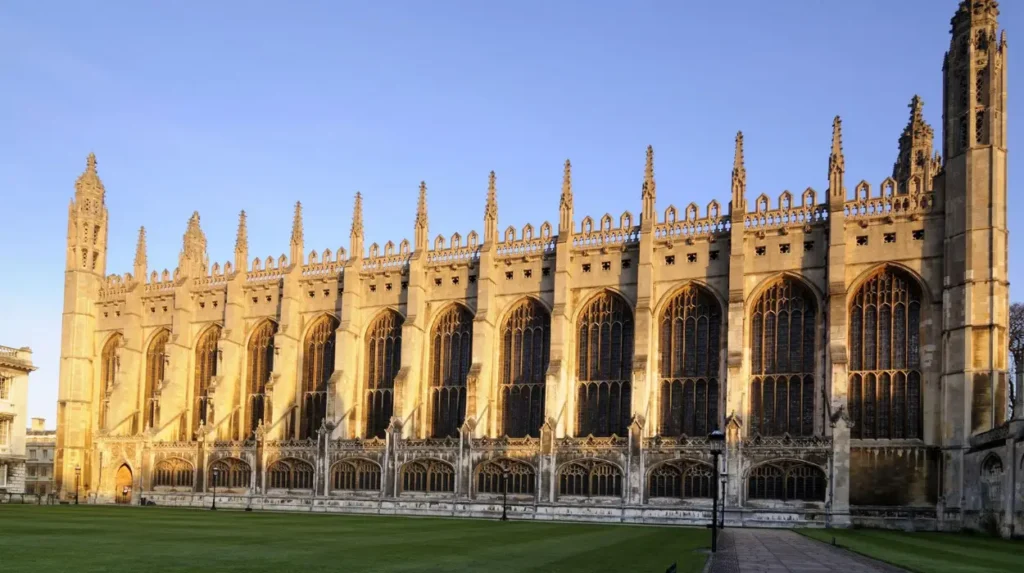
King’s College Chapel, begun in 1446, represents one of Europe’s finest examples of Perpendicular Gothic architecture.
Cambridge produced influential scholars including Isaac Newton, Charles Darwin, Alan Turing, Francis Crick, Rosalind Franklin through associated research, and Stephen Hawking.
The River Cam, medieval bridges, historic courts, and preserved college landscapes create one of Britain’s most recognisable historic environments.
Which cathedral cities make outstanding railway day trips?
Cathedral cities including Salisbury, Winchester, Ely, and York preserve medieval religious architecture, historic urban centres, and nationally significant monuments. Their cathedrals reflect centuries of religious, political, artistic, and engineering achievement across England.
Salisbury
Salisbury Cathedral was constructed between 1220 and 1258, making it one of Britain’s most architecturally unified Gothic cathedrals.
Its spire reaches approximately 123 metres, the tallest church spire in the United Kingdom.
The cathedral also safeguards one of the four surviving original copies of Magna Carta issued in 1215.
The surrounding Cathedral Close preserves historic houses, medieval streets, and landscaped grounds.
Winchester
Winchester served as the capital of the Kingdom of Wessex under Alfred the Great during the ninth century.
Winchester Cathedral ranks among Europe’s longest medieval cathedrals.
Jane Austen was buried inside the cathedral following her death in 1817.
Nearby Great Hall preserves the legendary Round Table traditionally associated with King Arthur, although the surviving wooden table dates largely from the thirteenth century.
Ely
Ely Cathedral dominates the flat Fenland landscape.
Construction began in 1083 after the Norman Conquest.
Its remarkable octagonal lantern tower replaced a collapsed Norman crossing in the fourteenth century and remains an engineering masterpiece.
The surrounding historic streets preserve medieval houses and riverside connections.
Which scenic countryside destinations combine natural beauty with history?
Historic countryside destinations including the Cotswolds, Chiltern Hills, South Downs, and Kent Downs combine preserved rural landscapes with centuries-old villages, churches, manor houses, and agricultural heritage. Their protected status conserves both natural and cultural history.
The Cotswolds
Visitors can reach gateways including Moreton-in-Marsh and Kingham directly by train.
The Cotswolds prospered during the medieval wool trade, which financed churches, manor houses, bridges, and market halls.
Honey-coloured limestone buildings define villages such as Broadway, Stow-on-the-Wold, Chipping Campden, and Bourton-on-the-Water.
The Cotswolds became designated as an Area of Outstanding Natural Beauty in 1966 before receiving National Landscape status in 2023.
Chiltern Hills
The Chiltern Hills extend northwest from London across chalk escarpments.
Historic market towns including Princes Risborough, Wendover, and Great Missenden preserve coaching inns, medieval churches, and traditional high streets.
The landscape reflects centuries of woodland management, farming, and rural settlement.
Kent Downs
Accessible through stations such as Canterbury, Ashford, and Folkestone, the Kent Downs contain ancient woodland, chalk grassland, historic villages, and pilgrimage routes.
The North Downs Way follows historic paths used for centuries between Canterbury and Farnham.
What royal and military heritage can visitors explore by train?
Rail journeys from London provide access to castles, royal residences, fortifications, battle sites, and military museums that illustrate England’s constitutional development, medieval warfare, royal government, and national defence across multiple historical periods.
Windsor Castle represents over 950 years of continuous royal occupation.
Dover Castle, reachable from London in just over one hour, overlooks the English Channel from strategic chalk cliffs.
The present castle largely dates from the reign of Henry II during the twelfth century, although earlier Iron Age, Roman, Anglo-Saxon, and Norman fortifications occupied the site.
Its medieval defences later expanded during the Napoleonic Wars and both World Wars.
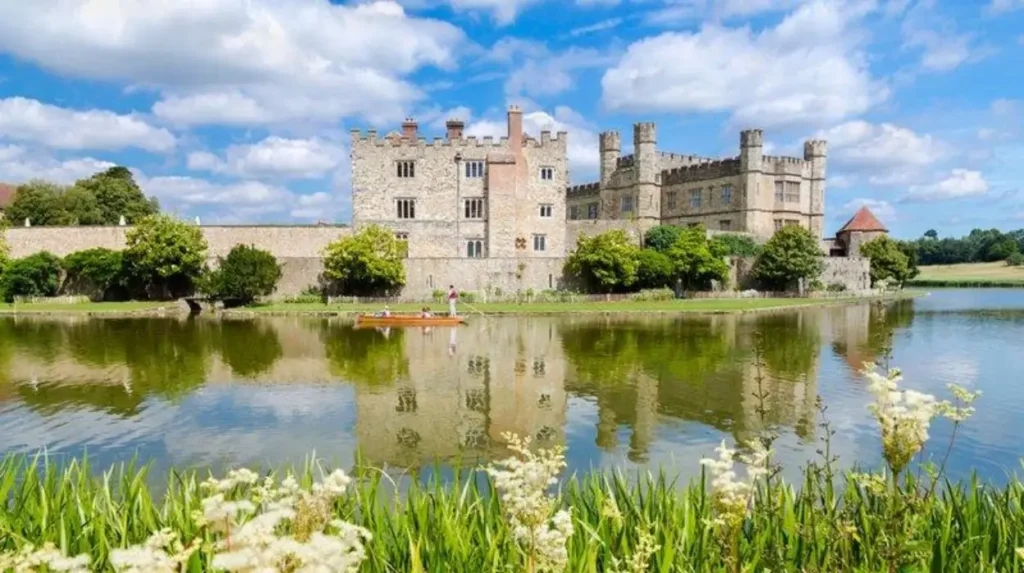
Leeds Castle in Kent developed from a Norman stronghold into a royal palace used by Edward I and Henry VIII.
Arundel Castle in West Sussex preserves nearly one thousand years of continuous occupation by the Dukes of Norfolk.
These locations demonstrate changing military technology, royal administration, and defensive architecture across successive centuries.
How have Britain’s railways shaped heritage tourism?
Britain’s railways transformed domestic tourism by making historic towns accessible to millions of visitors. Victorian railway expansion encouraged heritage preservation, regional economic development, and public appreciation of architecture, archaeology, museums, and historic landscapes.
Before railway expansion, long-distance travel required horse-drawn coaches travelling slowly along turnpike roads.
Railways dramatically reduced travel times.
By the late nineteenth century, London residents regularly visited cathedral cities, seaside resorts, university towns, and rural villages for leisure.
This growing visitor economy encouraged investment in museums, conservation societies, guidebooks, archaeological excavations, and heritage organisations.
Rail transport also supported the preservation movement.
Organisations including the National Trust, founded in 1895, benefited from improved visitor access to historic houses, countryside, and archaeological landscapes.
Today, heritage railways preserve steam locomotives, Victorian stations, signalling systems, and engineering techniques that form part of Britain’s industrial history.
What practical tips help visitors make the most of historic train day trips?
Planning around rail schedules, walking routes, opening times, and heritage priorities allows visitors to experience multiple historic landmarks efficiently. Early departures, advance ticket purchases, and seasonal awareness improve both convenience and cultural understanding.
Historic towns are generally compact.
Most railway stations sit within walking distance of principal attractions, reducing travel time after arrival.
Many cathedrals, museums, and castles operate timed admission systems during peak seasons.
Checking official opening times before departure helps maximise time on site.
England’s changing seasons also influence the visitor experience.
Spring highlights historic gardens and riverside walks.
Summer provides longer daylight for exploring castles and countryside.
Autumn enhances woodland landscapes surrounding historic estates.
Winter offers quieter visits to museums, cathedrals, and medieval streets.
Respecting conservation guidance remains essential.
Historic buildings require ongoing preservation funded through admissions, charitable donations, and public heritage programmes.
Following designated paths, observing photography policies, and supporting local museums contribute directly to long-term conservation.
Why do historic railway day trips remain an essential way to understand England’s past?
Historic railway day trips reveal England’s continuous development through settlements, universities, castles, cathedrals, countryside, and transport infrastructure. Together these destinations demonstrate over two millennia of political, religious, educational, architectural, and cultural history while remaining accessible from London within a single day.
Each destination preserves a distinct chapter of national history.
Roman cities such as St Albans illustrate Britain’s imperial foundations.
Norman castles including Windsor and Rochester demonstrate medieval conquest and royal authority.
Cathedral cities including Canterbury, Salisbury, Winchester, and Ely reflect religious influence across centuries.
University cities including Oxford and Cambridge document the evolution of scholarship and scientific discovery.
Rural landscapes including the Cotswolds and Chiltern Hills preserve traditional settlement patterns shaped by agriculture, trade, and local craftsmanship.
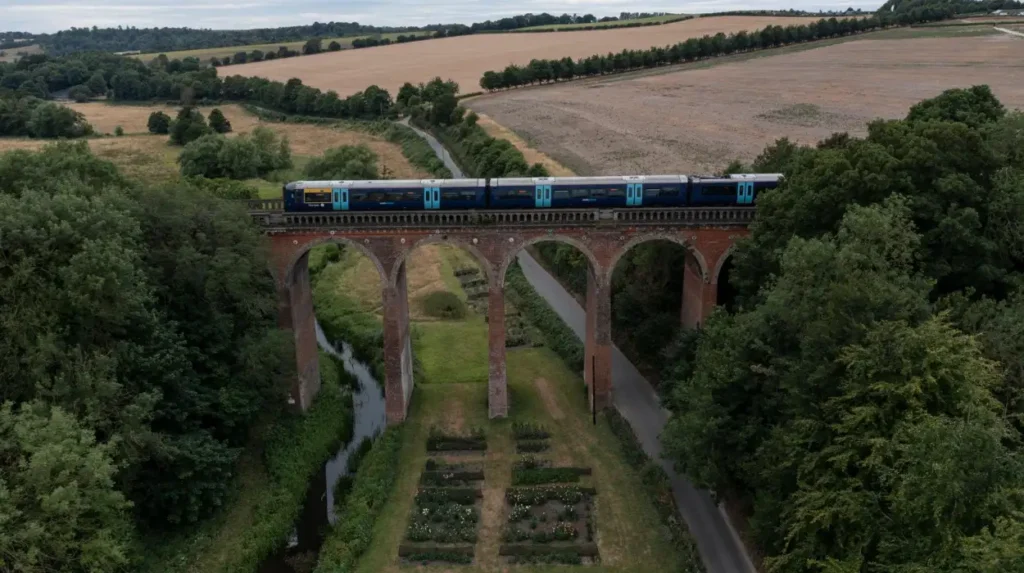
Britain’s railway network unites these locations into one accessible heritage corridor. The same transport system that revolutionised travel during the Victorian era continues to connect modern visitors with the places where England’s political institutions, educational traditions, architectural achievements, and cultural identity developed. For history enthusiasts, educators, students, genealogical researchers, and cultural travellers, the best day trips by train from London provide an enduring introduction to the nation’s historic towns and scenic countryside while supporting the preservation of these nationally significant landscapes for future generations.
Frequently Asked Question
What are the best historic day trips by train from London?
Some of the best historic day trips include Windsor, Canterbury, Oxford, Cambridge, Rochester, St Albans, Salisbury, Winchester, and Ely. These destinations feature castles, cathedrals, Roman ruins, medieval streets, and world-famous universities.