
Hyde Park is one of London’s most important historic landscapes and one of its most active public spaces. Covering approximately 142 hectares, or 350 acres, the park combines Tudor royal history, eighteenth-century landscape design, Victorian public recreation, political assembly, sport, wildlife and seasonal outdoor activity within central London.
- What is the historical importance of outdoor activity in Hyde Park?
- How can visitors explore Hyde Park during spring?
- What are the best outdoor activities in Hyde Park during summer?
- How can visitors enjoy Hyde Park during autumn?
- What can visitors do outdoors in Hyde Park during winter?
- How did the Serpentine transform outdoor recreation in Hyde Park?
- How has Hyde Park preserved its outdoor heritage for modern visitors?
- Why does Hyde Park remain important for outdoor recreation and London history?
- Frequently Asked Question
The park’s outdoor activities are inseparable from its history. Henry VIII acquired the land in 1536 for royal hunting. Charles I opened Hyde Park to the general public in 1637. Queen Caroline transformed its landscape during the 1730s through the creation of the Serpentine. The nineteenth century established Hyde Park as a major national venue for recreation, celebration and international events.
Today, walking, running, horse riding, boating, swimming, wildlife observation and organised sport continue this long tradition of public use. The changing seasons alter the landscape, vegetation, wildlife and available activities, making Hyde Park a year-round destination rather than a summer-only attraction.
For visitors interested in history, Hyde Park provides something more substantial than open green space. Its paths preserve former royal routes. Its lake records an important change in British landscape design. Its recreation areas occupy spaces shaped by major national events. Its monuments and gathering places document political and social change.
What is the historical importance of outdoor activity in Hyde Park?
Outdoor activity has shaped Hyde Park for almost five centuries, evolving from Tudor royal hunting into public walking, riding, boating, swimming, organised sport and political assembly within one of London’s largest and most historically significant central landscapes.
Hyde Park began as land connected with Westminster Abbey. In 1536, Henry VIII acquired the estate during the period of religious and political transformation associated with the English Reformation. He enclosed the land in 1540 and incorporated it into a wider system of royal hunting grounds. Deer hunting and horseback activity therefore formed the park’s earliest major recreational identity.
The original purpose of the park reflected Tudor royal culture. Hunting demonstrated wealth, land ownership and political authority. Hyde Park provided open terrain close to Westminster and the royal residences of London.
Public access gradually changed this exclusive function. Limited access existed during the early seventeenth century, but Charles I formally opened Hyde Park to the general public in 1637. This transformation established the foundation for the modern park as a shared civic landscape.
The park subsequently developed several forms of outdoor recreation. Riding and carriage driving became fashionable social activities. Walking routes expanded as London’s surrounding population increased. Fishing and skating attracted visitors during the eighteenth and nineteenth centuries. The Serpentine later created opportunities for boating and swimming.
Historic England describes Hyde Park as a royal deer park that developed into a public amenity. This change explains why modern outdoor activities exist alongside structures and routes created for monarchs, aristocrats and nineteenth-century urban visitors.
How did recreation transform Hyde Park into a public landscape?
Recreation changed Hyde Park from controlled royal land into a public space where Londoners could exercise, socialise and assemble. The development of paths, riding routes and water features made physical movement central to the park’s historic identity.
The Ring became an important early recreational feature. It developed as a route associated with riders and carriages and became a fashionable gathering place during the seventeenth century. This shift demonstrated a movement away from exclusive hunting towards public leisure.
The park therefore preserves a continuous history of outdoor activity. Modern visitors walking, cycling around surrounding routes or exercising in the park participate in a landscape that has supported organised movement and recreation for centuries.
How can visitors explore Hyde Park during spring?
Spring is ideal for walking, running, wildlife observation, horse riding and lakeside exploration because Hyde Park’s trees, meadows and gardens become increasingly active while the historic paths provide direct access to its major landscapes and monuments.
Spring reveals Hyde Park’s landscape structure with particular clarity. Trees develop new foliage, flowering plants return and wildlife activity increases around the Serpentine and meadow areas.
Walking is the most comprehensive way to understand the park. Hyde Park has a perimeter of approximately three miles, while its internal network of paths connects major historic features including Rotten Row, Speaker’s Corner, the Serpentine and Hyde Park Corner.
A spring walk provides an opportunity to examine how the landscape developed across different historical periods. The northern and eastern areas retain broad open spaces and mature trees, while the southern section concentrates several major monuments and the Serpentine.
For a broader practical exploration of the area, visitors can use our comprehensive [Hampstead’s Literary and Artistic History That Inspired Generations of Creative Minds] for itineraries and visiting parameters.
Why is Rotten Row important for spring walking and horse riding?
Rotten Row is one of Hyde Park’s most historically significant outdoor routes, originating as the seventeenth-century Route de Roi and continuing its long association with royal travel, riding and public recreation in central London.
Rotten Row developed from the French expression Route de Roi, meaning King’s Road. William III established the route in 1690 to create a direct connection associated with Kensington Palace and the wider royal landscape. Historic England records its importance as an early formal route through the park.
The route also became historically significant because artificial lighting was installed along the royal road. The Royal Parks identifies this development as part of the creation of the country’s first artificially lit highway.
Today, the route remains strongly associated with horse riding. This continuity connects modern equestrian recreation with centuries of movement through Hyde Park.
Spring is particularly suitable for exploring Rotten Row because daylight increases and the surrounding vegetation becomes more visible. Visitors can study the route as both a recreational facility and a surviving element of London’s royal transport history.
What wildlife activities are available in Hyde Park during spring?
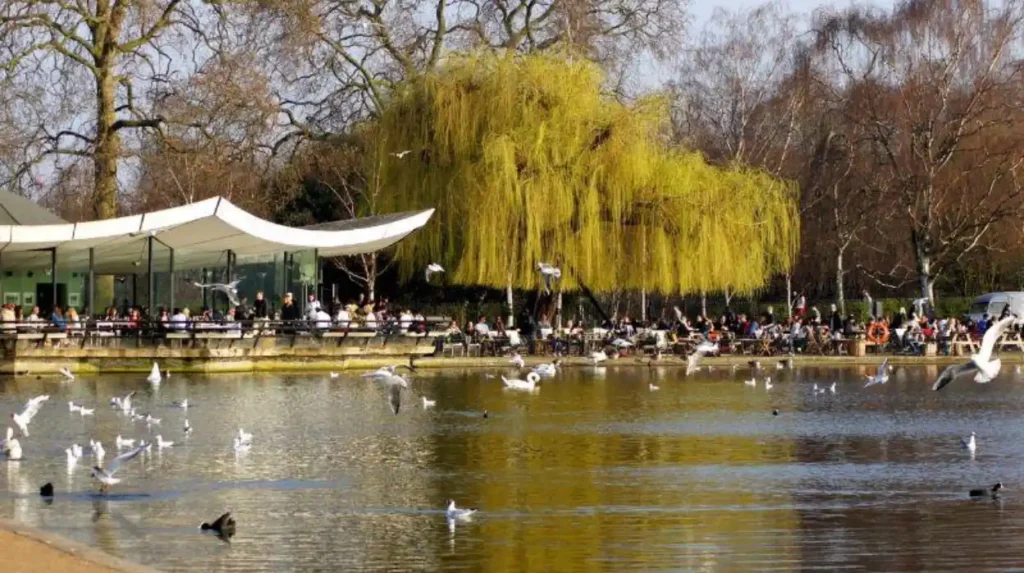
Spring wildlife observation centres on birds, waterfowl, trees and aquatic habitats, particularly around the Serpentine, where visitors can observe an active urban ecosystem within a landscape created through eighteenth-century royal engineering.
The Serpentine provides one of the park’s principal wildlife environments. Its water supports birds and other species while its shores create a transition between open water and managed parkland.
Wildlife observation also demonstrates an important historical change. Hyde Park began as a royal deer park. Its modern ecological value developed through successive changes in land management, landscape design and public use.
The Royal Parks identifies the Serpentine as a central location for wildlife observation, including birds around the lake and bridge areas.
Spring visitors should treat wildlife habitats as protected shared spaces. Observation from established paths reduces disturbance and supports the conservation function of the park.
What are the best outdoor activities in Hyde Park during summer?
Summer provides the widest range of Hyde Park outdoor activities, including boating, open-water swimming, tennis, padel, running, walking and organised games, while long daylight hours support extended exploration of the historic landscape.
Summer transforms Hyde Park into a major centre for active recreation. The park’s open grassland, lake and sports facilities support activities that represent different stages in its history.
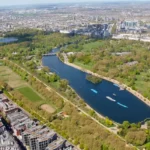
The most distinctive summer destination is the Serpentine. Created during the eighteenth century as part of Queen Caroline’s landscape transformation, the lake remains the physical centre of many modern outdoor activities.
The Serpentine also represents an important development in British landscape design. Artificial water features had traditionally followed formal, straight lines. Queen Caroline’s Serpentine was designed with a more natural appearance, establishing a model that influenced later parks and gardens.
Why is boating on the Serpentine a historic Hyde Park activity?
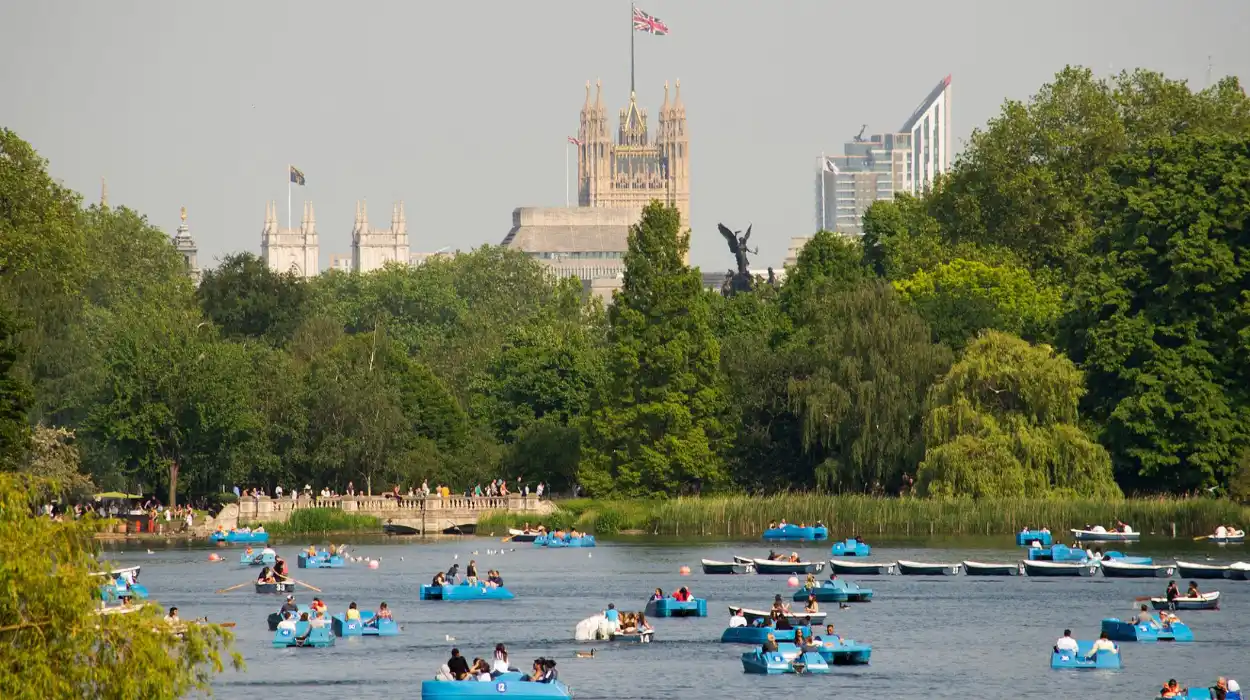
Boating on the Serpentine combines modern recreation with eighteenth-century landscape history, allowing visitors to experience Queen Caroline’s artificial lake while viewing Hyde Park from the water and observing its bridges, shoreline and wildlife.
The Serpentine was created during the 1730s by controlling the Westbourne watercourse. Historic records identify earlier ponds and water features in the area before the creation of the broader lake system.
The lake was formed as part of a wider redesign associated with Kensington Gardens and the royal landscape. Its irregular shape represented a departure from earlier formal water design.
Modern boating provides rowboats, pedalos and electrically assisted options. The Royal Parks states that boating operates through much of the year, with seasonal schedules affected by daylight and weather conditions.
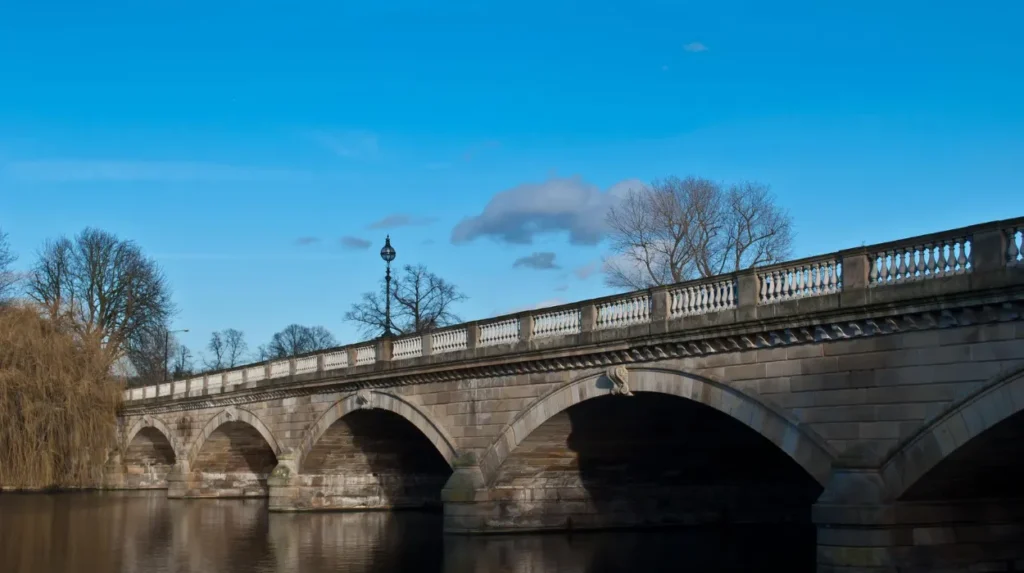
From the water, visitors can examine the Serpentine Bridge and understand how nineteenth-century engineering modified the earlier landscape. The bridge replaced an earlier cascade arrangement and formed part of the continuing development of Hyde Park’s circulation system.
Can visitors swim outdoors in Hyde Park during summer?
Public outdoor swimming takes place at the marked Serpentine Lido during the summer season, continuing Hyde Park’s long relationship with water recreation while separating organised swimming from boating areas and protected wildlife habitats.
The Serpentine Lido provides a designated location for open-water swimming. The majority of the lake is reserved for boating and wildlife rather than unrestricted swimming.
According to The Royal Parks, public swimming operates during the summer season, with scheduled access expanding between June and mid-September. The historic Serpentine Swimming Club also has a long association with the site.
Swimming in Hyde Park represents the evolution of public recreation in London’s royal parks. Activities once dominated by royal hunting and aristocratic riding later expanded to include recreation available to wider sections of the population.
Visitors should always check current operational information before swimming because safety arrangements and seasonal schedules are managed by the park authorities.
Which organised sports can visitors play in Hyde Park?
Hyde Park supports organised outdoor sport through facilities for tennis, padel, football, netball, lawn bowls and other activities, demonstrating how a historic royal landscape continues to function as an active public recreation space.
Sport occupies an important position in the modern use of Hyde Park. The Royal Parks provides facilities for tennis, padel, netball, football, lawn bowls and other organised activities.
This sporting use also has a direct historical connection to the Great Exhibition of 1851. The exhibition brought more than six million visitors to Hyde Park and established the park as an internationally recognised venue for public events. The site associated with the Crystal Palace is now connected with modern sporting activity.
The transition from exhibition space to recreational facilities demonstrates how historic landscapes acquire new public functions without losing their historical significance.
How can visitors enjoy Hyde Park during autumn?
Autumn is especially suitable for historical walking, running, photography and landscape observation because changing foliage makes Hyde Park’s mature trees, open spaces, historic routes and eighteenth-century water design easier to interpret.
Autumn shifts attention from intensive summer water activities towards landscape exploration. Falling leaves reveal long views through parts of the park and make the structure of avenues, paths and open spaces more visible.
Historic England records major nineteenth-century planting and improvement programmes within Hyde Park. These programmes changed the visual character of the landscape and responded to the growing demands of London’s expanding population.
Walking during autumn therefore provides an opportunity to study landscape management as part of history. Trees are not simply decorative features. They result from planned planting, replacement programmes and changing approaches to urban environmental management.
How does autumn help visitors understand Hyde Park’s landscape history?
Autumn exposes the structure of Hyde Park’s designed landscape by reducing dense foliage and highlighting historic routes, mature trees, open lawns and the relationship between the Serpentine, roads, gates and surrounding London development.
Hyde Park did not develop as a single planned landscape. Different periods produced different structures.
The Tudor period established the royal hunting park. The Stuart period expanded public access. The late seventeenth and eighteenth centuries introduced royal routes and major landscape engineering. The nineteenth century brought extensive improvements and new infrastructure. Examples include Rotten Row, the Serpentine and the redesigned entrances.
Autumn walking allows visitors to connect these layers physically. A route across the park can move from royal transport infrastructure to eighteenth-century landscape design and then to nineteenth-century public improvements.
This chronological complexity gives Hyde Park exceptional value for educators and students studying urban history, landscape architecture and heritage preservation.
Is autumn a good season for running and long walks?
Autumn supports sustained running and walking across Hyde Park because its extensive paths and approximately three-mile perimeter provide structured routes through historic landscapes while seasonal conditions encourage longer exploration beyond the busiest summer periods.
Hyde Park’s scale supports different distances and forms of movement. A visitor can follow the perimeter, circle sections of the Serpentine or create routes between major gates and monuments.
The park’s approximately 142-hectare area provides enough space for multiple recreational uses without limiting the visitor experience to a single route.
Running also continues a historical tradition of physical recreation within the park. Earlier visitors used Hyde Park for riding, driving, skating and other outdoor activities. Modern exercise represents another stage in the continuing adaptation of public space.
What can visitors do outdoors in Hyde Park during winter?
Winter visitors can explore Hyde Park through historical walks, wildlife observation, seasonal boating schedules and landscape study, using the quieter season to examine royal routes, monuments and the Serpentine without the intensity of peak summer recreation.
Winter changes the character of Hyde Park but does not end outdoor activity. The reduced foliage provides clearer views of mature trees, buildings and major landscape features.
Historical walking becomes particularly valuable during this period. Visitors can concentrate on the park’s physical evidence rather than seasonal gardens and large-scale summer activity.
The Serpentine remains a focal point. Boating schedules continue during much of the year, subject to seasonal operating arrangements and weather conditions. The Royal Parks provides winter access on selected days during the November-to-March period.
Why is winter useful for studying Hyde Park’s historic routes?
Winter makes Hyde Park’s circulation network easier to interpret because open views reveal the relationship between roads, paths, gates and royal routes that developed from Tudor hunting grounds into London’s modern public landscape.
Movement has always structured Hyde Park.
Early riders crossed the royal hunting ground. The Ring supported fashionable carriage activity. Rotten Row connected the royal landscape with wider London. Nineteenth-century improvements created new entrances, roads and circulation routes.
Decimus Burton played a major role in the nineteenth-century redesign of Hyde Park. His work reorganised parts of the park and introduced changes to entrances and boundaries. Historic England identifies the improvements of the 1820s as the most extensive programme of works undertaken in the park.
Winter walks allow visitors to understand these changes as connected elements of urban planning and landscape architecture.
What wildlife can visitors observe during winter?
Winter wildlife observation focuses on the Serpentine and surrounding habitats, where waterbirds and other urban wildlife remain visible against a simplified seasonal landscape that reveals the ecological importance of Hyde Park’s open water and vegetation.
The Serpentine remains an important ecological feature throughout the year. Seasonal changes affect visitor activity, but the lake continues to support wildlife and provide habitat within central London.
Winter observation also reinforces the importance of responsible public access. Hyde Park serves several functions simultaneously: recreation, heritage conservation, biodiversity and public gathering.
This balance has historical roots. The park changed repeatedly because different groups demanded different uses. Royal hunting gave way to wider recreation. Carriage routes were supplemented by pedestrian access. Public events introduced new pressures. Modern conservation now forms another major part of management.
How did the Serpentine transform outdoor recreation in Hyde Park?
The Serpentine transformed Hyde Park by introducing a major artificial lake in the 1730s, reshaping the landscape and creating a permanent centre for walking, boating, swimming, wildlife observation and the study of eighteenth-century British landscape design.
Queen Caroline, the wife of George II, directed major changes to Hyde Park and Kensington Gardens during the eighteenth century. Her programme altered the relationship between formal royal gardens and the wider public landscape.
The Serpentine was created by controlling the Westbourne watercourse. Historic research records earlier ponds associated with the landscape before they were reorganised into the Long Water and the Serpentine system.
The lake’s design was historically significant because it appeared more natural than the straight canals common in earlier formal gardens.
This design principle influenced the development of later landscape traditions. The Serpentine therefore functions as both a recreational facility and a surviving example of eighteenth-century landscape innovation.
How has Hyde Park preserved its outdoor heritage for modern visitors?
Hyde Park preserves outdoor heritage by maintaining historic routes, landscape features, public access and recreational traditions while adapting the park to modern sport, conservation, transport pressures and the needs of millions of visitors in central London.
Preservation in Hyde Park involves managing change rather than freezing the landscape in one historical period.
The park has lost features and gained new ones. Historic England records significant twentieth-century changes, including road widening around Park Lane that removed 8.5 hectares from the park during the 1960s.
This demonstrates the vulnerability of historic landscapes to urban infrastructure.
Tree populations have also changed. Disease affected historic planting, requiring replacement and continued landscape management. The park therefore represents an ongoing preservation challenge involving living vegetation as well as monuments and structures.
Modern management protects Hyde Park’s ability to serve multiple purposes. Visitors use the space for walking, sport and recreation. Researchers examine its royal and urban history. Educators use its physical landscape as evidence of historical change. Heritage specialists manage structures and designed landscapes.
Why does Hyde Park remain important for outdoor recreation and London history?
Hyde Park remains important because its outdoor activities preserve a continuous record of London’s transformation from royal hunting territory into a public landscape for recreation, political expression, sport, conservation, education and national cultural events.
The park’s historical importance lies in continuity and adaptation.
Henry VIII established its identity as royal land in the sixteenth century. Charles I opened it to the public in 1637. Queen Caroline reshaped its landscape during the eighteenth century. The nineteenth century established Hyde Park as a major setting for national events, including the Great Exhibition of 1851.
Modern outdoor activities continue this historical process.
Walking follows routes created for earlier forms of movement. Horse riding continues traditions associated with Rotten Row. Boating takes place on an eighteenth-century artificial lake. Swimming uses a landscape shaped by royal engineering. Organised sports occupy a park whose public role expanded dramatically during the Victorian period.
Hyde Park therefore offers a year-round record of British landscape history in active use.
Spring highlights renewal, wildlife and historic paths. Summer expands opportunities for swimming, boating and organised sport. Autumn reveals the structure of the designed landscape. Winter provides clearer conditions for studying routes, monuments and the park’s relationship with surrounding London.
For curious visitors, the strongest way to experience Hyde Park is to connect activity with history. Every route, lake and recreational space forms part of a landscape that has changed continuously for almost five centuries while remaining one of London’s defining public outdoor environments.
Frequently Asked Question
Can you go boating on the Serpentine?
Yes. Visitors can hire boats on the Serpentine, Hyde Park’s famous artificial lake created during the 1730s under Queen Caroline’s landscape improvements. Boating remains one of the park’s most popular seasonal outdoor activities.