London is one of the world’s most walkable historic capitals. More than 2,000 years of continuous settlement have created a city where Roman walls, medieval churches, Tudor palaces, Georgian squares, Victorian engineering, and modern landmarks exist within walking distance of one another. Self-guided walking tours allow independent travellers to explore this layered history at their own pace while following streets, riversides, parks, and neighbourhoods that reveal London’s architectural, political, cultural, and social development.
- Why are self-guided walking tours one of the best ways to discover London?
- Which self-guided walking tour explores London’s Roman and medieval origins?
- How does a Westminster walking tour explain Britain’s political history?
- What makes the South Bank one of London’s most rewarding walking routes?
- Which walking tour best explains London’s royal history?
- How can visitors explore London’s literary and cultural heritage on foot?
- Why is the City of London ideal for architectural walking tours?
- What historical stories does an East London walking route reveal?
- How does a Thames riverside walk explain London’s growth?
- Which neighbourhood walking tours showcase London’s local character?
- What practical principles create successful independent walking tours in London?
- Why do self-guided walking tours remain important for understanding London’s history?
Unlike organised tours, self-guided walks provide flexibility to spend more time at museums, churches, historic markets, public monuments, and lesser-known streets. London’s extensive pedestrian infrastructure, Underground network, public parks, and riverside pathways make independent exploration practical throughout the year.
This guide explains the best self-guided walking tours across London, the historical importance of each route, the landmarks encountered, and how these walks illustrate the evolution of Britain’s capital from Roman Londinium to a global metropolis.
Why are self-guided walking tours one of the best ways to discover London?
Self-guided walking tours reveal London’s history through its original street layout, surviving architecture, public spaces, riverside developments, and historic institutions. Independent exploration allows visitors to examine landmarks in chronological order while understanding how political power, commerce, religion, engineering, and urban planning shaped modern London.
Walking has always been central to understanding London because the city’s oldest districts developed centuries before motor vehicles existed. Roman roads, medieval alleyways, Georgian terraces, Victorian boulevards, and twentieth-century public squares remain largely accessible on foot.
London covers approximately 1,572 square kilometres, yet many of its most historically significant landmarks are concentrated within the City of London and Westminster. These districts preserve over two millennia of continuous urban development.
Historic England has designated thousands of listed buildings throughout Greater London, while numerous Conservation Areas protect historic streetscapes from inappropriate redevelopment. These protections allow independent visitors to experience authentic historic environments.
Walking also provides access to architectural details often overlooked from buses or taxis, including plaques, churchyards, narrow courts, guild halls, memorials, and historic shopfronts.
Which self-guided walking tour explores London’s Roman and medieval origins?
The Roman and medieval walking route introduces London’s earliest surviving history through Roman fortifications, medieval churches, ancient marketplaces, and the historic financial district. The route demonstrates how Londinium evolved into England’s commercial and administrative centre over nearly two thousand years of continuous occupation.
Roman London
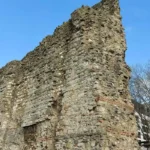
The walk begins near the remains of London’s Roman Wall, originally constructed around AD 190–225 to defend Londinium.
Fragments remain near Tower Hill, the Barbican, Noble Street, and Cooper’s Row. These surviving sections illustrate Roman engineering techniques using ragstone and brick.
Nearby stands the site of London’s Roman Amphitheatre beneath Guildhall Yard, discovered during archaeological excavations in 1988.
Medieval London
Following medieval streets leads visitors through Leadenhall Market, originally a poultry market dating to the fourteenth century.
The route continues towards medieval parish churches rebuilt after the Great Fire of 1666, including those designed by Sir Christopher Wren.
Guildhall remains the ceremonial headquarters of the City of London Corporation, whose governance traces its origins to medieval municipal administration.
The route concludes near the Tower of London, established by William the Conqueror after the Norman Conquest of 1066 to secure royal authority.
To experience these historic landmarks in person today, consult our comprehensive [Forgotten Corners of Historic London With Remarkable Stories Waiting to Be Discovered] for itineraries and visiting parameters.
How does a Westminster walking tour explain Britain’s political history?
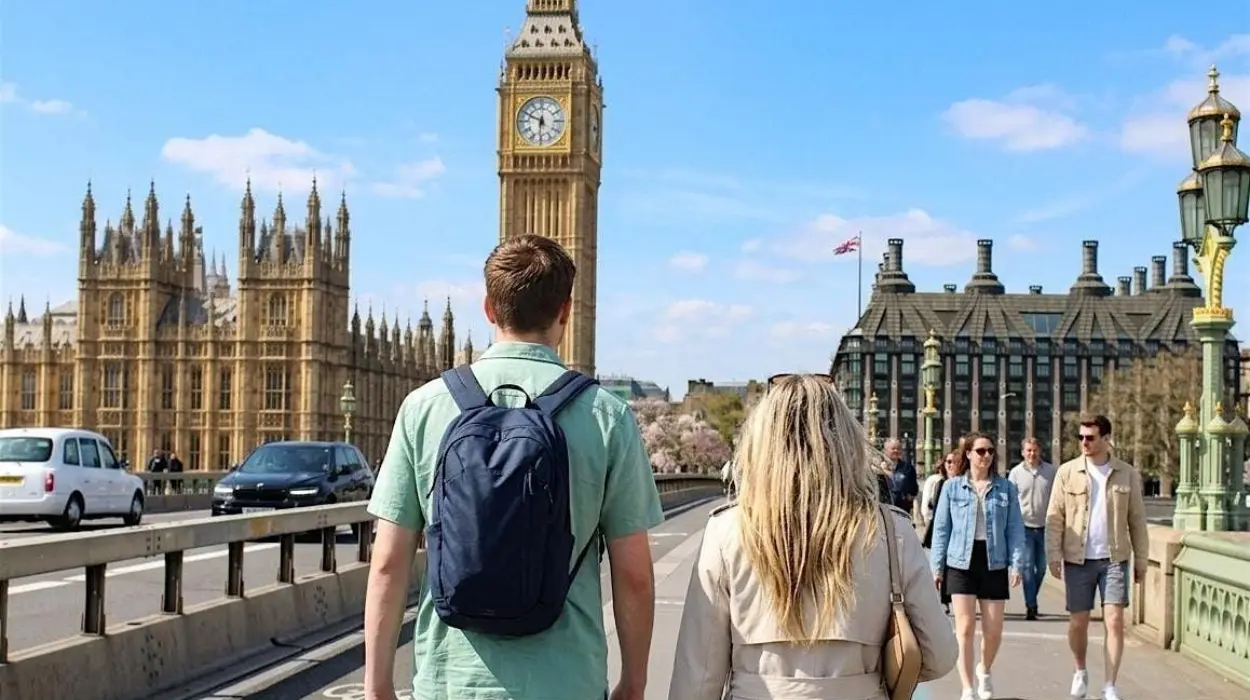
A Westminster walking tour demonstrates the evolution of constitutional government through royal palaces, Parliament, churches, ceremonial routes, and national memorials. The district preserves many buildings associated with monarchy, democracy, legislation, state ceremonies, and significant political events spanning nearly one thousand years.
Medieval Westminster
Westminster Abbey became the coronation church of English monarchs following William I’s coronation in 1066.
Nearly every British monarch since then has been crowned inside the Abbey.
The Palace of Westminster originally served as England’s principal royal residence during the medieval period before becoming the permanent home of Parliament.
Parliamentary London
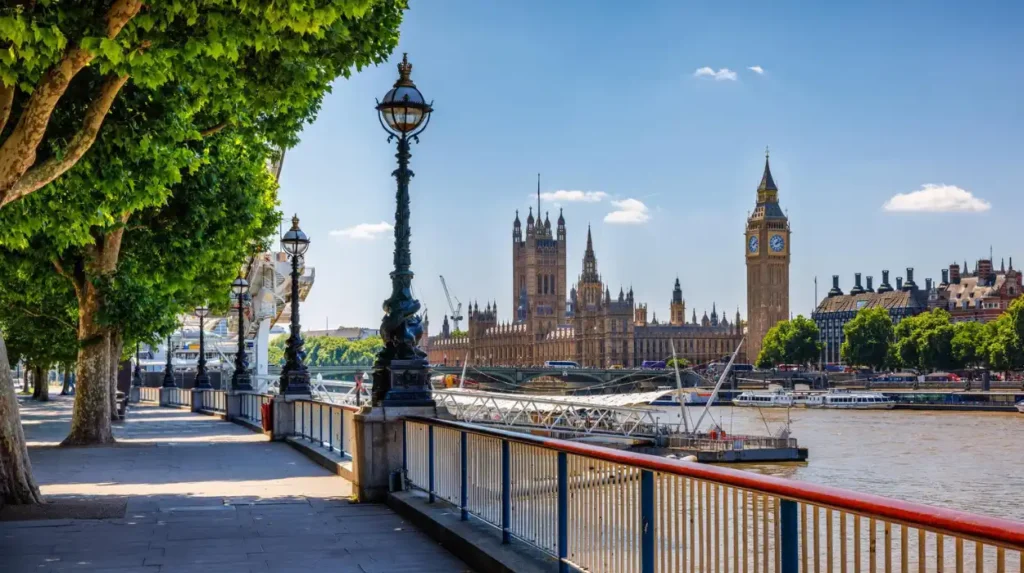
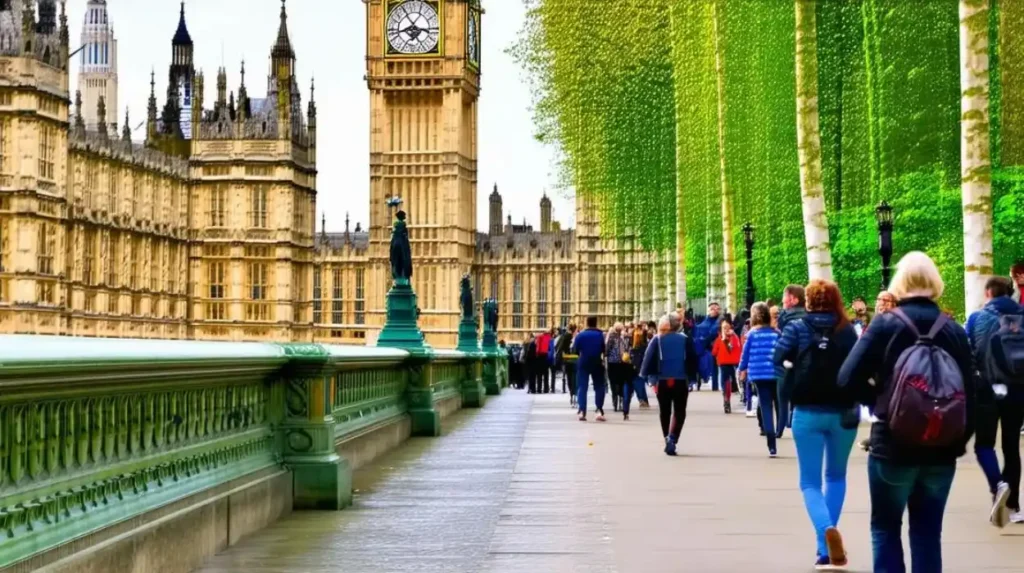
Following the fire of 1834, architects Charles Barry and Augustus Pugin designed the current Palace of Westminster in Gothic Revival style.
Big Ben refers specifically to the Great Bell inside the Elizabeth Tower rather than the tower itself.
Parliament Square contains statues commemorating major political leaders, including Winston Churchill, Nelson Mandela, Abraham Lincoln, Mahatma Gandhi, and Millicent Fawcett.
Whitehall connects Parliament with Trafalgar Square and contains many government departments that continue Britain’s administrative traditions.
What makes the South Bank one of London’s most rewarding walking routes?
The South Bank walking route combines industrial heritage, cultural institutions, riverside engineering, and modern regeneration. Walking beside the River Thames illustrates London’s transformation from a maritime trading port into an international centre for arts, tourism, commerce, and public recreation.
For centuries the South Bank remained outside the formal jurisdiction of the City of London.
Its location encouraged industries unsuitable within the medieval city walls, including theatres, breweries, warehouses, and entertainment venues.
The twentieth century dramatically reshaped the area.
The Festival of Britain in 1951 introduced new public architecture celebrating Britain’s post-war recovery.
The Royal Festival Hall remains one of the country’s leading concert venues.
Walking east reveals landmarks including the National Theatre, Shakespeare’s Globe, Tate Modern, Millennium Bridge, Borough Market, and HMS Belfast.
The Millennium Bridge opened in 2000, linking St Paul’s Cathedral with Tate Modern.
Today’s South Bank demonstrates successful urban regeneration while preserving important industrial structures.
Which walking tour best explains London’s royal history?
London’s royal walking route connects palaces, ceremonial parks, government buildings, and memorials associated with the British monarchy. The route illustrates changing royal residences, constitutional developments, ceremonial traditions, and public spaces that continue to host nationally significant state occasions.
The route typically begins at Buckingham Palace, the official London residence of the monarch since Queen Victoria established it as the principal royal palace in 1837.
St James’s Park originated during the reign of Henry VIII before later redesign under Charles II.
The Mall serves as London’s ceremonial avenue connecting Buckingham Palace with Admiralty Arch.
Horse Guards Parade hosts the annual Trooping the Colour ceremony celebrating the monarch’s official birthday.
Continuing towards Green Park and Hyde Park reveals royal hunting grounds transformed into public parks during later centuries.
Kensington Palace became an important royal residence after William III and Mary II purchased Nottingham House in 1689.
Today it remains an official royal residence while welcoming visitors to historic state apartments.
How can visitors explore London’s literary and cultural heritage on foot?
London’s literary walking routes connect homes, theatres, publishing districts, libraries, and educational institutions associated with influential writers, playwrights, scholars, and intellectual movements. These neighbourhoods document centuries of literary production that shaped English language, theatre, publishing, and education worldwide.
Covent Garden developed into London’s principal theatre district during the Restoration period after 1660.
Drury Lane became synonymous with English theatrical performance.
Nearby streets preserve connections with Charles Dickens, Virginia Woolf, Samuel Johnson, Oscar Wilde, and George Bernard Shaw.
The British Museum, founded in 1753, houses one of the world’s largest collections documenting global civilisation.
Bloomsbury later became associated with the Bloomsbury Group, whose members included Virginia Woolf, John Maynard Keynes, and E. M. Forster.
Walking through these districts illustrates London’s enduring role as a centre of publishing, scholarship, journalism, and literature.
Why is the City of London ideal for architectural walking tours?
The City of London presents over two thousand years of architectural evolution through Roman archaeology, medieval churches, Georgian rebuilding, Victorian commercial expansion, and contemporary skyscrapers. Few global financial centres preserve such diverse architectural periods within a compact, walkable urban landscape.
The Great Fire of London destroyed approximately 13,200 houses and 87 parish churches in September 1666.
Reconstruction introduced improved building regulations and widespread use of brick and stone.
Sir Christopher Wren designed fifty-one parish churches alongside St Paul’s Cathedral.
Victorian prosperity produced grand commercial buildings, banks, insurance headquarters, and railway infrastructure.
Modern additions include the Gherkin, the Cheesegrater, the Walkie Talkie, and other skyscrapers that coexist with protected historic buildings.
This architectural diversity reflects London’s continuing economic significance across successive centuries.
What historical stories does an East London walking route reveal?
East London walking tours explain immigration, industry, maritime trade, manufacturing, wartime resilience, and cultural diversity. Historic docks, markets, religious buildings, warehouses, and regenerated neighbourhoods demonstrate how successive communities transformed one of Britain’s most economically significant urban regions.
The Port of London became the world’s busiest port during the nineteenth century.
Docklands handled enormous quantities of tea, spices, sugar, timber, wool, and manufactured goods arriving from across the British Empire.
Immigration shaped neighbourhoods including Spitalfields and Whitechapel.
French Huguenots, Jewish communities, Irish workers, and later Bangladeshi residents contributed distinctive religious, cultural, and commercial traditions.
Brick Lane reflects these successive waves of settlement through churches converted into synagogues and later mosques.
The redevelopment of Canary Wharf from former docklands into a global financial district illustrates London’s continuing economic adaptation.
How does a Thames riverside walk explain London’s growth?
Walking beside the River Thames demonstrates how geography determined London’s development through trade, defence, transport, engineering, water supply, and commerce. The river connected Britain with international markets while influencing settlement patterns, infrastructure, and political authority across successive historical periods.
The Romans selected the Thames crossing because it provided the lowest practical bridging point before the estuary widened.
The original London Bridge remained the only bridge across the Thames for many centuries.
Expansion of bridges during the nineteenth century supported population growth and suburban development.
The Embankment projects transformed the riverfront by incorporating modern sewers designed by Sir Joseph Bazalgette after London’s nineteenth-century public health crises.
Today’s Thames Path allows walkers to follow extensive sections of riverside while observing docks, warehouses, bridges, government buildings, and regenerated waterfront districts.
Which neighbourhood walking tours showcase London’s local character?
Neighbourhood walking tours introduce London’s distinctive communities through local architecture, independent businesses, historic squares, religious buildings, public parks, and conservation areas. Exploring individual districts explains how different communities contributed unique identities while remaining connected within the wider metropolitan landscape.
Greenwich preserves maritime heritage through the Royal Observatory, the Old Royal Naval College, and riverside warehouses.
Notting Hill demonstrates Victorian residential planning alongside multicultural development during the twentieth century.
Hampstead retains eighteenth-century village character with historic houses, winding streets, and extensive heathland.
Chelsea reflects artistic, literary, and architectural traditions dating from the Tudor period.
Marylebone combines Georgian town planning with medical institutions, museums, and elegant residential streets.
Each neighbourhood illustrates different aspects of London’s historical development while maintaining distinctive architectural identities.
What practical principles create successful independent walking tours in London?
Successful independent walking tours combine historical research, logical route planning, reliable mapping, appropriate timing, and awareness of heritage regulations. Careful preparation enables visitors to understand historical context while efficiently exploring London’s extensive collection of protected buildings, museums, monuments, and public spaces.
Many central walking routes range between 3 and 8 kilometres, allowing comfortable exploration over several hours.
Historic churches frequently operate limited visiting hours outside worship services.
Museums generally provide free admission to permanent collections, although special exhibitions often require tickets.
Comfortable footwear remains essential because original stone paving survives across numerous historic districts.
Digital mapping applications, official heritage interpretation panels, museum guides, and conservation information provide valuable historical context throughout each walk.
Independent visitors benefit from researching landmark opening hours before beginning longer routes.
Why do self-guided walking tours remain important for understanding London’s history?
Self-guided walking tours preserve public engagement with London’s historical landscape by connecting architecture, archaeology, politics, commerce, religion, engineering, and culture within authentic urban environments. Walking original streets provides direct evidence of how successive generations shaped one of the world’s most historically significant cities.
London continues to evolve through regeneration, conservation, archaeological discovery, and sustainable urban planning.
Every major historical period remains visible across the capital, from Roman fortifications and Norman castles to Victorian railways and contemporary public spaces.
Walking encourages close observation of architectural details, commemorative plaques, historic street layouts, and surviving public institutions that collectively document over twenty centuries of continuous urban development.
For educators, walking routes provide practical historical case studies.
For cultural tourists, they deliver flexible and immersive experiences.
For genealogical researchers, historic neighbourhoods preserve valuable connections to family histories through churches, cemeteries, civic records, and longstanding communities.
As conservation projects continue protecting London’s historic environment, self-guided walking tours remain one of the most effective methods for understanding Britain’s capital. Independent exploration transforms streets, buildings, and public spaces into a living historical archive that explains how London developed into one of the world’s most influential cities.
What is a self-guided walking tour in London?
A self-guided walking tour is an independently planned route that allows visitors to explore London’s historic landmarks, neighbourhoods, museums, parks, and cultural sites at their own pace using maps or mobile navigation.