
Key Points
- Nigel Farage has visited Romford, in the London borough of Havering, to meet voters who say they feel “ignored” and “forgotten” by London’s political establishment.
- Residents have voiced frustration over deteriorating local services, traffic congestion, and a perceived lack of investment compared with other parts of London.
- The trip forms part of Farage’s campaign to boost Reform UK’s support in Havering, where an MRP poll for The Telegraph suggests Reform is on course to take control of the council from the Havering Residents Association.
- Local residents have separately complained about long‑running delays at the Gallows Corner junction, which has remained closed for months and caused severe traffic disruption.
- Broader concerns in London focus on how changes in party control of local councils could affect investment in housing, youth services, and high streets, as highlighted by Mayor Sadiq Khan in recent interviews.
Romford (The Londoner News) April 17, 2026
- Key Points
- Why is Nigel Farage focusing on Romford ahead of the London elections?
- What are residents complaining about in Havering and Romford?
- How are national and local politics connecting in Havering?
- How do Havering’s concerns reflect wider London‑wide debates?
- What does this mean for the upcoming local elections?
- Background of the development
- Prediction: How this development could affect voters and communities
Why is Nigel Farage focusing on Romford ahead of the London elections?
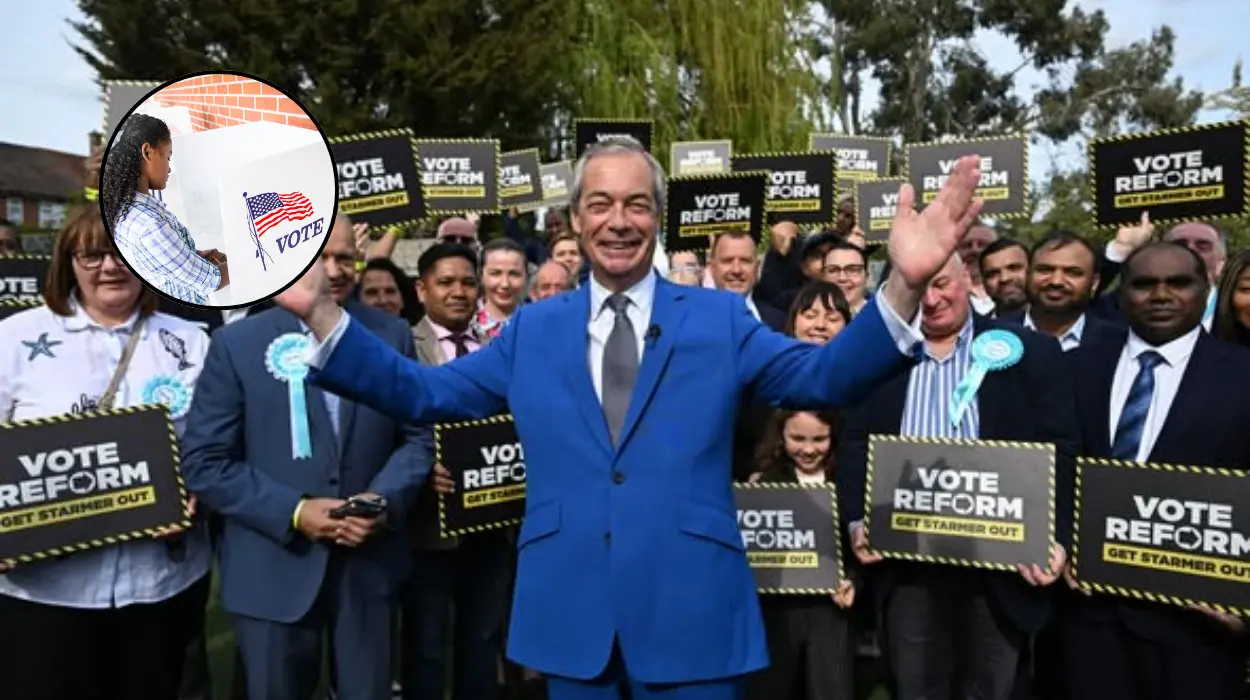
Romford, a borough on the eastern edge of Greater London, has become a focal point for political messaging in the run‑up to the local elections as Nigel Farage holds street‑level meetings with voters who say they feel left behind by London’s Labour‑led leadership. As reported by Hugo Gye of The Telegraph in his piece “Nigel Farage meets the voters feeling ignored in ‘forgotten’ Romford”, Farage has positioned himself as a voice for those who believe their concerns are being overlooked by the capital’s mainstream parties.
According to Gye, Farage described Romford as a place where residents feel they “don’t belong” to London the way they once thought they did, and where public services and transport are perceived as weaker than in more central or affluent boroughs. Residents told him they see the area as a “dumping ground” for problems created elsewhere in the capital, echoing earlier complaints by local politicians such as Romford MP Andrew Rosindell, who has criticised the purchase of new housing blocks in Romford by Newham Council instead of prioritising Havering families.
What are residents complaining about in Havering and Romford?
During his walkabouts in Romford town centre, Farage met market traders, retired couples, and working‑class constituents who raised issues ranging from potholes and anti‑social behaviour to the impact of slow transport and housing decisions on their daily lives. Many expressed the view that investments such as new tube or rail upgrades are directed at other parts of London, while Havering is treated as a low priority.
Transport‑related grievances have taken a concrete form at the Gallows Corner junction, where the roundabout has been closed since June 2025 and only finally expected to reopen in April 2026, according to Highways News. Residents have described the delay as causing “severe disruption”, including constant congestion, public‑transport delays, worsened air and noise pollution, and road‑safety concerns around schools. A petition circulated locally calls on Transport for London (TfL) to take “accountability” for the nine‑month delay, arguing it has damaged local businesses and residents’ quality of life.
How are national and local politics connecting in Havering?
Havering Council, which governs Romford, is currently run by the Havering Residents Association, a local party that has been able to keep bigger national parties at bay for much of the past two decades. However, recent polling conducted for The Telegraph by political analysts suggests Reform UK is on course to overtake the Residents and gain control of the borough, a shift that could reshape the political landscape for London’s eastern fringe.
Farage has framed his campaign as offering a direct alternative to both Labour and the Conservatives, arguing that London’s Labour leadership under the mayor has failed to address the needs of outer boroughs such as Havering. In parallel, the BBC has reported that Labour’s dominance across 21 of London’s 32 councils has been a key factor in decisions about investment in housing, youth services, and support for local high streets. London Mayor Sadiq Khan has warned that fewer Labour councils could mean fewer council homes, reduced youth clubs, and slower regeneration of local streets, statements relayed by BBC London correspondent Angus Crawford in coverage published on April 2, 2026.
How do Havering’s concerns reflect wider London‑wide debates?
Romford’s experience is being used by both national and local commentators as a case study of how outer‑London boroughs can feel disconnected from the priorities of the capital’s political centre. In a broader analysis of the London mayor’s role over the past 25 years, scholars quoted in The Political Quarterly via Wiley Online Library note that while mayors have limited powers, the direct election of the mayor has given individuals such as Sadiq Khan a platform to influence funding streams and public‑service priorities.
At the same time, residents in Romford and surrounding areas insist they are not seeking outright separation from London but greater recognition of their specific needs. Some explicitly contrast the attention given to central‑London projects—such as upgrades to the Tube or central‑zone regeneration schemes—with the comparatively slow pace of improvement in their own neighbourhoods. Local politicians and activists have also pointed to the sale of new housing stock in Romford to other councils as evidence that Havering’s housing and planning decisions are being driven by wider London‑level priorities rather than local demand.
What does this mean for the upcoming local elections?
For Reform UK, Havering represents a potential breakthrough in a part of London where neither Labour nor the Conservatives have traditionally dominated. The party’s campaign in Romford is banking on the frustration of voters who feel neglected, asking whether a London‑wide Labour leadership truly represents the interests of a borough that sits on the edge of the capital.
Labour, in turn, has emphasised that its record in London’s councils has underpinned investment in housing and social services, as highlighted by Khan in his BBC London interview. He has warned that a reduction in Labour’s council footprint could weaken the basis for such projects, particularly in outer boroughs where the pressure on homes and transport is already high. Conservative and Liberal Democrat voices have also weighed in on the broader London‑wide contest, arguing that a more fragmented council map could lead to more competition and experimentation in service delivery.
Background of the development
The current political moment in Romford and Havering is rooted in a longer‑standing debate about the relationship between outer‑London boroughs and the Mayor of London’s office. Since the Greater London Authority was established in 2000, successive mayors have had significant influence over transport, policing, and certain strands of housing and economic policy, but less direct control over local‑authority services such as refuse collection, libraries, and some education‑related matters.
Havering has long been governed by locally rooted parties and independents, which has allowed it to maintain a distinct identity within the capital while still relying on London‑level institutions such as TfL and the Metropolitan Police. At the same time, housing and planning decisions—such as the sale of new blocks in Romford to Newham Council—have drawn criticism from local residents and politicians who argue that Havering’s land is being used to solve problems elsewhere in the capital.
The frustration now surfacing in Romford is being amplified by broader national trends, including the rise of Reform UK and the weakening of traditional two‑party dominance in parts of England. Farage’s presence in the town signals that parties outside the mainstream are attempting to capitalise on perceptions of neglect, turning local transport bottlenecks and housing disputes into national‑level political narratives.
Prediction: How this development could affect voters and communities
For voters in Havering and similar outer‑London boroughs, the current political dynamic may lead to a sharper focus on how local services and transport decisions are made. If Reform UK gains ground in the borough, residents could see a more assertive local leadership that challenges London‑wide agencies over projects such as the Gallows Corner reopening or the allocation of housing blocks, while also testing the limits of influence that a borough council can exert over mayoral‑level bodies.
For London‑wide audiences, the experience in Romford may pressure the Mayor of London and other political parties to explain how they plan to balance investment in central zones with the needs of edge‑of‑London boroughs. If the current narrative of “forgotten” outer boroughs gains traction, it could encourage more transparent reporting on how transport and housing budgets are distributed across London, as well as greater scrutiny of whether London’s governance model adequately reflects the diversity of its communities.