Key Points
- E.L.V. Denim, a London‑based luxury fashion label, was founded in 2018 by fashion stylist Anna Foster and focuses on upcycling pre‑existing materials.
- The brand is built on the concept of reusing denim and other textiles, particularly damaged or discarded garments, to create new luxury pieces.
- E.L.V. Denim’s name stands for “East London Vintage,” reflecting its geographic roots and its emphasis on vintage and reclaimed materials.
- The label has presented at London Fashion Week, including evening‑wear collections made from unexpected materials such as crocheted bed linens.
- E.L.V. Denim positions itself as a “pioneering British luxury brand” that aims to give garments destined for landfill a second life.
- The brand has expanded from its signature denim jeans into shirts, dresses, accessories, and a cotton line sourced from textiles supplied by luxury hotels.
- E.L.V. Denim has been highlighted in 2026 guides and features as one of the sustainable or upcycling‑focused fashion brands to watch in London and the UK.
London (The Londoner News) April 17, 2026
- How does E.L.V. Denim build its identity around upcycling?
- How did Anna Foster’s background shape the brand’s direction?
- What does E.L.V. Denim’s name stand for, and how is it linked to East London?
- How has the brand expanded beyond jeans into broader collections?
- How is E.L.V. Denim positioned in 2026 sustainable fashion guides?
- What broader London fashion‑and‑sustainability trends does E.L.V. Denim fit into?
- Background of the development
- Predictions and implications
London Fashion label E.L.V. Denim, founded by fashion stylist Anna Foster in 2018, is increasingly being cited in 2026 guides and round‑ups as a London‑based example of how upcycled materials can underpin high‑end, sustainable fashion.
How does E.L.V. Denim build its identity around upcycling?
According to E.L.V. Denim’s own “About Us” page, the brand describes itself as a pioneering British luxury label that crafts timeless pieces from 100% upcycled materials. The company states that it seeks to “breathe a second life” into garments that would otherwise be sent to landfill, turning what it calls “loss” into luxury.
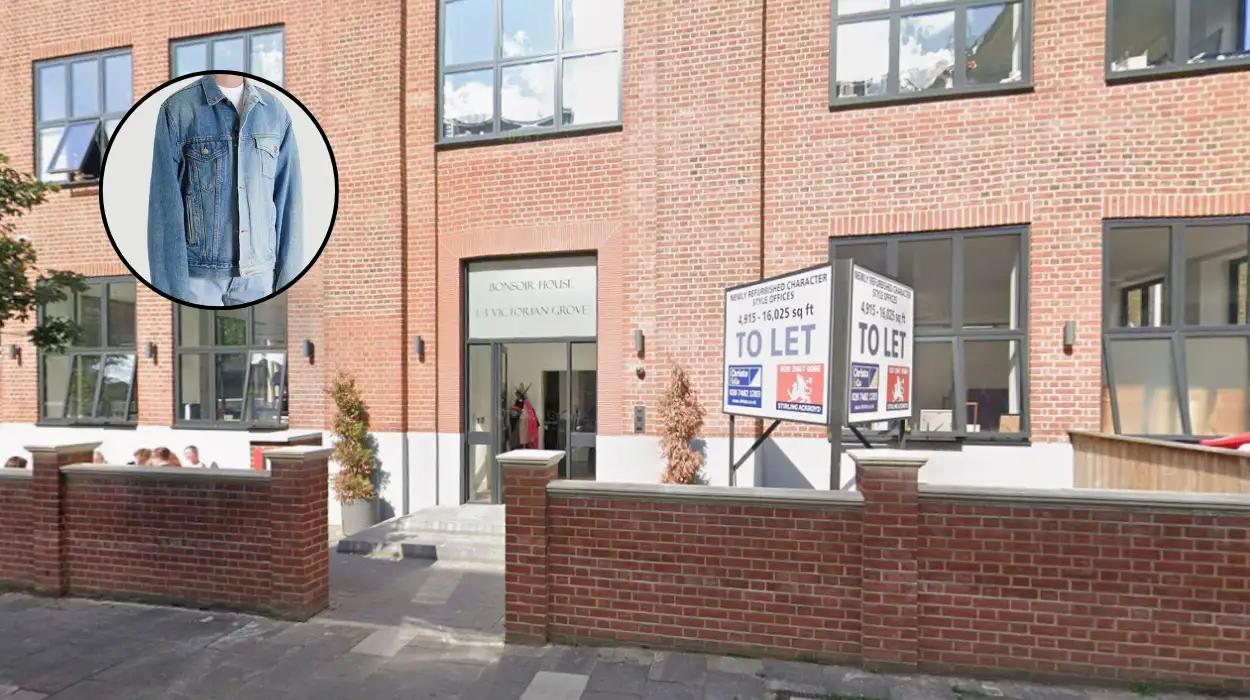
As noted by the brand’s communications, E.L.V. Denim began with a signature style: contrast‑colour denim mid‑seam jeans created from discarded denim. This approach allowed the label to emphasise visible seams and mismatched panels, positioning the visible traces of prior use as a deliberate aesthetic rather than a flaw.
How did Anna Foster’s background shape the brand’s direction?
In a 2025 LinkedIn “Founding Principles” feature on Anna Foster, she is described as a former fashion stylist who left a 20‑year career in fashion editing to launch E.L.V. Denim. The article notes that Foster’s work within the mainstream fashion industry led her to question overconsumption and the environmental impact of typical garment production.
In that same piece, Foster is quoted saying that when you are “disrupting the status quo,” many people respond with “no,” simply because they do not yet understand the question. The profile portrays her as consciously challenging established supply chains and material norms, such as using upcycled denim and other textiles instead of relying on virgin fabric.
A 2025 podcast interview with Foster, produced by Jo Glynn‑Smith, further outlines how she began to scrutinise the waste generated by the denim industry, including large volumes of discarded jeans and off‑cuts. The interview notes that this scrutiny, combined with her experience styling shoots where large volumes of clothes were used briefly and then discarded, became a key driver behind the creation of E.L.V. Denim.
What does E.L.V. Denim’s name stand for, and how is it linked to East London?
The “E.L.V.” of the brand name is explicitly derived from “East London Vintage,” a reference both to the geographical area Foster associates with the project and to its emphasis on vintage and recycled garments. This East London connection is repeated in profiles that describe the label as part of a broader London vintage‑and‑upcycling scene, including independent shops and designers operating in areas such as Hackney and Brick Lane.
In one 2025 feature from a “Founding Principles” series, it is noted that E.L.V. Denim has used locations such as 59 Great Portland Street in central London as a temporary community hub during a three‑month residency. The piece characterises this space as a place where the brand sought to connect with customers, collectors, and other creatives, using the residency as a platform to explain its upcycling methods and supply‑chain choices.
How has the brand expanded beyond jeans into broader collections?
Initially associated with upcycled denim jeans, E.L.V. Denim has since broadened its range to include shirts, dresses and accessories, as stated on the brand’s official “About Us” page. The same page notes that the brand has also introduced a cotton collection, made from textiles sourced from luxury hotels, effectively repurposing bed linens and other surplus fabrics.
The LinkedIn feature on Foster highlights that E.L.V. Denim has presented at London Fashion Week using unconventional materials, including evening gowns created from crocheted bed linens. The description in that piece suggests that the brand uses these presentations to demonstrate that upcycled materials can be used for high‑impact, runway‑level garments, not just casualwear.
Commentators on the 2026 London Fashion Week season, including a blog focused on sustainable brands, note that the event has adopted stricter sustainability requirements, pushing labels to demonstrate measurable changes in their production and material use. Within this context, E.L.V. Denim is cited as one of the designers “leading measurable change” by tying its entire aesthetic and production model to upcycling.
How is E.L.V. Denim positioned in 2026 sustainable fashion guides?
In a 2026 UK‑focused list of sustainable fashion brands, E.L.V. Denim is mentioned among labels that prioritise slow‑fashion principles, including smaller production runs and durable construction. The article notes that such brands usually adopt methods that reduce environmental impact while still aiming to maintain quality, and it places E.L.V. Denim in this category as an upcycling‑centric label.
A 2026 feature from The Glossary Magazine, framed as “Discover The Best Sustainable Fashion Brands In London 2026,” also references E.L.V. Denim and its founder Anna Foster. While the full text is not available here, the article is described as introducing E.L.V. Denim as a luxury label “built entirely on the idea” that sourced or vintage garments can be given a new life, reinforcing the brand’s identity around rescued materials.
What broader London fashion‑and‑sustainability trends does E.L.V. Denim fit into?
Commentary on London’s vintage and sustainable fashion scene points to a growing number of independent boutiques and labels that emphasise rework, repair and resale, often clustering in areas such as East London. For example, one guide on London’s vintage fashion shops singles out a Brick Lane‑based shop, Serotonin Vintage, which focuses on reworked pieces and environmental consciousness, suggesting that E.L.V. Denim operates within a wider ecosystem of upcycled and vintage‑driven retail.
At the same time, 2026 coverage of London Fashion Week underscores a shift from “promises” to “accountability” around sustainability, with organisers making stricter standards mandatory for designers. Within this evolving framework, upcycling‑centric brands such as E.L.V. Denim are being presented not only as stylistic experiments but as suppliers whose methods align with tighter environmental benchmarks.
Background of the development
E.L.V. Denim emerged in 2018 as part of a broader wave of upcycling and slow‑fashion initiatives in London, at a time when critics were increasingly highlighting textile waste and the environmental toll of fast fashion. The brand’s decision to work exclusively with upcycled materials, including denim and hotel textiles, reflects a deliberate attempt to bypass the creation of new fabric and instead repurpose existing stock.
Over the years, E.L.V. Denim has moved from a niche denim label into a full‑fledged luxury brand, presenting on the London Fashion Week schedule and using its shows to demonstrate that upcycled garments can function as high‑end eveningwear as well as everyday clothing. This evolution has helped the label gain visibility in sustainability‑focused round‑ups and guides, where it is often grouped alongside other slow‑fashion and circular‑design practitioners in the UK.
Predictions and implications
For London‑based consumers interested in sustainable fashion, E.L.V. Denim’s trajectory suggests that upcycled luxury is becoming a more visible and credible alternative to conventional fast‑fashion or even “greenwashed” eco‑collections. As major fashion events tighten sustainability criteria, brands that already build their entire model around reclaimed materials may gain a competitive advantage in terms of both credibility and regulatory compliance.
For designers and small‑scale producers in the UK fashion sector, E.L.V. Denim’s growth may encourage more experimentation with upcycled and vintage sources, particularly if similar brands continue to attract media attention and retail interest. At the same time, questions around scalability, labour conditions, and the long‑term environmental footprint of upcycling processes are likely to remain, meaning that E.L.V. Denim’s experience will be watched as a case study in how far a 100% upcycled model can be expanded in the luxury‑fashion space.