

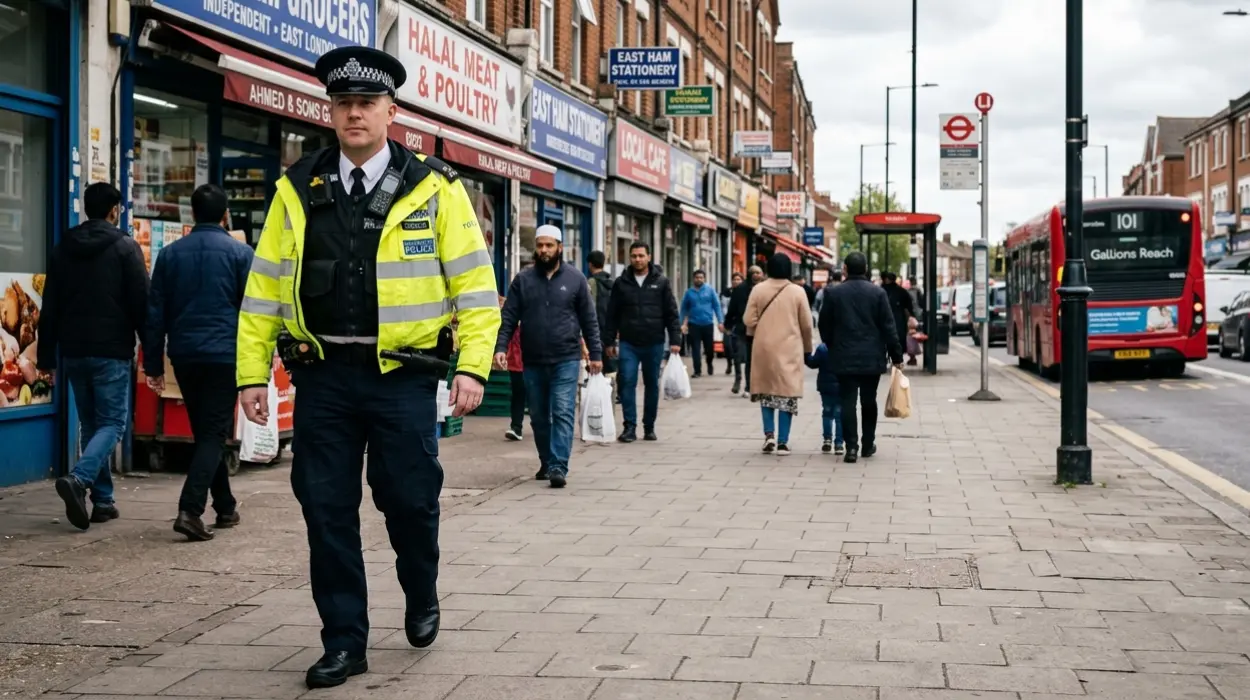
The Londoner News presents a comprehensive overview of urban security in East London, focusing on the Metropolitan Police Service response to modern safety challenges. Local enforcement structures face evolving micro-environments marked by anti-social behavior, theft, and violent crime patterns. This analytical report serves as an authoritative reference for residents, business owners, and regional stakeholders navigating community safety parameters within East Ham.
- Why Is The Metropolitan Police Launching New Patrols In East Ham?
- What Types Of Criminal Activity Are The Neighborhood Patrols Targeting?
- How Does The Public Health Approach To Crime Prevention Function?
- What Steps Can Local Businesses Take To Prevent Retail Theft?
- How Can Residents Improve Personal Safety Near High Streets?
- What Role Does Digital Infrastructure Play In Modern East London Policing?
- How Do Socio-Economic Factors Influence East Ham Crime Trends?
Why Is The Metropolitan Police Launching New Patrols In East Ham?
The Metropolitan Police Service launched targeted neighborhood patrols in East Ham to suppress rising rates of retail theft, anti-social behavior, and violent crime incidents occurring within high-density commercial corridors, specifically around the East Ham High Street North sector.
Urban safety evaluations conducted by Queen Mary University of London identify structural vulnerabilities along urban high streets, driven by economic shifts, post-pandemic adjustments, and the broader cost-of-living crisis (Blunt et al., 2025). High streets serve as critical social infrastructure for Londoners, meaning localized spikes in criminal activity directly impact regional economic resilience and community cohesion (Blunt et al., 2025). The introduction of visible, foot-based law enforcement resources aims to disrupt localized crime patterns and restore public confidence.
Operational policing frameworks rely on the criminology of place, which demonstrates that focused law enforcement presence in specific crime hotspots suppresses illegal activity without merely displacing it to surrounding residential sectors (Marasabessy, 2026). In East Ham, the deployment framework prioritizes the segment between the Barking Road junction and the Plashet Grove intersection (Blunt et al., 2025). This zone exhibits elevated footfall and corresponding escalations in property and interpersonal offences.
What Types Of Criminal Activity Are The Neighborhood Patrols Targeting?
The neighborhood patrols specifically target three distinct types of criminal activity: acquisitive property crimes, violent or weapons-related offenses, and persistent anti-social behavior elements that degrade public spaces and harm local commercial operations.
Acquisitive Property Crimes
Acquisitive crime represents a primary focus for the Metropolitan Police Service within urban retail environments. This category encompasses shoplifting, pickpocketing, and opportunist theft. Retailers along commercial corridors experience financial stress due to organized shoplifting syndicates and repeat individual offenders. Foot patrols maintain a visual presence inside and outside commercial premises to deter opportunist thieves and secure retail points of sale.
Violent and Weapons-Related Offenses
Violent crime reduction remains an absolute statutory priority for regional authorities under current legislative guidelines, including the Serious Violence Duty framework (Fraser, 2026). This category includes knife crime, robbery, and physical assaults. The implementation of public health approaches to violence reduction links enforcement with early intervention strategies, utilizing data-driven tracking to intercept individuals carrying weapons before escalation occurs (Fraser, 2026).
Persistent Anti-Social Behavior
Anti-social behavior encompasses non-felony offenses that undermine public order. The Metropolitan Police Service categorizes street drinking, intimidation, and open-air drug transactions under this classification. These offenses cluster near public transportation hubs and hidden alcoves, directly generating a heightened fear of crime among vulnerable demographics, such as single parents, elderly individuals, and school-aged children (Di Rocco, 2026).
How Does The Public Health Approach To Crime Prevention Function?
The public health approach treats criminal violence as a contagious, preventable disease, deploying multi-agency interventions that combine data tracking, hospital-based navigator programs, and community-level social support systems to break cycles of structural violence.
This paradigm shifts focus away from purely punitive containment toward systemic prevention, collaboration, and a formal recognition that violence stems from complex socio-economic challenges (Fraser, 2026). Criminological research confirms that areas characterized by vulnerable living conditions exhibit systemic exposure to crime, requiring structural interventions alongside standard law enforcement response (Guldåker et al., 2021). The public health strategy operates through three distinct operational phases:
Primary Prevention and Spatial Tracking
Primary prevention targets the root environmental and socio-economic variables that foster criminal activity. Regional authorities apply strategic mapping of living conditions to identify indicators of social stress, such as overcrowding, high unemployment, and low educational attainment (Guldåker et al., 2021). By mapping these indices against actual crime data, agencies deploy resources to vulnerable neighborhoods before criminal patterns stabilize.
Secondary Prevention and Interventive Navigators
Secondary prevention relies on rapid intervention when an individual enters a high-risk trajectory. A primary mechanism used across England and Wales is the implementation of Emergency Department navigator programs (Roberts, 2026). When a youth presents at an accident and emergency facility with a violence-related injury, trained clinical navigators immediately connect with the patient (Roberts, 2026). This interaction provides an immediate path away from retaliatory violence by linking the individual to housing, mental health, and educational services.
Tertiary Prevention and Focused Deterrence
Tertiary prevention manages long-term outcomes for established offenders to prevent recidivism. Specialized units work in tandem with the Youth Endowment Fund and local Violence Reduction Units to monitor high-risk networks (Fraser, 2026). This phase balances strict enforcement of judicial conditions with structured rehabilitation, using multi-agency coordination to disrupt territorial gang structures while offering genuine off-ramps from criminal lifestyles.

What Steps Can Local Businesses Take To Prevent Retail Theft?
Local businesses can prevent retail theft by implementing situational crime prevention methods, upgrading physical security infrastructure, participating in business crime reduction partnerships, and training retail personnel in active threat-mitigation protocols.
The Londoner News recommends a structured methodology for commercial property protection, derived from standard Metropolitan Police safety blueprints:
1.Optimize Spatial Layout and Product Sightlines:Immediate Phase.
Arrange retail floor plans to eliminate blind spots. High-value assets must reside within direct line of sight of the main point of sale. Position clear signage at entry points indicating the presence of active surveillance systems.
2.Upgrade Digital and Physical Security Hardware:Technical Integration Phase.
Install high-definition closed-circuit television cameras covering all entry, exit, and payment points. Ensure all recording equipment meets evidentiary standards for police extraction. Fit exit doors with functional alarms and secure display cases containing premium target inventory.
3.Deploy De-escalation and Deterrence Training:Operational Readiness Phase.
Train floor staff in customer engagement techniques that double as theft deterrence. Instruct employees to make direct eye contact and offer immediate assistance to every individual entering the premises, signaling that the space is actively monitored.
4.Link with Local Business Crime Reduction Partnerships:Continuous Communication Phase.
Connect commercial operations to shared communication networks, such as local radio links and digital alert applications. Sharing real-time descriptions of known shoplifting groups allows neighboring retailers to prepare security assets before an incident occurs.
Explore More Things To Do
Merton Abbey Mills Markets and Local Infrastructure Projects: Colliers Wood
Morrisons Installs Male Sanitary Bins in Customer Toilets: London
How Can Residents Improve Personal Safety Near High Streets?
Residents can improve personal safety by maintaining high situational awareness, eliminating visual distractions during transit, sticking to well-illuminated primary pedestrian routes, and securing personal communication devices against opportunistic snatch theft.
Analysis of urban environment data indicates that individuals are vulnerable to opportunistic property theft when their attention diverges from their immediate physical surroundings. The following behavioral adjustments optimize personal defense parameters against street-level crime types:
- Secure high-value mobile electronics: Avoid displaying smartphones, wireless headphones, and luxury timepieces while walking near transit hubs. Device snatching by offenders operating bicycles or mopeds represents a dominant mechanism for urban robbery.
- Utilize designated pedestrian corridors: Stick exclusively to primary thoroughfares that feature consistent public footfall and operational street lighting infrastructure. Avoid shortcuts through unlit alleys, isolated car parks, or industrial estates.
- Maintain strict boundary controls: Keep handbags, backpacks, and briefcases closed and positioned toward the front of the body when moving through dense crowds, particularly within high-volume marketplaces or train stations.
- Report structural maintenance failures: Report broken street lamps, damaged security fencing, and accumulated refuse to the Newham Borough Council immediately, as physical disorder acts as a visual catalyst for increased anti-social behavior.
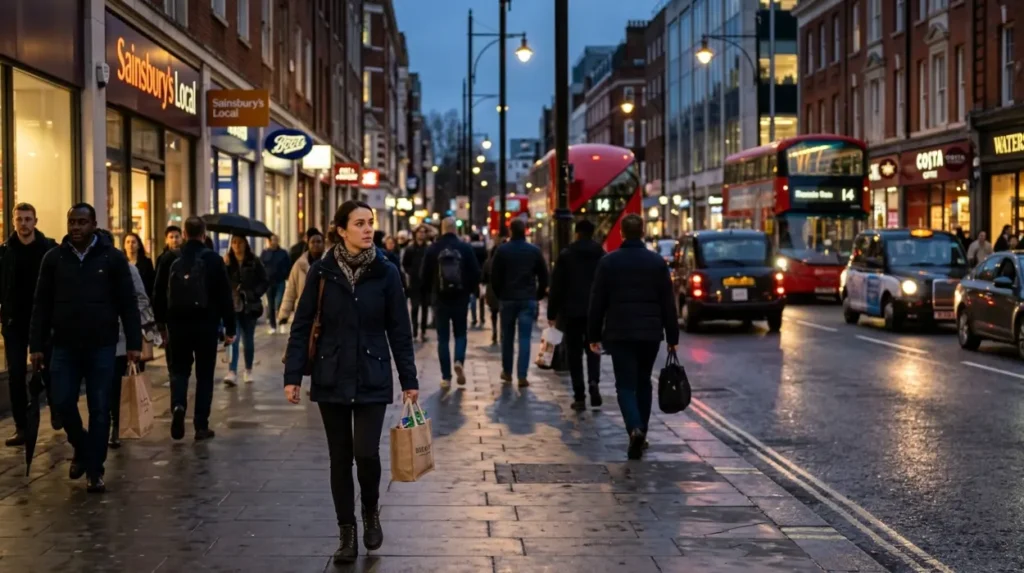
What Role Does Digital Infrastructure Play In Modern East London Policing?
Digital infrastructure provides the foundational framework for modern policing by enabling real-time spatial analysis through predictive crime mapping, automated evidence gathering via body-worn video, and rapid multi-agency information exchange.
The transition from historical, localized policing to modern hybrid security frameworks requires extensive integration of digital assets to maximize resource efficiency (Ayodele, 2025). This technological structure relies on key operational components.
The use of body-worn video serves as a critical tool for accountability and transparency, drawing strong support from community groups seeking objective verification of enforcement actions (Mokoena, 2026). Concurrently, law enforcement agencies leverage this digital asset to safeguard officers against false allegations and streamline the compilation of digital case files for the Crown Prosecution Service.
How Do Socio-Economic Factors Influence East Ham Crime Trends?
Socio-economic factors directly drive localized crime trends because structural deprivation, housing instability, and dense urban environments weaken community social cohesion while increasing exposure to illicit underground economies.
Criminological research underlines the reality that vulnerable living conditions strongly correlate with elevated exposure to crime (Guldåker et al., 2021). Newham remains a highly diverse, inner-city London borough characterized by pockets of exceptional socio-economic deprivation and families navigating temporary accommodation challenges (Pierce, 2026). These systemic pressures yield distinct sociological impacts:
Weakened Collective Efficacy
Collective efficacy refers to the shared trust and willingness of residents to intervene for the common good of their neighborhood. High population turnover, often driven by unstable housing markets and temporary placements, inhibits the formation of strong community relationships (Di Rocco, 2026). When residents lack long-term ties to their environment, informal social control declines, permitting anti-social behavior networks to establish a permanent presence in public spaces.
Environmental Catalysts and Macro Pressures
Urban environments present unique stressors that interact with human behavior. Academic studies demonstrate that macro-environmental factors, including air pollution spikes, correlate with measurable increases in short-term crime rates within urban centers (Bondy, 2024). When these ambient stressors combine with economic strain—such as inflation or systemic un-employment—the threshold for interpersonal conflict drops, resulting in higher volumes of spontaneous violent encounters.
Youth Vulnerability and Exploitation
The absence of stable economic pathways for school-leavers creates an environment ripe for criminal exploitation. Organized crime syndicates exploit vulnerable youth experiencing housing instability or school exclusion, drawing them into local drug supply networks (Fraser, 2026). Addressing these trends requires deep investment from central initiatives like the Pride in Place Impact programme alongside traditional policing to rebuild the economic core of the neighborhood (Blunt et al., 2025).
Why are there more police patrols in East Ham in 2026?
The Metropolitan Police increased patrol visibility in East Ham to address rising concerns around shoplifting, anti-social behavior, robbery, and violent incidents concentrated around High Street North and nearby transport corridors. The strategy focuses on hotspot policing, where officers are deployed in areas with consistently elevated crime reports.