
Key points
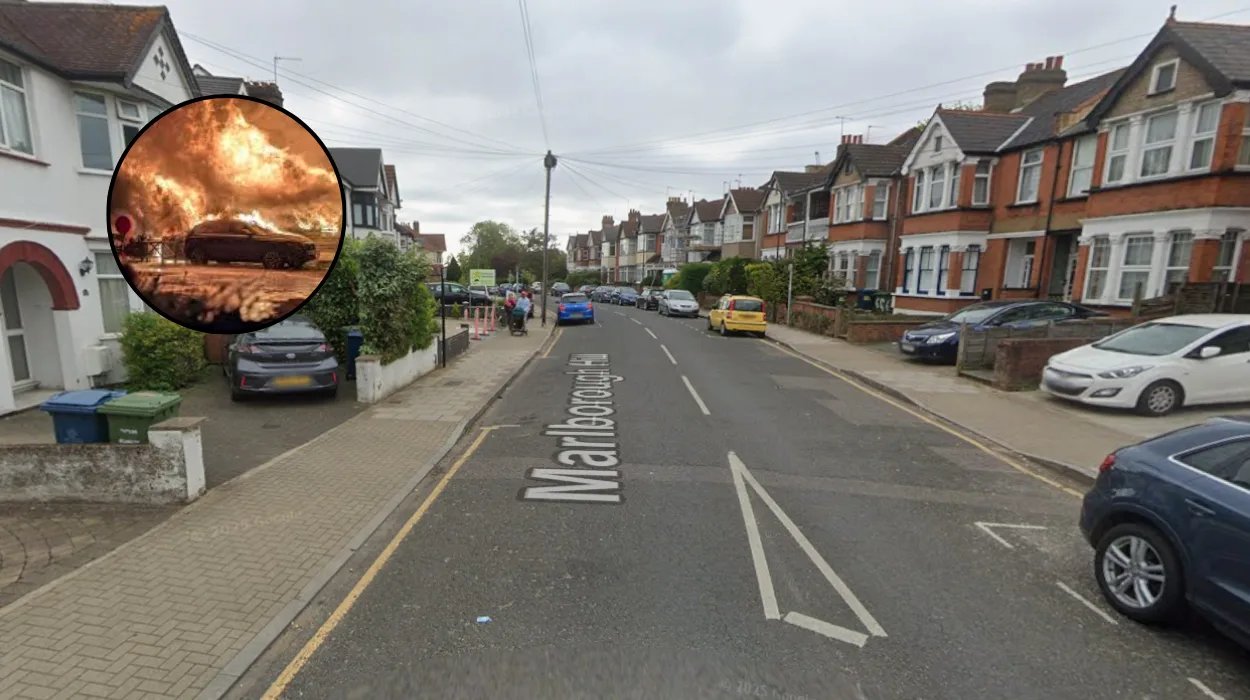
- A car was destroyed after it caught fire on Marlborough Hill in Harrow on Thursday 16 April 2026.
- The incident occurred in the morning, with the vehicle fully alight and producing thick smoke as it burned in the road.
- Photos from the scene show the car engulfed in flames and well alight, with flames visible on the vehicle.
- No further details are publicly available at the time of this report regarding injuries, casualties, or the cause of the blaze.
Harrow (The Londoner News) April 17, 2026 – A car was destroyed after it caught fire on Marlborough Hill in Harrow on Thursday 16 April 2026, according to local news coverage. As reported by Harrow Online, the vehicle was fully alight in the road, with flames and thick smoke coming from the burning car as it was consumed by the blaze.
Photographs shared by the outlet show the car engulfed in flame, with the front and central sections appearing to be the main points of ignition, although the reporting does not give an official account of where the fire started within the vehicle. Residents in the immediate vicinity were able to see the smoke rising from the road, but the report does not specify whether any buildings or nearby parked cars were damaged.
Authorities including the London Fire Brigade typically respond to similar incidents in Harrow, as evidenced by previous car‑fire operations in the borough, but the Harrow Online article on this specific event does not state which fire‑fighting units attended or how long crews were on scene. Nor does it confirm whether the driver or any passengers were present at the time the fire broke out, leaving open the question of whether the car was occupied or abandoned when the blaze took hold.
Were there any injuries or casualties?
Harrow Online’s report on the Marlborough Hill fire does not record any injuries or casualties connected to the incident. The piece focuses on the fact that the car was destroyed by the blaze and that flames and smoke were visible from the road, but it does not include statements from paramedics, police, or eyewitnesses confirming whether anyone required medical treatment.
In comparable car‑fire cases in Harrow, such as a previous incident on Headstone Road where one car was destroyed, the London Fire Brigade has noted that there were no reports of injuries. However, for this specific incident on Marlborough Hill, the available information does not make it clear whether that pattern has repeated or whether emergency services treated anyone as a precaution.
What do the photos from the scene show?
The images accompanying the Harrow Online story show the burning vehicle clearly in the road, with flames leaping from the car’s bodywork and smoke billowing upwards. The photos appear to have been taken from the roadside, suggesting that members of the public or local reporters captured the moment before or during the arrival of emergency services.
The angle and framing of the pictures indicate that the fire was already well developed when the photographs were taken, with much of the car’s upper structure obscured by flame and smoke and the lower chassis still visible beneath. However, the article does not describe any visible impact damage or collision marks, so it is not possible from the published material to tell whether the blaze followed a crash or started spontaneously while the vehicle was stationary.
Has the cause of the fire been identified?
The Harrow Online report does not state any official cause for the fire that destroyed the car on Marlborough Hill, nor does it quote London Fire Brigade or Metropolitan Police investigators on the matter. The piece treats the incident as a straightforward car‑fire, focusing on the visual impact of the blaze and the fact that the vehicle was reduced to a burned‑out shell, rather than on technical or forensic details.
By contrast, in other Harrow car‑fire incidents, such as the 2022 car fire on Headstone Road, authorities have publicly confirmed that one car was destroyed and that there were no reports of injuries, but again without specifying the ignition source. In the absence of an official statement for the Marlborough Hill case, the reasons behind the ignition—whether mechanical fault, electrical issue, fuel‑related, or deliberate—remain unconfirmed.
How did the incident affect traffic and residents?
The article does not mention any formal road closure, traffic diversions, or disruption to pedestrians on Marlborough Hill, nor does it describe any response from local authorities to the blaze beyond the implied presence of emergency services. Given the size of the fire shown in the photographs, it is possible that drivers were asked to slow down or avoid the immediate area, but those details are not recorded in the published report.
Residents living near the hill may have noticed the smoke and the glow of the flames, particularly as the report notes the incident took place in the morning, a time when many people are commuting or moving around the area. However, Harrow Online does not attribute any direct quotes or statements to local residents about disruption, property damage, or concerns for safety, so the precise effect on nearby households and businesses remains unclear.
Background of the development
Car fires occur with some regularity in the Harrow area, and local fire‑brigade records show a pattern of similar incidents in recent years. For example, the London Fire Brigade has previously responded to a fire in which a single car was destroyed on Headstone Road, Harrow, with no reported injuries and limited impact on surrounding properties.
In other nearby incidents, such as a 2016 collision‑related blaze when a car ploughed into a shop front on Station Road, Harrow, nearly 60 firefighters were deployed and the fire damaged several floors of a commercial building, again highlighting the disruptive potential of vehicle fires in built‑up parts of the borough. Marlborough Hill itself is a residential and mixed‑use road in North‑west London, meaning that any major fire on the carriageway has the potential to affect nearby homes, parked vehicles, and passing traffic, even if the immediate consequences are not always spelled out in local reports.
Prediction for how this development can affect the local audience
For residents of Harrow, incidents such as the car fire on Marlborough Hill may increase awareness of the risks associated with vehicle faults, particularly in older or poorly maintained cars. If similar fires recur in the borough, local drivers may be more inclined to seek regular mechanical checks, especially before long journeys or in periods of hotter weather when engine and electrical components can overheat.
For nearby residents and businesses, a visible blaze on a road like Marlborough Hill can also prompt calls for clearer emergency‑response planning, such as faster notification of road closures or stronger guidance on what to do if a vehicle catches fire in a congested area. Local authorities and fire‑safety campaigners may in future use this and comparable incidents to promote public‑safety messages, for instance on how to evacuate safely, avoid inhaling smoke, and not attempt to extinguish a fully developed car fire without proper equipment.