
Key Points
- Shomrim North West London volunteers responded within a minute to stabbings in Golders Green on 29 April 2026, detaining the 45-year-old assailant who stabbed two Jewish men, one in his 70s and one in his 30s.
- The attacks form part of a series targeting London’s Jewish community since March 2026, including arson on Hatzola ambulances, synagogue firebombings, chemical threats, and graffiti, with many claimed by Iran-linked Harakat Ashab al-Yamin al-Islamia (HAYI).
- Shomrim, established in 2009, operates a 24-hour hotline, patrols in high-visibility vests, and assists with missing persons, burglaries, and antisemitic assaults, serving all community members.
- Counter-terrorism police have made 27 arrests, including charges for arson and terrorism offences, amid increased policing under Operation Compertum.
- Prime Minister Keir Starmer called the Golders Green stabbing “utterly appalling” and pledged a “fundamental reset” against extremism; Mayor Sadiq Khan praised Shomrim’s “heroic” efforts.
- Volunteers like Ben Grossnass and Steven Bak emphasise running “towards danger” despite ongoing threats, with no deterrence from fear or hate.
London (The Londoner News) April 30, 2026 – Jewish volunteer group Shomrim North West London detained a knife-wielding assailant moments after he stabbed two men in Golders Green, highlighting their critical role amid a surge in antisemitic attacks across the capital. The incident on 29 April underscores the escalating violence targeting the Jewish community, with Shomrim volunteers arriving ahead of police to protect residents. Authorities have linked many assaults to an Iran-backed group, prompting heightened security measures.
- Key Points
- What Sparked the Recent Antisemitic Wave in London?
- Who Are the Shomrim Volunteers and What Do They Do?
- What Happened in the Golders Green Stabbing?
- Which Other Attacks Hit the Jewish Community?
- How Have Authorities Responded to These Incidents?
- What Do Political Leaders Say About the Attacks?
- How Has the Community Reacted?
- What Is the Broader Context of Iran-Linked Threats?
What Sparked the Recent Antisemitic Wave in London?
The 2026 London antisemitic attacks began in March, involving arson, explosives, and chemicals aimed at Jewish institutions. On 23 March, four Hatzola volunteer ambulances were torched in Golders Green’s Machzike Hadath synagogue car park, with hooded attackers causing explosions from oxygen cylinders and damaging the building.
As reported by Wikipedia contributors citing police sources, CCTV captured three suspects pouring accelerant before fleeing.
Subsequent incidents escalated: on 15 April, Finchley Reform Synagogue faced a firebombing with a brick and petrol bottles, though no ignition occurred. Mayor Sadiq Khan, as quoted by Al-Monitor, stated:
“I’m grateful to the Met Police for their swift response to the appalling attempted arson attack at Finchley Reform Synagogue overnight. The incident is being treated as an antisemitic hate crime, and there is an increased police presence in place in the local area.”
Who Are the Shomrim Volunteers and What Do They Do?
Shomrim North West London, founded in 2009, runs a 24-hour emergency hotline and rapid response unit with five vehicles. Volunteers wear high-visibility yellow vests marked “Shomrim” and “Emergency Response”, patrolling neighbourhoods and liaising with police.
They handle missing persons, burglaries, antisemitic assaults, and general emergencies, open to all residents.
Ben Grossnass, a Shomrim volunteer, told The Guardian’s unnamed reporter:
“Whenever I receive a call, even if it’s 5 AM and I’m asleep, I will spring into action and assist whoever needs help.”
Five weeks before the stabbing, Grossnass responded to the Hatzola arson. Steven Bak added:
“We are an organization that will always rush towards danger to safeguard the community. We are here for the community, and nothing will deter us. No fear, no hate.”
In the Golders Green stabbing, Shomrim arrived within 90 seconds, as per their social media cited by Al Jazeera.
What Happened in the Golders Green Stabbing?
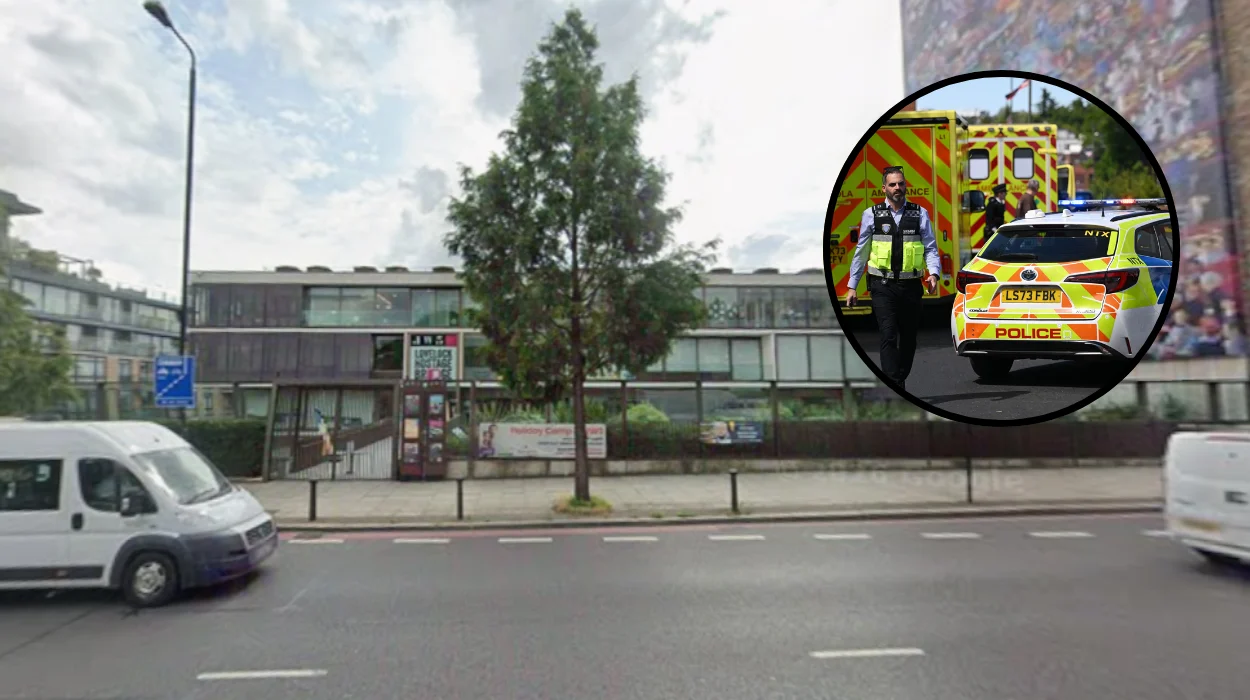
On 29 April, a man ran along Golders Green Road stabbing Jewish passers-by, injuring a man in his 70s and another in his 30s. Hatzola treated them on-site before hospital transfer. Shomrim volunteers detained the 45-year-old suspect until police tasered and arrested him.
The Observer reported that two Shomrim guards pursued and helped detain the knifeman in this “terror attack”, leaving victims seriously wounded. HAYI claimed responsibility. Prime Minister Keir Starmer described it as “utterly appalling”. Golders Green MP, as per BBC live updates, said:
“I have been informed about a grave stabbing incident in Golders Green. The individual suspected has been apprehended.”
She thanked Shomrim for their “essential efforts” and added:
“Assaults on British Jews constitute an assault on Britain as a whole. It is unacceptable for Jews to be singled out in this manner.”
Metropolitan Police Commissioner Mark Rowley, quoted by Al Jazeera, noted the suspect’s history of “serious violent behaviour and mental health challenges”, facing attempted murder charges.
Which Other Attacks Hit the Jewish Community?
The wave included multiple arsons: on 17 April, a Hendon charity site saw fluid bottles left at the door, causing minor scorch marks; Barnet residential bins were ignited; and Kensington Gardens near the Israeli Embassy yielded harmless powdered jars after HAYI’s threat. On 19 April, Kenton United Synagogue’s medical room was damaged by an accelerant bottle, and a Watford Jewish shop was firebombed with graffiti.
Further: 20 April foiled arson; 28 April memorial wall fire in Golders Green commemorating October 7 victims and Iranian protesters. HAYI claimed most, seen as an IRGC front outsourcing to locals.
How Have Authorities Responded to These Incidents?
Counter Terrorism Policing leads, with 27 arrests: four charged for Hatzola arson—Hamza Iqbal (20), Rehan Khan (19), Judex Atshatshi (18), and a 17-year-old dual national—for arson endangering life. Others include pairs for Finchley and Kenton attacks, a Terrorism Act arrest post-embassy threat, and nine for planned arsons.
Operation Compertum deploys hundreds of officers, armed vehicles, drones, stop-and-search in Barnet, and Project Servator behavioural detection. Deputy Assistant Commissioner Vicki Evans stated:
“We’ve made very clear that we will be relentless in our pursuit of anyone involved in carrying out or planning these arson attacks… We will not rest until all those responsible for these acts are held to full account.”
The Golders Green case is a declared terrorist incident.
What Do Political Leaders Say About the Attacks?
Prime Minister Keir Starmer vowed:
“We won’t relent in our fight against antisemitism and terror. Any perpetrators will feel the full force of the law,”
promising specialist officers and extremism countermeasures. Mayor Sadiq Khan posted on X:
“London’s Jewish community have been the target of a series of shocking antisemitic attacks. There must be absolutely no place for antisemitism in society,”
praising Shomrim.
Conservative leader Kemi Badenoch called it an “epidemic of violence” and “national emergency”. Reform UK’s Nigel Farage deemed it a “national disgrace”, citing incitement and migration;
Zia Yusuf linked to IRGC via Channel crossings. Green Party’s Zack Polanski faced backlash for suggesting “perception of unsafety”, refusing apology amid criticism from Starmer and Ed Davey.
Jonathan Hall KC said London is “under attack” by Iran, urging IRGC proscription.
How Has the Community Reacted?
Chief Rabbi Sir Ephraim Mirvis warned of a “sustained campaign of violence and intimidation… gathering momentum”, urging action before fatalities. An online fundraiser post-Hatzola raised £3.2 million; government donated replacement ambulances. Archbishop Sarah Mullally offered “wholehearted support, solidarity and prayers”: “An attack on Jewish people is an attack on us all.”
Over 20 groups, including Somali Bravanese refugees, rallied post-Finchley, recalling synagogue aid after their 2013 arson. Shomrim plans security training expansion.
What Is the Broader Context of Iran-Linked Threats?
Iran’s history includes 20 MI5-disrupted plots (2022-2024); May 2025 arrests for synagogue attacks; March 2026 charges against Nematollah Shahsavani and Alireza Farasati for foreign intelligence aid. HAYI provides IRGC deniability via proxies.