
Key points
- The UK’s national terrorism threat level has been raised from “substantial” to “severe” for the first time in more than four years, indicating that a terrorist attack is now “highly likely” in the coming months.
- The decision was taken by the Joint Terrorism Analysis Centre (JTAC), which operates within MI5 and advises the Home Office on the overall threat to the UK.
- The change follows a stabbing incident targeting two Jewish men in Golders Green, north–London, but officials stress that the revised level reflects a broader, long‑term rise in Islamist and extreme‑right‑wing threats inside the UK, not just that single attack.
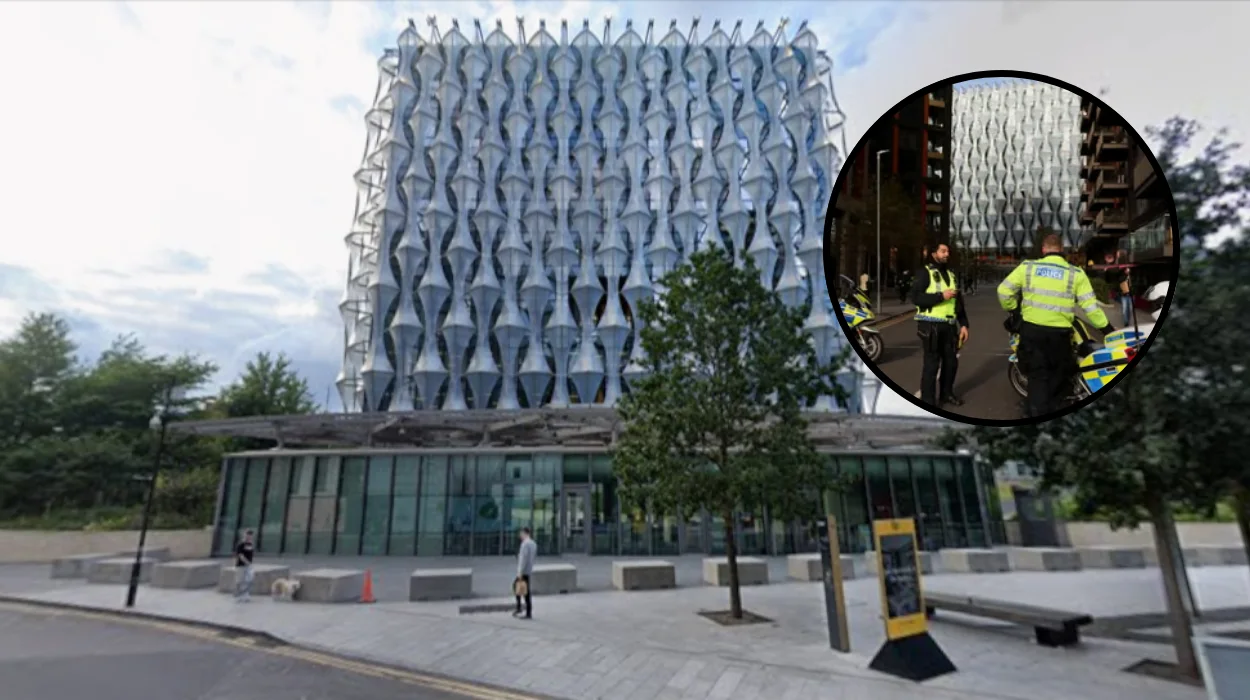
- The United States Embassy in London has issued a security alert urging American citizens to exercise increased caution, stay vigilant in public spaces, and avoid high‑profile targets such as schools, churches, tourist sites, and transport hubs.
- The embassy has advised US nationals to vary their travel routes and schedules and to review personal security plans, including emergency contacts and evacuation procedures.
- This is the second security alert issued by the US Embassy in the UK within weeks, after an earlier warning about a rise in antisemitic attacks and threats to Jewish and American‑linked institutions both in the UK and across Europe.
- UK counter‑terrorism officials have called the public to remain alert but not alarmed, and have reiterated that the UK’s security and intelligence agencies are on heightened operational footing.
London (The Londoner News) May 2, 2026 – The United States Embassy in London has issued a fresh security alert for American citizens following the British government’s decision to raise the UK’s national terrorism threat level from “substantial” to “severe”, making large parts of public life in England, Wales and Scotland feel more exposed to a potential attack. The shift, announced by the Joint Terrorism Analysis Centre (JTAC) and confirmed by the Home Office, marks the first time the threat level has reached “severe” in over four years, and has prompted US authorities to urge US nationals to remain especially vigilant in crowded areas, places of worship and transport hubs. Officials from both governments have warned that the heightened classification is not a response to a single incident alone, but to a longer‑term uptick in Islamist and extreme‑right‑wing terrorism carried out by individuals and small groups inside the UK.
- Key points
- What does the new threat level mean for the UK?
- Why did the US Embassy issue a new security alert?
- What triggered the Golders Green attack and the wider security rethink?
- How are UK authorities asking the public to respond?
- How is the global community reacting to the UK’s new threat level?
- What comes next for UK and US security co‑operation?
Local residents and foreign visitors in London have reported seeing more uniformed police and security personnel at major stations, shopping centres and tourist sites, while some US‑owned businesses and cultural venues have reviewed their access controls and security protocols. In interviews with local media, several London‑based American expatriates said they were re‑evaluating their evening routines and travel plans, though most stressed that they did not intend to change long‑term commitments to the city.
What does the new threat level mean for the UK?
The new “severe” threat level means that the UK’s Joint Terrorism Analysis Centre assesses that a terrorist attack is “highly likely” in the coming months, the second‑highest of the five official ratings used by the British government. Under the existing framework, “substantial” means an attack is “likely”, while “severe” indicates that the probability has now risen to “highly likely” without a specific, identified, imminent plot being disclosed publicly.
As reported by James Landale of BBC News, the JTAC decision was made by counter‑terrorism professionals within MI5 and is intended to be an intelligence‑led, non‑political judgement about the underlying risk environment across England, Wales and Scotland.
The BBC added that the last time the UK faced a “severe” threat level was in November 2021, following a bomb outside Liverpool Women’s Hospital and the murder of MP Sir David Amess, after which the level was later downgraded back to “substantial” in early 2022.
Analysts at counter‑terrorism policing and MI5 have pointed to two overlapping trends that helped drive the elevation: a rise in Islamist‑inspired activity and a parallel surge in extreme‑right‑wing terrorism carried out by individuals or small cells. In a statement released through the Counter Terrorism Policing website, Laurence Taylor, Head of Counter Terrorism Policing, said:
“As we have seen, the UK has been experiencing a gradual increase in terrorist threats for some time, driven by a rise in both Islamist and Extreme Right‑Wing terrorism.”
As quoted by reporters at Al Jazeera, MI5 noted that the revised threat level also comes after the stabbing of two Jewish men in Golders Green, north London, on a Wednesday in late April, an incident that has been treated as part of a wider pattern of antisemitic and politically motivated violence. However, officials from the same agency have been careful to emphasise that the change in threat level is not based solely on that one attack but on a broader assessment of
“individuals and small groups based in the UK”
exploiting both Islamist and far‑right ideologies.
Why did the US Embassy issue a new security alert?
The United States Embassy in London issued a security alert instructing US citizens to “exercise increased caution” while in the UK, particularly when visiting public spaces, schools, churches, tourist attractions and transport terminals.
The alert, as reported by Fox News and Al Jazeera, advised Americans to remain alert, vary their travel routes and schedules, and keep their personal security plans updated in case of an emergency.
Writing for Fox News, correspondent Stephanie Pagones noted that the embassy had previously issued a similar warning in late April, urging US nationals to take extra care when visiting Jewish and American‑linked institutions amid rising attacks and threats targeting such sites in the UK and other European countries.
Those earlier warnings had specifically referenced a spike in antisemitic incidents and threats against Jewish schools, synagogues and community centres, which US officials said required particular vigilance from US‑citizen visitors and students.
The updated guidance from the US Embassy calls on American nationals to review their security habits, including how they move through crowded areas, where they choose to live or work, and whether their children attend schools or universities in high‑profile locations. As Al Jazeera reported, the embassy’s notice also encouraged US citizens to register with the embassy’s online
“Smart Traveler Enrollment Program”
(STEP) so that consular staff can reach them quickly in case of a crisis or evacuation request.
In interviews with Al Jazeera, several US expatriates in London said they were considering adjusting their commutes, limiting late‑night travel on public transport, and discussing emergency contacts with family members back home. Some American parents at international schools in central London told local reporters that headteachers had issued additional security briefings to students and staff, including reminders about using well‑lit, well‑populated routes and avoiding gatherings near prominent landmarks at peak hours.
What triggered the Golders Green attack and the wider security rethink?
The stabbing of two Jewish men in the Golders Green area of north London, which took place on a Wednesday evening in late April, has become a focal point in the public discussion about the new threat level. According to BBC News, the two victims were attacked on the street in what police later described as an antisemitic hate crime, with one man requiring hospital treatment for stab wounds.
As reported by BBC journalist Rajini Vaidyanathan, the Metropolitan Police treated the incident as a terror‑linked hate crime and connected it to broader patterns of online radicalisation and real‑world violence targeting Jewish communities across Europe. Counter‑terrorism officers have since disclosed that the suspect in the case was arrested under the Terrorism Act, underscoring the seriousness with which UK authorities are treating such episodes.
While the JTAC has been careful not to say that the Golders Green attack alone justified raising the threat level, multiple sources, including Al Jazeera and BBC News, have reported that the incident served as a high‑profile illustration of the wider risks. In a statement quoted by Al Jazeera, MI5 officials explained that the revised level also reflects the cumulative effect of numerous smaller plots, failed attempts, and online radicalisation campaigns that have kept security agencies under pressure for months.
The Home Office has reiterated that the decision to raise the threat level is based on continuous intelligence collection and analysis, not on public pressure or political calculation. Nevertheless, the visibility of the Golders Green attack has heightened public anxiety, particularly among Jewish groups and other minority communities who have reported feeling increasingly targeted by extremist rhetoric and real‑world violence.
How are UK authorities asking the public to respond?
Senior officials from the Home Office and counter‑terrorism policing have repeatedly urged the public to remain “alert but not alarmed” in the wake of the new threat level. In a statement carried by BBC News, the Home Secretary confirmed that JTAC had raised the threat level from “substantial” to “severe”, and said that the UK’s security apparatus was operating at a heightened state of readiness.
As quoted by Laurence Taylor of Counter Terrorism Policing, the public should
“remain alert to the threat of terrorism and report anything suspicious”
to the police, while also maintaining normal life as much as possible. He added that the shift in the threat level does not mean authorities have uncovered a specific, named plot against the UK, but rather that the overall probability of an attack has risen due to the evolving threat landscape.
National protective‑security guidance, summarised by BBC News and the GOV.UK terrorism‑information page, advises members of the public to be observant in busy areas, avoid leaving bags unattended, and report any unattended items or suspicious behaviour via the anti‑terrorism hotline.
Transport for London (TfL) and other agencies have also encouraged regular travellers to be aware of emergency exits, signage, and the use of CCTV in key stations and hubs.
For institutions and businesses, security experts quoted by Al Jazeera and BBC News have recommended reviewing security plans, updating communication channels with local police, and training staff on what to do if an incident occurs, including lockdown and evacuation procedures. In some London boroughs, schools and community centres have brought in additional security volunteers or private guards, particularly when hosting large public events or interfaith services.
How is the global community reacting to the UK’s new threat level?
The elevation of the UK’s threat level has drawn attention from other Western governments and security‑analysis circles, several of whom have publicly acknowledged the gravity of the situation. In its reporting, Al Jazeera highlighted that the move places the UK among a small group of countries that have recently faced similarly high designations, with security analysts noting that the combination of Islamist and far‑right threats is becoming increasingly common in Europe.
As pointed out by James Landale of BBC News, the frequency of attacks and plots in recent years has prompted JTAC to move away from assumptions that the threat would steadily decline after major disruptions such as the Manchester Arena bombing and the 2017 London Bridge attack. Instead, officials cited a “more complex, multi‑front” environment in which both Islamist and extreme‑right‑wing actors are exploiting internet platforms and grievances over foreign policy and domestic social issues.
Travel‑industry bodies and business‑leaders quoted by BBC News and Al Jazeera have warned that while the UK’s tourism sector is resilient, any prolonged perception of heightened risk could affect visitor numbers and corporate events. Some hotel and retail managers in central London told local reporters they were already seeing a slight increase in queries from foreign visitors about safety, but added that most still chose to complete their trips.
Security‑consultants speaking to Al Jazeera said that multinational companies with offices in London may review their travel policies for US and European staff, especially those working near high‑profile government buildings or in areas with visible Jewish or American‑linked institutions. However, several business‑owners stressed that the UK’s long‑standing reputation for effective security and policing meant that most firms were more likely to adjust security protocols than to scale back operations.
What comes next for UK and US security co‑operation?
Analysts monitoring the situation expect that the UK’s “severe” threat level could remain in place for some time, barring a significant drop in the underlying security pressures. As reported by BBC News, MI5 and JTAC regularly review the threat level, but changes are typically infrequent and only introduced when intelligence and operational assessments clearly justify them.
The US Embassy in London is also likely to continue issuing periodic security alerts, particularly if fresh incidents or intelligence tips emerge that could affect American citizens. In the meantime, counter‑terrorism officials on both sides of the Atlantic have emphasised that close intelligence‑sharing and joint training exercises will remain a priority, especially as the lines between Islamist, far‑right and lone‑actor terrorism continue to blur.
For the public in London and across the UK, the most immediate instruction, repeated by both UK and US officials, remains simple but demanding: stay alert, report suspicious activity, and try to live as normally as possible while understanding that the security environment has become measurably more dangerous.