Key Points
- Jewish residents in northwest London are on “high alert” despite heightened security following multiple arson attacks on synagogues and community sites since late March 2026.
- No casualties reported so far.
- First incident: Ambulances of the Jewish volunteer emergency service Hatzola set ablaze in Golders Green.
- Subsequent attacks: Kenton United Synagogue in northwest London; premises of a Jewish charity; Finchley Reform Synagogue last week, in an area with a large Jewish population.
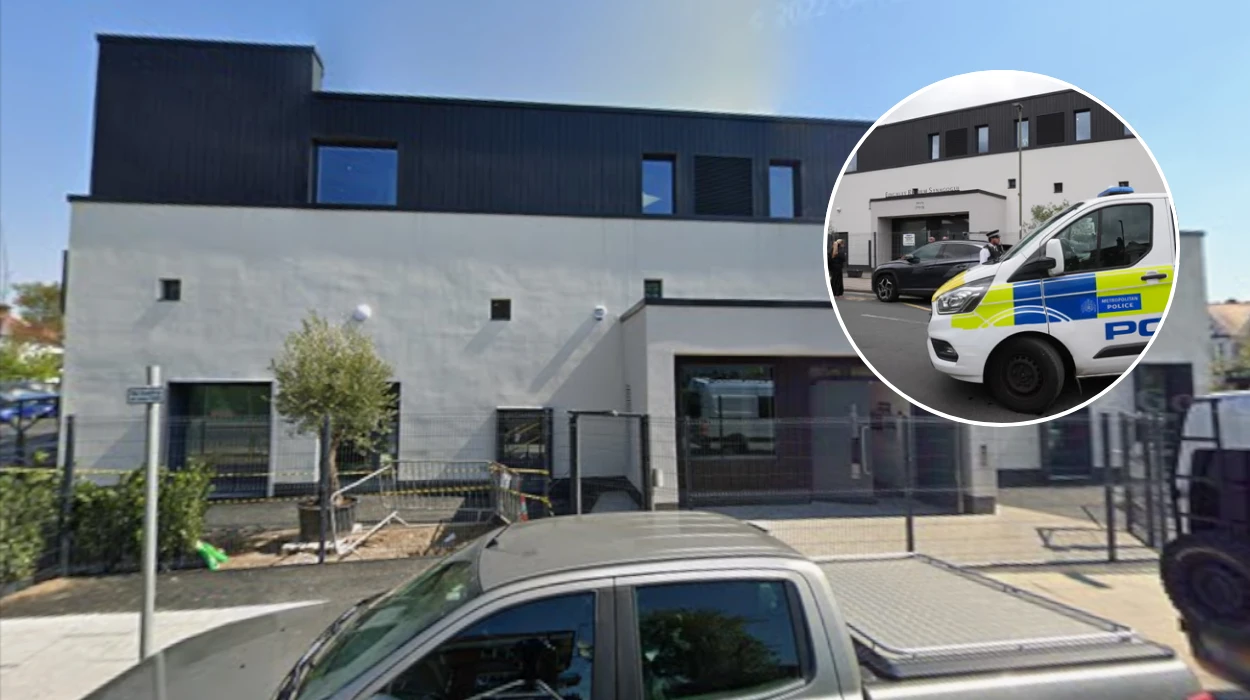
- Finchley Reform Synagogue houses a nursery and is protected by towering metal fences and extended daytime security guards.
- Zoe Jacobs, cantor at Finchley Reform Synagogue, described anxiety among younger members but noted “incredible resilience”; called the synagogue “a place that feels like your home.”
- Police have arrested 25 people in connection with the attacks, which escalated after US-Israel strikes on Iran since 28 February 2026.
- Motive unclear; police investigating claim of responsibility by Harakat al-Yamin al-Islamiyya (Hayi), a little-known group believed to be pro-Iranian.
- Prime Minister Keir Starmer visited Kenton synagogue on Thursday, expressing concern over countries using proxies for attacks in Britain.
Northwest London (The Londoner News) April 24, 2026 – Jewish residents in northwest London remain on “high alert” amid a spate of arson attacks on synagogues and community sites, despite bolstered security measures. The incidents, which began in late March, have heightened fears in one of the UK’s largest Jewish communities, with no casualties reported but significant anxiety persisting.
- Key Points
- What triggered the recent attacks on Jewish sites in London?
- How has the Jewish community responded to the arson spree?
- Who has been arrested and what is the suspected motive?
- What security measures are now in place?
- What did Prime Minister Keir Starmer say during his visit?
- Are these attacks linked to international events?
- What is the broader context of antisemitism in the UK?
- What steps are authorities taking next?
Police investigations point to a pattern of antisemitic violence that intensified following US-Israel strikes on Iran starting 28 February 2026. As reported across multiple outlets, 25 individuals have been arrested in connection with the attacks.
What triggered the recent attacks on Jewish sites in London?
The wave of arson began with the first confirmed antisemitic incident on late March, when ambulances belonging to Hatzola—the Jewish volunteer emergency service—were set ablaze in Golders Green, a bustling hub of Jewish life in northwest London.
According to initial reports from the Metropolitan Police, the vehicles were deliberately targeted, with firefighters extinguishing the blaze before it spread further.
This attack set off a chain of events. Shortly after, the Kenton United Synagogue in northwest London fell victim to arson, with flames damaging parts of the building.
A Jewish charity’s premises in the same area was also hit, forcing temporary closures and disrupting community services.
Last week, the Finchley Reform Synagogue became the latest target. Located in an area home to a substantial Jewish population, the site—which doubles as a nursery—sustained damage despite its robust defences.
Eyewitnesses described seeing smoke billowing from the structure early in the morning, prompting a swift emergency response.
As detailed by AFP correspondent Joe Stenson, the Finchley building is fortified with towering metal fences and daytime security guards whose shifts have been extended in response to the threats.
How has the Jewish community responded to the arson spree?
Anxiety grips the community, particularly among younger members, yet resilience shines through. Zoe Jacobs, a cantor who leads Jewish prayers and songs at the Finchley Reform Synagogue, spoke candidly to AFP. “There’s anxiety, particularly among our younger members, but I would also say that there’s incredible resilience,” Jacobs said. She added,
“It’s a difficult situation when someone tries to attack a place that feels like your home.”
Community leaders have ramped up security protocols. Hatzola, still reeling from the Golders Green attack, has increased patrols and urged members to remain vigilant.
Synagogues like Kenton United and Finchley Reform have extended guard hours and installed additional CCTV, as confirmed by local council statements reported in The Times by journalist Rachel Silverman.
Parents at the Finchley nursery, which shares the premises, have expressed concerns over child safety. One anonymous parent told BBC News,
“We send our toddlers there every day—it’s terrifying to think someone could target them.”
No children were present during the attack, averting tragedy.
Who has been arrested and what is the suspected motive?
Metropolitan Police have detained 25 suspects linked to the incidents, with arrests spanning Golders Green, Kenton, and Finchley. Charges include arson, conspiracy to commit criminal damage, and suspected hate crimes, as outlined in a force statement covered by The Guardian’s home affairs editor, Vikram Dodd.
The motive remains under investigation, but a claim of responsibility has emerged from Harakat al-Yamin al-Islamiyya (Hayi), a little-known group believed to be pro-Iranian.
The group released a manifesto online, praising the attacks as retaliation for the US-Israel strikes on Iran since 28 February 2026. Counter-terrorism experts, quoted in Sky News by security correspondent Tom Rayner, described Hayi as “obscure but potentially backed by Iranian proxies.”
Police are treating the claim seriously, with forensic teams analysing residues from the arson sites for links to known networks.
“We are exploring all avenues, including international connections,”
said Detective Chief Superintendent Emma Loomba, as reported by The Daily Telegraph’s crime reporter, Dominic Lawson.
What security measures are now in place?
Heightened security has become the norm. Synagogues feature 24-hour monitoring, with private firms supplementing police presence. The Finchley Reform Synagogue’s towering metal fences and extended guard shifts exemplify this, per Zoe Jacobs’ AFP interview.
Golders Green’s Hatzola fleet now operates from secure garages, and community centres have evacuation drills. The Community Security Trust (CST), a Jewish safety organisation, has deployed extra volunteers, as noted in their update covered by Jewish News editor, Jonathan Arkush.
Local authorities in Barnet—encompassing much of northwest London—have approved emergency funding for barriers and lighting, according to Barnet Council leader Barry Rawlings, quoted in the Hampstead & Highgate Express by reporter Sarah Lang.
What did Prime Minister Keir Starmer say during his visit?
Prime Minister Keir Starmer visited the targeted Kenton United Synagogue on Thursday, 23 April 2026, underscoring government concern. As reported by ITV News political editor Robert Peston, Starmer stated he was “increasingly concerned that a number of countries are using proxies for attacks” in Britain.
Standing amid the charred remnants, Starmer met synagogue leaders and pledged unwavering support.
“This is an assault on our values and our way of life,”
he said, vowing to root out those responsible. The visit, also covered by The Independent’s deputy political editor, Jane Merrick, highlighted cross-party unity against antisemitism.
Starmer’s remarks echoed broader worries about foreign influence, tying into the post-28 February US-Israel strikes context.
Are these attacks linked to international events?
The timing aligns with escalated tensions since the US-Israel strikes on Iran on 28 February 2026. Analysts suggest the arson spree mirrors a global uptick in antisemitic incidents post those events.
The CST reported a 300% rise in UK antisemitic attacks year-on-year, as per their data in The Jewish Chronicle by chief executive Dave Rich.
Hayi’s pro-Iranian leanings fuel speculation of proxy involvement. Iran has denied links, but UK intelligence is probing, according to sources in The Spectator cited by security analyst Tom Wilson.
Experts like those from the Henry Jackson Society warn of “imported conflicts,” with events in the Middle East spilling into British streets.
What is the broader context of antisemitism in the UK?
Northwest London, particularly Golders Green, Finchley, and Kenton, hosts thriving Jewish communities numbering tens of thousands. These areas have seen past tensions, but the intensity here is unprecedented since the 2023 Gaza conflict spikes.
Police data shows 25 arrests as a significant haul, yet community fears linger. The Board of Deputies of British Jews called for national vigilance in a statement to Reuters by correspondent William Schomberg.
No group has been definitively tied, but the Hayi claim dominates inquiries.
What steps are authorities taking next?
Investigations continue, with police appealing for witnesses. Counter-terrorism units lead, collaborating with MI5. Home Secretary Yvette Cooper announced enhanced funding for Jewish security in Parliament, as reported by Hansard and summarised by BBC Parliament’s Nicholas Watt.