
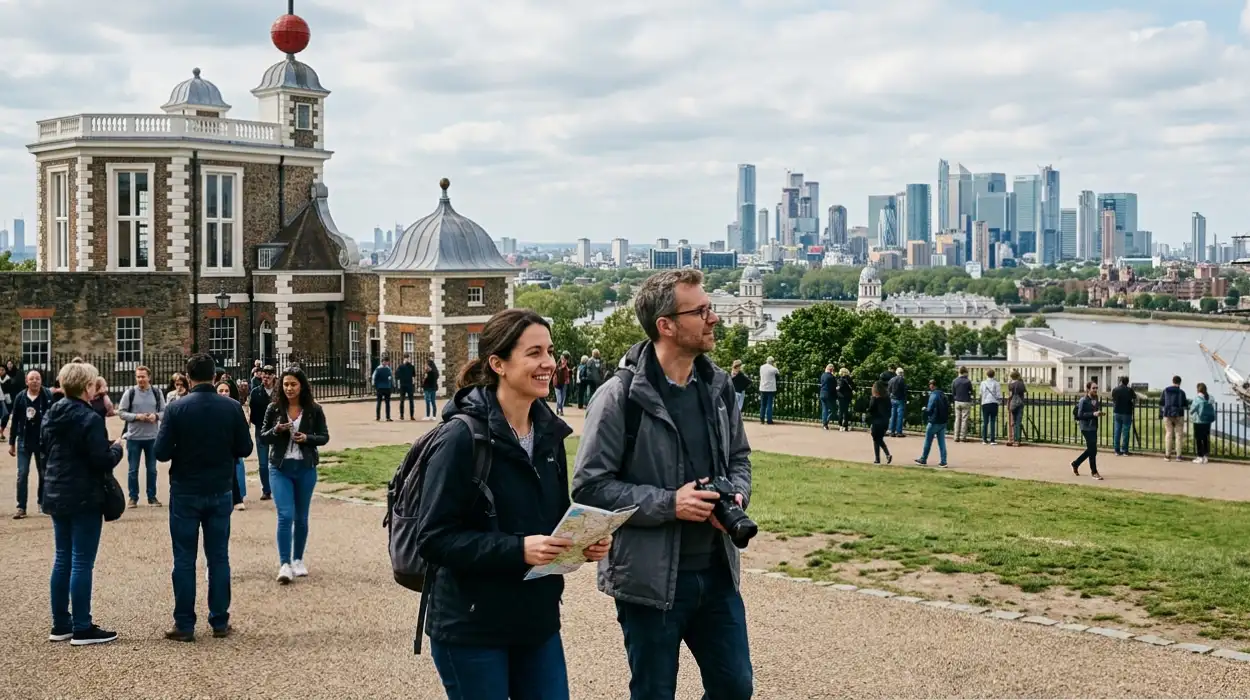
Greenwich offers top attractions centered on maritime history and science. Key sites include the Royal Observatory, Cutty Sark, and Greenwich Park. The Londoner News details these for London visitors seeking structured itineraries.
- What Is Greenwich and Why Visit It?
- Where Is the Royal Observatory in Greenwich?
- What Can You Do at the Royal Observatory Greenwich?
- What Is the Cutty Sark and Its History?
- How Do You Explore the Cutty Sark?
- What Makes Greenwich Park Special?
- What Activities Fill a Day in Greenwich Park?
- What Is the National Maritime Museum?
- Why Visit the Old Royal Naval College?
- What About Greenwich Market?
- How Does One Get to Greenwich from Central London?
- What Are Family-Friendly Activities in Greenwich?
- Are There Free Things to Do in Greenwich?
- What Is Up at The O2 Experience?
- How to Plan a One-Day Greenwich Itinerary?
What Is Greenwich and Why Visit It?
Greenwich is a historic district in southeast London, England, designated a UNESCO World Heritage Site in 1997 for its maritime and royal significance. Visitors explore the Prime Meridian at the Royal Observatory, board the Cutty Sark clipper ship, wander Greenwich Park’s 183 acres, and visit the National Maritime Museum and Old Royal Naval College. These attractions draw 2.5 million visitors annually, blending science, seafaring history, and green spaces.
Greenwich sits on the south bank of the River Thames, 5.5 miles east of Charing Cross. The area originated as a royal palace in the 15th century under the House of Plantagenet. King Henry VIII expanded it into a Tudor palace where his daughters Mary and Elizabeth I were born.
The district’s structure divides into Greenwich Park, the waterfront with Cutty Sark and the college, and market areas. Processes involve timed tickets for indoor sites and free park access. The Prime Meridian, established in 1884 at the International Meridian Conference, divides east and west longitudes at 0 degrees.
Examples include standing exactly on the Meridian line indoors or outdoors. Statistics show Greenwich Park hosts 47 deer across fallow and red species. Implications extend to global timekeeping, as Greenwich Mean Time (GMT) sets UTC standards used worldwide.
Where Is the Royal Observatory in Greenwich?
The Royal Observatory Greenwich sits at the top of Greenwich Park at 25 floors above sea level, coordinates 51.4769° N, 0.0008° W. Founded in 1675 by King Charles II to solve the longitude problem for sailors, it houses the Prime Meridian, Airy Transit Circle telescope, and planetarium shows. Open daily 10 am-5 pm; adult tickets cost £20.
This observatory has defined the Prime Meridian since 1884. Architect Christopher Wren designed the Flamsteed House in 1675. Key components include the Octagon Room with original 1676 furnishings and the Meridian Courtyard.
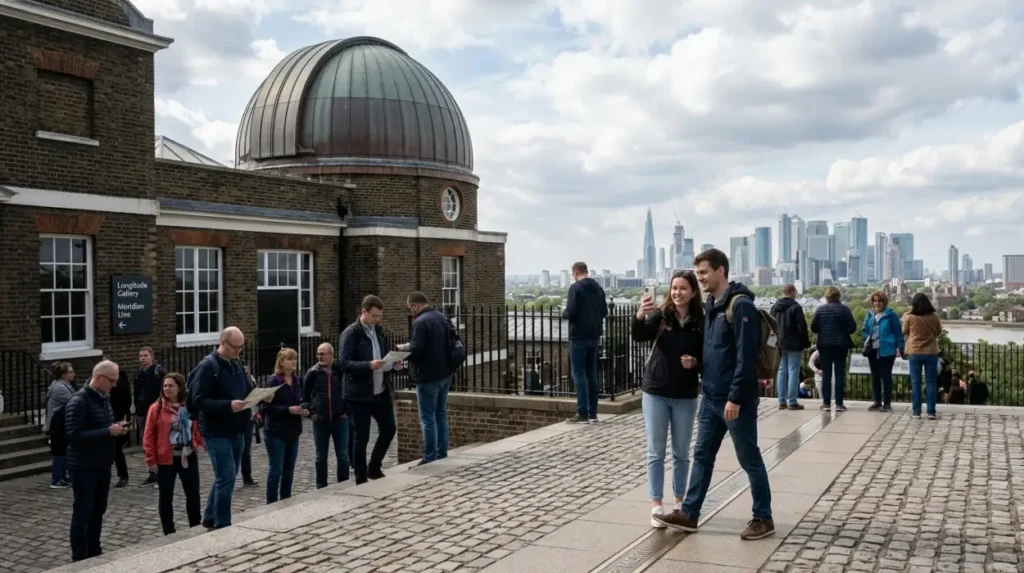
Visitors straddle the Meridian line, marked by a stainless steel strip. The longitude problem arose because sailors lacked accurate east-west positioning, leading to 6,000 shipwrecks yearly in the 1700s. John Harrison’s chronometers solved it, tested here from 1767.
Real-world examples feature Harrison’s H4 watch, accurate to 39 seconds over 47 days. Data indicates 100,000 annual visitors touch the Meridian. Future relevance persists in GPS systems referencing Greenwich.
What Can You Do at the Royal Observatory Greenwich?
Activities at the Royal Observatory include standing on the Prime Meridian, viewing Harrison’s chronometers in the Longitude Gallery, exploring the Camera Obscura projection, attending planetarium shows in the 300-seat Peter Harrison Planetarium, and climbing to the Hilltop viewpoint for Canary Wharf panoramas. Combine with Cutty Sark via a combo ticket for £38.
Macro context positions the site as astronomy’s birthplace. Subtopics cover self-guided tours through 18th-century buildings. Details reveal 24 telescopes on display, including the 1893 Great Equatorial.
Processes involve interactive exhibits like aligning a sextant. Implications linked to modern navigation apps using UTC. Examples: Daily Meridian photo ops and weekend stargazing events. Research from Royal Museums Greenwich reports 85% visitor satisfaction.
The Hilltop offers unobstructed London skyline views, including the Shard at 309 meters.
What Is the Cutty Sark and Its History?
Cutty Sark is a composite-built clipper ship launched in 1869 in Dumbarton, Scotland, for tea trade from China. It holds the record for fastest London-Shanghai wool voyage in 1889 at 72 days. Restored after 2007 fire, it sits in dry dock; explore three decks with interactive cargo exhibits. Adult tickets £20, open 10am-5pm daily.
Historical context traces clippers as fastest sailing vessels pre-Suez Canal dominance. Key structure: Iron frame, wooden planking, 212 feet long, 963 tons. Mechanisms enabled 17.5 knots top speed via 32,000 square feet sail area.
Real-world examples: Carried 600 tons tea in 1870 races. Statistics: Survived 1922 collision, restored 1954-1957 at £250,000. Implications: Symbolizes end of sail era, now trains 1,000 schoolchildren yearly in maritime skills.
How Do You Explore the Cutty Sark?
Board via gangway to the main deck for helm control simulation, descend to orlop deck for cargo holds with tea, wool, and rum samples, view engine room replica, and access under-hull glass walkway at 6 meters height. Audio guides in 12 languages; family trails for ages 5-12. Last entry 4:15pm.
Flow starts topside with captain’s quarters, showing 28 crew bunks. Subtopics: Multisensory exhibits smelling spices. Details: 1869 hull intact, holds Guinness record as sole tea clipper.
Processes trace voyages via timeline panels. Implications educate on global trade routes. Examples: Afternoon tea under hull at Even Keel café seats 100. Visitor data: 400,000 annually.
Under the hull, glass panels reveal the ship’s copper sheathing from 1870.
What Makes Greenwich Park Special?
Greenwich Park spans 183 acres as London’s oldest royal park, enclosed since 1433, with ancient sweet chestnut trees over 400 years old, a 50-acre flower garden, Queen’s Orchard with 13 heritage apples, and Roman temple remains from 50 AD. Free entry; deer herd numbers 50.
Background: Leased to Greenwich Hospital in 1664. Components: Boating lake, children’s play area with zip lines. Mechanisms: Managed by Royal Parks with annual 5 million visitors.
Examples: Roman villa mosaics unearthed 1902. Stats: Hosts Wimbledon tennis early rounds. Implications: Southern boundary of Maritime Greenwich UNESCO site.
What Activities Fill a Day in Greenwich Park?
Picnic on lawns with Thames views, cycle 6km paths, visit Ranger’s House for Wernher Collection of 700 Renaissance items, play in adventure area for ages 2-12, watch cricket on the Heath, or join guided park tours Tuesdays at 2pm. Dogs welcome on leads.
Context: Park divides into formal gardens and wild heath. Subtopics: Wolf conservation story via 2006 statue. Details: 183 steps to Observatory.
Processes: Annual Great Cross Country Run since 1954. Implications: Promotes biodiversity with 300 plant species. Examples: Blossom festival April-May.
What Is the National Maritime Museum?
The National Maritime Museum, opened 1937 in former Naval Asylum, holds 2.5 million items including Nelson’s uniform from Trafalgar 1805, the first marine chronometer H1, and 50m yacht Royal Yacht Britannia model. Free entry; special exhibits £15. Open 10am-5pm.
Structure: Sammy Ofer Wing with 10 galleries. Key processes: Interactive ship simulators. Examples: Moon landing maps. Stats: 1.5 million visitors yearly. Implications: Educates on British naval power peaking 1815 with 600 ships.
Why Visit the Old Royal Naval College?
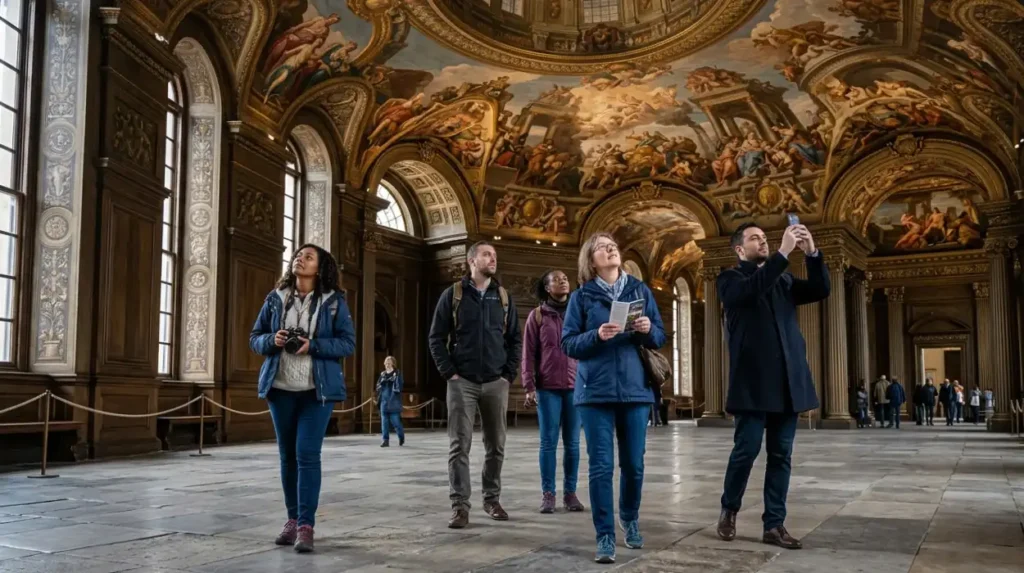
The Old Royal Naval College, designed by Sir Christopher Wren, 1694-1714, post-1696 fire, features the Painted Hall with 40,000 square feet of baroque murals by James Thornhill, completed in 1726, and the UNCLE bar in twin domes. Free grounds; Painted Hall £15. Film site for Four Weddings.
Historical context: Replaced Greenwich Palace. Components: Chapel with 1770s carvings. Mechanisms: Hosts 300 events yearly.
Examples: Bridgerton Netflix exterior. Data: UNESCO core site. Future: Visitor center by 2028.
What About Greenwich Market?
Greenwich Market, established 1737 charter, hosts 120 stalls daily with street food from 40 vendors, artisan crafts, and live music weekends. Open Wednesday-Sunday 10am-5:30pm; free entry. Annual turnover £5 million.
Background: Victorian covered roof 1830s. Subtopics: Food types like Korean BBQ, vegan pies. Details: 200 traders vetted.
Processes: Rotating pop-ups. Implications: Supports 500 local jobs. Examples: Vintage clothing row.
How Does One Get to Greenwich from Central London?
Take DLR from Bank to Cutty Sark (20 minutes, £2.80 off-peak), Thames Clipper from Westminster (40 minutes, £10), or Southeastern train from London Bridge (12 minutes, £2.50). Uber 25 minutes £25. Buses 188/199 from Liverpool Street.
Options include Oyster card zones 2-3. Stats: 10 million DLR riders yearly. Implications: Eco-friendly Clippers use hybrid engines.
What Are Family-Friendly Activities in Greenwich?
Climb Cutty Sark for kid trails, touch Meridian at Observatory, splash in Greenwich Park paddling pool in summer, explore Meantime Brewing children’s tours, or ride Emirates Air Line cable car over the Thames (5 minutes, £5.50). All sites are wheelchair accessible.
Context: Targets ages 3-12. Subtopics: Planetarium star shows. Details: Free under-5s museum entry.
Examples: Park farmyard with goats. Research: 60% families repeat visits.
Are There Free Things to Do in Greenwich?
Walk Greenwich Park trails, view Cutty Sark exterior, tour National Maritime Museum collections, stroll Riverside Promenade, picnic by the Thames, and watch O2 free light shows. Park and museum save £50 on a family of four versus paid sites.
Free sites cover 80% attractions. Examples: Meridian courtyard outdoors. Stats: 70% visitors use free options. Implications: Accessible year-round.
What Is Up at The O2 Experience?
Up at The O2 climbs a 52-meter mast via 1.6km ladders for 360-degree views to 15 miles, including Wembley Stadium. Sessions are hourly, 10 am-9 pm; £37 adult, 90 minutes total. Over 1 million have climbed since 2012.
Mechanism: Harnessed climb, no experience needed. Examples: Sunset slots. Data: 96% completion rate.
How to Plan a One-Day Greenwich Itinerary?
Morning: DLR to Cutty Sark (10 am board), walk to Market lunch (12 pm), afternoon Park to Observatory Meridian (2 pm), museum (4 pm), evening Painted Hall or riverside dinner. Total 8km walk, combo tickets £38/person.
Flow optimizes a 7-hour visit. Subtopics: Rest at park benches. Details: Apps like Visit Greenwich map.
Implications: Covers UNESCO essentials. Examples: Summer extensions to 6 pm.
What is Greenwich and why should you visit it?
Greenwich is a UNESCO-listed historic district known for maritime history, the Prime Meridian, royal heritage, and major attractions like museums, parks, and markets.