

Key Points
- Trial Date Set: 45-year-old Essa Suleiman is scheduled to stand trial in March of next year following a series of violent incidents in London.
- Multiple Charges of Attempted Murder: Suleiman faces three counts of attempted murder targeting a friend in Southwark and two Orthodox Jewish men in Golders Green.
- Chronology of Attacks: The prosecution alleges Suleiman first attacked his long-time friend, Ishmail Hussein, in south London before travelling to north London on the morning of April 29.
- Golders Green Victims Named: The victims of the north London stabbings have been identified as Shloime Rand, 34, and Moshe Shine, 76. Both suffered severe injuries.
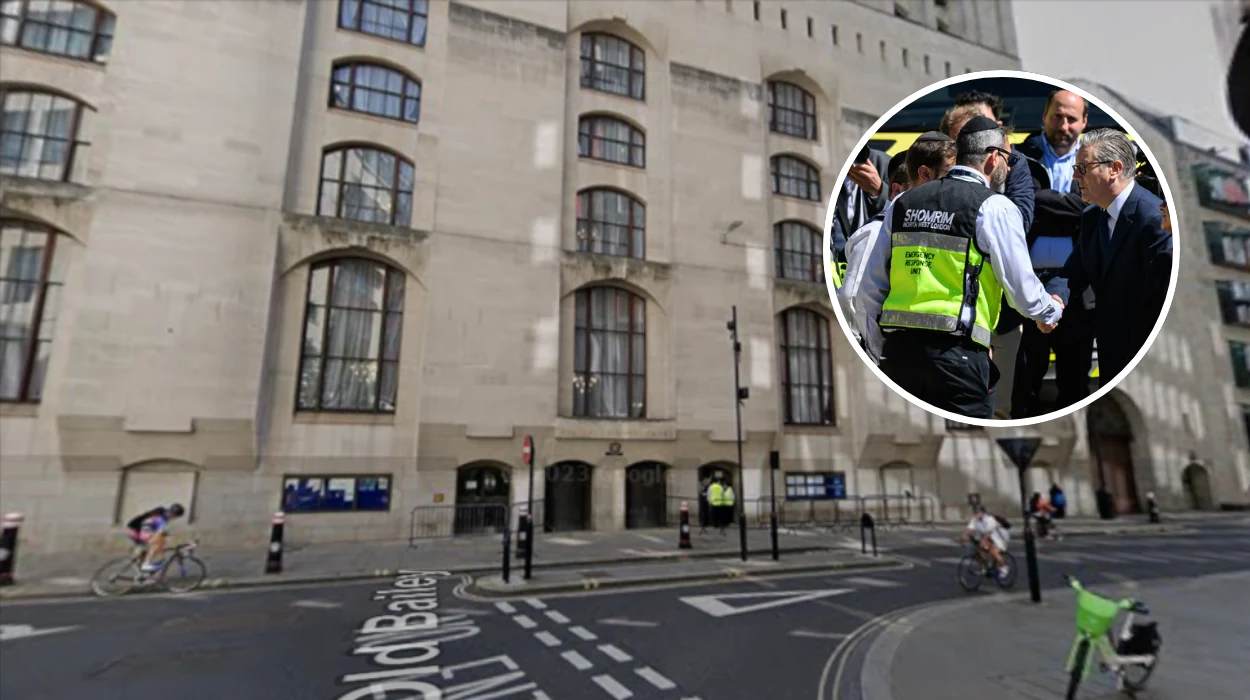
- Court Appearance: The defendant appeared at the Central Criminal Court (the Old Bailey) via video link from HMP Belmarsh, confirming his identity. He remains remanded in custody.
- Media Attributions Maintained: This report compiles documented accounts from various court reporters and legal correspondents covering the Old Bailey proceedings.
Golders Green (The Londoner News) May 15, 2026 – A 45-year-old man accused of a dual-locality stabbing spree that terrorised an Orthodox Jewish community in north London and left a south London acquaintance injured will stand trial in March next year. Essa Suleiman appeared via video link at the Central Criminal Court, widely known as the Old Bailey, to face three counts of attempted murder and one count of possessing an offensive weapon. The scheduled trial follows a fast-moving sequence of violent events on April 29, which began in a residential flat in Southwark and culminated hours later on the streets of Golders Green. Legal correspondents across major metropolitan news outlets have noted that the case is being treated with the utmost gravity given the nature of the locations and the individuals targeted.
When Will the Golders Green Attack Trial Begin?
According to detailed court breakdowns published by legal correspondents at The Times, the judicial timeline for the case against Essa Suleiman has now been formalised by the judiciary.
Judge Mark Lucraft KC ordered that the defendant stand trial in March of next year, allowing both the Crown Prosecution Service (CPS) and the defence team adequate time to compile their respective arguments, forensic evidence, and psychological evaluations.
During the preliminary hearing, the court established a strict timetable for the service of evidence. As reported by the BBC London court correspondent, Suleiman appeared on a television monitor from a secure room inside HMP Belmarsh, a high-security prison in southeast London.
Dressed in standard prison issue attire, the defendant sat with his arms folded throughout the brief administrative hearing. When addressed by the court clerk, he spoke only to confirm his name and his date of birth.
Legal experts writing for The Guardian have noted that the gap between the initial offences in April and the projected trial date next year reflects the extensive nature of the evidence that needs to be processed.
This includes hours of closed-circuit television (CCTV) footage tracking the suspect’s movements across the London transport network, detailed forensic analysis of the weapon recovered, and comprehensive medical testimony regarding the extensive injuries sustained by the three victims.
Explore More London Crime News
London Attack Sparks Community Alert, FTSE Outlook Wavers 2026
Northwest London Synagogue Arson Attacks Spark Jewish Fear, 2026
What Happened During the Initial Attack in Southwark?
Before the highly publicised events in north London took place, a separate and deeply personal conflict allegedly unfolded in the southern part of the capital.
As documented by crime reporters for The South London Press, the prosecution maintains that Suleiman’s violent trajectory began hours before he arrived in Golders Green. The first venue of offence was a residential flat located in the borough of Southwark.
In detailing the background of the initial confrontation, The Daily Telegraph reported that Suleiman allegedly turned on a long-time acquaintance, identified in court documents as Ishmail Hussein.
Legal analysts note that the two men had known each other for a significant number of years, sharing close ties as members of the vibrant Somali community residing in south London. The precise motive for the altercation within the Southwark flat remains a central focus of ongoing police inquiries.
According to statements presented during the preliminary hearing and recorded by The Independent, the confrontation escalated rapidly, resulting in Suleiman allegedly attempting to murder Hussein. Fortunately, despite the gravity of the charge filed against the defendant, Hussein managed to survive the encounter.
Court reporters from The Metro confirmed that Hussein sustained what have been legally and medically classified as minor injuries, which did not require prolonged hospitalisation, allowing him to provide a statement to the Metropolitan Police Service shortly after the incident.
How Did the Suspect Travel to Golders Green?
One of the most critical aspects of the prosecution’s timeline involves the interval between the first assault in Southwark and the subsequent stabbings in north London. Writing for The Daily Mail, judicial reporter Emily Wright observed that the prosecution intends to demonstrate a calculated progression in the defendant’s movements across the city.
Following the altercation with Hussein in Southwark, Suleiman is accused of leaving the flat and fleeing the immediate area. According to evidence summaries provided by transport police correspondents at
The Evening Standard, the defendant then boarded public transport to cross the River Thames, travelling a considerable distance from south London directly into the heart of Golders Green, an area well-known for its prominent and historic Jewish population.
As reported by The Jewish Chronicle, the prosecution’s case highlights the deliberate transition from a localized, interpersonal dispute in Southwark to an seemingly unprovoked assault on strangers in a distinctly religious neighbourhood.
Investigators have spent weeks auditing Oyster card swipe data, bus route cameras, and London Underground CCTV to map out the exact path Suleiman took during those critical morning hours on April 29, establishing a clear link between the two distinct crime scenes.
Who Were the Victims of the Golders Green Stabbings?
The escalation of violence in north London resulted in severe physical trauma for two prominent members of the local community.
As reported by The Jewish News, the victims were targeted on the street during the mid-morning hours while going about their daily routines. Both men were wearing clothing that is distinctively characteristic of the Orthodox Jewish community, making their religious identity immediately apparent to onlookers and, the prosecution argues, to their attacker.
The first individual confronted on the street was 34-year-old Shloime Rand. According to court dispatches compiled by The Sun, Rand was subjected to a sudden and ferocious knife attack. The physical consequences of the assault were immediate and life-threatening; medical reports submitted to the court indicated that Rand suffered a punctured lung as a direct result of the stabbing, necessitating emergency intervention from London’s Air Ambulance and specialized trauma teams.
Moments after the initial assault on Rand, the attacker allegedly turned his attention to a second bystander. As reported by Sky News home affairs correspondent Mark White, 76-year-old Moshe Shine was the next to be targeted in the street. Given his advanced age, Shine was particularly vulnerable to the onslaught. The court heard that Shine suffered multiple penetrating wounds across his upper body, with medical examinations documenting severe injuries to his head, neck, chest, and abdomen. Both men survived the ordeal due to the rapid intervention of emergency services and members of the public, but they face extensive periods of physical rehabilitation.