
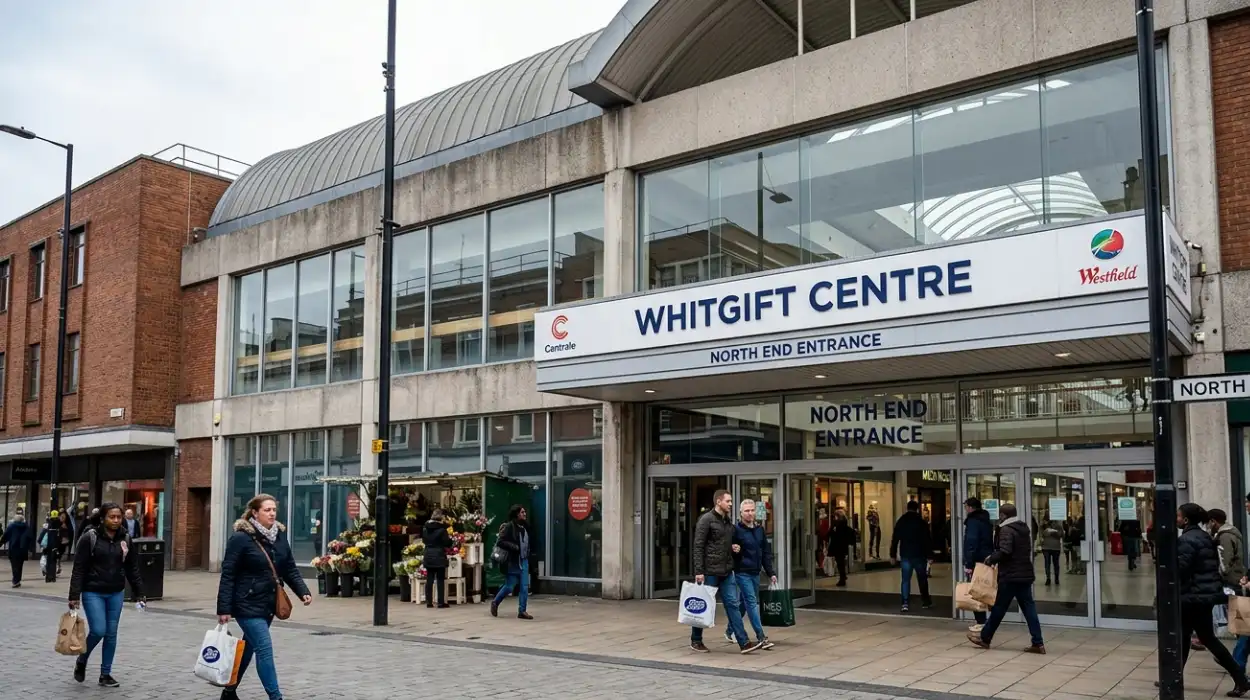
The Whitgift Centre is a large shopping centre in Croydon town centre, South London, opened between 1968 and 1970, spanning 1,302,444 square feet of retail space across three storeys with adjoining offices. It once held the title of Greater London’s largest covered shopping development until Westfield London opened in 2008. Named after John Whitgift, the 16th-century Archbishop of Canterbury buried in nearby Croydon Minster, the site sits on land owned freehold by the Whitgift Foundation, a registered charity in England and Wales.
- When Did the Whitgift Centre Open?
- What Led to the Decline of the Whitgift Centre?
- Is the Whitgift Centre Officially Closed?
- Who Owns the Whitgift Centre Site?
- What Are the Current Redevelopment Plans?
- What Is the Timeline for Whitgift Redevelopment?
- How Will Redevelopment Impact Jobs?
- What Happens to Existing Stores and Tenants?
- What Public Spaces Are Planned?
- How Does This Fit Croydon’s Regeneration?
- What Is the Economic Impact?
- Are There Any Controversies?
- What Should Locals Expect Next?
The centre adjoins the former Allders department store and links to the Centrale shopping centre across North End street. Boots opened as the first shop on October 17, 1968, with the full centre inaugurated by the Duchess of Kent in October 1970. Initial design by architects Anthony Minoprio and Fitzroy Robinson & Partners featured no roof for two decades, exposing it to the elements.
A 1990s rebuild introduced an atrium design, demolishing features like the Roman-themed Forum pub. Monthly footfall reached 2.08 million at its peak. Ownership shifted over time: Howard Holdings held a long-term lease until 2010 administration, followed by management under Royal London Asset Management and Irish Bank Resolution Corporation. Unibail-Rodamco-Westfield (URW) acquired full ownership of Whitgift and Centrale in 2023.
When Did the Whitgift Centre Open?
The Whitgift Centre opened in stages from 1968 to 1970, with Boots launching on October 17, 1968, and official inauguration by the Duchess of Kent in October 1970. Construction began in 1965 after demolishing Whitgift School buildings, used until 1965 by Trinity School of John Whitgift. The project replaced historic structures with a modern precinct praised in 1971 by architects Ian Nairn and Nikolaus Pevsner for functional shopping flow despite banal details.
This timeline positioned Croydon as a retail hub in South London. The centre’s basement includes a 1-kilometre service road network for vehicle access to retail units. Five tower blocks above provided office space. Early operations emphasized covered retail amid Greater London’s urban expansion.
What Led to the Decline of the Whitgift Centre?
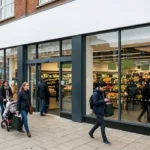
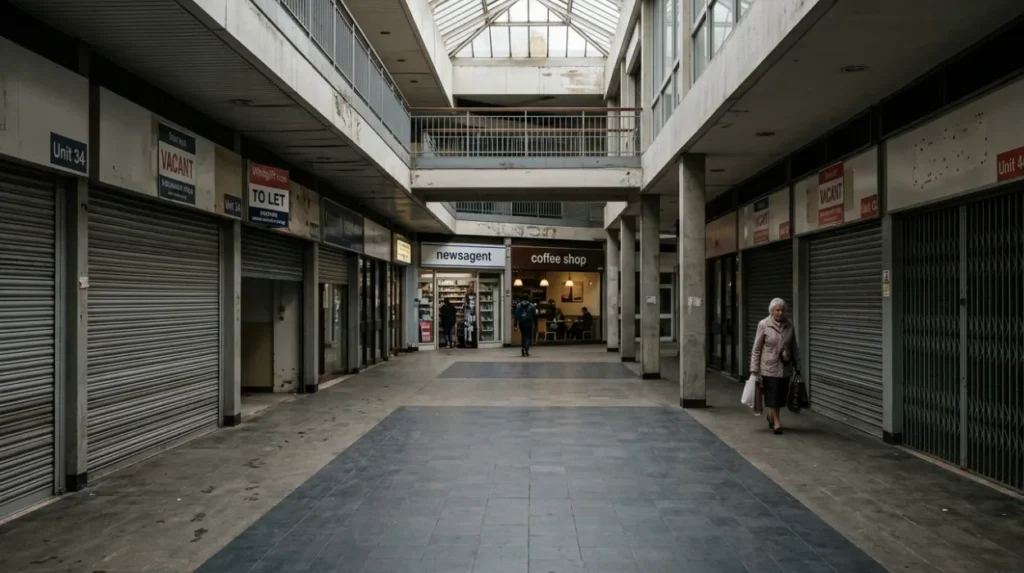
Retail shifts, economic pressures, and redevelopment delays caused the Whitgift Centre’s decline, with over 70 empty units by October 2025, exceeding open stores. Sainsbury’s closed on October 14, 2023, after 54 years, leaving 50% derelict by late 2023. Flying Tiger Copenhagen shut in April 2026, displaying a “Goodbye Croydon” sign after seven years.
Pandemic uncertainty accelerated exits, reducing footfall from 2.08 million monthly. 2020 riots damaged perceptions, deterring shoppers. Ownership changes and Brexit concerns stalled plans, with no construction start by 2019. By May 2025, 75% of outlets vanished, though maintenance kept it clean with a chiming green clock.
Is the Whitgift Centre Officially Closed?
The Whitgift Centre remains partially operational as of May 2026, with more closed than open units, but no full closure declaration; it awaits phased redevelopment. Over 70 vacancies stood in October 2025, up from 46 in September 2024 and 52 in June 2024. Recent activity includes November 2025 filming for Taylor Swift’s “Opalite” video.
Stores operate limited hours: Monday 10:00 AM-6:00 PM, Thursday-Friday 9:00 AM-6:00 PM, Sunday 9:30 AM-5:30 PM. URW maintains the site tidy amid regeneration prep. Full closure ties to masterplan phases, not yet enacted.
Who Owns the Whitgift Centre Site?
Unibail-Rodamco-Westfield (URW) owns the Whitgift Centre leasehold since 2023, with the Whitgift Foundation holding freehold. URW, a global commercial real estate firm, also controls adjacent Centrale. Prior leaseholder Howard Holdings collapsed in 2010; administrators managed for Royal London Asset Management and Irish Bank Resolution Corporation.
In 2013, Hammerson and Westfield formed a joint venture, but URW consolidated ownership. The Foundation’s charity status mandates community benefits from leases. URW leads “The Croydon Project” regeneration.
What Are the Current Redevelopment Plans?
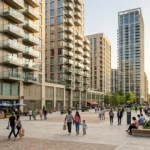
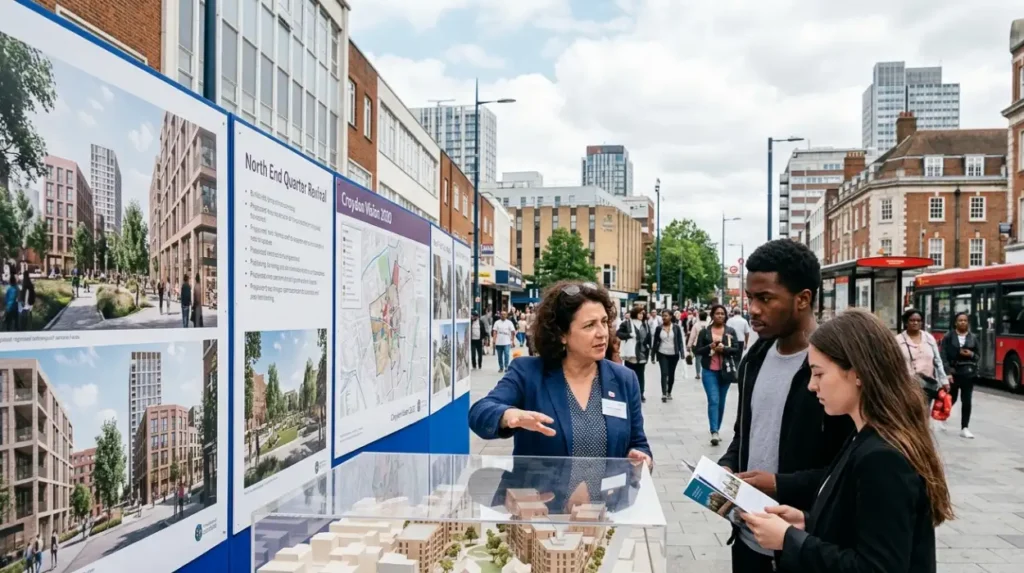
URW’s Croydon Project transforms the Whitgift site into a mixed-use hub with 2,500-3,000 homes, reduced retail (700,000-1 million sq ft), public squares, shops, restaurants, leisure, and workspaces. The North End Quarter Masterplan Framework, endorsed by Croydon Council on February 27, 2025, integrates Whitgift, Centrale, and Allders.
Plans pivot from retail-heavy to residential-led, preserving heritage like Whitgift Almshouses and Allders. Features include pedestrian streets, green areas, taller Wellesley Road buildings, and tenures like market sale, build-to-rent, student, co-living, supported housing. Consultation launched March 12, 2026, via TheCroydonProject.co.uk.
Explore More South London News
Saiqa Ali Suspended by Green Party in Lambeth 2026
Croydon 2026 Election Results: Labour Holds, Perry Wins, Greens Surge; London 2026
What Is the Timeline for Whitgift Redevelopment?
Croydon Council endorsed the Masterplan Framework in February 2025; first phases like Centrale upgrades submitted February 2026, with full planning applications and construction pending 2026-2027 consultations. Initial Westfield £1bn scheme proposed 2012 for 1.5 million sq ft retail, cinema, bowling; delayed repeatedly from 2017 start.
URW updated framework December 2024 post-consultation. November 2024 consultation ran to November 29, with 2025 series before applications. Allders Parade opened September 2025 with six shops. Completion targets maintain Metropolitan Centre status.
How Will Redevelopment Impact Jobs?
The Croydon Project creates 7,000 local jobs through construction, new retail, leisure, workspaces (300,000-700,000 sq ft), and homes. Past £1.4bn plan projected 7,000 roles in retail, leisure, residential. URW emphasizes evening activation via culture and F&B.
Phased approach sustains existing traders during build. Centrale refresh and Allders revival boost immediate employment. Council investments in North End enhance safety, supporting commerce.
What Happens to Existing Stores and Tenants?
Remaining tenants relocate within refreshed Centrale or Allders during Whitgift phases; retail shrinks from 1.9 million sq ft to flexible 700,000-1 million sq ft. Allders hosts new shops and dining since September 2025. URW’s framework prioritizes active uses pre-demolition.
Vacant units exceed 70; operators like post-Sainsbury’s spaces stay maintained. Joint marketing with Centrale continues. Tenants gain from improved public spaces.
What Public Spaces Are Planned?
Plans feature a major public square on Whitgift site, green areas, better-connected pedestrian streets, and revitalized North End. Framework conserves landmarks amid networks of plazas. Wellesley Road sees taller structures framing open areas.
Allders integrates culture and community. Croydon Council aids North End safety upgrades. Designs draw from 2024-2026 consultations.
Explore More South London News
Jawdance Launches at Brixton House with Kat François in 2026 South London
Bunsik Opens First Korean Corndog Spot in Brixton, South London 2026
How Does This Fit Croydon’s Regeneration?
The Croydon Project anchors North End Quarter revival, aligning with Croydon Vision 2020 and emerging Local Plan exceeding 1,250-home minimum. It reimagines Centrale, Allders, Whitgift as vibrant core for South London’s economic hub. URW partners with NextGen Panel and council.
Momentum includes Allders Parade and Centrale application. Framework balances heritage, homes, retail. Aims restore creativity in London’s youngest borough.
What Is the Economic Impact?
Redevelopment injects £1.4bn, delivers 2,500-3,000 homes, 7,000 jobs, sustains Metropolitan Centre with mixed uses. Retail reduction adapts to online shifts; workspaces add 300,000-700,000 sq ft. Footfall rebounds via leisure, culture.
Council endorsement boosts investment. Examples: Westfield schemes created similar London jobs. Long-term: active day-evening economy.
Are There Any Controversies?
Delays from 2012 plans sparked trader exits and footfall drop; 2020 review cited Brexit, high street changes. Riots eroded confidence. URW pivoted post-pandemic to mixed-use amid retail decline.
Consultations addressed concerns, updating 2024 framework. Freeholder tensions resolved via joint ventures. Current stability via maintenance.
What Should Locals Expect Next?
Expect 2026 planning submissions post-March consultation, Centrale/Allders phases first, full Whitgift transformation by late 2020s. Feedback via TheCroydonProject.co.uk shapes designs. Near-term: more pop-ups like Allders Parade.
Council monitors progress. Site stays accessible, clean. Outcome: vibrant homes-retail blend.
What is the Whitgift Centre?
The Whitgift Centre is a major shopping centre in Croydon town centre, South London, opened between 1968 and 1970.