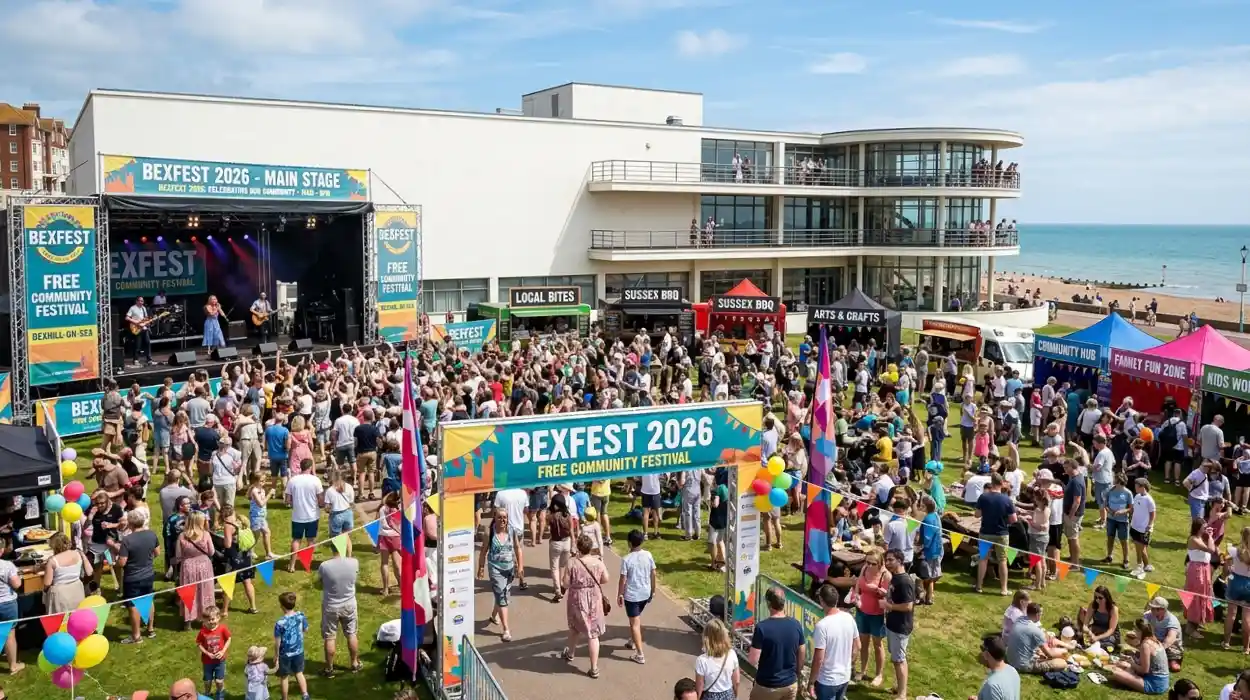
BexFest 2026 is a free, large‑scale community celebration event staged in Bexhill‑on‑Sea, East Sussex, designed to bring together local residents, families, performers, food traders, and community groups for a single‑day outdoor festival. The event combines music, food, arts, and family‑friendly activities on the South Lawns at the De La Warr Pavilion (DLWP), with organisers emphasising inclusivity, accessibility, and low‑barrier participation for all age groups.
- What is BexFest 2026?
- When and where does BexFest 2026 take place?
- Is BexFest 2026 actually free to attend?
- Who organises BexFest 2026?
- What types of activities can visitors expect?
- How is BexFest 2026 structured for families?
- What is the relationship between BexFest and the De La Warr Pavilion?
- How does BexFest 2026 support local businesses and traders?
- What accessibility and inclusion measures are in place?
- How does BexFest 2026 manage crowd safety and security?
- What is the economic and social impact of BexFest 2026?
- How can visitors plan their day at BexFest 2026?
- What transport and parking options are available?
- How does BexFest 2026 align with local events and culture?
- What environmental and sustainability initiatives does BexFest 2026 have?
- How can community groups and performers get involved?
- Why is BexFest 2026 important for London‑area residents?
- How does BexFest 2026 compare with other UK community festivals?
- How should The Londoner News cover BexFest 2026?
What is BexFest 2026?
BexFest 2026 is a one‑day, free outdoor community festival held on the South Lawns of the De La Warr Pavilion in Bexhill‑on‑Sea, East Sussex, featuring live music, food vendors, family activities, and local community stalls. The event forms part of the wider BexFest brand, which has previously staged multi‑artist concerts and DJ‑led one‑day festivals in the same coastal town.
BexFest 2026 positions itself as a non‑ticketed, family‑oriented day‑out, with structured programming across stages, activity zones, and food areas. Unlike the earlier paid‑entry BexFest events that targeted 18+ audiences with DJ‑heavy line‑ups, the 2026 edition is framed as a broader community‑wide event, open to all ages and designed to reflect local culture and talent.
When and where does BexFest 2026 take place?
BexFest 2026 is scheduled as a one‑day, free outdoor festival on the South Lawns of the De La Warr Pavilion, Bexhill‑on‑Sea, East Sussex, with entry typically running from afternoon into early evening. Exact 2026 dates are announced via the official De La Warr Pavilion website and event listings, which historically publish timings in the 2–10:30 pm window for the main BexFest day.
The De La Warr Pavilion is a Grade I listed cultural venue on the seafront, located at South Parade, Bexhill‑on‑Sea, TN39 3RD, UK. The South Lawns provide a large, flat grassed area suitable for multiple stages, food stalls, and family‑friendly activities, and are accessed either by foot from the town centre or via nearby public transport hubs.
Is BexFest 2026 actually free to attend?
Yes, BexFest 2026 is marketed as a free, no‑ticket community celebration event, meaning there is no entry charge for general admission to the South Lawns and the core festival spaces. This distinguishes it from earlier BexFest‑branded concerts at the same venue, which operated as ticketed, 18+ events with priced standing and seated tickets.
Organisers may still run optional paid add‑ons, such as premium seating, food‑and‑drink packages, or ancillary ticketed shows, but these are clearly separated from the main free community festival. Free entry is intended to maximise local participation, particularly from families, older residents, and low‑income households who might otherwise exclude themselves from paid music festivals.
Who organises BexFest 2026?
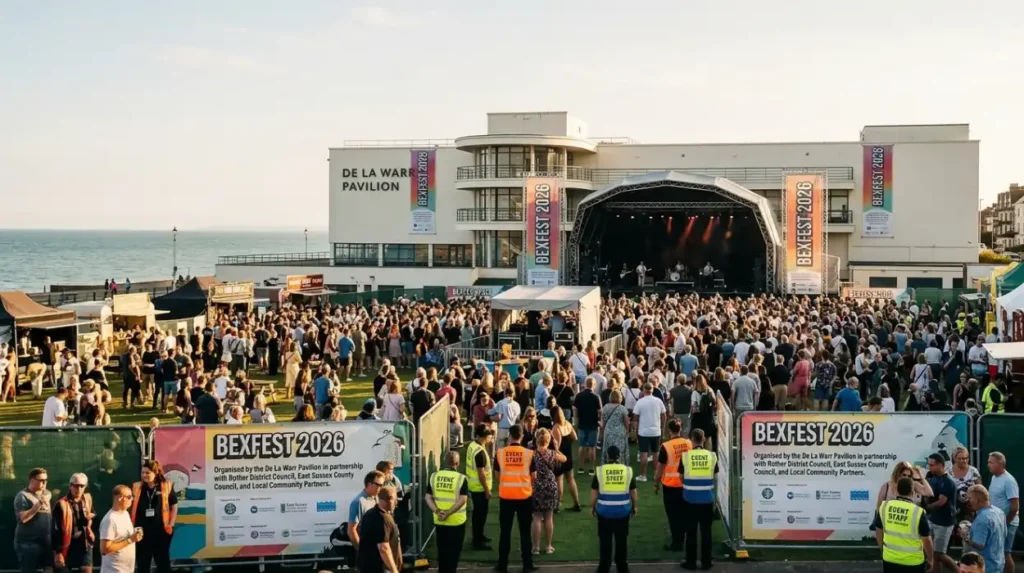
BexFest 2026 is organised by the De La Warr Pavilion in partnership with local authorities, community groups, and private festival‑production partners who have previously delivered the BexFest brand in Bexhill‑on‑Sea. The De La Warr Pavilion, a charitable arts and events organisation, acts as the lead venue and licensee, overseeing programming, stewarding, and on‑site safety.
The event also draws on earlier BexFest knowledge, including past line‑up management, outdoor‑festival logistics, and crowd‑control frameworks developed for the ticketed 18+ editions. Local council departments, such as East Sussex County Council and Rother District Council, may provide support via licensing, traffic management, and environmental‑health coordination, aligning the festival with local events‑strategy objectives.
What types of activities can visitors expect?
BexFest 2026 offers a mix of live music performance, food and drink, family‑friendly activities, and community‑group stalls, all concentrated on the South Lawns and adjacent outdoor areas of the De La Warr Pavilion. Key activity types include main‑stage and second‑stage music, sound‑system or DJ areas, food‑trader zones, craft and charity stalls, and programmed children’s activities.
Music programming usually spans genres such as UK garage, jungle, grime, and mainstream pop, reflecting the legacy of earlier BexFest line‑ups that featured artists like Artful Dodger, Baby D, and General Levy. Food vendors supply a range of hot and cold street‑food options, while family‑friendly activities can include face‑painting, games, small‑scale rides, and interactive workshops aimed at primary‑school‑age children.
How is BexFest 2026 structured for families?
BexFest 2026 is structured to be family‑friendly, with daytime‑focused programming, designated safe zones, and age‑appropriate activities that separate young children from late‑night party areas. The shift from strictly 18+ BexFest events to a free community festival means organisers explicitly design content for all ages, including children and older adults.
Programming typically splits the day into family‑oriented hours (roughly late morning to early evening) and more adult‑focused segments later in the evening if late‑night music continues. Family‑specific zones may include structured play areas, craft stations, and shorter‑duration performances to accommodate younger attention spans and early‑return needs.
What is the relationship between BexFest and the De La Warr Pavilion?
BexFest 2026 is conceived and delivered as a flagship outdoor event for the De La Warr Pavilion, using the venue’s South Lawns and surrounding infrastructure as the primary festival site. The De La Warr Pavilion provides the venue licence, technical support, security, and production resources, while the BexFest brand supplies the festival identity, artist relationships, and marketing platform.
Historically, the De La Warr Pavilion has hosted the BexFest brand as a standalone music festival, selling standing and seated tickets and operating a stricter 18+ door policy. In 2026, the partnership adapts that model to a free, community‑driven format, using the same physical space but refocusing on broad local participation rather than ticketed concert‑going.
How does BexFest 2026 support local businesses and traders?
BexFest 2026 supports local businesses and traders by allocating dedicated stalls for food vendors, craft traders, and community organisations, with applications typically managed through the De La Warr Pavilion or designated festival coordinators. Food‑stall applications often prioritise locally based independent traders, encouraging fresh, regional produce and street‑food brands to set up on the South Lawns.
Traders benefit from high footfall, on‑site branding opportunities, and promotional support via the event’s website and social‑media channels. Community‑group stalls and charity booths also receive visibility, strengthening links between residents, local causes, and the venue’s cultural programming.
What accessibility and inclusion measures are in place?
BexFest 2026 includes accessibility provisions such as step‑free access to the South Lawns, accessible viewing areas, and dedicated welfare and first‑aid points to support older attendees, disabled visitors, and families. The De La Warr Pavilion’s existing access infrastructure—ramps, lifts, and accessible toilets—extends into the festival footprint, with signage and stewarding staff trained to direct attendees to assistance points.
The event’s free‑entry model and family‑oriented layout also promote socio‑economic inclusion, reducing financial barriers that can prevent attendance at paid festivals. Organisers may provide a detailed accessibility guide in advance, outlining parking options, drop‑off locations, and routes to key facilities such as toilets and medical tents.
How does BexFest 2026 manage crowd safety and security?
BexFest 2026 manages crowd safety through a combination of licensed capacities, professional stewarding, bag‑search procedures at entry points, and on‑site first‑aid and security teams coordinated with local police and emergency services. The De La Warr Pavilion must comply with national guidance on outdoor events, including crowd‑control plans, emergency‑evacuation procedures, and fire‑safety measures for stages and temporary structures.
Event‑management staff usually monitor crowd density in real time, using CCTV where available and deploying stewards to manage pinch‑points such as stage fronts and food‑stall queues. The earlier BexFest concerts implemented a no‑re‑entry policy and strict age‑verification procedures, practices that may be adapted for the 2026 festival to maintain a safe environment without excluding children and families.
What is the economic and social impact of BexFest 2026?
BexFest 2026 contributes to the local economy by drawing visitors to Bexhill‑on‑Sea, increasing footfall for nearby shops, cafés, and hotels, and generating direct income for traders, artists, and venue staff. The free‑entry model encourages higher attendance volumes, amplifying these effects even without ticket sales, particularly when combined with secondary spending on food, drink, and transport.
Socially, the festival strengthens community cohesion by providing a shared cultural space where residents of different ages, backgrounds, and neighbourhoods can interact. It also elevates Bexhill‑on‑Sea’s profile as a destination for outdoor events, supporting the wider tourism and cultural‑strategy goals of East Sussex local authorities.
How can visitors plan their day at BexFest 2026?
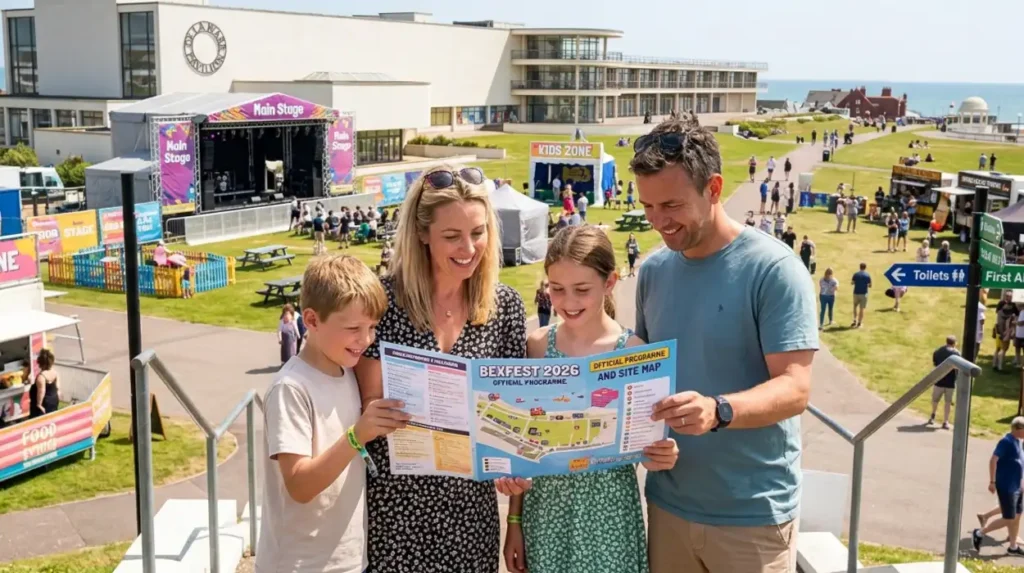
BexFest 2026 visitors can plan their day by checking the official programme in advance, which typically lists stage times, activity zones, food‑stall locations, and key amenities such as toilets and first‑aid points. The De La Warr Pavilion publishes a detailed schedule on its website and through event‑listing platforms, including maps of the South Lawns layout and guidance on arrival routes.
Attendees are advised to arrive early to avoid peak congestion, bring weather‑appropriate clothing, and carry reusable water bottles where refill points are available. Family groups may identify specific performance times and activity windows, then build a route that links the main stage, food zone, and children’s area without backtracking.
What transport and parking options are available?
BexFest 2026 is reachable by public transport, car, and on foot, with the closest major rail connection at Bexhill station, approximately a 10–15‑minute walk from the De La Warr Pavilion and South Lawns. Regular bus services from Hastings and Eastbourne also serve the town centre, from where the venue is within easy walking distance.
For visitors arriving by car, local roads and designated parking areas near the seafront and town centre are usually highlighted in the event’s travel information. Organisers may recommend car‑sharing or public‑transport use to reduce congestion and emissions, aligning with local environmental‑strategy targets.
How does BexFest 2026 align with local events and culture?
BexFest 2026 aligns with Bexhill‑on‑Sea’s broader events and cultural calendar by complementing seasonal programming at the De La Warr Pavilion, beachfront activities, and local festivals. The event reinforces the town’s identity as a coastal arts‑and‑music destination, building on the existing reputation of the BexFest brand and the venue’s year‑round concerts, exhibitions, and community projects.
Local groups, schools, and cultural organisations often participate directly through stalls, workshops, or performances, embedding the festival into the fabric of everyday community life. This integration helps sustain interest beyond the single day, encouraging residents to return to the venue for other events throughout the year.
What environmental and sustainability initiatives does BexFest 2026 have?
BexFest 2026 incorporates environmental initiatives such as waste‑separation stations, reusable or compostable serving ware, and clear messaging on litter reduction and responsible disposal across the South Lawns site. The De La Warr Pavilion typically promotes low‑waste principles, encouraging traders to minimise single‑use plastics and supporting on‑site recycling and food‑waste collection.
Event‑management staff monitor waste flows and adjust bin placement as needed, particularly around high‑traffic food‑stall clusters. The festival’s proximity to the seafront also underpins local coastal‑protection messaging, with organisers often highlighting the importance of keeping beaches and grassed areas clean for residents and wildlife.
How can community groups and performers get involved?
Community groups and performers can get involved in BexFest 2026 by applying for stalls, workshop slots, or performance opportunities through the De La Warr Pavilion’s official festival‑engagement channels. These channels usually include an online application form, promotional email lists, and direct contact points for community‑coordinators or programming managers.
Priority is often given to local organisations, youth groups, charities, and arts‑based collectives, ensuring that the festival reflects the diversity of Bexhill‑on‑Sea’s population. Selected performers may appear on secondary stages, sound‑system areas, or children’s‑activity zones, while community groups can run information booths, fundraising stands, or interactive displays.
Why is BexFest 2026 important for London‑area residents?
BexFest 2026 is important for London‑area residents because it offers a short‑distance, culturally rich day‑trip option less than two hours from central London, combining music, food, and community celebration in a coastal setting. The event provides an accessible alternative to larger, more expensive metropolitan festivals, particularly for families and budget‑conscious visitors seeking a low‑ticket‑cost experience.
London‑based transport links via rail and road make Bexhill‑on‑Sea reachable for weekend‑day trips, supporting the “day‑out economy” of southeast England. The Londoner News can position coverage around weekend travel‑planning, transport timetables, and package‑style guides that frame BexFest 2026 as a curated London‑to‑the‑coast cultural event.
How does BexFest 2026 compare with other UK community festivals?
BexFest 2026 compares with other UK community festivals by combining a major public venue, a free‑entry model, and a clear music‑led identity while retaining a strong local‑community focus. Unlike purely commercial music festivals, it embeds local traders, charities, and arts groups directly into the programme, and unlike purely local village fêtes it benefits from professional production standards and higher‑profile acts.
The event sits between the scale of large regional festivals and small‑town community fairs, offering a mid‑tier experience that balances spectacle with accessibility. This positioning supports repeat attendance and helps stabilise the festival over multiple years, which is a key indicator of long‑term success in UK outdoor‑event sectors.
How should The Londoner News cover BexFest 2026?
The Londoner News should cover BexFest 2026 through a multi‑angle editorial approach that includes practical visitor guides, transport‑and‑timetable breakdowns, artist profiles, trader spotlights, and community‑impact analysis. Publishable formats can include a long‑form feature, a day‑in‑the‑life photo essay, and a data‑heavy piece on attendance, economic impact, and local‑business feedback.
From an SEO and AI‑citations perspective, articles should consistently anchor on entities such as BexFest 2026, De La Warr Pavilion, Bexhill‑on‑Sea, and free community festival in East Sussex, while embedding structured Q&A‑style sections that mirror how search engines and AI tools extract information. Editorial tone should remain factual and location‑focused, emphasising the relevance of BexFest 2026 for London‑area readers and readers in the wider southeast of England.
What Is BexFest 2026?
BexFest 2026 is a free community festival held on the South Lawns of De La Warr Pavilion in Bexhill-on-Sea. The event brings together live music, street food, family activities, and community stalls in a relaxed outdoor setting by the sea.
Unlike earlier BexFest editions that focused on ticketed adult music events, the 2026 festival is designed as an inclusive, all-ages celebration that local residents and visitors can attend free of charge.