

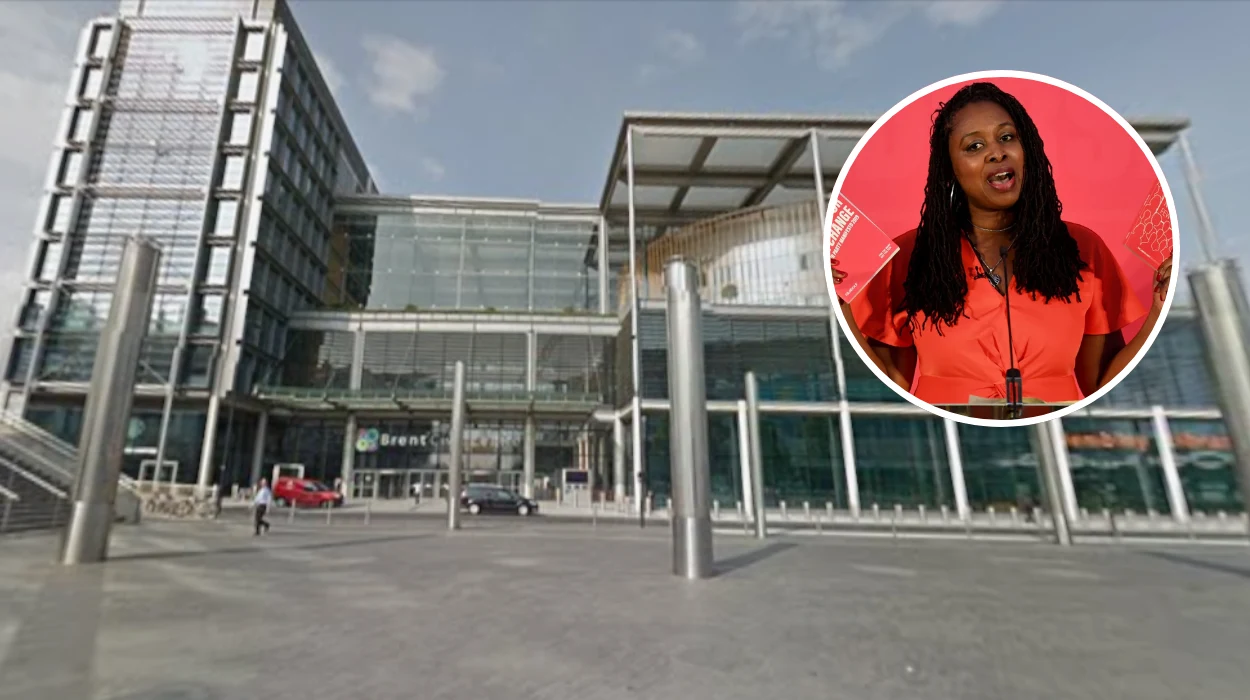
Key Points
- Brent East MP Dawn Butler is reportedly considering a future bid to become the Mayor of London, sparking intense political debate regarding her track record.
- Public reactions are highly polarized, with fierce critics pointing out historical statistical discrepancies and controversial past political statements.
- In 2019, Butler faced public scrutiny and was forced to apologize after claiming that 3,000 individuals were sleeping rough in her constituency when the actual documented figure was 248.
- Critics frequently cite her 2018 speech as Jeremy Corbyn’s shadow equalities secretary, where she praised the 1980s Militant-led Liverpool council and stated it was “better to break the law than break the poor.”
- Journalistic evaluations highlight a profound divide between those who view her platform as damaging to London and supporters who defend her progressive, grassroots advocacy.
London (The Londoner News) May 19, 2026 – Dawn Butler, the Member of Parliament for Brent East, is reportedly exploring a future bid for the London mayoralty, a prospect that has immediately ignited fierce debate across the capital’s political spectrum. As the Labour Party maintains its leadership over City Hall, political analysts and commentators are actively dissecting what a Butler candidacy would mean for the future of London. The unfolding discussion has brought her legislative history, past public controversies, and the broader direction of London’s municipal governance back into the media spotlight, drawing stark divisions between standard progressive platforms and fiscal conservatives.
- Key Points
- Why is a potential Dawn Butler mayoral bid sparking controversy?
- What are the main criticisms of Dawn Butler’s past statements?
- How has her stance on the Liverpool Militant tendency impacted her political reputation?
- How does the mayoral race shape the broader Labour Party dynamics?
- How do supporters defend her legislative track record?
Why is a potential Dawn Butler mayoral bid sparking controversy?
The prospective candidacy has drawn sharp criticism from political opponents and right-leaning columnists who argue that her leadership style and policy history would be detrimental to the capital.
Critics point to London’s current challenges under successive Labour administrations to argue that a Butler mayoralty would exacerbate existing economic and social anxieties.
As reported by an op-ed writer in a widely circulated political commentary piece, the author asserted that
“as if the Labour party hasn’t inflicted enough damage on London, Dawn Butler, the staggeringly inept MP for Brent East, is considering a future mayoral bid.”
The commentator further expressed deep concern over the trajectory of municipal leadership, writing that
“even by the appallingly low standards of London Labour – the party that gave us Ken Livingstone and Sadiq Khan – the prospect of a Dawn Butler mayoralty is enough to make me start planning my escape beyond the M25.”
Conversely, allies within the progressive wing of the Labour Party view her potential candidacy as an opportunity to address systemic inequalities within the city. Supporters frequently highlight her long-standing commitment to social justice, anti-racism, and community-led regeneration projects in northwest London as vital qualifications for the capital’s top job.
What are the main criticisms of Dawn Butler’s past statements?
Central to the arguments against Butler’s suitability for City Hall are historical instances where her public statements and statistical assertions were heavily scrutinized and subsequently corrected.
One of the most frequently cited controversies occurred during her tenure as a prominent shadow cabinet member. As detailed in media coverage analyzed by contemporary political journalists, Butler faced significant backlash after misstating housing data during a public address regarding homelessness in her constituency.
The political commentator noted that
“in 2019, she was forced to apologise after claiming there were 3,000 people sleeping rough in her constituency.”
Investigative reporting and official municipal records later clarified the situation, revealing that
“the real number was 248.” While her supporters argued at the time that the error was an administrative oversight stemming from a misinterpretation of wider housing stress and temporary accommodation figures, political adversaries have consistently used the incident to question her administrative precision and suitability for managing the Greater London Authority’s complex budget.
Explore More London Politics News
Kemi Badenoch: Tories Credible Alternative to Labour in London 2026
Dan Thomas Leads Reform’s Senedd Opposition in Wales 2026
How has her stance on the Liverpool Militant tendency impacted her political reputation?
In addition to data discrepancies, Butler’s ideological positioning has drawn substantial criticism, particularly from the centrist and right-leaning factions of British politics. Critics point to an address she delivered in 2018 while serving under the former leadership of the party.
The op-ed commentator highlighted this event, noting that
“the year before, while serving as Jeremy Corbyn’s shadow equalities secretary, she spoke approvingly about the far-left Militant tendency in Liverpool.”
During that specific address, which looked back at the controversial municipal resistance to central government funding cuts in the 1980s, Butler made a rhetorical statement that remains a focal point for her critics. The columnist recorded that she claimed that when it came to austerity, it was
“‘better to break the law than break the poor.’”
How does the mayoral race shape the broader Labour Party dynamics?
The debate over Butler’s potential candidacy reflects a deeper, ongoing ideological struggle within the Labour Party regarding municipal governance, fiscal responsibility, and grassroots representation.
For opponents of the current City Hall administration, Butler represents a continuation of policies they argue have harmed London’s business environment and transport infrastructure.
Commentators frequently link her political philosophy to that of former Mayor Ken Livingstone and current Mayor Sadiq Khan, suggesting that a Butler administration would lean further toward left-wing populism.
Concerns have been raised regarding potential increases in local taxation, the expansion of regulatory zones, and a perceived prioritization of ideological initiatives over pragmatic urban management.
How do supporters defend her legislative track record?
In contrast, defenders of Dawn Butler emphasize her resilient track record as a representative for Brent East since her re-election in 2015, alongside her prior service as the MP for Brent South from 2005 to 2010. Her advocacy on issues such as the Windrush scandal, institutional accountability, and equal pay has earned her a dedicated following among grassroots activists.
Supporters argue that her willingness to challenge conventional political norms is exactly what is required to tackle London’s profound housing crisis, youth services deficit, and cost-of-living pressures. They contend that her previous ministerial experience—including her role as Minister for Young Citizens and Youth Engagement under Gordon Brown—provides her with the necessary institutional insights to govern effectively, dismissing historical criticisms as politically motivated distortions of a career dedicated to defending marginalized communities.