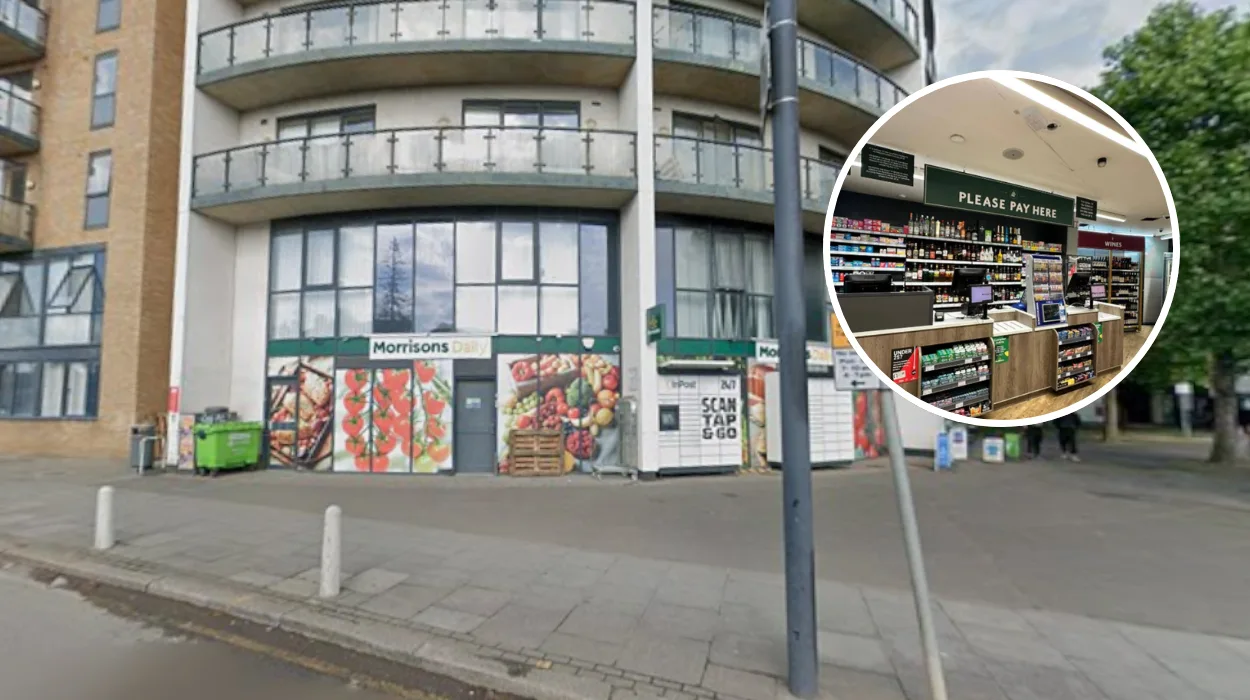
Key Points
- Mass Closures Planned: Morrisons has announced proposals to close approximately 100 of its company-owned Morrisons Daily convenience stores over the coming months.
- Jobs at Risk: Hundreds of shopfloor workers face uncertainty, with the supermarket confirming that an official consultation process regarding potential redundancies will begin shortly.
- Blame on Government Policy: The grocery chain explicitly attributed its inability to return these locations to profitability to significant financial pressures exacerbated by UK government policy choices, specifically naming National Insurance Contributions (NIC) and National Living Wage (NLW) increases.
- Legacy of McColl’s Acquisition: All 100 earmarked outlets were previously part of the McColl’s convenience chain, which Morrisons rescued out of administration for £190 million in 2022.
- Strategic Pivot to Franchises: Despite the contraction of its company-owned estate, Morrisons maintains that expanding its 1,700-store convenience operations via independent franchises remains a core element of its long-term growth strategy.
Bradford (The Londoner News) May 22, 2026 – WM Morrison Supermarkets is planning to shut down approximately 100 of its lossmaking convenience stores over the next few months, placing hundreds of store workers at risk of redundancy. The Bradford-based supermarket group revealed that the targeted outlets—all of which were converted from the McColl’s retail chain rescued by Morrisons in 2022—have suffered from long-standing profitability challenges. Management directly blamed UK government policy choices for worsening the financial situation, citing rising employment taxes and legislative wage hikes as key factors that have made maintaining the operations economically unviable.
- Key Points
- Why Is Morrisons Closing 100 Convenience Stores?
- How Did Government Policy Exacerbate the Store Closures?
- What Role Did the 2022 McColl’s Takeover Play in This Decision?
- How Many Jobs Are Affected and What Is the Plan for Staff?
- What Is the Impact of Private Equity Debt on Morrisons?
- How Will This Change Morrisons’ Future Convenience Strategy?
- What Is Morrisons’ Current Position in the UK Grocery Market?
The decision marks a critical restructuring phase under Chief Executive Rami Baitiéh, who is attempting to streamline the group’s balance sheet and manage a heavy debt burden left by its private equity takeover. While the closures represent a physical contraction of its corporate retail footprint, Morrisons insists it will continue to aggressively expand its convenience market presence by pivoting heavily toward a low-capital franchise model rather than owning and operating the sites directly.
Why Is Morrisons Closing 100 Convenience Stores?
The decision to close a substantial portion of its convenience estate follows a comprehensive commercial review of the group’s retail operations. As first reported by retail journalists at The Grocer, the 100 branches identified for closure are company-owned and operated “Morrisons Daily” formats that have failed to hit financial targets.
As reported by an official spokesperson for Morrisons, the company stated that:
“The performance of all company owned stores across our convenience business is subject to continuous review. This process has identified a number of stores, which were part of the McColl’s acquisition, whose performance has been challenged for a number of years and which are loss making, despite remedial action.”
The supermarket chain clarified that these 100 specific sites had been structurally unprofitable well before the current financial year, dating back to their operational window under previous ownership. Despite corporate capital injection and rebranding efforts over the last four years, the locations have consistently failed to generate a net positive return.
How Did Government Policy Exacerbate the Store Closures?
In an unusually direct political critique from a major UK supermarket board, Morrisons explicitly singled out fiscal and regulatory decisions made by the government as the primary catalyst for the final closure decision. Retailers across Britain have voiced growing panic over escalating overheads, but Morrisons is among the first of the “Big Four” grocers to tie store closures directly to state policy.
As reported by business reporters Tom Place of The Standard and James Fontanella-Khan of the Financial Times, an official Morrisons spokesperson stated that:
“This situation has been exacerbated in more recent years by significant cost increases resulting from Government policy choices (NIC and NLW), which have made returning these stores to profitability even more difficult. Having completed the review, we are now proposing to take the tough but necessary decision to close a number of these stores over the next few months.”
The corporate statement specifically isolates the twin pressures of increased employer National Insurance Contributions (NIC) and the latest legal elevations of the National Living Wage (NLW). Because convenience stores rely heavily on physical, hourly-paid floor staff across long opening hours, these statutory employment hikes have drastically altered the financial dynamics of marginal shops.
Furthermore, as outlined by business analysts at City A.M., the wider UK grocery sector is grappling with an “avalanche of costs” that includes the newly enacted Extended Producer Responsibility (EPR) packaging recycling levy. These microeconomic strains are occurring alongside macroeconomic friction caused by global supply chain volatility linked to ongoing international conflicts.
What Role Did the 2022 McColl’s Takeover Play in This Decision?
To understand the structural instability of the targeted stores, retail analysts point directly to the acquisition history of the properties. In May 2022, Morrisons engaged in a highly publicised, high-stakes bidding war against rival supermarket chain Asda to rescue the collapsing McColl’s Retail Group out of administration.
As reported by senior insolvency and retail editors at the Financial Times, Morrisons successfully bought 1,164 McColl’s convenience stores and newsagents in a deal valued at £190 million. The supermarket chain subsequently launched an extensive capital expenditure program to convert hundreds of those distressed high-street units into brighter, food-led “Morrisons Daily” branches.
However, industry experts note that many McColl’s units were saddled with historical disadvantages, including poor high-street footfall, expensive long-term lease structures, and outdated logistical frameworks. While many conversions proved highly successful, this week’s announcement confirms that approximately 8% of the original rescued estate remained structurally broken and impervious to commercial remediation. This marks Morrisons’ second major retreat from corporate convenience, following the complete shutdown of its ill-fated “M Local” venture in 2015.
Explore More Local Businesses
UC Bearcats Partner With Molton Brown for Fragrance Research: London 2026
Savills Appoints New Lettings Heads in Bishops Park and Richmond, London 2026
How Many Jobs Are Affected and What Is the Plan for Staff?
The announcement has triggered widespread concern among trade unions and regional retail workers, given that hundreds of frontline staff members are employed across the 100 affected properties.
As reported by regional journalists Joe Smith and Sonia Sharma of ChronicleLive, an official corporate statement from Morrisons confirmed the human cost of the restructuring, stating that:
“Regrettably, the proposal means that some of our convenience store colleagues will now be at risk of redundancy and a consultation will commence shortly. We understand this will be difficult news for them and we will be providing these colleagues with all necessary support.”
In an effort to mitigate compulsory redundancies and smooth over industrial relations, the company has pledged to utilize its extensive logistical and corporate network to reabsorb as many displaced workers as possible.
As further detailed by the reporting team at The Grocer, the Morrisons spokesperson added that:
“This will include finding other opportunities for impacted colleagues elsewhere in the business wherever we can, in our supermarket, logistics and manufacturing operations and we have a strong track record of achieving this historically. We will also work hard to mitigate the impact on customers, continuing to serve them through other nearby stores and online.”
The human resource pressure comes on the heels of a wider administrative cull inside the grocery group. Just last month, Morrisons confirmed it was cutting more than 200 corporate roles at its Hilmore House headquarters in Bradford—representing roughly 8% of its central head office staff—in a bid to eliminate bureaucratic duplication across its shifting retail divisions.
What Is the Impact of Private Equity Debt on Morrisons?
While Morrisons has targeted its public messaging toward government legislation, independent financial journalists and City analysts argue that the supermarket’s internal capital structure has severely restricted its ability to absorb economic shocks.
As reported by retail financial analysts for the Financial Times, Morrisons has faced punishing debt service costs since its £10 billion leveraged takeover by American private equity titan Clayton Dubilier & Rice (CD&R). The blockbuster buyout saddled the previously cash-rich, property-owning British grocer with billions of pounds in high-interest debt.
To manage this leverage, Chief Executive Rami Baitiéh has been forced to aggressively pursue asset disposals, including complex sale-and-leaseback transactions and ground-rent deals on its valuable supermarket properties to chip away at the liabilities.
Financial disclosures show that Morrisons’ annual loss to the end of October narrowed by £33 million to a total net loss of £318 million, while its net debt has successfully dropped 46% from its post-takeover peak down to £3.2 billion. Last year alone, the company shelled out £281 million purely in interest payments. Analysts suggest that these heavy debt obligations have left Morrisons with far narrower profit margins than its competitors, forcing immediate, unsentimental closures of underperforming assets when statutory operating costs rise.
How Will This Change Morrisons’ Future Convenience Strategy?
Despite axing 100 corporate sites, Morrisons is adamant that it is not abandoning the lucrative UK convenience market. Instead, the business is radically altering its operational model to transfer financial risk away from its own balance sheet.
As reported by industry correspondents at Asian Trader, the corporate strategy will focus almost exclusively on a franchise-led expansion model rather than building out corporate-owned brick-and-mortar stores. Out of its current estate of 1,700 convenience locations, roughly 700 are already operated by independent third-party franchise partners.
As reported by Convenience Store magazine, a Morrisons corporate spokesperson clarified the forward-looking strategy, stating that:
“Expansion of our Convenience business is a core part of Morrisons growth strategy. We currently have around 1,700 Convenience stores, opening more than 120 new franchise stores last year, and we have a robust plan in place for further expansion. We continue to see the opportunity to open hundreds more franchise convenience stores in the years ahead.”
By utilizing independent retailers who manage their own local staffing pools and property leases under the Morrisons Daily banner, the brand can maintain wholesale volume and brand visibility without bearing the direct brunt of rising National Insurance or local business rates.
As summary analysis from The Standard concludes, the executive team views this consolidation as a net positive for long-term stability, with Morrisons asserting that the mixture of closing structural loss-makers and adding capital-light franchise sites will ultimately “improve the quality of the convenience estate and make it stronger overall.”
What Is Morrisons’ Current Position in the UK Grocery Market?
The retrenchment of its convenience network occurs at a time when Morrisons is battling fiercely to retain its traditional market share against aggressive structural shifts in British retailing.
According to official supermarket data tracks cited by the Financial Times, Morrisons currently holds an 8.4% share of the highly competitive UK grocery market. The company, which historically anchored the prestigious “Big Four” ranking alongside Tesco, Sainsbury’s, and Asda, was famously unseated from its fourth-place position by the meteoric rise of German discount giant Aldi.
The restructuring of the convenience arm follows a series of other radical defensive cost-cutting maneuvers executed across the group’s wider store portfolio over the last 18 months. Under Chief Executive Rami Baitiéh’s mandate to boost efficiency, Morrisons has quietly closed down or trimmed back various in-store secondary services, including regional pharmacies, in-store customer cafés, traditional fresh meat counters, and dedicated florists.
The focus has now pivoted toward digital efficiency and wholesale growth. Following a recent executive shake-up that saw Group Retail Director Martin Dawson absorb the convenience portfolio after the departure of wholesale director Matt Heslop, Morrisons has committed heavily to expanding its e-commerce capabilities, including the rollout of a modernized, home-grown delivery van fleet to boost “Morrisons Online” operations.