
Key Points
- Unseen Domestic Archive: A massive, previously unreleased archive of rock legend Jimi Hendrix’s everyday corporate and personal documents is set to be publicly exhibited for the very first time.
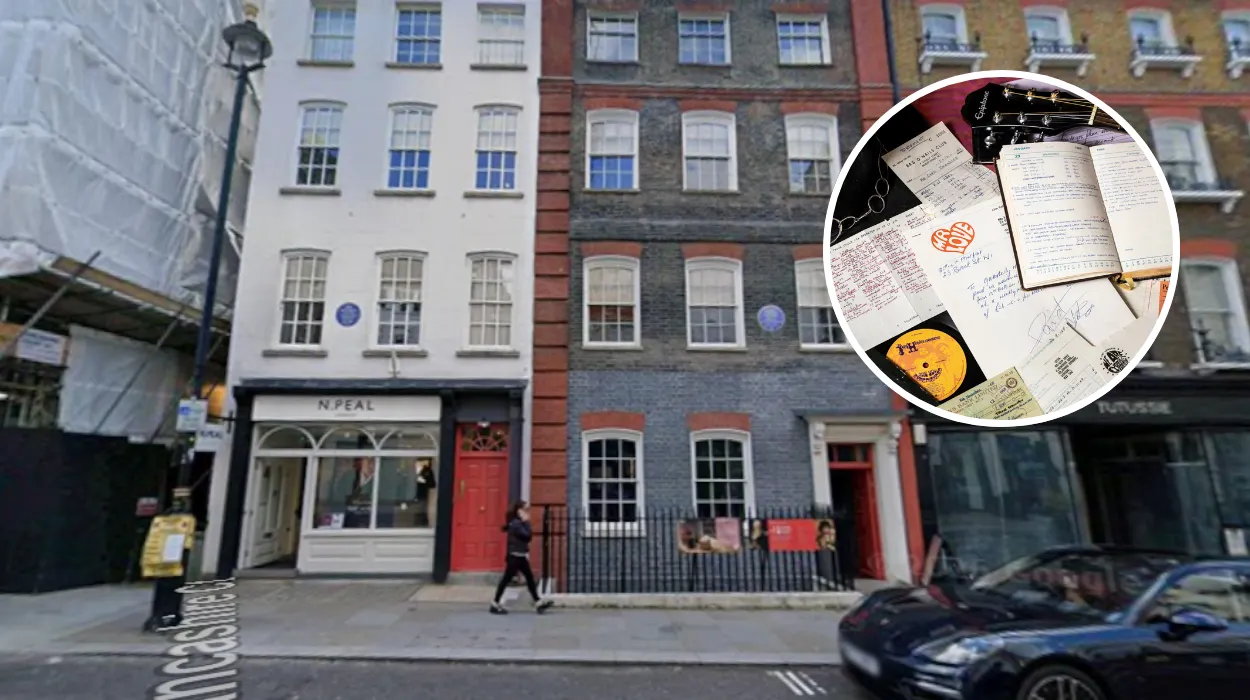
- Exhibition Venue and Date: The exhibition will officially open to the public on 19 June 2026 at the Handel Hendrix House museum, located at 23 Brook Street in Mayfair, London—the exact Georgian building where Hendrix lived during the height of his late-1960s fame.
- Domesticity Behind the Rock Icon: The collection features intimate, mundane artifacts of Hendrix’s daily domestic life, including private letters, work permits, dry cleaning tickets for psychedelic stage wear, and phone bills running into tens of thousands of pounds.
- Culinary Insights: The archive contains restaurant receipts from “Mr Love,” a ground-floor eatery at 23 Brook Street, revealing Hendrix’s strong preference for American steaks and hamburgers over traditional English mashed potatoes.
- Management Records Secured: The bulk of the collection comprises the internal corporate records of Anim Records, the historic management firm run by Mike Jeffery that directed the operations of the Jimi Hendrix Experience.
- Saved by “Trixie” Sullivan: The entire historical cache was salvaged from abandonment in 1973 by Patricia “Trixie” Sullivan, the day-to-day administrative anchor of Hendrix’s career, who kept the documents preserved under her bed in Spain inside four plastic trunks for decades.
- Royal Preview: The impending exhibition received a formal royal viewing ahead of its public launch when His Royal Highness The Duke of Edinburgh toured the Brook Street museum premises to inspect the newly acquired items.
London (The Londoner News) May 25, 2026 – A vast, previously unseen archive of personal receipts, corporate records, and domestic documents belonging to legendary rock guitarist Jimi Hendrix will go on public display for the first time next month in the very London flat where he spent the most stable period of his meteoric career. As exclusively reported by arts correspondent Dalya Alberge of The Guardian, the deeply intimate exhibition is scheduled to open on 19 June 2026 at 23 Brook Street, a preserved Georgian townhouse in Mayfair. The property, which Hendrix shared with his trailblazing British girlfriend Kathy Etchingham between 1968 and 1969, now operates as the Handel Hendrix House museum. The collection provides an unprecedented look past the explosive stage persona of the guitar icon, who tragically died of an apparent drug overdose in 1970 at the age of 27, by illuminating his ordinary, day-to-day domestic realities.
- Key Points
- Why is the New Jimi Hendrix Exhibition Globally Significant?
- What Do the Restaurant Receipts Reveal About Hendrix’s Life in London?
- How Did 23 Brook Street Become Hendrix’s True Home?
- Who Was Patricia “Trixie” Sullivan and Why Was She Vital?
- How Was the Archive Rescued from a Bed in Spain?
- What Did the Duke of Edinburgh Observe During His Royal Visit?
The upcoming exhibition is constructed around a trove of corporate and administrative paperwork from Anim Records, the management agency established by Hendrix’s controversial manager, Mike Jeffery, to handle the financial and logistics operations of the Jimi Hendrix Experience and associated acts. Rather than focusing solely on the musical elements of his career, the display features highly personal items such as dry cleaning dockets for his signature flamboyant outfits, work permits, personal correspondence, and extensive telephone bills totaling tens of thousands of pounds. The exhibit also highlights Sullivan’s private diaries, which contain meticulous notes written on the road during Hendrix’s landmark January 1969 concert tour of Germany.
The historic items were saved from destruction by Patricia “Trixie” Sullivan, the operational manager who handled the day-to-day business affairs of Hendrix and his bands. Following the sudden death of Mike Jeffery in a 1973 mid-air plane collision, Sullivan intervened when court bailiffs entered the management firm’s London offices. Finding that the legal authorities were solely focused on seizing the physical office furniture, Sullivan gathered the seemingly worthless stacks of paper left behind and secured them in four large plastic trunks, which she preserved under her bed at her home in Spain for fifty years. The entire collection was recently purchased by the Handel Hendrix House museum via an auction of Sullivan’s estate, supported financially by a grant from the National Lottery Heritage Fund, enabling the curation of this upcoming exhibition.
Why is the New Jimi Hendrix Exhibition Globally Significant?
The collection bridges the historical gap between Hendrix the cultural deity and Hendrix the private individual. As a composer, singer, and guitarist, Hendrix radically expanded the expressive and sonic boundaries of the electric guitar, fusing elements of rock, blues, soul, and jazz into masterworks such as Purple Haze, Foxy Lady, and All Along the Watchtower. Because his mainstream career lasted a mere four years before his untimely death, archival materials detailing his private life are exceptionally rare.
By showcasing the business paperwork and financial receipts behind the art, the exhibition contextualizes how a 1960s musical empire operated. Curators emphasize that the collection shifts public focus away from rock-star mythology, instead offering an empirical look at the administrative machinery that sustained Hendrix’s global tours, equipment procurement, and residential life in the United Kingdom.
What Do the Restaurant Receipts Reveal About Hendrix’s Life in London?
Among the most compelling pieces of historical evidence within the archive are the culinary receipts from “Mr Love,” a fashionable restaurant that operated on the ground floor of 23 Brook Street during the late 1960s. Dalya Alberge of The Guardian noted that the American musician had very little practical use for the kitchen inside his bohemian upper-floor flat, choosing instead to have his daily meals sent directly up to his living quarters by the restaurant staff.
The bills show that while the swinging London elite and various celebrities dined downstairs at heart-shaped tables—attended to by waitresses wearing contemporary hot pants—Hendrix preferred the isolation of his flat, regularly ordering classic American steaks and hamburgers. One specific billing statement preserved in the archive covers a multi-month period of food orders totaling £32, 16 shillings, and 6 pence, an amount calculated to be worth approximately £485 in today’s currency.
The documents validate Hendrix’s well-documented friction with traditional British cuisine. In an archival quote cited by The Guardian, Hendrix famously lamented the homogeneity of local restaurant menus:
“The problem with English food is you get mashed potatoes with just about everything, and I ain’t gonna say anything good about that.”
How Did 23 Brook Street Become Hendrix’s True Home?
To understand the emotional weight of these everyday items, museum officials emphasize the unique status that the Mayfair flat held in the musician’s turbulent life. As reported by Dalya Alberge, Claire Davies, the exhibition curator and deputy director of the Handel Hendrix House, explained the profound domestic significance of the property:
“They tell a really important story of this one little moment of domesticity in Hendrix’s life. He had a very difficult childhood and then, during his four-year career when he was based in London, he was staying with other people or in hotels. So when he was here at 23 Brook Street, it was the only place he called home and the only place with his name on the rent invoices.”
The physical environment of the flat, which he shared with Kathy Etchingham, was entirely designed to provide a sense of permanence. Hendrix famously described the apartment as the only place he ever felt truly at home, utilizing the space to entertain, relax, and jam with the elite of British rock royalty. According to internal museum documents and financial records featured in the collection, Hendrix spent heavily to furnish his sanctuary. The newly uncovered paperwork reveals invoices for high-end Persian rugs purchased by the guitarist, which Davies noted would carry a market valuation of roughly £30,000 in contemporary money.
Who Was Patricia “Trixie” Sullivan and Why Was She Vital?
The unveiling of this archive significantly alters the historical narrative surrounding the administrative success of the Jimi Hendrix Experience. While public records consistently focus on primary manager Mike Jeffery, the corporate files show that it was Patricia “Trixie” Sullivan who kept the chaotic infrastructure of the management company from collapsing.
As detailed by curator Claire Davies, the documentation confirms that Sullivan occupied the absolute epicentre of the business operations driving Hendrix and his bandmates. Describing Sullivan’s immense influence on the musicians’ careers, Davies stated:
“She was clearly running the show. I’m not sure they’d have been able to do it without her.”
The records indicate that Sullivan processed the band’s international flight manifests, organized intricate calendar schedules, tracking critical concert performances, and managed the spiraling logistics of Hendrix’s personal life. Her day-to-day involvement is underscored by the presence of her personal rent invoices addressed directly to Hendrix. When the financial affairs of the rock star fell into disarray due to his lifestyle and constant touring, it was Sullivan who step-by-step handled his bills. Davies added:
“So that’s how the receipts were collected, because she was trying to give some order to his life by paying for those things.”
How Was the Archive Rescued from a Bed in Spain?
The survival of these documents is an extraordinary tale of historical preservation born out of administrative negligence. Following Mike Jeffery’s sudden death in 1973, legal bailiffs arrived at the Anim Records London headquarters to liquidate assets and settle outstanding claims. However, the bailiffs properties appraisal was highly short-sighted; they were exclusively interested in seizing the valuable physical furniture within the office space, viewing the towering cabinets of company files and personal receipts as worthless paper waste.
Recognizing the immense historical and personal value of the documentation, Sullivan collected every discarded file, invoice, letter, and diary entry before the offices were cleared. She packed the paperwork tightly into four large plastic trunks and transported them to her residence in Spain. Kept safely out of sight under her bed, the trunks remained untouched for half a century, safeguarding the unresearched history of the 1960s rock movement until her estate eventually made them available for museum acquisition.
What Did the Duke of Edinburgh Observe During His Royal Visit?
Prior to the formal public announcement of the exhibition, the collection received high-profile institutional validation when His Royal Highness The Duke of Edinburgh conducted an official visit to the Handel Hendrix House. According to a formal statement released by Simon Daniels, the Director of the Handel Hendrix House, the royal visit on April 13, 2026, was organized to celebrate rock heritage and inspect the museum’s ongoing preparations for the June launch.
During the tour, the Duke of Edinburgh was presented with specific artifacts from the Anim Records archive, including Sullivan’s original 1960s diaries, unpaid telephone invoices, and dry cleaning receipts for Hendrix’s iconic striped suit and gold jacket. The royal visit highlighted the unique cultural convergence of the Brook Street site, which celebrates the separate residential history of two of the world’s most influential musical figures: Baroque composer George Frideric Handel, who lived at No. 25 Brook Street from 1723 until 1759, and Jimi Hendrix, who occupied the upper floors of No. 23.
In reflecting upon the institutional milestone and the museum’s upcoming 25th anniversary, Director Simon Daniels expressed deep gratitude for the royal endorsement, stating:
“We are hugely grateful to His Royal Highness for visiting the museum today and for his encouragement for all that we do to look after the incredible musical heritage at Brook Street, and to inspire everyone with the stories and music of Handel and Hendrix. As we enter our 25th year as a museum, it was a privilege to share the work we do with The Duke, and we hope more people will want to experience the museum – the home of ‘Baroque ‘n’ Roll’.”
The museum has confirmed that alongside the physical exhibition opening on 19 June 2026, curators are compiling a comprehensive digital catalogue of the Anim Records collection, ensuring these newly recovered chapters of rock history will be permanently accessible to scholars and fans worldwide.