London’s historic gardens represent more than ornamental green spaces. They document centuries of British political power, scientific innovation, artistic expression, and landscape design. From medieval monastery gardens to royal parks and Victorian public landscapes, these gardens shaped the evolution of British horticulture while influencing garden design across Europe and the wider world. Today, many remain protected heritage sites that preserve living examples of changing architectural styles, botanical collections, and social history.
- What is the history of London’s historic gardens?
- How did medieval gardens influence London’s landscape heritage?
- Why did royal gardens transform British landscape design?
- How did the Georgian landscape movement change London’s gardens?
- Which historic gardens shaped London’s cultural identity?
- How did Victorian public parks transform London’s urban environment?
- Why are London’s historic gardens important for botanical science?
- How are London’s historic gardens preserved today?
- What lasting influence have London’s historic gardens had on British landscape design?
What is the history of London’s historic gardens?
London’s historic gardens developed over nearly one thousand years through medieval religious cultivation, Tudor royal expansion, Stuart formal design, Georgian landscape innovation, Victorian public park creation, and modern conservation. Together they established many principles that continue to define British landscape architecture and urban green planning today.
The history of London’s gardens mirrors the city’s political, cultural, and urban development. Early gardens primarily served practical purposes. Medieval monasteries cultivated medicinal herbs, vegetables, fruit trees, and flowers for religious ceremonies. These enclosed spaces became centres of botanical knowledge and agricultural experimentation.
Following the Norman Conquest in 1066, aristocratic estates introduced ornamental gardens influenced by continental European traditions. Wealthy landowners incorporated geometric layouts, enclosed courtyards, fountains, and decorative planting into their residences.
The Tudor period transformed London’s gardens into symbols of royal authority. Monarchs invested heavily in palace grounds, expanding gardens into carefully planned landscapes featuring terraces, knot gardens, orchards, and hunting parks. These estates demonstrated political prestige while showcasing horticultural innovation.
During the seventeenth century, formal French and Dutch influences reshaped British garden aesthetics. Symmetrical avenues, elaborate parterres, canals, and sculptural features became common across royal and noble estates.
The eighteenth century introduced a revolutionary shift toward naturalistic landscape design. Designers abandoned rigid geometry in favour of sweeping lawns, lakes, woodland planting, and carefully composed views that appeared natural despite extensive planning.
The nineteenth century witnessed another transformation as industrialisation encouraged governments and philanthropists to establish public parks for urban populations. London’s gardens evolved from private privilege into shared civic resources.
Today, historic gardens continue to preserve centuries of landscape design while supporting biodiversity, education, tourism, and cultural heritage.
How did medieval gardens influence London’s landscape heritage?
Medieval gardens established London’s earliest organised horticultural traditions through monasteries, hospitals, castles, and noble households. Their cultivation techniques, enclosed layouts, medicinal collections, and water management systems became foundations for later British garden development and botanical research across subsequent historical periods.
Medieval London’s gardens were functional landscapes designed to meet practical needs. Religious institutions maintained herb gardens containing medicinal plants used to treat illness. Monasteries also cultivated vegetables, fruit orchards, vineyards, and flowering plants for food, worship, and hospitality.
Enclosed walls protected valuable crops from livestock while creating sheltered microclimates suitable for delicate plants. Raised beds improved drainage and organised cultivation according to seasonal requirements.
Many medieval gardens included symbolic features reflecting Christian theology. Cross-shaped pathways, enclosed paradise gardens, and specific flower species represented biblical themes. These religious meanings influenced British garden traditions for centuries.
Water management became another defining characteristic. Wells, channels, fish ponds, and simple irrigation systems supported year-round cultivation while demonstrating advanced engineering for the period.
Archaeological excavations throughout London have uncovered evidence of medieval garden layouts, seed remains, pollen records, and irrigation features. These discoveries help historians reconstruct planting schemes and understand urban agriculture during the Middle Ages.
Although few complete medieval gardens survive, their influence remains visible in the enclosed courtyard gardens associated with historic institutions and cathedral precincts.
Why did royal gardens transform British landscape design?
Royal gardens introduced advanced horticultural techniques, international design influences, botanical collections, and professional landscape planning. Their innovations established national standards that later spread to aristocratic estates, public parks, botanical institutions, and private gardens throughout Britain and overseas territories.
The English monarchy used gardens to express authority, wealth, diplomacy, and cultural sophistication. Royal estates became experimental landscapes where architects, engineers, gardeners, and botanists introduced new ideas.
The Tudor dynasty expanded palace gardens significantly. Formal knot gardens featured intricate geometric planting using clipped herbs and coloured gravels. Terraces provided elevated views across carefully organised landscapes.
The Stuart monarchy embraced continental European styles. Long avenues aligned with palace buildings created dramatic visual perspectives. Water features, ornamental canals, and elaborate fountains reflected increasing engineering expertise.
Royal patronage also encouraged plant exploration. Foreign ambassadors, merchants, and explorers introduced new flowers, shrubs, and trees from Europe, Asia, Africa, and the Americas. These botanical exchanges expanded Britain’s horticultural diversity.
Royal gardens became centres of scientific observation. Gardeners documented cultivation methods, experimented with acclimatisation, and exchanged knowledge with scholars across Europe.
Many innovations pioneered within royal estates later appeared in aristocratic gardens, educational institutions, and municipal parks, influencing landscape design across the British Isles.
How did the Georgian landscape movement change London’s gardens?
The Georgian landscape movement replaced rigid geometric gardens with naturalistic landscapes featuring sweeping lawns, lakes, woodland planting, curved pathways, and carefully composed scenery. This philosophy became one of Britain’s most influential contributions to international landscape architecture and environmental design.
The eighteenth century marked a decisive turning point in British garden history. Designers rejected highly formal French-inspired layouts and instead sought landscapes that reflected idealised nature.
Naturalistic gardens required sophisticated planning despite their informal appearance. Artificial lakes replaced straight canals. Curving pathways guided visitors through changing scenic compositions. Carefully positioned tree groups framed distant views.
Landscape designers integrated architecture into broader compositions. Bridges, temples, follies, statues, and pavilions created visual focal points while enhancing the visitor experience.
Agricultural improvements also influenced garden design. Expansive lawns merged visually with surrounding countryside through concealed boundaries such as sunken fences, commonly called ha-has.
The Georgian movement reflected changing philosophical ideas about beauty, nature, and social status. Wealthy landowners increasingly valued landscapes that appeared harmonious rather than overtly controlled.
London’s gardens adopted many of these principles, helping establish British landscape gardening as an internationally recognised design tradition.
Which historic gardens shaped London’s cultural identity?
Several historic gardens became enduring symbols of London’s political, scientific, artistic, and social development. Their preservation demonstrates changing relationships between nature, architecture, public health, education, and national heritage across multiple centuries of continuous urban evolution.
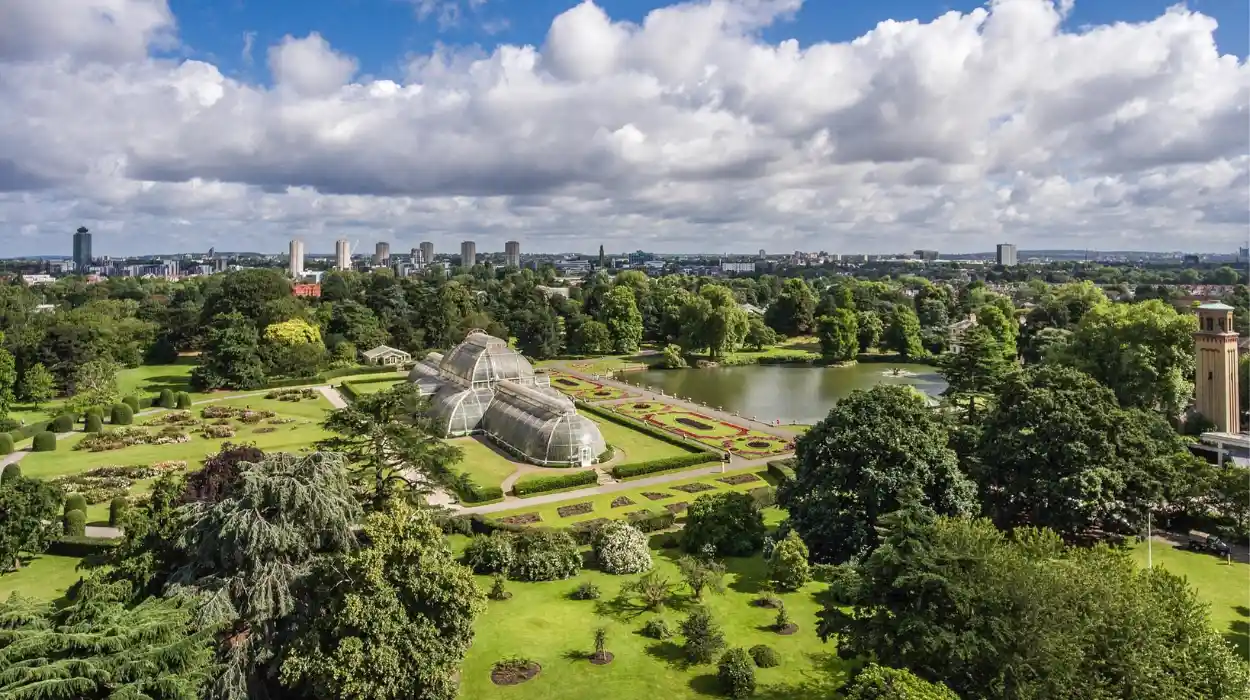
Among London’s most significant historic landscapes, the Royal Botanic Gardens, Kew stands as one of the world’s leading botanical institutions. Established during the eighteenth century and expanded through scientific exploration, it contains tens of thousands of living plant species and extensive research collections. Its status as a UNESCO World Heritage Site recognises its international importance.
The gardens of Hampton Court Palace preserve examples of Tudor and Baroque landscape design. Formal avenues, ornamental planting, historic yew trees, and the famous hedge maze illustrate centuries of evolving royal horticulture.
St James’s Park evolved from a royal hunting ground into one of London’s earliest landscaped public parks. Its lakes, ornamental bridges, wildlife habitats, and ceremonial views remain integral to the city’s identity.
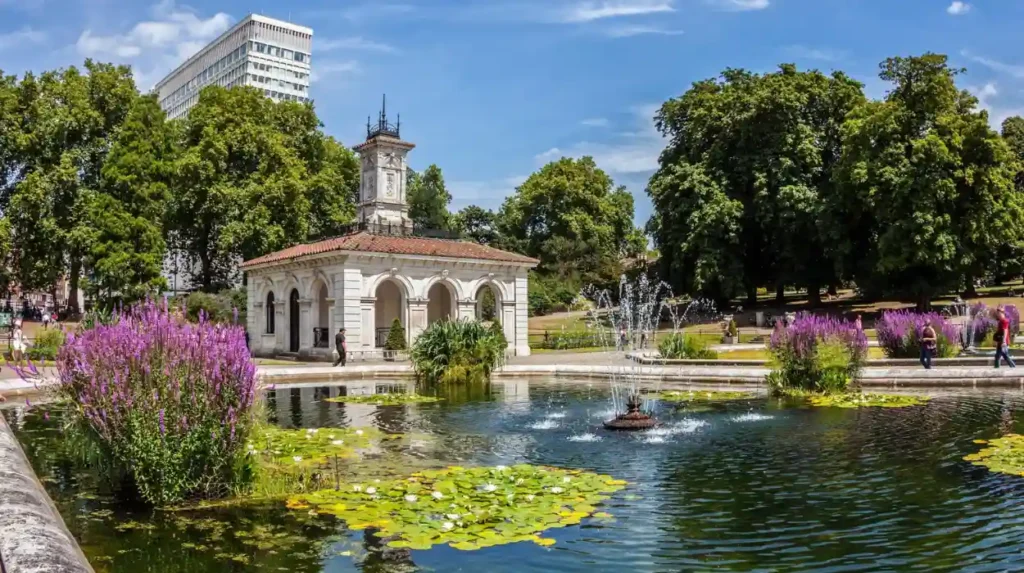
Kensington Gardens combines royal history with nineteenth-century landscape improvements. Memorials, formal water features, and mature tree collections demonstrate changing approaches to urban park management.
Together these landscapes illustrate the diversity of London’s garden heritage and its influence on British landscape design.
How did Victorian public parks transform London’s urban environment?
Victorian public parks expanded access to green space through government planning, philanthropy, and municipal investment. These landscapes improved public health, recreation, education, biodiversity, and urban planning while preserving important elements of Britain’s historic landscape traditions for rapidly growing populations.
Rapid industrialisation dramatically increased London’s population during the nineteenth century. Overcrowding, pollution, and limited recreational opportunities created demand for public green spaces.
Municipal authorities responded by developing parks designed for exercise, relaxation, education, and civic pride. Landscapes included tree-lined walks, ornamental lakes, flower gardens, sports facilities, and children’s recreation areas.
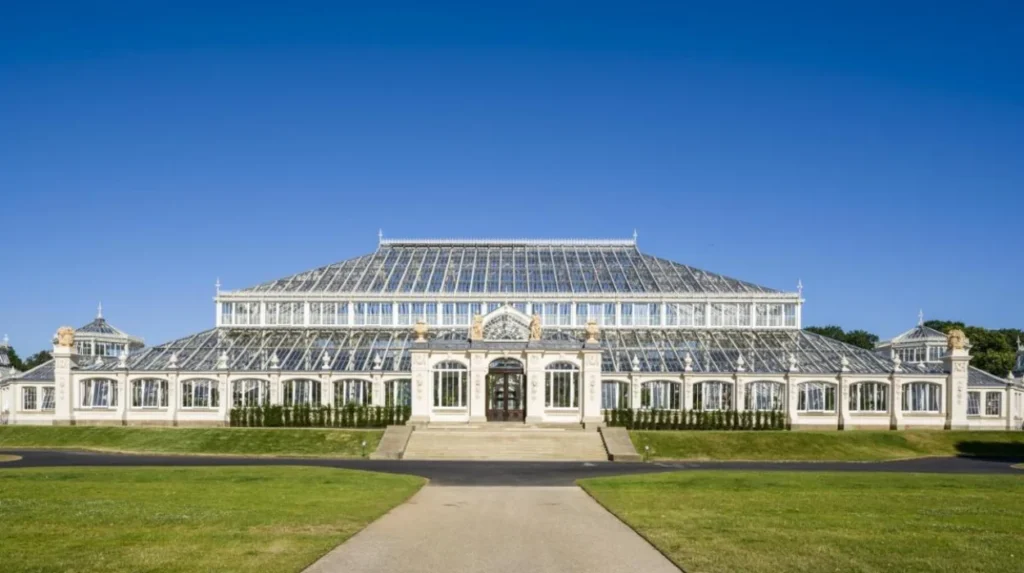
Victorian designers carefully balanced aesthetics with functionality. Curving paths improved circulation while diverse planting enhanced seasonal interest. New engineering techniques enabled the construction of large lakes, bridges, glasshouses, and ornamental structures.
Public parks also reflected advances in public health. Access to fresh air, sunlight, and open landscapes became recognised as important components of urban wellbeing.
Educational opportunities expanded through botanical displays, labelled plant collections, and organised public events. Gardens became outdoor classrooms where visitors learned about horticulture, geography, and natural science.
Many Victorian parks remain central features of London’s urban landscape, demonstrating the lasting value of nineteenth-century planning principles.
Why are London’s historic gardens important for botanical science?
London’s historic gardens contributed significantly to botanical classification, plant conservation, scientific research, global species exchange, and horticultural education. Their living collections continue supporting international biodiversity research, environmental monitoring, and conservation programmes across numerous scientific disciplines and institutions.
Historic gardens evolved into major scientific resources during the eighteenth and nineteenth centuries.
Botanical institutions documented thousands of plant species collected through exploration and scientific expeditions. Living collections enabled researchers to compare species, study adaptation, and develop classification systems.
Glasshouse technology allowed cultivation of tropical plants previously impossible to grow in Britain’s climate. Advances in heating, irrigation, and construction expanded botanical research considerably.
Seed exchanges between botanical institutions accelerated scientific collaboration across Europe and beyond. Herbarium collections preserved specimens that remain valuable for modern taxonomic research.
Today, London’s historic gardens support research into climate adaptation, plant genetics, conservation biology, ecosystem restoration, and sustainable horticulture.
Their scientific importance extends well beyond ornamental beauty, making them internationally recognised centres of environmental knowledge.
How are London’s historic gardens preserved today?
Historic gardens are protected through heritage legislation, conservation management, archaeological research, horticultural expertise, ecological monitoring, and public education. These combined efforts ensure significant landscapes remain historically authentic while adapting to environmental and urban challenges affecting long-term preservation.
Conservation requires balancing historical accuracy with modern environmental realities.
Specialist landscape historians analyse historic maps, estate records, paintings, planting lists, and archaeological evidence to understand original garden layouts.
Professional horticulturists maintain historic plant varieties while replacing ageing trees according to conservation strategies. Heritage specialists restore pathways, water features, walls, sculptures, and architectural structures using historically appropriate materials.
Climate change presents new preservation challenges. Rising temperatures, changing rainfall patterns, invasive species, and emerging plant diseases require adaptive management.
Government agencies, charitable organisations, universities, and volunteers collaborate to protect London’s historic landscapes through research, funding, and public engagement.
Many historic gardens operate educational programmes that encourage visitors to understand the importance of landscape conservation and environmental stewardship.
To experience these historic landscapes in person today, consult our comprehensive [Most Beautiful Streets in London Every Tourist Should Explore During Their First Visit] for itineraries and visiting parameters.
What lasting influence have London’s historic gardens had on British landscape design?
London’s historic gardens established enduring principles of landscape planning, horticulture, conservation, urban design, and public recreation. Their influence extends across Britain and internationally through professional education, heritage preservation, environmental planning, and contemporary landscape architecture practices.
British landscape design developed through continuous adaptation rather than sudden change. Medieval cultivation established practical horticultural foundations. Renaissance influences introduced artistic planning. Georgian designers redefined landscape aesthetics through naturalistic compositions. Victorian reformers expanded public access to urban green spaces.
These successive developments shaped modern landscape architecture.
Contemporary designers continue applying principles first refined in London’s historic gardens. Integrated planting, ecological management, visual composition, sustainable water systems, and public accessibility remain central objectives.
Historic gardens also influence heritage tourism. Millions of visitors explore these landscapes annually, contributing significantly to London’s cultural economy while supporting conservation funding.
Academic researchers continue studying archaeological evidence, historical documents, botanical collections, and landscape management techniques preserved within these sites.
As cities worldwide address climate resilience, biodiversity loss, and sustainable urban planning, London’s historic gardens provide valuable examples of how carefully designed landscapes can serve environmental, cultural, educational, and recreational purposes simultaneously.
London’s historic gardens represent one of Britain’s most significant cultural and environmental achievements. Across nearly a millennium, these landscapes evolved from practical medieval cultivation into internationally influential examples of landscape architecture, botanical science, and urban planning. Royal patronage, scientific exploration, artistic innovation, and public investment collectively shaped gardens that continue defining British landscape design.
Their legacy extends far beyond ornamental beauty. Historic gardens preserve archaeological evidence, rare plant collections, architectural traditions, ecological habitats, and centuries of horticultural knowledge. They demonstrate how landscapes reflect political change, scientific progress, cultural identity, and environmental stewardship.
What are London’s historic gardens?
London’s historic gardens are protected landscapes created over centuries by monasteries, royal households, aristocratic estates, botanical institutions, and public authorities. They preserve Britain’s horticultural, architectural, scientific, and cultural heritage while remaining important recreational and educational spaces.