Key Points:
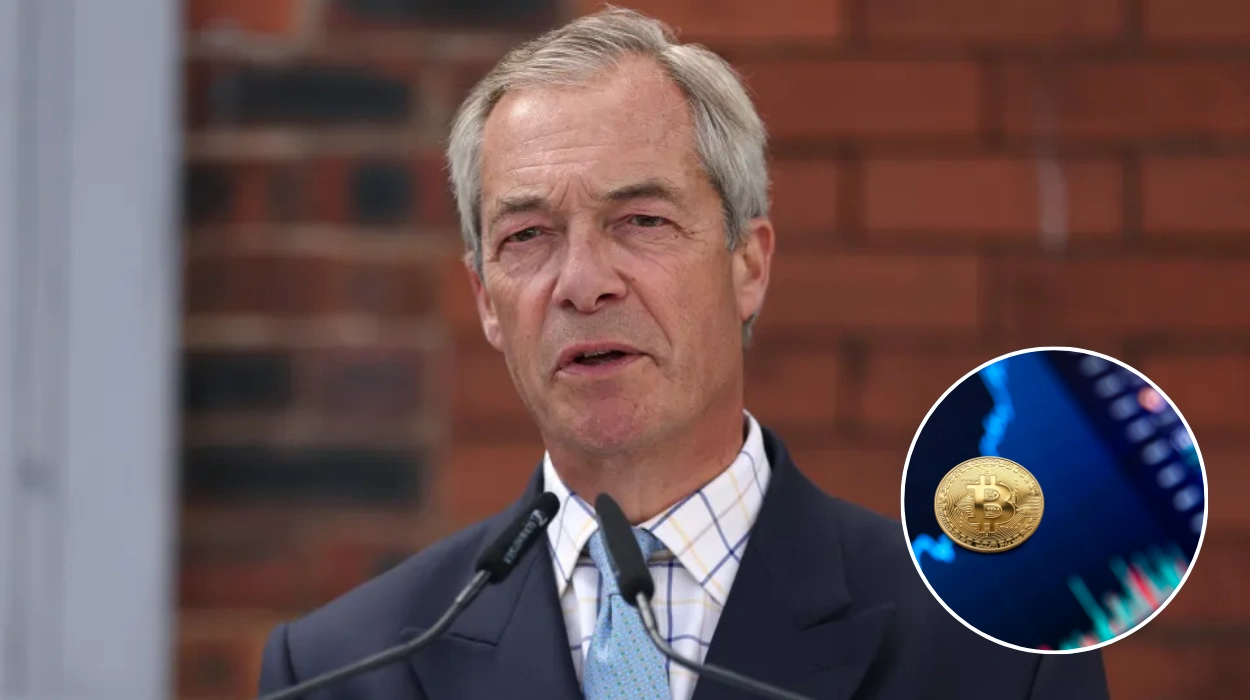
- Political Resignation: Reform UK leader Nigel Farage has announced his resignation as a Member of Parliament (MP), forcing a high-stakes special by-election in his constituency.
- Corruption Allegations: The sudden exit follows rigorous scrutiny over an undeclared £5 million financial gift from a Thailand-based cryptocurrency billionaire and additional funding from a convicted fraudster.
- Lobbying Scandal: Allegations have emerged that Farage used a private meeting with Bank of England Governor Andrew Bailey to lobby against a state-backed digital currency, potentially benefiting his primary financial backer.
- Media Crackdown: No independent journalists were permitted to attend, film, or ask questions during the broadcasted announcement.
- Political Repercussions: The burgeoning scandal breaks out at a critical juncture for Reform UK, following three consecutive special election defeats and ahead of an expected leadership transition within the governing Labour Party.
London (The Londoner News) July 7, 2026 – Reform UK leader Nigel Farage has announced his immediate resignation from the House of Commons, triggering a snap by-election in his seat as he seeks a public mandate to clear his name over mounting financial misconduct and illicit lobbying allegations. The high-profile populist leader, a staunch British ally of US President Donald Trump, revealed his decision during a tightly controlled broadcast statement on Tuesday afternoon, following weeks of intense pressure from opposition lawmakers and a formal investigation by Westminster’s independent standards watchdog. Farage faces severe scrutiny regarding a £5 million personal gift from a cryptocurrency tycoon, unrecorded financial support from a convicted fraudster for his private staff, and accusations of abusing his parliamentary position to influence central bank fiscal policy.
- Key Points:
- Why Has Nigel Farage Resigned His Parliamentary Seat?
- What are the Allegations Surrounding Cryptocurrency Lobbying?
- How is George Cottrell Connected to the Reform UK Scandal?
- What are the Wider Political Consequences for Reform UK?
- Can Farage Evade Parliamentary Standards by Running in a By-Election?
Why Has Nigel Farage Resigned His Parliamentary Seat?
The sudden decision by the Reform UK leader to step down from the House of Commons comes as a preemptive maneuver against an expanding investigation into his personal and political finances. As reported by Jill Lawless of the Associated Press (AP), Nigel Farage faces an official probe by Parliament’s independent standards commissioner, Daniel Greenberg, over a massive £5 million ($6.7 million) gift from Christopher Harborne, a billionaire cryptocurrency entrepreneur based in Thailand. Under parliamentary regulations, MPs are strictly required to declare substantial financial gifts and external streams of income to ensure transparency and prevent foreign or corporate interference in British democratic processes.
In a broadcasted statement issued at 2:00 p.m. on Tuesday, Farage adamantly defended his integrity, asserting that his resignation was a deliberate choice to take his case directly to the electorate rather than waiting for a parliamentary committee verdict. In his televised address, Farage stated:
“I have done nothing wrong. I have not broken the law in any way at all. I have not misused public money.”
However, the nature of the announcement itself has drawn heavy criticism from media freedom advocates and political rivals. The Associated Press noted that no independent journalists were invited to film the announcement or ask questions, leading opponents to claim the politician was actively evading public cross-examination.
What are the Allegations Surrounding Cryptocurrency Lobbying?
The financial cloud over Farage darkened further following specific allegations concerning his interactions with the highest echelons of British financial regulation. As reported by political reporters at The Guardian, the parliamentary standards watchdog has been formally urged to investigate whether Farage engaged in illicit “crypto lobbying” on behalf of his primary billionaire backer.
According to parliamentary disclosures and investigative findings published by The Guardian, Farage accepted the personal £5 million gift from Christopher Harborne just prior to the July 2024 general election. He subsequently accepted two additional donations of £25,000 each from Harborne to fund political trips to the United States and the Chagos Islands in January 2025 and February 2026, respectively. Furthermore, between August 2025 and February 2026, Reform UK as a political entity accepted a staggering £15 million in direct donations from Harborne.
The controversy centers on a private meeting held in September 2025 between Farage and the Governor of the Bank of England, Andrew Bailey. Investigative reports indicate that Farage utilized this private audience to vehemently urge the central bank to abandon its proposed state-run digital currency, colloquially known as “Britcoin.” Harborne is a principal investor in Tether, a major private stablecoin that would face direct, potentially devastating commercial competition from a state-backed digital pound.
Writing to the standards commissioner to demand an immediate investigation, Labour MP Chris Brickell expressed deep concern over the timeline of these events. As reported by The Guardian, Brickell stated:
“Farage took a £5m gift from Christopher Harborne – we know that. We also know that he has since used his platform, both publicly and privately, to advance positions that could benefit Mr Harborne’s crypto interests. Before meeting the governor of the Bank of England, Farage openly championed Tether, criticised proposed restrictions on stablecoins and vowed to challenge the Bank’s approach. He has since claimed credit for persuading the Bank to soften its position.”
Brickell added that the situation raises fundamental questions about democratic integrity, stating:
“This is not simply a debate about cryptocurrency. It is about whether an MP who has received millions from one individual should be lobbying for policies that could increase the value and profitability of that donor’s investments… The public will rightly ask whether these events are pure coincidence or a case of political influence being exercised on behalf of a billionaire backer.”
Simultaneously, fellow Labour MP Joe Powell has submitted an official request to Andrew Bailey demanding full disclosure of the minutes of the September 2025 meeting, which the Bank of England has previously refused to make public. Powell remarked that if the allegations are accurate, they raise “serious questions about transparency, democracy and the influence of major donors over UK financial policy.”
In response to the lobbying allegations, Farage has repeatedly altered his explanation for the £5 million windfall, initially claiming it was earmarked for his personal security, then asserting it was a retrospective “reward for delivering Brexit,” and later stating he was entitled to spend it entirely at his own discretion. When pressed on the matter, a Reform UK spokesperson dismissed the allegations to the press, stating:
“This is utter rubbish. Nigel’s only focus is on saving the country.”
How is George Cottrell Connected to the Reform UK Scandal?
In addition to the Harborne cryptocurrency probe, Farage faces a secondary front of financial scrutiny involving a controversial aristocratic figure within his inner circle. As reported by The Guardian team, opposition lawmakers are actively lobbying the Electoral Commission for a secondary inquiry into unrecorded material support provided to Farage by George Cottrell.
Cottrell, an aristocratic crypto-gambling entrepreneur, is well known in British political circles, having previously served a federal prison sentence in the United States for wire fraud. Recent journalistic disclosures revealed that Cottrell has been spotted attending numerous high-profile Reform UK events, despite the party maintaining that he holds “no formal role” in their organizational structure.
The core of the legal complaint rests on allegations that Cottrell personally financed private staffing, high-end security details, and luxury housing accommodations for Farage before and during his tenure as an elected MP. Under UK electoral law, political parties and individual candidates must transparently declare all third-party financial aid, including non-monetary donations “in kind,” such as free accommodation or staff allocation.
The escalating pressure over the Cottrell connection culminated in a volatile public confrontation. As detailed by Andrew Sparrow in The Guardian’s politics live coverage, Farage launched an aggressive verbal assault against a Sky News journalist who questioned him directly about his financial relationship with the convicted fraudster. Farage warned the reporter of “serious consequences” for pursuing the line of inquiry, subsequently decrying the coordinated investigations as an establishment “witch-hunt.”
Explore more Politics News:
Prince Harry Denied Buckingham Palace Stay During London Visit 2026
Rutte and Starmer Hold Critical Defense Summit: London 2026
What are the Wider Political Consequences for Reform UK?
The resignation of Nigel Farage occurs at an incredibly volatile moment for British domestic politics. Despite holding only eight out of 650 seats in the House of Commons, Reform UK’s populist, anti-immigration platform has consistently performed strongly in nationwide opinion polls, frequently placing them ahead of the main opposition Conservative Party and neck-and-neck with the governing Labour Party.
However, political analysts observe that the party’s electoral momentum may be hitting a ceiling. As highlighted by Jill Lawless of the AP, Reform UK recently suffered three consecutive special election defeats in constituencies they had confidently predicted they would win. The most prominent of these losses was to Labour’s heavyweight politician, Andy Burnham.
Burnham, who is widely expected to succeed Keir Starmer as Prime Minister within the coming weeks following internal Labour leadership shifts, recently delivered a high-profile speech outlining a 10-year national recovery plan based on greater regional devolution. Farage used his platform to fiercely attack Burnham’s vision, arguing that local devolution in London, Wales, and Scotland had fundamentally failed to deliver safer communities or functional public services. Farage claimed that Britain is “broken” and asserted that “voters want immediate action rather than long-term promises.”
Despite Farage’s rhetorical offensives, the financial scandals have provided significant ammunition to his critics. Writing in an editorial column for The Guardian, political commentator Gaby Hinsliff noted that while Farage finds himself on the brink of political ruin, the underlying public discontent fueling his party remains a potent force. Hinsliff warned that even if Farage is diminished by this “Partygate moment” for Reform UK, mainstream political entities cannot afford to rest easy, as the electorate still desperately craves “something worth voting for.”
Can Farage Evade Parliamentary Standards by Running in a By-Election?
Political experts are highly divided on whether Farage’s strategy of resigning to trigger a by-election will successfully neutralise the institutional threats against him. In an analysis compiled by The Guardian’s parliamentary team, comparisons were drawn to former Prime Minister Boris Johnson, who similarly resigned his seat in parliament when faced with an imminent suspension recommendation from the Privileges Committee.
However, political analysts point out a critical structural flaw in Farage’s gambit. While a normal citizen cannot be investigated by the parliamentary standards commissioner, Farage intends to immediately run as a candidate in the ensuing by-election. Should he win back his seat, the standards commissioner, Daniel Greenberg, and the parliamentary standards committee have the absolute authority to immediately revive their active investigation.
Consequently, rather than evading scrutiny, Farage’s critics argue that he has merely delayed the inevitable, while exposing himself to harsh public criticism for attempting to bypass constitutional oversight. Mainstream ministers have already signaled that the government intends to use this scandal to launch a sweeping legislative crackdown on political donations, introducing stringent new transparency measures to ensure that billionaire financiers and private corporate entities cannot exert covert, undue influence over the British legislative system. Farage’s upcoming by-election will now serve as a definitive, high-stakes referendum on his political survival and the ultimate viability of Reform UK.