Key Points
- Escalating Security Anxieties: Jewish travellers and British residents are increasingly expressing fears over being visibly identifiable as Jewish in public spaces across Greater London.
- Luton Airport Admires Protocol Failure: Security management at London Luton Airport officially apologised after failing to follow established headwear protocols, sparking scrutiny over the treatment of Jewish travellers wearing traditional head coverings.
- Deteriorating Perceptions of Safety: Recent qualitative observations and community data illustrate that visible expressions of faith—such as wearing a kippah or tzitzit—are being reassessed by families due to rising regional hostilities.
- Unprecedented Surge in Incidents: National monitoring bodies point to a sustained climate of ambient antisemitism and targeted street-level harassment, creating a notable gap between institutional assurances and lived reality.
London (The Londoner News) May 30, 2026 – An escalating sense of anxiety regarding personal safety has prompted a growing number of Jewish international tourists and domestic travellers to reconsider their visibility—and their presence—in the British capital. The trend comes amidst heightened public friction and documented operational anomalies at major transportation hubs, including London Luton Airport. The airport recently issued a formal admission that internal security staff deviated from standardized screening procedures during a security check involving Jewish passengers, reinforcing apprehensions within the community that visible religious indicators now invite disproportionate scrutiny or hostility.
Why is London increasingly perceived as unsafe for visibly Jewish visitors?
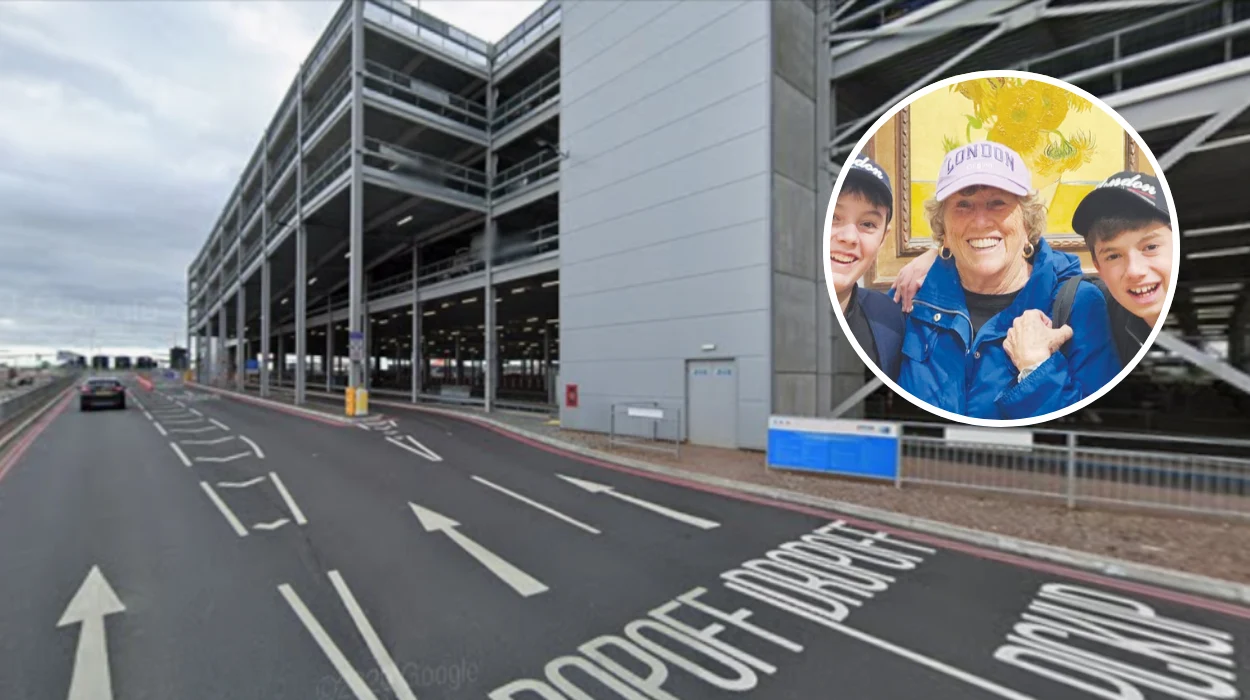
The hesitation to travel to the United Kingdom is no longer confined to casual observation; it has manifested as a agonizing domestic calculation for families globally. In a widely discussed analytical account published by The Jerusalem Post, an author framing the emotional dilemma of the diaspora pondered:
“To take my grandsons Mendy and Tal to London, or not to take my grandsons Mendy and Tal to London: that was the question.”
This statement captures a broader sentiment felt by international visitors who previously viewed the British capital as a secure haven for multi-generational cultural tourism, but who now view traditional garments as a potential liability on public streets.
The shift in tourist confidence mirrors a deep-seated domestic crisis. As reported by Caroline Davies of The Guardian, British Jews are increasingly confronting their own “red lines” regarding public safety. Davies noted that community figures, such as synagogue chair and father-of-four Mr Frankfurt, are actively evaluating alternative living arrangements, stating:
“If the things that are part of day-to-day life become physically unsafe for you and your family to the point of risk of life, you’d be crazy not to consider alternatives. And that is where we are now.”
The report highlighted that everyday experiences—ranging from verbal abuse at cultural events to explicit street-level harassment—are causing a generational fracture, with younger community members expressing fear about maintaining a visible identity in the UK.
Explore More London Local News
Gatwick Route 4 Flight Delay and Airspace Consultation Closes: Sussex 2026
Plastic Surgeon Dr Costantino Davide Sanctioned Over Patient Safety: West London 2026
What happened during the screening failure at London Luton Airport?
The anxieties surrounding transit infrastructure were recently validated by a formal acknowledgement from aviation officials. Following a disputed security interaction involving traditional Jewish headwear, the Guest Relations department at London Luton Airport issued an official statement admitting to a procedural breakdown.
The security division stated:
“Good afternoon. Thank you for contacting us and sharing your concerns regarding your recent experience at London Luton Airport. We are truly sorry to hear about the distress you experienced and the negative impact it had on your journey. We have carefully reviewed your complaint and can confirm that our established procedures were not correctly followed in this instance. Ordinarily, all headwear, including baseball caps, must be removed and scanned in our central search area to ensure that they are not utilized to conceal prohibited items. Those checks are important to ensure the safety and security of all airport users.”
This operational admission follows a history of legal and structural scrutiny at the hub. According to reporting by The Times of Israel, Luton Airport previously engaged in legal remediation via 3D Solicitors and UK Lawyers for Israel (UKLFI) after a separate high-profile incident involving Israeli author Alon Penzel. In that instance, Penzel was detained and aggressively interrogated by an officer over literature and apparel relating to the geopolitical aftermath of the October 7 attacks. Daniel Berke of 3D Solicitors stated that his client “was subjected to a prolonged and unjustified detention in circumstances that were deeply distressing and publicly humiliating,” which ultimately forced the airport to promise enhanced staff training explicitly covering fairness and respect toward Jewish and Israeli travellers.
How severe is the rise in documented UK antisemitism?
The statistical framework supporting these fears points toward a systemic shift in the public square. Data published by the Community Security Trust (CST) in their Antisemitic Incidents Report indicates that the United Kingdom sustained an unprecedented baseline of 3,700 recorded incidents within a single calendar year, averaging over 300 anti-Jewish infractions per month. For the first time in documented history, the country surpassed 200 incidents in every single consecutive month, moving the issue from a temporary spike to a structural reality.
Furthermore, an extensive study published by the Institute for Jewish Policy Research (JPR) detailed the rise of what researchers term “ambient antisemitism”—defined as indirect exposure to hostility via social platforms, media framing, and microaggressions in public spaces. The JPR findings revealed that 35% of British Jews rated their personal safety between 0 and 4 on a 10-point scale, a stark drop from the single-digit anxieties recorded prior to late 2023. This atmosphere has fundamentally altered how community members interact with non-Jewish peers, with a significant proportion reporting a narrowing of their social and professional circles out of self-preservation.
What is the institutional response to the community’s fears?
British political leadership has repeatedly attempted to offer rhetorical assurances, though community leaders argue there remains a wide gap between state declarations and street-level reality. As reported by Sky News, Home Secretary Shabana Mahmood described the trend of British Jews feeling unsafe in their own country as “devastating,” adding that “it is a challenge to all of us” to reverse the trajectory and restore public confidence. Similarly, Prime Minister Sir Keir Starmer has issued public condemnations following high-profile physical attacks in locations such as Golders Green and Manchester, asserting that targeting the Jewish community is equivalent to an assault on the fabric of Britain itself.
At the municipal level, the Greater London Authority has highlighted significant financial and policing allocations aimed at mitigating the threat. In formal responses during Mayor’s Question Time, the Mayor of London confirmed a zero-tolerance mandate executed via increased police patrols and direct engagement with the London Jewish Forum (LJF). The Mayor highlighted an investment of £3.95 million into the Shared Endeavour Fund, designed to empower Londoners to reject extremist rhetoric.
However, writing for the Times of Israel blogs, commentator Yaakov Chaliotis highlighted the emotional exhaustion caused by this dynamic, stating that a Jew in Britain can “hear solidarity from a lectern and still feel that visible Jewish life in the street, on campus, or outside a synagogue has become politically inconvenient.” Chaliotis argued that the modern anxiety is characterized not just by a fear of physical attack, but by a “fear of abandonment” by institutions that fail to convert political rhetoric into durable, daily protection.
For a deeper dive into how the British Jewish community is navigating these safety concerns, you can view this BBC Newscast discussion on Jewish safety in the UK. This broadcast features special correspondents and community members discussing the real-world impact of recent street-level incidents and the ongoing national conversation surrounding public security in London.