Key Points
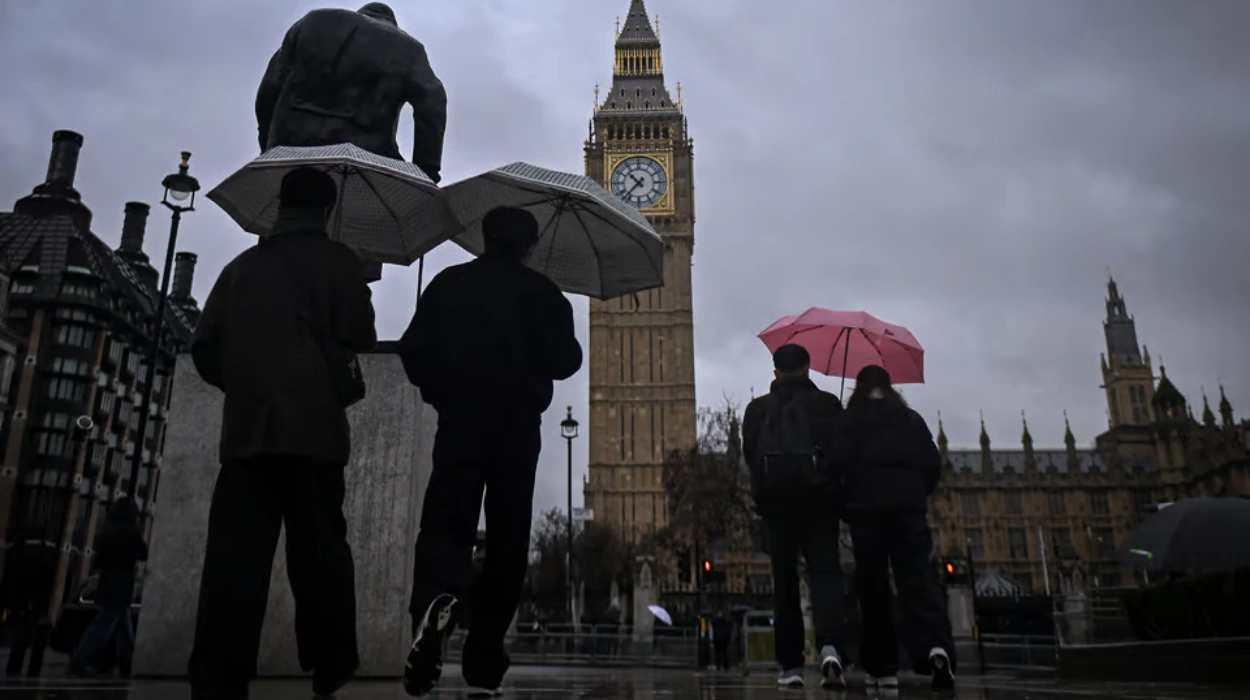
- Dramatic Weather Shift: London is bracing for heavy, persistent rainfall following a intense, record-breaking nationwide heatwave.
- Extreme Temperature Fluctuations: Temperatures peaked at a blistering 35.1°C in Kew Gardens, West London, but are projected to plummet to as low as 11°C by the end of next week.
- Imminent Rainfall: After a warm weekend with highs of 30°C on Saturday and 24°C on Sunday, continuous daily rain is forecast for the capital from Monday through at least the following Friday.
- National Impacts: The heaviest and most frequent initial downpours are expected to strike northern and western areas of the UK before spreading nationwide to mark an unsettled start to meteorological summer.
- Agricultural Relief: Meteorologists state the rainfall is desperately required by British growers, gardeners, and farmers to alleviate severe ground dryness caused by prolonged dry conditions.
- Tragic Heatwave Casualties: A total of 12 people have lost their lives in water-related accidents across the UK during the hot spell, with 16-year-old Charlie Noble being the latest victim.
- Severe Water Supply Deficits: Thousands of residents in Kent face critical water shortages and closures of local businesses, forcing South East Water to set up emergency bottled water stations.
- Long-Term Optimism: Forecasters predict a strong likelihood that high pressure will re-establish itself, bringing a return of dry and warm weather conditions by the second half of June.
London (The Londoner News) May 30, 2026 – London and the wider United Kingdom are preparing for a drastic meteorological shift as heavy, continuous rain is forecast to sweep across the capital, bringing a sudden end to a historic, record-breaking heatwave that pushed temperatures to an extraordinary 35.1°C in West London. According to official meteorological data, the blistering conditions are set to give way to an extended period of precipitation beginning early next week, with temperatures in the capital expected to collapse by more than twenty degrees, bottoming out at a chilly 11°C. While the arrival of wet weather promises essential relief to British agricultural sectors, gardeners, and parched landscapes currently suffering from extreme dryness, the preceding period of intense heat has left a trail of infrastructure disruption and tragedy, including severe regional water shortages and a total of twelve accidental drowning deaths across the nation.
- Key Points
- What Are the Specific Temperature Changes Forecast for London?
- When and Where Will the Heavy Rain Fall Across the United Kingdom?
- How Are Meteorologists Explaining This Drastic Transition?
- Will the Warm Weather Return to the Capital Later This Month?
- What Human Toll and Fatalities Occurred During the Heatwave?
- How Has the Hot Weather Impacted Local Infrastructure and Water Supplies?
The upcoming weather transition represents a profound disruption to the start of the British meteorological summer, reversing weeks of unseasonably dry and hot weather that culminated in England and Wales logging their hottest May days ever recorded. Forecasters indicate that while the capital will enjoy a brief, final window of bright, warm intervals over the weekend—reaching up to 30°C on Saturday—the weather system will rapidly destabilise. By Monday, a relentless low-pressure system is scheduled to take hold, triggering daily rainfall across London that is expected to persist until at least the following weekend, fundamentally altering daily commutes, outdoor commerce, and regional water resource management across the south-east of England.
What Are the Specific Temperature Changes Forecast for London?
The contrast between the outgoing heatwave and the incoming low-pressure system highlights an unusually volatile transition for early summer in the United Kingdom. As detailed by staff reporter Alastair Lockhart of The Evening Standard, the maximum temperature achieved during the peak of the heatwave reached a remarkable 35.1°C, recorded officially at Kew Gardens in west London. This extreme reading cemented the month as one of the most anomalous periods of early-season heat in contemporary British history, altering daily routines and straining urban infrastructure across the capital.
However, the upcoming week will see this tropical air mass completely displaced by cooler maritime air. Alastair Lockhart of The Evening Standard noted that temperatures are on track to “dip to as low as 11°C next week” as the capital undergoes a rapid cooling phase. Before the wet weather takes a firm hold, Londoners will experience a staged decline over the weekend. Saturday is projected to maintain a substantial high of approximately 30°C, accompanied by bright spells, while Sunday will see a more modest peak of 24°C. By the time the working week commences on Monday, the thermometer will slide significantly lower, hovering around averages more typical of an unsettled spring than a summer launch.
When and Where Will the Heavy Rain Fall Across the United Kingdom?
The geographical progression of the storm system indicates that while London will experience its primary deluge during the working week, other regions of the country will bear the initial brunt of the atmospheric shift. As reported by Alastair Lockhart of The Evening Standard, the Met Office has stated that showers are expected to be “most frequent and heaviest” in northern and western areas of the country on Sunday. These outer regions will serve as the entry point for the broader weather front, capturing the dense moisture moving in from the Atlantic before the system expands eastward.
As the calendar turns, the arrival of June is poised to bring a highly visible change in the national landscape. Writing for The Evening Standard, journalist Alastair Lockhart explained that the month is set to begin with rain showers seen much more widely across the entirety of the United Kingdom, though these periods of heavy precipitation will occasionally be broken up by some “brighter intervals.” For London specifically, the outlook requires residents to prepare for an extended wet spell, with official Met Office models forecasting some level of rain in the capital every single day from Monday until at least the subsequent Friday, creating a sustained damp period across the metropolitan area.
How Are Meteorologists Explaining This Drastic Transition?
To provide scientific context to this sharp climatic pivot, experts emphasize that such dramatic shifts, while inconvenient for urban populations, represent a natural rebalancing of regional weather patterns. As detailed in the reporting by Alastair Lockhart of The Evening Standard, Met Office meteorologist Greg Dewhurst stated that the upcoming week will definitively bring “a change from the heatwave” as regional temperatures fall much closer to the seasonal average for this time of year.
Furthermore, the meteorological data underscores that the preceding weeks left the country’s environment in a highly vulnerable, desiccated state. Highlighting the ecological benefits of the incoming system, Met Office meteorologist Greg Dewhurst told Alastair Lockhart of The Evening Standard:
“It’s been quite a dry period of weather and hot period of weather, so it will be probably much needed and much welcome rain to gardeners and growers and farmers with the ground being so dry at the moment.”
Greg Dewhurst further observed to The Evening Standard that the transition represents a major systemic change, but added that it is “probably a welcome change for those who either don’t like the heat or want some rain,” balancing the frustrations of urban commuters against the critical needs of the agricultural sector.
Explore More London Local News
Why Visibly Jewish Tourists No Longer Feel Safe: London 2026
Best Luxury Hotel Cigar Lounges: London 2026
Will the Warm Weather Return to the Capital Later This Month?
For residents dismayed by the prospect of a completely washed-out June, long-range meteorological modeling offers a strong degree of reassurance. The current low-pressure system is not expected to lock the UK into a permanent summer damp. As published by Alastair Lockhart of The Evening Standard, Met Office expert Greg Dewhurst confirmed that there are “good signs” the heat will eventually return to the British Isles, with further warm spells highly likely to follow what he described as an “unsettled” start to the month of June.
This temporary instability is characteristic of seasonal transitions, where competing air masses battle for dominance over Western Europe. Providing a specific timeline for the return of summer conditions, Greg Dewhurst explained to Alastair Lockhart of The Evening Standard:
“Particularly (during) the middle to second half of June, it looks like it starts settling down with higher pressure a bit more dominant again, so an unsettled start to meteorological summer, but there are signs that it does settle down as the month goes on.”
This forecast suggests that high-pressure systems will eventually regain control of the UK’s weather architecture, suppressing cloud formation and allowing solar radiation to rebuild temperatures back toward the high parameters observed in late May.
What Human Toll and Fatalities Occurred During the Heatwave?
While the economic impact of the weather is frequently measured in retail and agricultural terms, the human cost of the extreme late-May heatwave has been severe and tragic. The sustained high temperatures prompted millions of citizens to seek outdoor water sources for recreation, leading to an unprecedented spike in emergency rescue responses and accidental drownings across multiple jurisdictions within the United Kingdom.
As recorded by Alastair Lockhart of The Evening Standard, a 16-year-old youth named Charlie Noble became the 12th person to die in a water-related incident over the course of the heatwave. The teenager’s body was successfully recovered by emergency services in Stirlingshire, Scotland, on Thursday. The loss of Charlie Noble highlights the immense danger associated with open-water swimming during sudden urban heat spikes, where individuals often underestimate currents and the physiological effects of cold-water shock.
The geographic distribution of these fatalities demonstrates that the public safety crisis was truly national in scope, affecting almost every corner of England, Wales, and Scotland. According to the comprehensive data compiled by Alastair Lockhart of The Evening Standard, water-related deaths during this specific hot spell have been officially confirmed in the following regions:
- South Yorkshire
- West Yorkshire
- Cornwall
- Hampshire
- Warwickshire
- Cheshire
- Pembrokeshire
- Lincolnshire
- Lancashire
- Stirlingshire
This widespread loss of life has triggered renewed calls from emergency services, local councils, and water safety charities for greater public vigilance and stricter adherence to warning signs near reservoirs, rivers, and unmonitored coastal areas during periods of extreme solar heat.
How Has the Hot Weather Impacted Local Infrastructure and Water Supplies?
Beyond the immediate public health crisis, the prolonged absence of rainfall combined with surging domestic demand has pushed regional utility infrastructure to its absolute limit. The south-east of England, which historically features the highest population density and lowest per-capita water availability in the UK, has seen its distribution networks severely compromised by the unseasonal heatwave.
Journalist Alastair Lockhart of The Evening Standard reported that thousands of people residing in Kent are expected to face severe water issues over the weekend. This localized crisis has emerged as the utility company South East Water continues to grapple with maintaining adequate water pressure and supply volumes throughout its network during the extended period of hot weather. The rapid surge in water consumption for garden irrigation, paddling pools, and domestic cooling outpaced the rate at which local treatment facilities could process and pump treated water into localized storage towers.
The consequences of this operational failure have disrupted both private citizens and the local commercial economy. As detailed by Alastair Lockhart of The Evening Standard, numerous local businesses have been forced to close their doors due to a lack of running water, and disrupted residents have been forced to queue up at emergency water bottle stations. These supply interruptions and emergency distribution centers have been active since the systemic problems first began amidst the heavy usage recorded during the preceding bank holiday weekend heat, exposing vulnerabilities in regional climate resilience that the incoming heavy rains may finally, if painfully, resolve.