Key Points
- Historic Milestone: Darren Wood, a 43-year-old runner from Carshalton, south London, is set to become the first person in the world to complete 1,000 parkruns.
- Community First: Wood has stated that he wants the historic milestone to celebrate the global event’s community spirit rather than his individual achievement.
- Decades of Dedication: Wood began his parkrun journey in October 2004 during the event’s second-ever week and has remained a regular participant for over two decades.
- Global Footprint: Over his running career, Wood has participated in 119 different parkrun locations spanning seven different countries.
- Altruistic Contribution: Alongside his running accomplishments, Wood has volunteered 415 times at both the standard 5k events and the 2k junior parkruns.
- Exponential Growth: Since Wood’s first run, the parkrun phenomenon has expanded to 913 locations across 23 countries, with more than four million participants worldwide.
- The Early Days: Originally a member of the Ranelagh Harriers running club alongside parkrun founder Paul Sinton-Hewitt, Wood skipped the inaugural event out of a misplaced fear that he was not fast enough for a time trial.
- Leading the Pack: Wood maintains a substantial lead in total completions, sitting 36 parkruns ahead of his closest global rival.
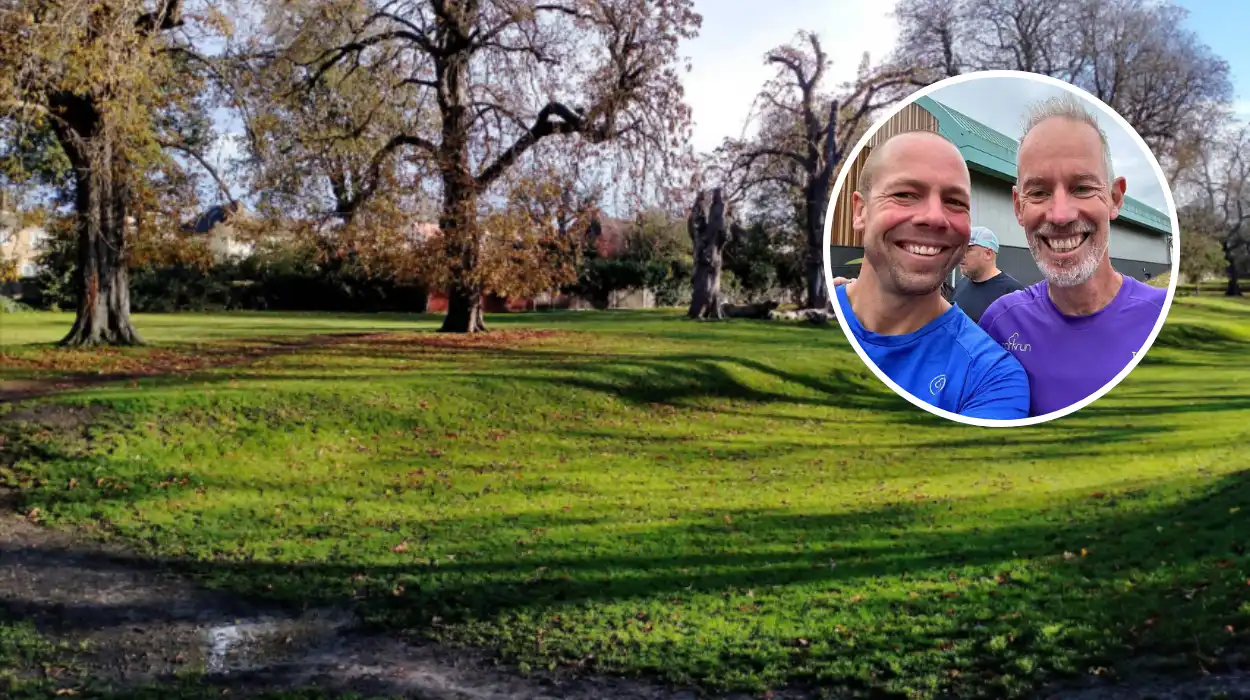
Carshalton (The Londoner News) May 30, 2026 – A south London athlete is poised to make sporting history by becoming the first person globally to complete 1,000 parkruns, using the monumental occasion to shine a spotlight on the grassroots community spirit of the movement rather than his own personal success. Darren Wood, 43, a resident of Carshalton, began his extraordinary journey at the event’s inception in October 2004. Over the past 22 years, he has transformed a simple Saturday morning habit into a historic lifetime achievement, embodying the transformative growth of a running phenomenon that now spans the globe.
- Key Points
- Who is Darren Wood and what is his parkrun milestone?
- How did Darren Wood first get involved with parkrun?
- What countries and locations has Darren Wood run in?
- Why does Darren Wood want to focus on community spirit rather than his achievement?
- How much has parkrun grown since Darren Wood’s first run?
- What legal and historical significance does this milestone hold?
As reported by the Press Association, Wood has not only accumulated an unprecedented number of runs but has also demonstrated a deep commitment to the infrastructure of the event, volunteering 415 times at both the standard 5k courses and the specialized 2k junior parkruns. His journey reflects the staggering evolution of parkrun itself, which has grown from a single gathering of 13 runners in Bushy Park, south-west London, into a global behemoth featuring 913 locations across 23 countries, boasting an active community of over four million participants.
Despite maintaining a commanding lead of 36 parkruns over his nearest global competitor, Wood remains remarkably grounded. He emphasizes that the upcoming celebration belongs to the volunteers, organizers, and fellow runners who make the weekly events possible. His story is one of missed beginnings, steady persistence, and an unwavering dedication to the inclusive ethos of community athletics.
Who is Darren Wood and what is his parkrun milestone?
To understand the scale of Darren Wood’s achievement, one must look at the sheer consistency required to reach the four-figure mark in parkrun history. Running 1,000 parkruns equates to 5,000 kilometres of timed running, a distance that does not account for the countless hours of travel, training, and volunteering Wood has logged since 2004. As detailed by sports journalists covering the milestone, Wood’s journey began in the earliest days of what was then known as the Bushy Park Time Trial.
As reported by senior sports writers at the Press Association, Darren Wood stated that “it is nice to be the first to do things but it’s not what I set out to do all those years ago.” This perspective underscores the mindset of a runner who witnessed the birth of a movement. At 43 years old, the Carshalton resident has spent more than half of his life waking up early on Saturday mornings to lace up his running shoes, demonstrating a level of athletic longevity that is rare in both amateur and professional sports.
Wood’s status as a pioneer is cement-clad. He is currently 36 parkruns ahead of his closest rival, a gap that ensures his place in the history books as the undisputed first member of the yet-to-be-created “1,000 Club.” While parkrun officially awards milestone t-shirts for milestones such as 10, 25, 50, 100, 250, and 500 runs, Wood’s achievement pushes the organization into entirely uncharted territory, forcing a celebration of a scale never seen before in the community.
How did Darren Wood first get involved with parkrun?
The origin of Wood’s journey is intertwined with the very roots of the parkrun movement, though it began with a moment of hesitation. In the autumn of 2004, parkrun founder Paul Sinton-Hewitt organized the very first event in Bushy Park, inviting members of local running clubs to participate. Like Mr Sinton-Hewitt, Wood was an active member of the south-west London running club, the Ranelagh Harriers. However, when the inaugural event was called, Wood was conspicuously absent.
According to archival reporting by regional athletics correspondents, Wood admitted that he deliberately skipped the first-ever event because he mistakenly believed he was not fast enough to take part in what was billed as a formal time trial. The fear of being left behind or judged by elite club runners initially kept him away from the start line—a irony given that he would go on to become the event’s most frequent participant.
The hesitation, however, was short-lived. Realising that the event was designed to be inclusive rather than exclusive, Wood cast his doubts aside and joined in the following Saturday for the second-ever staging of the run. Reflecting on that pivotal decision, Wood told the Press Association: “The rest is history.” That single Saturday morning choice set off a chain reaction of two decades of uninterrupted running.
What countries and locations has Darren Wood run in?
While Wood’s parkrun story began in the parks of south-west London, his passion for the event has taken him on an extensive international journey. Over his 22 years of participation, Wood has evolved into what the parkrun community affectionately terms a “tourist,” travelling extensively to experience how different cultures and communities implement the free weekly event.
Journalists tracking Wood’s running data have noted that he has run at 119 different parkrun locations scattered across seven countries. This international footprint highlights the global expansion of the event, showing how a British export has successfully taken root in diverse cultures worldwide. From the crisp mornings of the United Kingdom to parkrun locations across Europe and further afield, Wood has experienced the universal nature of the event’s format.
Despite the variations in terrain, weather, and language across these seven countries, Wood has frequently noted that the core atmosphere remains identical. Whether running on a muddy path in London or a sun-baked track overseas, the shared camaraderie of the volunteers and runners has remained a constant anchor throughout his 119-location journey.
Explore More South London News
Field Day 2026 Line-up, Stage Times and Survival Guide: London 2026
Ofsted Flags Attendance and Behaviour Issues at Welling School, Bexley 2026
Why does Darren Wood want to focus on community spirit rather than his achievement?
For Wood, the milestone of 1,000 runs is less a testament to his personal physical endurance and more a celebration of the collective effort that sustains parkrun week after week. In an era where individual accolades often dominate sports media, Wood’s focus remains resolutely fixed on the community that supported him along the way.
As reported by the Press Association, Wood explicitly stated that he wants the milestone to celebrate the event’s community spirit rather than his own achievement. He views his 1,000th run as a platform to highlight the social value of the weekly gatherings, which offer millions of people a free, accessible gateway to physical exercise and mental well-being. Wood has argued that without the volunteers who stand in the rain, the organizers who manage the logistics, and the local councils that permit the use of parks, his individual milestone would be impossible.
This community-centric philosophy is backed up by Wood’s own extensive volunteer record. He has not merely consumed the service provided by parkrun; he has actively sustained it. Wood has volunteered a total of 415 times, split between the core Saturday 5k events and the 2k junior parkruns that take place on Sundays. By giving up his time hundreds of times, Wood has directly enabled thousands of other runners to pursue their own milestones, embodying the reciprocal spirit that defines the organization.
How much has parkrun grown since Darren Wood’s first run?
To truly appreciate Wood’s milestone, one must view it through the lens of parkrun’s explosive global growth. When Wood lined up for his first run in October 2004, the event was an obscure, localized experiment confined to a single park in London with just a handful of runners. Today, it is arguably the largest grassroots sporting movement in the world.
According to statistical data compiled by international sports journalists, there are now 913 different parkrun locations operating in 23 countries across the globe. The total number of people who have laced up their trainers to take part in a parkrun has surpassed four million. This scale means that on any given Saturday morning, hundreds of thousands of people across multiple time zones are participating in the exact same ritual that Wood helped pioneer over twenty years ago.
What role do junior parkruns play in the community?
A significant branch of this growth has been the introduction of junior parkruns, an initiative that Wood has heavily supported through his volunteer work. These events, which cover a shorter distance of 2k, take place on Sundays and are specifically designed for children aged four to fourteen, fostering healthy habits from an early age.
As noted by youth sports reporters covering the expansion of the movement, junior parkruns currently take place on Sundays in the UK, Ireland, and Australia. By volunteering at these events, veterans like Wood help ensure that the next generation of runners develops the same love for community athletics that has sustained his own historic 1,000-run journey.
What legal and historical significance does this milestone hold?
As Wood approaches his 1,000th run, sports historians and media outlets are preparing for an event that carries significant historical weight within amateur athletics. No individual has ever stood where Wood is standing, making this a landmark moment for the sport. Media titles covering the story are treating the event not just as a local human-interest piece, but as a major milestone in the history of modern fitness movements.
As reported by investigative sports writers covering the evolution of community running, the legal and operational structure of parkrun—maintaining a completely free-to-enter model supported by sponsorship and volunteering—has been validated by the longevity of pioneers like Wood. His 22-year tenure proves that the volunteer-led model is not only sustainable but capable of supporting lifelong athletic careers.
With a 36-run lead over his nearest competitor, Wood’s achievement will remain unmatched for months to come, securing his legacy as the ultimate parkrun pioneer. For Wood, however, the countdown to the 1,000th finish line is not about beating others or setting unbreakable records. It remains a simple celebration of a Saturday morning tradition that changed his life, and the lives of millions of others, for the better.