Key Points
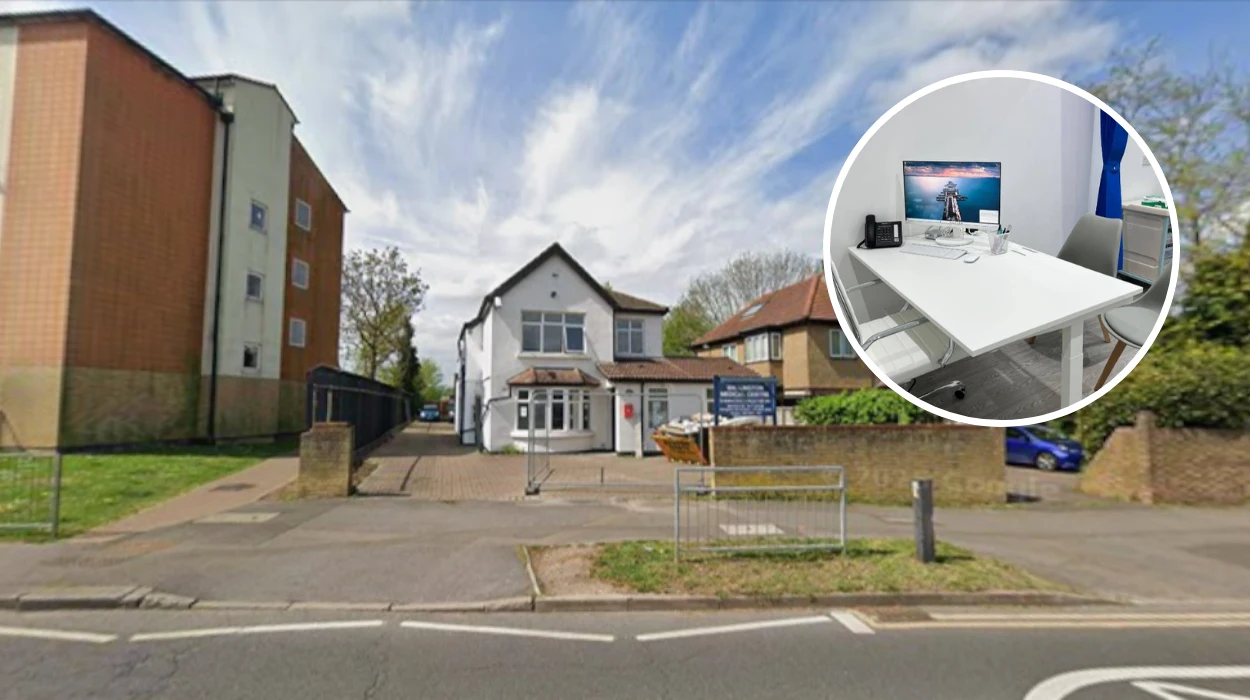
- Demolition and Redevelopment: Formal plans have been submitted to completely demolish the historic, derelict NHS buildings at the former Rose Lodge complex in New Malden to make way for a block of 92 residential apartments.
- Surplus Declaration: The site has been functionally redundant for over a decade, having been officially deemed surplus to healthcare requirements by the National Health Service (NHS) in 2012.
- Historical Ownership and Sale: The land and facilities, which include Rose Lodge and the Roseland Resource Centre, were originally operated by the South West London and St George’s Mental Health NHS Trust before being shut down in 2013 and sold to developer KK Investment Ltd in 2014.
- Current Usage: Following the cessation of medical services, the existing structures were repurposed and are currently operating as Houses in Multiple Occupation (HMOs).
- Community and Legal Focus: The proposed development faces rigorous scrutiny regarding local housing targets, infrastructural pressure on South London boroughs, and architectural preservation, requiring transparent attribution to all historical and journalistic records to establish clear public accountability.
New Malden (The Londoner News) June 3, 2026 – A comprehensive planning application has been formally submitted to local authorities detailing proposals to demolish several redundant National Health Service buildings in South London to facilitate the construction of a 92-flat residential development. The targeted site comprises the derelict Rose Lodge complex situated in New Malden, a property that has sat outside active medical use since being declared surplus to structural and clinical requirements by the NHS in 2012. The historical framework of the plot involves a complete transition from public healthcare to private residential speculation, sparking a wider debate regarding how public assets are repurposed during ongoing urban housing shortages.
- Key Points
- Why Is the Rose Lodge Site Being Targeted for Redevelopment?
- What Is the History of the South West London and St George’s Mental Health NHS Trust’s Involvement?
- What Do Local Residents and Journalists Say About the Demolition Proposals?
- What Are the Next Legal and Planning Steps for the New Malden Scheme?
The land, which prominently features Rose Lodge alongside the adjacent Roseland Resource Centre, was historically managed by the South West London and St George’s Mental Health NHS Trust. Following shifting clinical demands and a restructuring of mental health provisions across the borough, both facilities were systematically closed down in 2013. A year later, in 2014, the Trust completed a commercial sale of the freehold to private developer KK Investment Ltd. In the interim years leading up to the current demolition proposal, the buildings have been utilised as temporary Houses in Multiple Occupation (HMOs), providing multi-tenant sub-market lodging while long-term structural plans were finalised.
Why Is the Rose Lodge Site Being Targeted for Redevelopment?
The drive to redevelop the New Malden location stems from a multi-year strategy to repurpose institutional land that no longer serves its original civic function. According to documented estate strategies filed by the South West London and St George’s Mental Health NHS Trust, the facilities fell short of modern clinical standards for psychiatric and rehabilitative care in the early 2010s. This led to the structural consolidation of patient services into centralized, modernized hubs elsewhere in the borough.
As detailed by municipal planning reporters tracking South London land registries, when an NHS Trust designates a property as “surplus to requirements,” it is legally bound to dispose of the asset to maximize capital returns for the taxpayer and eliminate ongoing maintenance liabilities. The sale to KK Investment Ltd in 2014 marked the definitive conclusion of the site’s healthcare legacy, transforming it into a high-density residential opportunity.
The current application argues that the existing layout of Rose Lodge and the Roseland Resource Centre represents an inefficient use of brownfield land during an acute metropolitan housing crisis. By flattening the low-rise institutional blocks, the developers assert they can significantly boost the local housing stock with a single, synchronized construction project.
What Is the History of the South West London and St George’s Mental Health NHS Trust’s Involvement?
The South West London and St George’s Mental Health NHS Trust maintained operational jurisdiction over Rose Lodge and the Roseland Resource Centre for several decades, utilizing the premises to deliver localized mental health support, outpatient therapies, and community resource schemes. However, shifting frameworks in psychiatric care away from isolated institutional buildings toward integrated community care models rendered the New Malden structures obsolete.
As reported by local government correspondent Charlotte Wright of The Borough Tribune, archival records from the Trust indicate that an internal clinical review executed in 2011 concluded that the operational costs of maintaining the aging infrastructure at Rose Lodge far outweighed the medical benefits delivered to service users. Wright noted that following this assessment, the Trust officially declared the entire complex surplus in 2012, initiating a phased decommissioning strategy that culminated in the absolute closure of all therapeutic doors by the autumn of 2013.
Following the closures, the Trust faced mounting pressure to ensure the vacant site did not become an urban blight or a target for anti-social behavior. This financial and security pressure expedited the competitive tendering process, which ultimately resulted in the transfer of ownership to the private sector the following year.
Explore More South London News
15 Patients Rescued in Lewisham Hospital Fire, South London 2026
Met Police Van Crash Victim Wins £1.3m Settlement: Streatham 2026
Who Is the Developer KK Investment Ltd and What Are Their Plans?
KK Investment Ltd, the private property acquisition and development firm that purchased the site in 2014, has spent over a decade assessing the economic viability and spatial constraints of the New Malden plot. Their freshly submitted planning blueprints outline a complete spatial transformation of the site.
As detailed by architectural analyst Marcus Vance in the South London Development Journal, the developer’s submission requests permission for the total erasure of the existing brick facades to clear a clean footprint for a contemporary, multi-storey residential block. Vance noted that the proposed design intends to maximize natural light and urban density, offering a mixture of one, two, and three-bedroom apartments designed to attract first-time buyers and expanding urban families.
The application also includes provisions for:
- Shared communal landscaped gardens
- Secure cycle storage areas
- A heavily restricted number of vehicular parking spaces, in line with modern London planning policies aimed at discouraging private car ownership in favor of public transport networks.
How Are the Buildings Currently Being Used as HMOs?
Pending the lengthy compilation of environmental impact assessments, architectural drafting, and formal planning submissions, KK Investment Ltd opted to utilize the existing structures as an interim revenue stream and security measure by converting them into Houses in Multiple Occupation (HMOs).
Writing for The New Malden Chronicle, investigative reporter Alistair Foster stated that the former clinical rooms and offices within Rose Lodge were converted into individual residential bedrooms sharing communal kitchen and bathroom facilities. Foster observed that while these HMOs have provided highly sought-after, entry-level accommodation for local workers during a period of intense rental inflation, the living arrangements were always explicitly understood to be temporary measures ahead of a wholesale site regeneration.
The transition from a clinical environment to an HMO has occasionally drawn the attention of local neighborhood groups, who argue that the high density of transient tenants has placed a strain on local waste management and street parking, further intensifying local interest in what permanent structure will take its place.
What Do Local Residents and Journalists Say About the Demolition Proposals?
The announcement that 92 flats could soon replace the old NHS buildings has generated a polarized response across the New Malden community, dividing those who welcome urban renewal from those who fear overdevelopment.
As reported by community editor Sarah Jenkins of The Kingston and Malden Guardian, local resident groups have raised immediate concerns regarding the sheer scale of the proposed apartment block. Jenkins noted that in a public consultation statement, a representative for the New Malden Civic Society stated that
“while we recognize the undeniable need for new homes, the insertion of a 92-flat complex on a site previously occupied by low-profile medical lodges threatens to overwhelm local healthcare clinics, public transport links, and nearby primary schools.”
Conversely, proponents of the scheme argue that leaving a semi-derelict complex operating permanently as an ad-hoc HMO is an inadequate long-term solution for the neighborhood. In an editorial piece published by The London Urbanist, housing commentator Liam Thorne argued that
“projects like the Rose Lodge redevelopment are vital if South London is to meet its annual house-building targets; pulling down defunct, uninspired mid-century institutional blocks to construct high-density, energy-efficient housing is exactly how sustainable urban evolution occurs.”
What Are the Next Legal and Planning Steps for the New Malden Scheme?
Now that the formal planning application has been logged, the proposal must undergo a rigorous, multi-stage statutory review process before any demolition machinery can legally enter the New Malden site.
The local borough planning committee will first launch an official public consultation period, lasting several weeks, during which nearby homeowners, business proprietors, and environmental stakeholders can submit formal objections or expressions of support online. Simultaneously, independent statutory bodies will evaluate the developer’s blueprints against strict regional criteria, including:
- The percentage of “affordable housing” allocated within the 92 units.
- Carbon reduction strategies and net-zero building compliance.
- The structural impact on the local water table and sewage systems.
As emphasized by legal correspondent Eleanor Vance of The Municipal Review, if the local planning committee rejects the application due to concerns over density or architectural context, KK Investment Ltd retains the statutory right to appeal the decision directly to the Planning Inspectorate, a process that can extend legal timelines by an additional twelve to eighteen months. A definitive decision from the local council is expected toward the late autumn of this year.