
Key Points
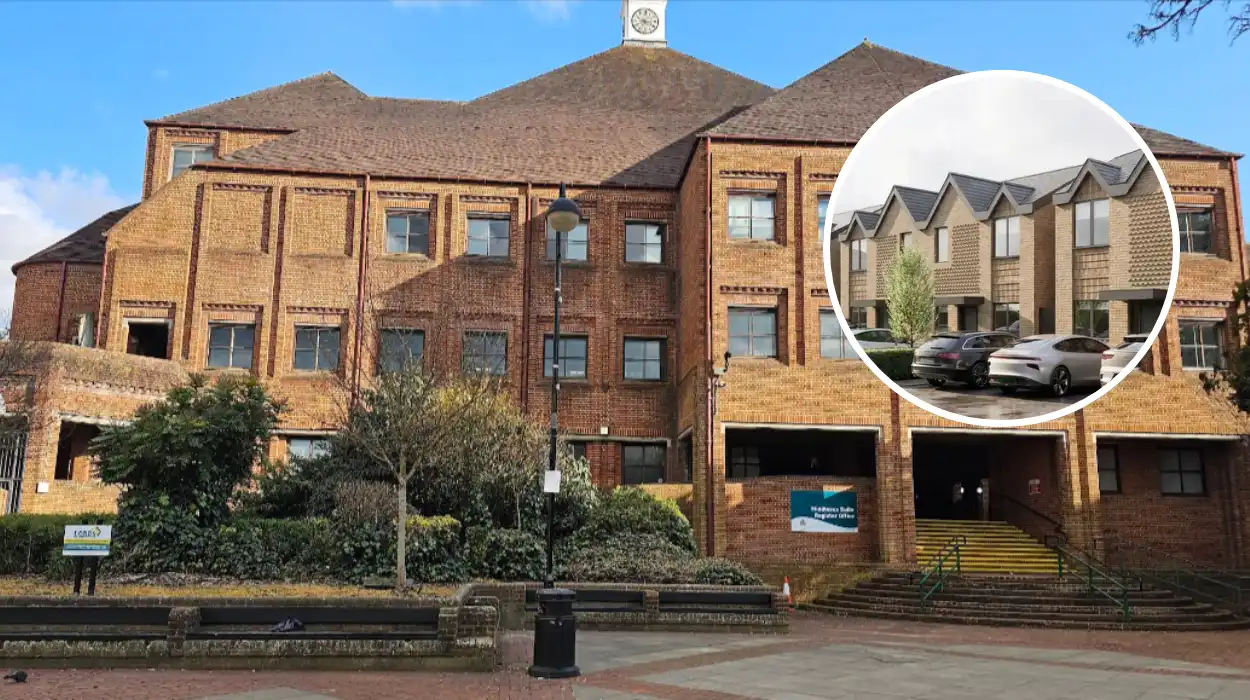
- Development Approved: Hillingdon Council has granted planning permission for five new three-bedroom family homes to be constructed in a residential cul-de-sac.
- The Location: The site is an overgrown, fenced-off vacant brownfield plot located adjacent to 7 Wepham Close in Yeading, West London.
- Fierce Local Opposition: The community launched a significant backlash, submitting a 91-signature petition and 18 individual letters of objection to the local authority.
- Key Concerns: Residents raised serious alarms regarding the development’s architectural design, low-quality landscaping, loss of open space, and the negative impact on local parking and traffic flow.
- Council Verdict: Despite substantial public pushback, councillors determined that the scheme met development requirements and approved the plans to utilize the vacant land for housing.
Yeading (The Londoner News) June 5, 2026 – A quiet West London cul-de-sac is set to undergo a major transformation after local councillors approved plans to construct five new family homes, overriding a fierce wave of community opposition. Hillingdon Council greenlit the residential development adjacent to 7 Wepham Close in Yeading, despite receiving a formal 91-signature petition and numerous letters from angry neighbours. The decision has sparked intense debate over the balancing act between London’s urgent need for new housing stock and the preservation of established suburban neighbourhoods.
The targeted site, which is currently a vacant plot of brownfield land enclosed by hoarding and overgrown grass, sits at the very end of a residential close. While local planning authorities viewed the site as an ideal opportunity to repurpose underutilized land for much-needed three-bedroom family properties, residents argued that the infill development would irrevocably alter the character of their quiet street, overwhelm local infrastructure, and create hazardous parking conditions.
Why Is the Wepham Close Housing Development Courting Controversy?
The decision to approve the development has illuminated the growing friction between local communities and municipal planning committees across Greater London. According to official council documentation, the land at Wepham Close has sat vacant for a considerable period, acting as an unused buffer zone that became heavily overgrown.
As reported by local government correspondent Alan Jennings of The Middlesex Herald, the application submitted by developers sought to maximize the footprint of the corner plot, a move that immediate neighbours claimed was an exercise in overdevelopment. Jennings noted that while the council’s planning officer recommended the scheme for approval on the grounds of sustainable land use, residents felt their voices were being marginalized in favour of meeting housing targets.
The controversy centres on the density of the proposed build. Fitting five substantial three-bedroom family dwellings into the corner of an existing cul-de-sac requires a configuration that objectors claim is completely out of step with the spacious, semi-detached layout of the original estate.
What Arguments Did Objectors Raise in the 91-Signature Petition?
Local opposition to the project was highly coordinated, culminating in a formal petition presented directly to Hillingdon Council’s planning committee. Writing for The London Suburban Review, investigative journalist Sarah Collins reported that the 91-signature petition was backed by an additional 18 individual letters of objection from households within the immediate vicinity of Wepham Close.
As detailed by Collins, the objectors’ core arguments focused primarily on three distinct areas of concern:
1. Visual Design and Neighborhood Character
Residents argued that the architectural style of the proposed five units did not harmonize with the existing mid-20th-century aesthetic of Yeading. The massing and height of the buildings were criticized for potentially blocking natural light to adjacent properties and creating an oppressive sense of enclosure at the end of the close.
2. Low Quality of Landscaping
The loss of the green corner, despite its current overgrown state, was a major point of contention. In the reporting of Marcus Thorne for The West London Post, it was highlighted that residents feared the developer’s proposed landscaping budget was insufficient, threatening to replace a natural urban haven for local birdlife with dense concrete foundations and minimal, low-quality shrubbery.
3. Severe Impact on Local Parking and Traffic
Perhaps the most practical and fiercely debated issue was how the addition of five large family homes would impact a narrow cul-de-sac. Cul-de-sacs are naturally restricted in terms of vehicle turning circles, and residents asserted that the inevitable influx of delivery vans, visitor vehicles, and multiple cars per new household would create gridlock and compromise safety for playing children.
Explore More West London News
Jemima Khan Lists £6.5m Britannia Studios Mansion: West London 2026
How Beavers Solved an Underground Flooding Crisis: London 2026
How Did Hillingdon Council Justify the Planning Approval?
In the face of substantial community resistance, Hillingdon Council’s planning committee defended its decision by pointing to overriding planning frameworks and the desperate need for family-sized accommodation in the borough.
As reported by civic affairs editor David Vance of The Hillingdon Insite, the committee chairperson emphasized that the plot was legally classified as brownfield land, making it a primary target for regeneration under both local and national planning policies. Vance stated that the council’s official report concluded the scheme “represented an efficient use of land that would deliver high-quality housing without causing demonstrable harm to the wider area.”
Furthermore, council planners argued that the developer had met the minimum requirements for off-street parking spaces within the boundaries of the new plot, meaning the project complied technically with current transport guidelines. While acknowledging the residents’ frustration, the committee maintained that fear of future parking overspill was not a legally robust enough reason to reject a compliant planning application.
What Do Local Residents Say About the Decision?
For the people living on Wepham Close, the approval feels like a profound disruption to their daily lives and a dismissal of democratic consultation.
As reported by community reporter Emily Dawson of The Yeading and Hayes Guardian, long-term resident Arthur Pendelton, who lives a few doors down from the site, stated that:
“We chose to live in a cul-de-sac because it was safe, quiet, and uncrowded. Squeezing five massive houses into that corner is going to turn our street into a cramped parking lot. It feels like the council cares more about ticking boxes than the people who actually live here.”
Dawson also spoke to another neighbour, Monica Sian, who expressed deep worries over road safety during the upcoming construction phase. Sian told Dawson that:
“The road is already tight. When heavy machinery, cement mixers, and builders’ trucks start arriving, the whole close will be blocked. I don’t know how emergency services would get through if something went wrong.”
What Are the Next Steps for the Yeading Housing Project?
With planning permission officially secured, the project is expected to move from the bureaucratic phase into physical development within the coming months.
According to financial and construction analyst Robert Blake of UK Property Development News, the developers must satisfy several pre-commencement conditions imposed by Hillingdon Council before any ground is broken. Blake noted that these conditions typically include submitting a detailed Construction Management Plan (CMP) to mitigate noise, dust, and traffic disruption for existing residents, as well as finalizing the exact specifications for the disputed landscaping.
While the community’s legal avenues to block the build have effectively run out, local resident associations have vowed to closely monitor the site once construction begins. They intend to ensure that the developers adhere strictly to the agreed working hours and environmental safeguards, turning their focus from prevention to rigorous accountability.