
Key Points
- Strategic Redirection: The Four Seasons Hotel London at Tower Bridge has launched Cooper’s Cut, a luxury modern steakhouse, marking a massive strategic shift away from haute cuisine by replacing its former two Michelin-starred restaurant led by Chef Anne-Sophie Pic.
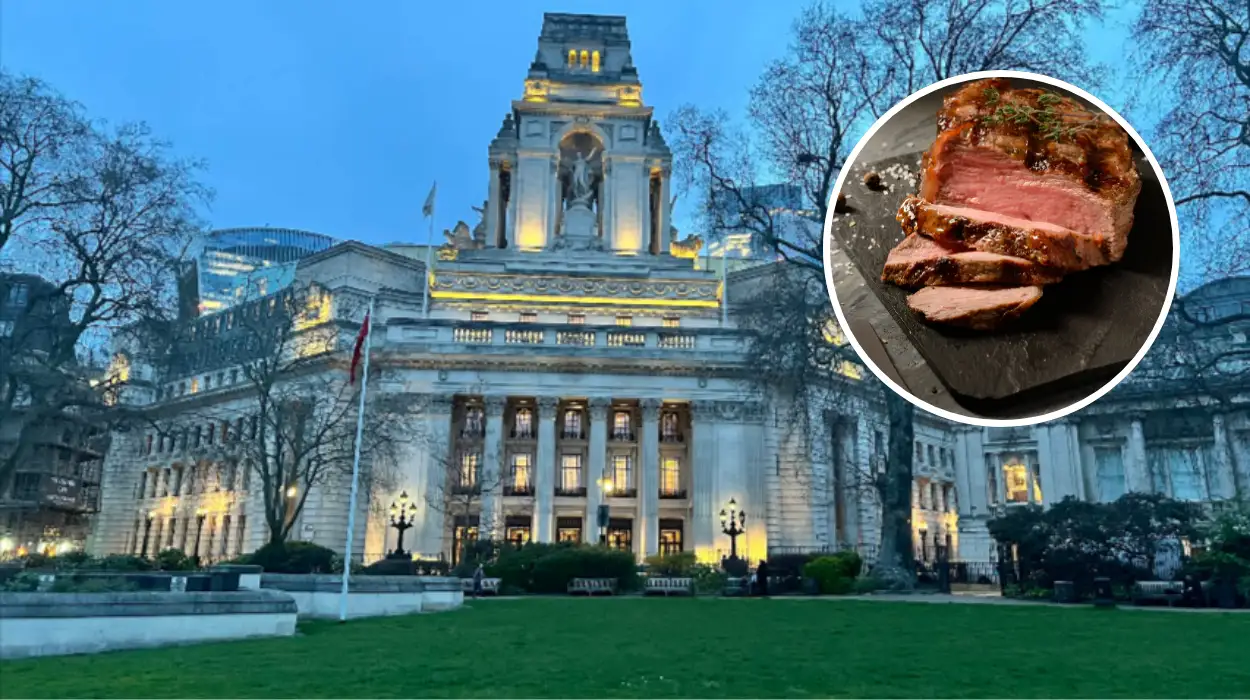
- Architectural Heritage: Named after the original British architect Sir Edwin Cooper, the 72-cover restaurant is situated inside the historic 10 Trinity Square, the Beaux-Arts monument that previously served as the Port of London Authority headquarters.
- Deep Historic and Cultural Ties: The Grade II* listed building has survived the Blitz, hosted the inaugural United Nations reception in 1946, featured in cinematic productions like Skyfall and The Crown, and stands on grounds where first-century Roman artifacts were uncovered.
- Premium Gastronomy and Beverage Innovation: Helmed by Executive Chef Luke Armstrong, the establishment features premium grass-fed British beef, Japanese Wagyu, and a specialized cocktail matrix by Head of Bars Michele Lombardi featuring sessionable, low-strength Martinis alongside a high-calibre wine program.
- Diverse Critique: Industry commentators have offered varied assessments. Harden’s described the move as a major “change of gear,” Hot Dinners questioned whether substituting a two-starred venue with a steakhouse is a “sign of the times,” and Olive Magazine lauded the quality of the food.
London (The Londoner News) June 8, 2026 – In a transformative restructuring of its culinary portfolio, the Four Seasons Hotel London at Tower Bridge has officially inaugurated Cooper’s Cut, a contemporary luxury steakhouse that completely redefines the property’s gastronomic strategy. The newly introduced 72-cover restaurant occupies the ground-floor space previously held by the hotel’s renowned, two Michelin-starred fine dining establishment helmed by Chef Anne-Sophie Pic. This high-profile transition represents a dramatic tactical pivot for the five-star hospitality venue, moving away from ultra-formal tasting menus toward a premium, craft-led grill concept that merges relaxed refinement with elite international culinary standards.
- What Is the Significance of the Culinary Pivot at 10 Trinity Square?
- How Has the Architectural Past Shaped the Identity of Cooper’s Cut?
- What Historical Artifacts and Global Milestones Define the Building?
- Who Controls the Legacy and Modern Development of the Property?
- What Drives the Culinary Philosophy of Executive Chef Luke Armstrong?
- Which Signature Dishes Form the Core of the Restaurant’s Menu?
- How Does the Beverage Matrix Intersect with the Wine Program?
The venue is named in direct tribute to Sir Edwin Cooper, the visionary British architect responsible for designing the building—the colossal former Port of London Authority headquarters at 10 Trinity Square—alongside other landmarks such as Marylebone Town Hall. Now owned and extensively restored by China’s Reignwood Group, the historical structure houses Cooper’s Cut in a setting forged through a century of global trade, wartime destruction, and modern reinvention. Under the culinary direction of the hotel’s newly appointed Executive Chef, Luke Armstrong, the restaurant balances its heritage surroundings with forward-thinking cooking techniques, dry-ageing craftsmanship, a highly specialized wine programme, and a mindful cocktail selection tailored to contemporary London lifestyles.
What Is the Significance of the Culinary Pivot at 10 Trinity Square?
The opening of Cooper’s Cut represents far more than a routine menu update; it marks a structural realignment in how luxury hotels approach their food and beverage operations. As observed by the hospitality monitoring group Harden’s, the transition to Cooper’s Cut signals what can only be defined as “a big change of gear” for the Tower Hill property. By closing a highly decorated, multi-starred establishment to pave the way for a grill house, the hotel management has deliberately chosen an approach focused on premium ingredient sourcing, accessibility, and robust sessionable dining over the theatrical restrictions of traditional French fine dining.
This dramatic operational shift quickly caught the attention of prominent food media figures across the United Kingdom. Writing for the specialized culinary chronicle Hot Dinners, reporters raised an analytical query regarding the broader macroeconomic environment of London’s hospitality industry, asking, “Is it a sign of the times that [the] luxury hotel has decided to replace its two Michelin-starred restaurant with a steakhouse?” This question highlights a growing industry-wide movement where elite hotels prioritize high-volume comfort and impeccable, unpretentious execution to capture both corporate clientele and discerning local diners.
How Has the Architectural Past Shaped the Identity of Cooper’s Cut?
The physical space inhabited by Cooper’s Cut is deeply interwoven with the narrative of British maritime and political history. As chronicled by wine and hospitality analyst Douglas Blyde of The Drinks Business, the Beaux-Arts giant was officially opened in 1922 by the Welsh Liberal Prime Minister, David Lloyd George. In its early decades, the monolithic structure acted as the central nervous system for the financial and administrative machinery of Britain’s vast maritime empire. Thousands of merchants, sailors, and trade officials passed through its doors, dealing with global commerce beneath a spectacular domed rotunda meticulously lined with marble, brass, and solid walnut.
This architectural grandeur was severely compromised during the Second World War when the Blitz tore directly through the core of the building, destroying significant portions of the internal structure. Despite the devastating wartime aerial bombardment, the shell survived, undergoing a series of structural overhauls and reinventions across the subsequent decades. The interior aesthetic of the restaurant today reflects this complex history, deploying dark timber, plush leather seating, and highly polished surfaces that connect naturally with the hotel’s luxurious environment while maintaining a welcoming, street-facing presence for external guests.
Explore More Local Businesses
Queen Rania Brings French Luxury and Global Defiance to SXSW London 2026
Burger King and Pringles Launch Free Chicken Fries: London 2026
What Historical Artifacts and Global Milestones Define the Building?
The historical pedigree of 10 Trinity Square extends deep into classical antiquity and mid-century global diplomacy. During the extensive conversion process required to transform the historic office headquarters into a luxury hotel, a team of professional archaeologists working on-site uncovered remarkably preserved remnants of Roman London. Among these ancient discoveries were rare first-century amulets and everyday artifacts, which are currently preserved and displayed within the hotel premises, grounding the site in nearly two millennia of urban history.
Moving from ancient history to modern diplomacy, the building’s upper floors preserve a remarkably restored walnut boardroom that played a foundational role in post-war international relations. In 1946, this specific boardroom hosted the official reception tied directly to the inaugural meeting of the United Nations, serving as a gathering point for world leaders working to rebuild global stability. In contemporary popular culture, the striking Beaux-Arts façade of the building has become an iconic visual shorthand for British institutional power and establishment authority, featuring prominently as a filming location in the James Bond cinematic release Skyfall and Netflix’s historical drama The Crown.
Who Controls the Legacy and Modern Development of the Property?
The modern survival and multi-million-pound restoration of the property are entirely attributable to the strategic investments of its parent conglomerate. The building was formally acquired and completely overhauled by China’s prominent Reignwood Group, an international investment firm with a diversified commercial portfolio spanning aviation, luxury real estate, and consumer goods. The corporate footprint of the parent company is subtly visible throughout the property, characterized by the ever-present bottles of VOSS premium water stationed systematically across the hotel’s rooms, spa, and dining tables.
Following a vast, meticulous restoration process that sought to preserve every salvageable historical asset while integrating state-of-the-art luxury amenities, Reignwood Group officially reopened the complex in 2017. Today, the location operates as a multifaceted luxury ecosystem consisting of high-end hotel rooms, permanent private residences, a comprehensive wellness spa, and the exclusive Ten Trinity Square Private Club, which is managed in a prestigious corporate partnership with the iconic Bordeaux estate Château Latour. Cooper’s Cut operates alongside the contemporary Asian restaurant Mei Ume and the central Rotunda Bar & Lounge, forming a diverse culinary triad.
What Drives the Culinary Philosophy of Executive Chef Luke Armstrong?
At the heart of the kitchen’s operation is a commitment to precision, ingredient integrity, and classical foundations executed through a modern lens. The gastronomic direction of Cooper’s Cut is fully controlled by the hotel’s newly appointed Executive Chef, Luke Armstrong. Armstrong brings more than a decade of international experience accumulated at the absolute pinnacle of global gastronomy, having previously refined his skills at legendary culinary institutions including the three Michelin-starred Oud Sluis in the Netherlands, the two-starred The Ledbury in London, and L’Envol in Hong Kong.
According to official launch documentation released by the communication team at Four Seasons Press Room, Chef Armstrong’s signature culinary style is strictly defined by a mastery of contemporary French techniques, a deep respect for seasonal British produce, and an advanced command of specialized butcher crafts, including precise in-house dry-ageing protocols. His structured approach brings a quiet precision and deliberate restraint to the modern steakhouse format. Instead of over-complicating the presentations, Armstrong focuses on highlighting the intrinsic textures and deep natural profiles of hand-selected meats sourced from the world’s most reputable livestock producers.
Which Signature Dishes Form the Core of the Restaurant’s Menu?
The menu at Cooper’s Cut is carefully structured around premium cuts of beef cooked over open, live flames in a partially open kitchen that allows diners to witness the grilling process firsthand. The kitchen champions exceptional heritage meats, featuring prime selections of grass-fed British beef—such as the meticulously aged Cumbrian Belted Galloway and classic Hereford T-Bone sharing cuts—alongside highly prized, intensely marbled Japanese Wagyu, specifically authentic Hyogo Tajima beef. This emphasis on meat quality was validated by consumer food guides; as published in a review by Olive Magazine, food critics explicitly declared that “the wagyu is the dish that made our eyelashes flutter.”
Beyond the central steak selection, Chef Armstrong showcases a series of confident, elegant side plates and starters. The menu features a refined Belted Galloway beef steak tartare paired creatively with a smoked scallop and topped with prestigious Maison Kaviari caviar. Seafood lovers are catered to with extra-large, delicately grilled Scottish langoustines served alongside a classic Mary Rose sauce and fresh lemon, as well as a decadent Billingsgate fish selection reflecting local market availability. The dining experience concludes with structured, classic desserts, most notably a signature Granny Smith apple tarte Tatin accompanied by rich crème fraîche ice cream.
How Does the Beverage Matrix Intersect with the Wine Program?
While the restaurant brands itself as a steakhouse by name, expert analysts emphasize that it operates as an elite destination for serious wine and spirits enthusiasts in practice. In his comprehensive evaluation for The Drinks Business, Douglas Blyde highlighted the exceptional quality of the restaurant’s beverage program, noting that the venue seamlessly blends “Gonzalo Rodriguez Diaz’s cellar” management with the unparalleled historical legacy of “Château Haut-Brion.” The wine list is carefully curated to offer deep, powerful vintages capable of pairing with heavily charred, flame-cooked meats, drawing structural support from the hotel’s elite partnerships with global viticultural estates.
On the spirits side, the beverage architecture has been completely devised by the hotel’s acclaimed Head of Bars, Michele Lombardi. The cocktail menu is structurally anchored by a contemporary, innovative reinterpretation of the classic Martini. In an effort to acknowledge the historic corporate traditions of the City of London while adjusting to the wellness-conscious habits of modern professionals, Lombardi introduced the “Three Martini Mid-Day” pairing lunch. By utilizing premium, lighter spirits, significantly intensifying the integration of natural botanicals, and precisely recalibrating the liquid ratios, the bar team successfully engineered mid-strength martinis. These drinks provide the exact same sensory indulgence as a historical classic while allowing corporate diners to maintain a mindful, sessionable pace throughout the working day.