

Key Points
- Major Breakthrough: A 44-year-old man has been arrested in connection with the infamous 2017 “Putney pusher” incident, marking a dramatic development in a case that had been closed for eight years.
- The Charges: The suspect was apprehended on suspicion of causing attempted grievous bodily harm (GBH) following a morning raid at his £1.4 million home in west London.
- The Incident: On 5 May 2017, a male jogger appeared to deliberately shove a 33-year-old female pedestrian into the path of an oncoming double-decker bus on Putney Bridge.
- Heroic Reflexes: The victim narrowly escaped catastrophic injuries or death due to the instantaneous swerving reflexes of bus driver Oliver Salbris, who was widely commended for his actions.
- Case Resurrected: The Metropolitan Police initially closed the investigation in 2018 after interviewing 50 people and arresting three suspects who were later eliminated from inquiries.
- Cultural Impact: The unsolved mystery inspired a 2024 theatrical play titled Once Upon a Bridge by playwright Sonya Kelly, which actively renewed public interest and prompted official pleas for fresh information.
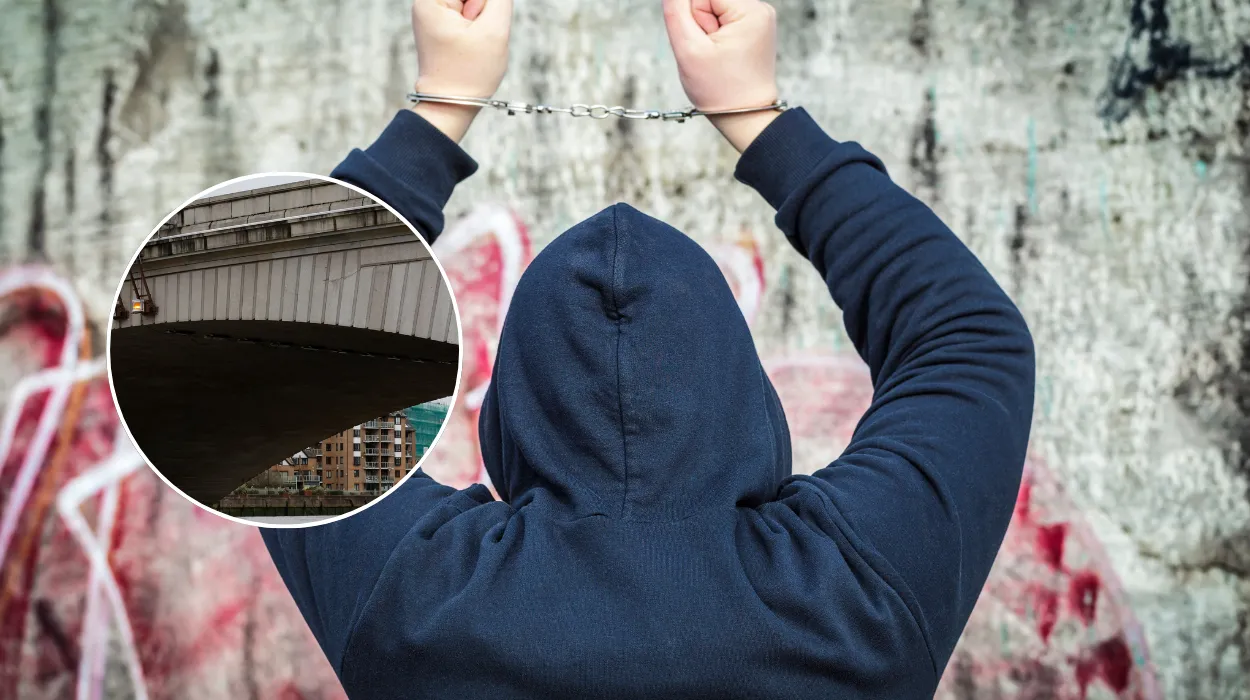
London (The Londoner News) June 15, 2026 — A 44-year-old man has been arrested by detectives investigating the notorious 2017 “Putney pusher” incident, in which a female pedestrian was captured on closed-circuit television (CCTV) being shoved directly into the path of an oncoming double-decker bus on a south-west London bridge. The dramatic breakthrough, announced on Monday by Scotland Yard, comes nine years after the initial assault shocked the British public and sparked a massive international manhunt. The suspect, who remains unnamed for legal reasons, was detained during a targeted police operation at his £1.4 million residential property located in west London and was subsequently taken into custody on suspicion of causing attempted grievous bodily harm.
As reported by senior journalists covering the Metropolitan Police beat, the unexpected arrest breathes new life into a high-profile cold case that police officially closed in 2018 after exhaustive inquiries yielded no viable leads. The original incident, which occurred during the morning rush hour on 5 May 2017, involved a male jogger who suddenly knocked a 33-year-old woman off the pavement and onto the tarmac of Putney Bridge. The victim was saved from a near-certain fatal impact by the rapid, split-second steering adjustments made by the driver of the oncoming number 430 bus, preventing a catastrophic collision by a matter of inches.
What Happened on Putney Bridge in May 2017?
The baseline facts of the case date back to a clear spring morning nearly a decade ago, an event that became an internet sensation due to the shocking nature of the CCTV footage released by investigators. On 5 May 2017, at approximately 07:40 BST, a 33-year-old woman was walking across Putney Bridge toward the tube station when a male jogger running in the opposite direction crossed the path of oncoming traffic and used his arms to forcefully push her sideways.
The momentum of the unprovoked shove sent the woman tumbling directly into the roadway, head-first, just as a red double-decker bus bore down on her position. According to archival case files from the Metropolitan Police, the unbothered assailant did not break his stride after the assault. Remarkably, the police reports highlight that about 15 minutes after the initial push, the same suspect came jogging back across the bridge heading in his original direction. Though the shaken victim attempted to confront the runner and speak to him, he completely ignored her presence, refused to acknowledge her, and continued running toward the northern side of the River Thames.
Who Was the Hero Bus Driver in the Putney Pusher Incident?
The central hero of the narrative remains Oliver Salbris, the driver of the London 430 bus who was widely celebrated across the United Kingdom for preventing a public tragedy. Writing for The Sunday Times, journalists chronicled Salbris’s immediate psychological and physical reaction to seeing a pedestrian suddenly thrown in front of his multi-ton vehicle. Reflecting on the terrifying proximity of the near-miss, Salbris stated to the publication that he genuinely believed a fatal impact was unavoidable given the stopping distance required for a public transit bus.
As reported by The Sunday Times, Oliver Salbris recounted the exact moment of the near-fatal encounter: “If I hadn’t swerved, I would have smashed her head. It was reflex. The consequences would have been terrible for her – and for me.” The professional driver noted that his defensive driving training and adrenaline allowed him to pull the vehicle sharply into the right lane without striking other cars or losing control of the bus. In subsequent media appearances referenced in modern reviews of the case, Salbris expressed an ongoing desire for accountability, emphasizing that the jogger needed “to be caught and to explain himself” for what appeared to be a completely callous and deliberate act of violence.
Why Did the Metropolitan Police Close the Original Investigation?
The journey to Monday’s arrest was lengthy and marked by immense public frustration regarding the limitations of urban surveillance and facial identification. In its initial, highly active phase of the investigation, the Metropolitan Police force dedicated significant resources to tracking down the runner. Detectives systematically reviewed hours of surrounding CCTV footage, combed through local commuter logs, and actively interviewed more than 50 men who regularly utilized that specific geographic corridor for morning exercise or daily travel.
During the course of the first 12 months following the 2017 assault, police officers arrested three distinct suspects under public scrutiny. However, following rigorous alibi verification, forensic checks, and detailed interviews, all three individuals were fully eliminated from the investigation without any charges being brought against them. Recognizing that all immediate lines of inquiry had been thoroughly exhausted, a Metropolitan Police spokesperson confirmed in August 2018 that the case had been formally closed, though they maintained that any significant new information brought to light would be promptly evaluated by cold case detectives.
How Did a Theatrical Play Help Keep the Case Alive?
The enduring mystery of the “Putney pusher” eventually transitioned from the true-crime realm into a piece of contemporary British culture. The unresolved nature of the bridge assault was adapted into a highly acclaimed stage play titled Once Upon a Bridge, penned by the award-winning playwright Sonya Kelly. The production debuted in 2024, providing audiences with an intimate, multi-perspective examination of the three individuals whose lives intersected during that singular, fleeting moment on the Thames crossing: the anonymous runner, the traumatized victim, and the vigilant bus driver.
When the production initially opened its doors to theatregoers in 2024, representatives for the Metropolitan Police publicly vocalized their support for the artwork, expressing an official hope that the dramatic staging would stimulate the memories of the public and encourage anyone possessing dormant information to finally contact law enforcement. As reported by theatre critics and news journalists tracking the cultural impact of the case, Sonya Kelly herself made direct appeals to her audiences, arguing that the clarity of the original video footage meant the attacker’s identity was bound to be known by someone in his immediate social or familial circle.
According to published statements, Sonya Kelly observed the following regarding the public’s collective memory: “The footage is clear. If he was, say, my cousin I would know him. So if there is somebody watching the play, thinking they have more information, I hope they will come forward.” This intersection of performing arts and active criminal justice is widely believed by industry observers to have sustained the public visibility of the case during its quietest years.
Explore more London Crime News:
Essa Suleiman Golders Green Stabbing Trial Set: London 2026
US Embassy London security alert after UK threat level raised 2026
What Do We Know About the Recent Arrest?
The silence surrounding the investigation was shattered on Monday, June 15, 2026, when Scotland Yard issued an official press release detailing an early morning enforcement action. Met officers executed a targeted warrant at a residential address in a wealthy sector of west London, detaining a 44-year-old male resident without incident. Media outlets noted the significant affluent profile of the neighborhood, highlighting that the property where the suspect was apprehended boasts an estimated market valuation of £1.4 million.
An official spokesperson for the Metropolitan Police provided a brief but consequential update regarding the operational development, stating to the press:
“The arrest relates to an incident on 5 May 2017, where a woman was pushed into the path of a bus on Putney Bridge.”
When pressed by legal correspondents for additional details regarding what specific new forensic evidence, eyewitness testimony, or tip-off led to the sudden resurrection of the file, the Met spokesperson declined to elaborate further on the operational specifics, simply adding that “Inquiries continue” as detectives prepare their formal case for the Crown Prosecution Service (CPS).
The suspect remains in a secure police station in London where legal counsel has been provided. Legal specialists note that the charge of suspicion of causing attempted grievous bodily harm carries substantial prison time under English law, reflecting the gravity of an act that could have easily resulted in a vehicular homicide had the circumstances differed by a fraction of a second. Further updates are expected as formal charging decisions are finalized by authorities.