Key Points
- Major Breakthrough: The Metropolitan Police Service has arrested a 44-year-old multi-millionaire banker on suspicion of attempted grievous bodily harm, marking a dramatic development in the notorious nine-year-old “Putney Pusher” cold case.
- Political Praise: Fleur Anderson, the Labour Member of Parliament (MP) for Putney, has officially praised Scotland Yard detectives for their persistence, stating she hopes the arrest brings “reassurance” to the victim.
- The Incident: On 5 May 2017, an unidentified male jogger shoved a 33-year-old female pedestrian headfirst into the path of an oncoming double-decker London bus on Putney Bridge.
- Heroic Reflexes: The victim escaped death by centimetres due to the rapid reaction of bus driver Oliver Salbris, who swerved the number 430 vehicle to avoid hitting her head.
- Suspect Profile: According to media disclosures, the detained individual is a high-net-worth city director, a decorated former British Army captain, and reportedly possesses ancestral links to major European royal houses, including the House of Windsor.
- Procedural Status: Following extensive questioning by detectives, the unnamed suspect was officially released on police bail pending further comprehensive investigations.
London (The Londoner News) June 16, 2026 – The Metropolitan Police Service has secured a significant breakthrough in one of the United Kingdom’s most notorious unsolved cold cases following the arrest of a 44-year-old multi-millionaire private banker. The suspect was detained on suspicion of attempted grievous bodily harm in connection with the infamous 2017 “Putney Pusher” incident, in which a male jogger deliberately shoved a female pedestrian into the path of an oncoming double-decker London bus. The surprise operational development has prompted formal statements of gratitude from local political figures, who lauded Scotland Yard for maintaining a focus on the case nearly a decade after the initial investigation was shut down.
- Key Points
- Who is the suspect arrested in the Putney Pusher case?
- How did political figures react to the breakthrough?
- What exactly happened on Putney Bridge in May 2017?
- How did the heroic bus driver react to the news?
- Why did the original police investigation go cold?
- How did cultural media keep the cold case alive?
Following the suspect’s arrest at his affluent £1.4 million residence in West London, Scotland Yard confirmed that the individual was processed through a dynamic interrogation cycle before being legally bailed. As reported by Nicholas Cecil, Chief Reporter, and Matt Watts, News Editor of the Evening Standard, a Metropolitan Police spokesman formally declared: “On Monday, 15 June, a 44-year-old man was arrested on suspicion of attempted grievous bodily harm. He was taken to police custody, where he remains. The arrest relates to an incident on 5 May 2017, where a woman was pushed into the path of a bus on Putney Bridge in Putney. Inquiries continue.” Later administrative updates confirmed his release on bail pending further technical inquiries.
Who is the suspect arrested in the Putney Pusher case?
As detailed in an extensive investigative report by the Daily Mail, and subsequently corroborated by the Times of India World Desk, the individual currently at the centre of the revived investigation is a prominent corporate figure within the City of London’s financial district. The 44-year-old suspect is understood to operate as a director at a highly exclusive private bank, where he manages financial portfolios and provides strategic counsel to exceptionally wealthy clients and institutional investors. Professional evaluation platforms have historically described the executive as highly personable, sophisticated, and exceptionally well-regarded by his elite financial peers.
In addition to his high-ranking banking credentials, the Daily Mail disclosed that the suspect is a decorated former British Army officer who held the rank of captain. During his military tenure, he reportedly saw active deployment and served with distinction in several major international conflicts. Furthermore, the publication alleged that the individual possesses deep ancestral lineages connecting him directly to multiple prominent European royal houses, including the British monarchy’s House of Windsor. The Metropolitan Police have systematically declined to comment on the suspect’s specific identity, occupation, or alleged aristocratic connections, in strict compliance with standard UK policing protocols governing uncharged detainees.
How did political figures react to the breakthrough?
The sudden arrest after a nine-year impasse drew immediate reactions from legislative representatives in South-West London. As reported by Nicholas Cecil of the Evening Standard, Putney’s Labour MP, Fleur Anderson, extended her profound gratitude to the investigative units who refused to let the file gather dust permanently. Expressing a sense of relief for the local community, Ms Anderson stated:
“This is a significant step forward and one that many people in Putney will welcome after such a long time. My thoughts are with the woman involved – I hope this brings her some reassurance.”
The parliamentarian highlighted that long-term investigative commitment is vital for public confidence in urban safety. Ms Anderson further added to the Evening Standard: “I’d like to thank the police for sticking with this case over the years. It’s important now that the investigation is able to proceed properly.” The sentiment reflects a broader municipal relief, given that the bridge remains a heavily utilized thoroughfare connecting the districts of Putney and Fulham.
What exactly happened on Putney Bridge in May 2017?
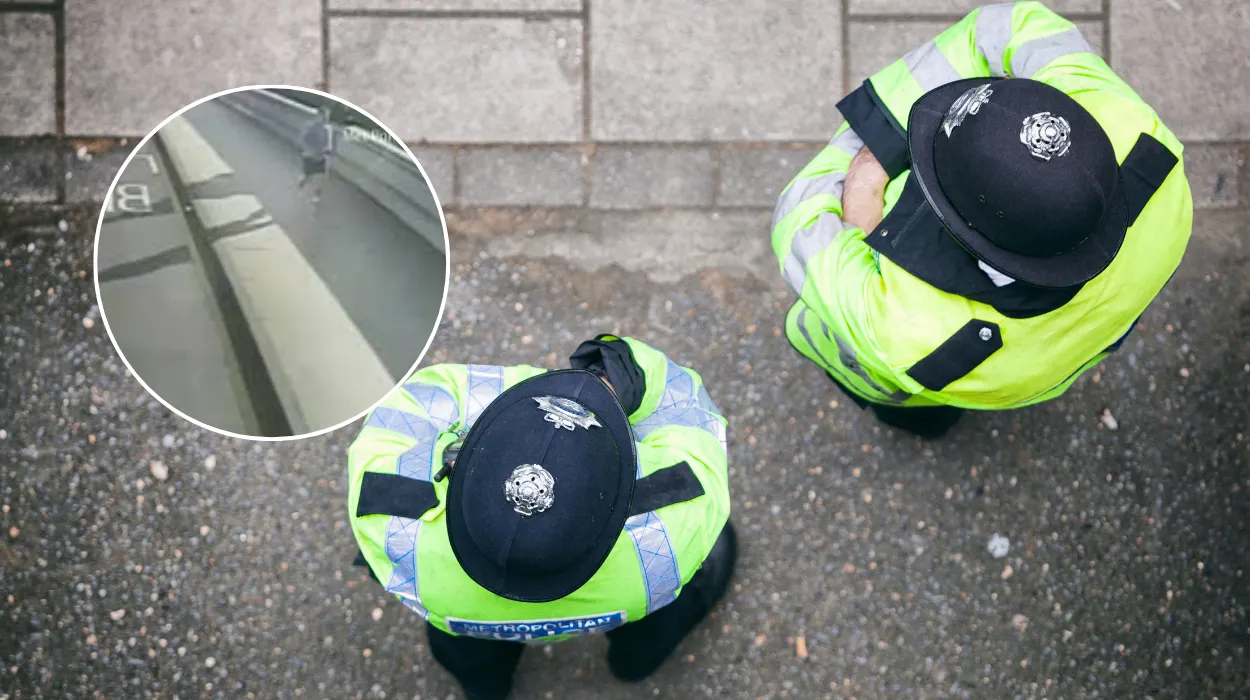
To fully comprehend the gravity of the latest arrest, it is necessary to re-examine the chilling events of 5 May 2017, which transformed a routine morning commute into an international news story. As documented by the Financial Times, the incident occurred at approximately 7:40 am during the peak morning rush hour. A 33-year-old woman was walking south across Putney Bridge when a male jogger, travelling in the opposite direction, approached her. Despite ample space on the pavement to pass safely, CCTV cameras mounted on an approaching vehicle captured the runner suddenly extending his right arm and aggressively shoving the woman headfirst off the kerb and directly into the designated bus lane.
The victim was thrown directly into the path of a double-decker number 430 bus, which was travelling at approximately 12 mph (43.2 km/h). As noted in chronological reports by Sky News, the pedestrian’s head fell within a few short centimetres of the heavy front wheels of the moving vehicle. In an extraordinary display of driving skill, the bus driver instantly recognized the danger and executed an emergency swerve into the adjacent lane, narrowly avoiding a fatal impact.
The immediate aftermath of the assault added a further layer of bewilderment for investigators. As reported by The Guardian, approximately 15 minutes after the initial push, the exact same jogger turned around and ran back across Putney Bridge using the reverse route. The victim, who had been helped to her feet by distressed bus passengers, spotted her assailant and attempted to confront him about the assault. However, the jogger completely ignored her presence, refused to acknowledge her verbal interventions, and casually continued his run northward toward the River Thames.
Explore more London Crime News:
Putney Pusher Arrested Over 2017 Bridge Incident: London 2026
Essa Suleiman Golders Green Stabbing Trial Set: London 2026
How did the heroic bus driver react to the news?
The driver of the number 430 bus, Oliver Salbris, was universally hailed as a hero for his instantaneous reactions on that morning. In an interview published by The Sunday Times, Mr Salbris recalled the sheer terror of the moment, emphasizing how close the incident came to becoming a tragedy. As reported by The Sunday Times, Mr Salbris stated: “If I hadn’t swerved, I would have smashed her head. It was reflex. The consequences would have been terrible for her – and for me.” He later added to The Guardian that the perpetrator desperately needed “to be caught and to explain himself”.
Following the announcement of the multi-millionaire’s arrest, historical reflections from the driver resurfaced across British broadcasting networks. Speaking in an archival interview on ITV’s Good Morning Britain, which was re-analysed in recent reports, Mr Salbris admitted that the event has remained permanently etched in his consciousness. As transcribed by the Evening Standard, Mr Salbris previously explained: “I always think about the case and I still drive over Putney Bridge several times a day. Whenever I’m on the bridge, I look very carefully at the pedestrians on the pavement, I just can’t help it. I wouldn’t say it haunts me, but it’s not something I can easily forget.”
The driver highlighted the profound psychological toll that close calls exert on transport workers. Mr Salbris further noted: “I’m glad my reactions were quick on that day, or it would have ended very differently, both for me and the woman who was pushed. Her head was only a few centimetres from the bus and the wheel, even after I swerved to avoid her.”
Why did the original police investigation go cold?
The failure to catch the “Putney Pusher” during the initial 2017-2018 inquiry became a source of intense frustration for Scotland Yard, especially given London’s status as one of the most heavily monitored cities in the world. As detailed by Holly Evans, an investigative reporter for The Independent, the Metropolitan Police launched a massive operational hunt following the release of the viral CCTV footage in August 2017. The video triggered widespread public anger, leading media commentators to debate cultural phenomena ranging from “jogger rage” to misogynistic street violence. Matthew Weaver of The Guardian noted at the time that the unknown runner had rapidly transformed into “a national hate figure”.
During the primary phase of the inquiry, detectives identified, tracked, and systematically questioned more than 50 separate men of interest. As recorded in historical archives by Martin Evans of The Daily Telegraph, police issued multiple batches of fresh high-resolution stills from the bus camera, hoping a colleague or family member would identify the unique grey T-shirt, dark blue shorts, and grey trainers worn by the suspect.
The intense public pressure resulted in several wrongful detentions. Most notably, a private equity investor named Eric Bellquist was arrested and thrust into the media spotlight. However, as reported by the Financial Times, Mr Bellquist was rapidly and completely eliminated from the inquiry after providing irrefutable documentation proving he was physically located in the United States at the exact time the assault occurred. Two other individuals were also arrested and subsequently released without charge. By June 2018, as reported by Jennifer Hassan of The Washington Post, the Metropolitan Police officially closed the file, formally stating that all viable lines of inquiry had been completely exhausted.
How did cultural media keep the cold case alive?
Despite the formal closure of the police file in 2018, the case retained a prominent position within British true-crime lore and digital investigative communities, particularly on platforms like Reddit. The unresolved nature of the daytime assault eventually inspired major artistic works. As reported by The Guardian, playwright Sonya Kelly authored a highly acclaimed stage production titled Once Upon a Bridge, which premiered to audiences in 2021 and saw prominent revivals in 2024.
The theatrical piece structured its narrative directly around the perspectives of the three individuals caught in the split-second crisis: the runner, the victim, and the bus driver. When the production launched its 2024 run, the Metropolitan Police publicly backed the creative endeavour, openly stating their hope that the dramatic retelling would stimulate public memory and encourage individuals with hidden information to contact authorities. As documented by The Guardian, playwright Sonya Kelly made a direct public appeal to theatergoers, stating: “The footage is clear. If he was, say, my cousin, I would know him. So if there is somebody watching the play, thinking they have more information, I hope they will come forward.”
Legal experts suggest that the emergence of “new information” cited by Scotland Yard sources may potentially stem from the renewed public interest generated by these continuous cultural representations and media retrospectives. With the suspect currently on police bail, forensic focus shifts toward corroborating digital footprints, travel logs, and historical testimonies from May 2017 to determine if the crown can secure a definitive criminal prosecution.