
Key Points
- Overall Transformation Investment: Richmond Council has unveiled comprehensive £1.5 million blueprint proposals specifically aimed at transforming the South West London town centre via four major foundational projects.
- Creation of a Brand New Public Square: A total of £250,000 has been set aside to completely redesign Whittaker Square and Avenue, transforming the core precinct into a bustling public space intended for local markets, outdoor performances, and small-scale community events.
- Focus on Family-Friendly Inclusivity: Recognizing an acute spatial deficit, local authorities have allocated £150,000 to construct a dedicated central children’s play area within the heart of the primary town centre.
- Advanced Navigation and Wayfinding Upgrades: The municipal council has earmarked £220,000 to drastically enhance navigational visibility between the key riverside districts and Richmond station by rolling out updated maps, totems, informational signage boards, and distinct local walking trails.
- Pedestrian-First Vision for George Street: A £200,000 budget is strictly designated for technical modelling to initiate the conversion of George Street into a premier pedestrian-friendly haven, integrating increased public seating arrays and biodiverse greenery.
- Public Consultation and Execution Strategy: The local authority will engage in deeper operational design phases and active civic consultations before committing additional long-term funds required to finalize the large-scale spatial interventions.
Richmond (The Londoner News) June 16, 2026 – A major £1.5 million urban regeneration strategy has been unveiled by Richmond Council, laying out a bold multi-stage vision to transform the public infrastructure of Richmond town centre in South West London. The sweeping local authority blueprint encompasses four critical priority projects designed to elevate civic spaces, foster family inclusivity, optimize active travel pathways, and resolve long-standing layout constraints. As documented across municipal project boards and initial reporting by Charlotte Lillywhite of MyLondon, the proposed capital injection aims to turn underutilized urban pockets into a series of interconnected, pedestrian-first green destinations. However, the completion of these initial phases depends entirely upon formal cabinet approvals, detailed technical modelling, and subsequent community feedback sessions.
- Key Points
- How Will the Proposed £1.5 Million Town Centre Budget Be Distributed?
- What Changes Are Planned for Whittaker Square and Avenue?
- Why Is a Central Children’s Play Area Being Introduced?
- How Will the Council Improve Navigation Between Richmond Station and the Riverside?
- What Is the Long-Term Pedestrian Vision for George Street?
- How Do These Projects Fit into Richmond’s Wider Growth Plan?
- What Are the Next Legal and Consultative Steps for the Proposals?
How Will the Proposed £1.5 Million Town Centre Budget Be Distributed?
According to detailed planning data published by Richmond Council and reviewed by MyLondon reporter Charlotte Lillywhite, the total initial allocation of £1.5 million is split across distinct tactical interventions aimed at unlocking long-term economic and social value. Rather than applying a single uniform upgrade to the high street, the local authority has opted to isolate specific geographic zones within the South West London hub to address distinct civic needs.
The structural funding breakdown is organized as follows:
| Project Target Zone | Allocated Initial Budget | Primary Core Objective |
| Whittaker Square & Avenue | £250,000 | Creation of an event-ready town square destination |
| Central Children’s Play Area | £150,000 | Family-friendly infrastructure implementation |
| Town Centre & Riverside Wayfinding | £220,000 | System-wide updates to signage, totems, and trail navigation |
| George Street Pedestrian Modelling | £200,000 | Detailed traffic/spatial modelling for pedestrianisation |
The remaining balance of the overarching £1.5 million fund is slated to cover comprehensive public engagement frameworks, architectural design fees, and preliminary site assessments. Local authorities emphasize that certain elements, particularly the complete structural alteration of George Street, will demand secondary funding tranches once initial design modelling parameters are verified.
What Changes Are Planned for Whittaker Square and Avenue?
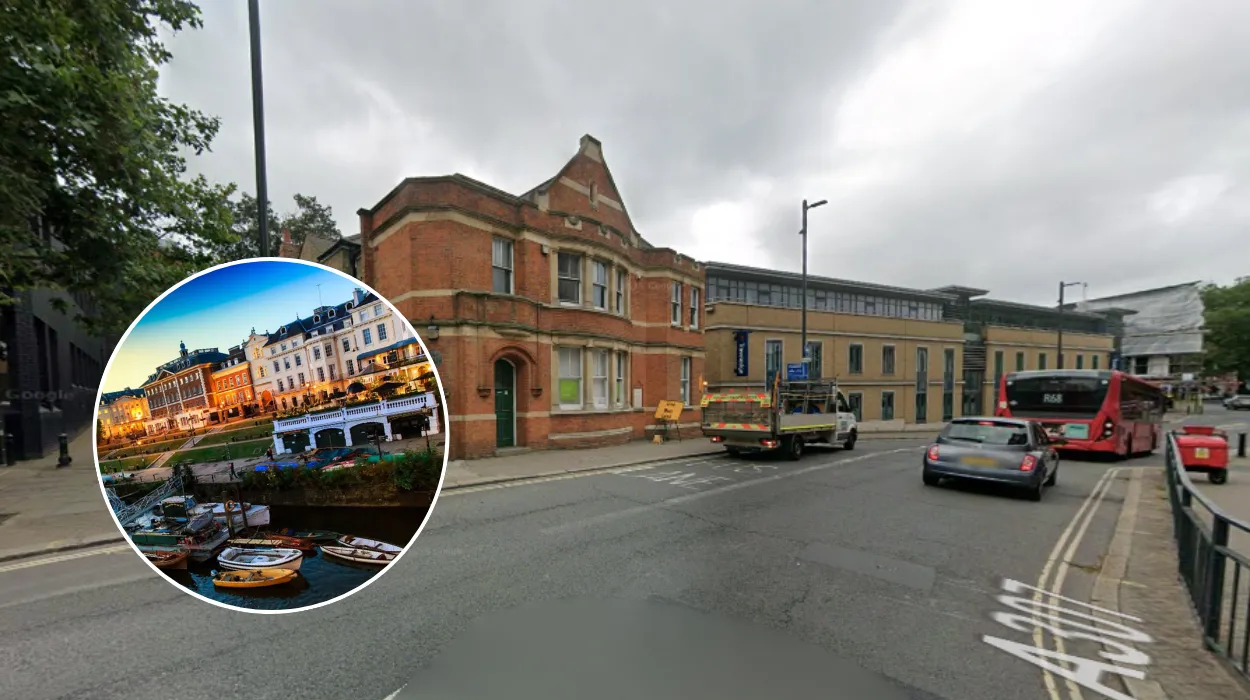
As reported by Charlotte Lillywhite of MyLondon, Richmond Council plans to dedicate £250,000 toward turning Whittaker Square and Avenue, situated in the heart of the busy commercial town centre, into a thriving public destination. Local architectural briefs indicate that the space currently suffers from structural underutilization and fails to register as a distinct landmark for visitors moving between the high street and local transport links.
To remedy this, municipal planners intend to reclaim a portion of existing on-street parking bays, reallocating that physical footprint entirely to civic pedestrian use. The structural layout alterations will introduce extensive integrated seating configurations, architectural planters, and native greenery arrays.
In official policy communications regarding the spatial overhaul, Richmond Council stated that the deliberate structural interventions would directly address “the current lack of a ‘town square’ destination” within the immediate borough. Once completed, the revamped Whittaker Square is intended to serve as an adaptable civic venue capable of hosting:
- Small-scale community performances and acoustic live music sets
- Weekly pop-up artisan food and craft markets
- Seasonal cultural exhibitions and educational public installations
Why Is a Central Children’s Play Area Being Introduced?
A core component of the newly unveiled town centre vision involves making the commercial heart of Richmond far more accessible to young families. As highlighted by MyLondon reporting, the local authority has set aside £150,000 specifically to fund a central children’s play area.
Urban research conducted during the exploratory phases of the project exposed a stark absence of dedicated, free-to-use recreational spaces for children within the primary retail perimeter. Parents navigating the town centre routinely had to travel toward the peripheral historic parks or the Thames riverside to find basic play provisions. By inserting a modern, secure play facility directly into the central commercial zone, the council intends to extend the average dwell time of shopping families, providing a reliable space where children can play safely without cost. Planners are targeting designs that blend naturally with the surrounding retail architecture, avoiding industrial styles in favor of sustainable, timber-based play structures and integrated green safety screening.
Explore more South London News:
Northcote Road Pedestrianisation for Dining and Drinking: South London 2026
Most Scenic UK Running Routes: Richmond Park Named Top Ten (London, 2026)
How Will the Council Improve Navigation Between Richmond Station and the Riverside?
Navigational friction has long been identified as a persistent issue for the thousands of commuters and tourists exiting Richmond station daily. To create a seamless journey through the town’s retail zones down to the banks of the River Thames, Richmond Council has budgeted £220,000 for systemic wayfinding improvements.
As detailed by Charlotte Lillywhite’s news coverage, this investment will fund a comprehensive network of new and upgraded signs, structural totems, clear geographic information boards, and specialized local trails. The strategic intent is to decentralize foot traffic from overcrowded main thoroughfares, guiding visitors along secondary historic lanes filled with independent businesses. The upgraded navigational assets will feature unified map graphics, clear walking distances to key local landmarks, and real-time transit information points, effectively binding the transit hub at Richmond station to the leisure districts along the riverside.
What Is the Long-Term Pedestrian Vision for George Street?
George Street represents one of the most commercially vital yet traffic-dense corridors in South West London. Under the newly revealed council proposals, the street is positioned to undergo a transformation into a pedestrian-friendly “standout area.”
To transition this vision into reality safely, the council has allocated an initial £200,000 strictly for advanced technical and spatial modelling. This analytical stage will assess how altering vehicular access along George Street impacts wider borough traffic distribution, bus routing schedules, and emergency vehicle access. The ultimate design options being evaluated include wide-scale pavement expansions, the introduction of modular public seating blocks, and extensive street-greening projects designed to lower ambient urban noise and improve localized air quality. Because the physical installation costs of complete pedestrianisation will vastly exceed the initial analytical budget, this project is treated as a long-term anchor initiative within the council’s wider urban evolution plan.
How Do These Projects Fit into Richmond’s Wider Growth Plan?
What Are the Core Pillars of the Borough’s Strategy?
The four immediate town centre initiatives serve as the opening phase of the newly minted Richmond Growth Plan. This comprehensive, decade-long structural blueprint aims to cultivate sustainable, inclusive economic development across the entire borough. As stated in official executive declarations from Richmond Council, the overarching strategy balances the historical preservation of its market-town heritage with forward-thinking sustainable urban designs.
The ten-year growth framework focuses heavily on five strategic priority areas:
- Housing Delivery: Driving the construction of 5,500 new homes, including a firm commitment to deliver 500 deeply affordable units within the next five years to retain key workers and young families.
- Skills and Employment: Directly connecting residents to higher-wage future industries, with a target of expanding local job opportunities by 20% over the next decade.
- Town Centres as Economic Hubs: Strengthening high streets like Richmond, Twickenham, and Teddington to resist broader retail declines by transforming them into multi-use social destinations.
- Transport and Active Connectivity: Enhancing cycling infrastructure, walking paths, and zero-emission transit links to significantly cut down reliance on private motor vehicles.
- Low-Carbon Economy: Lowering the borough’s collective carbon footprint by supporting local green enterprises and expanding urban tree canopies.
What Do Key Council Leaders Say About the Transformation?
To drive the delivery of these broad economic and spatial targets, Richmond Council has formed a dedicated “Growth Coalition,” uniting local businesses, educational institutions, cultural groups, and institutional investment partners.
Reflecting on the purpose of these interconnected initiatives, Councillor Phil Giesler, Lead Member for Business and Growth, stated that:
“This is a plan with purpose. Richmond has all the ingredients of a successful economy – talent, enterprise and world-class assets – but we need to be more ambitious in how we turn that into opportunity. We’re setting a clear direction for growth that is greener, fairer and built to last.”
This perspective on community-wide progress was reinforced by Councillor Gareth Roberts, Leader of Richmond Council, who noted:
“This is a serious plan for growth – one that recognises both the scale of the challenge and the opportunity in front of us. Richmond already has a healthy economy, but we need more homes people can afford, better connections, and more good jobs for local people. Growth must work for all our communities – not just a few. That’s the bottom line – and this plan is about getting on and delivering it.”
What Are the Next Legal and Consultative Steps for the Proposals?
While the unveiling of the £1.5 million layout marks a major milestone, construction equipment will not arrive on high streets immediately. Richmond Council is legally bound to advance through several strict consultative and regulatory stages before any physical ground is broken.
The immediate next phase requires the council’s executive cabinet to formally approve the allocation of the designated funds to trigger the procurement of specialist design agencies. Following the completion of the technical modelling for George Street and the spatial drafting for Whittaker Square, the council will launch an extensive public consultation process. This will grant local residents, property owners, independent retailers, and accessibility advocacy groups the opportunity to review the detailed blueprints and submit formal feedback.
Planners will be required to carefully balance the desires of local businesses—many of whom rely on nearby parking bays for customer access—against the overarching environmental goal of creating a pedestrian-first, green sanctuary. The feedback gathered during these public forums will directly shape the final amendments presented to the planning committee for ultimate development approval.