The Ultra Low Emission Zone is a statutory air quality enforcement mechanism operating across all thirty-two boroughs of Greater London to reduce traffic pollution. It levies a mandatory twelve pound fifty daily fee on non-compliant vehicles driven within its borders.
- How Did The Historical Evolution Of London Air Quality Laws Form The Foundation For Current ULEZ Standards?
- Which Technical Euro Standards Determine Vehicle Compliance In 2026?
- How Can Motorists Check If Their Specific Vehicle Meets The 2026 ULEZ Compliance Standards?
- What Are The Penalties And Enforcement Mechanisms For Operating A Non-Compliant Vehicle?
- Which Historic Vehicles And Special Classes Qualify For An Exemption From The ULEZ Charge?
- What Is The Socio-Political And Economic Impact Of Modern Clean Air Regulations On London Communities?
- How Will Future Urban Planning Frameworks Redefine The Historical Preservation Of London Transportation?
The regulatory framework known as the Ultra Low Emission Zone (ULEZ) was established to address severe atmospheric pollution in the United Kingdom capital, specifically targeting nitrogen dioxide ($NO_2$) and fine particulate matter ($PM_{2.5}$). Formally implemented under the Greater London Authority Act 1999, the policy empowers the Mayor of London and Transport for London (TfL) to penalise owners of high-emitting motor vehicles. The spatial boundary encompasses the entire administrative region of Greater London, covering approximately 1,579 square kilometres and affecting over nine million municipal residents.
The legal mechanism functions via continuous monitoring. Automatic Number Plate Recognition (ANPR) cameras intercept vehicle registration data at entry and exit vectors across the boundary. The operational timeline runs twenty-four hours a day, seven days a week, three hundred and sixty-four days a year, with the solitary exception of Christmas Day.
To fully comprehend the structural reality of this policy, it must be evaluated alongside historical transformations in urban transport management. For motorists navigating these modern parameters, planning extended regional journeys often requires checking local municipal constraints. To experience this historic landmark in person today, consult our comprehensive [London Heritage Site Visitor Guide and Historical Itineraries] for itineraries and visiting parameters.
How Did The Historical Evolution Of London Air Quality Laws Form The Foundation For Current ULEZ Standards?
The legal foundation for current emission standards originated with the Clean Air Act 1956, passed by Parliament following the Great Smog of 1952. Subsequent municipal frameworks transitioned from smoke abatement to targeting vehicular internal combustion engine emissions.
The historical evolution of environmental regulation in London reveals a shifting focus from industrial coal byproducts to vehicular internal combustion engine emissions. The primary turning point occurred during the Great Smog of 1952, an atmospheric inversion that trapped industrial sulfur dioxide and coal smoke, causing approximately 12,000 premature deaths. Parliament responded by passing the Clean Air Act 1956, which introduced smoke control areas, relocated urban electricity generating stations, and prohibited the combustion of bituminous coal in designated municipal sectors.
As industrial manufacturing decentralized away from the urban core during the late twentieth century, the source of atmospheric degradation shifted to automobiles. Traffic congestion and diesel particulates replaced coal smoke as the primary public health threat. The legislative trajectory modernised through successive transport interventions implemented by municipal authorities:
- 2003 (The Central London Congestion Charge): Introduced a flat daily fee for entering the urban core, primarily designed to reduce traffic volume rather than regulate tailpipe composition.
- 2008 (The Low Emission Zone): Established the first city-wide emission boundaries, targeting heavy goods vehicles, commercial buses, and coaches exceeding 3.5 tonnes.
- 2019 (The Ultra Low Emission Zone Launch): Implemented within the central Congestion Charge footprint, imposing strict European emission standards on passenger cars and light commercial vehicles.
- 2021 (The Inner London Expansion): Extended the regulatory boundaries outward to the North Circular Road (A406) and South Circular Road (A205).
- 2023–2026 (The Greater London Expansion): Absorbed all remaining outer London boroughs, formalising the current administrative layout.
Which Technical Euro Standards Determine Vehicle Compliance In 2026?
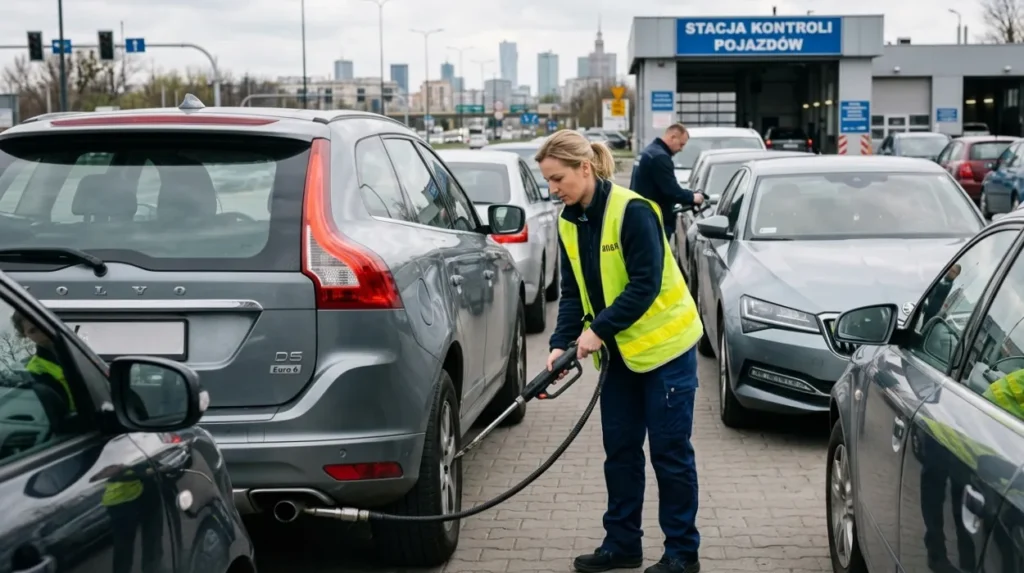
Vehicle compliance is dictated by European Emission Standards, which regulate specific limits for nitrogen oxides and particulate matter. For petrol vehicles, the minimum threshold is Euro 4, while diesel vehicles require compliance with the more stringent Euro 6 framework.
The technical criteria for compliance are tied directly to the European Emission Standards, a series of directives issued by the European Union that define acceptable limits for tailpipe exhaust. These standards are indexed to vehicle fuel types and manufacturing dates, though legal enforcement relies entirely on certified emissions data rather than the calendar year of registration.
For spark-ignition engines (petrol vehicles), the regulatory threshold is the Euro 4 standard. This protocol became legally mandatory for all new vehicle type approvals in January 2005 and for general registrations in January 2006. The standard mandates that nitrogen oxide ($NO_x$) emissions must not exceed 0.08 grams per kilometre ($g/km$). Most petrol motor vehicles registered with the Driver and Vehicle Licensing Agency (DVLA) after January 2006 naturally comply with this limit.
For compression-ignition engines (diesel vehicles), the threshold is the significantly more restrictive Euro 6 standard. This framework became mandatory for passenger cars in September 2015 and for light commercial vans in September 2016. The policy targets the reduction of harmful diesel particulates and nitrogen oxides, setting a strict $NO_x$ cap of 0.08 $g/km$, compared to the preceding Euro 5 allowance of 0.18 $g/km$. The primary objective of this rule is to eliminate high-polluting older diesel automobiles from the metropolitan transport network.
How Can Motorists Check If Their Specific Vehicle Meets The 2026 ULEZ Compliance Standards?
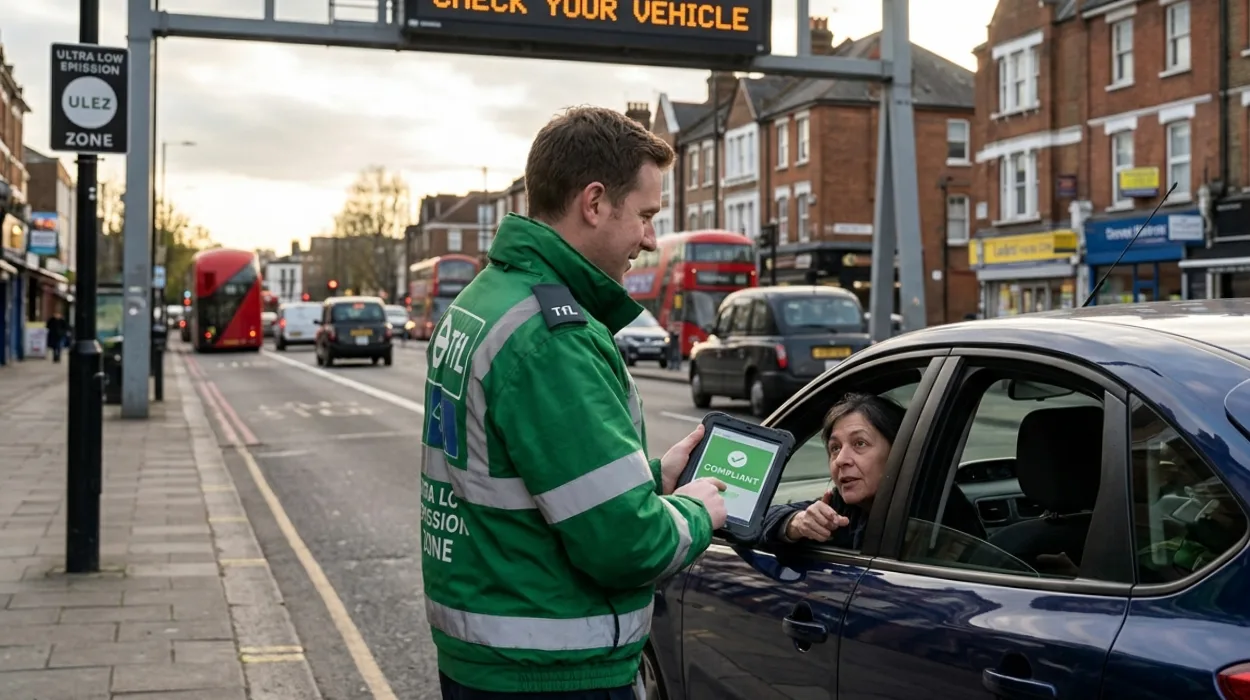
Motorists can verify vehicle compliance by entering their vehicle registration number directly into the official Transport for London online portal. Alternatively, owners can cross-reference the certified Euro status recorded on section V.5 of their DVLA V5C logbook.
The definitive method for verifying compliance is utilizing the digital infrastructure provided by Transport for London. The municipal authority maintains a centralized relational database linked directly to the DVLA registry, which immediately processes queries based on unique vehicle identification attributes.
To check compliance via this system, an individual must execute the following sequential process:
Step 1: Access the Central Portal
Navigate to the official Transport for London interface designated for road user charging verification.
Step 2: Input Registration Attributes
Enter the vehicle registration number plate characters into the designated alphanumeric text field. Select the country of registration from the secondary interface options to ensure correct database routing.
Step 3: Review Emission Output
The platform matches the registration against the vehicle’s original type-approval documentation. The interface generates an instantaneous binary status confirmation, indicating whether the vehicle is subject to the daily twelve pound fifty fee.
For vehicles registered outside the United Kingdom, or for custom vehicles missing automated data entries, physical documentation must be submitted manually. Owners must upload digital copies of their vehicle logbook demonstrating conformity with the Euro 4 or Euro 6 specifications to avoid erroneous penalty assessments.
What Are The Penalties And Enforcement Mechanisms For Operating A Non-Compliant Vehicle?
Enforcement is sustained by a vast network of automatic number plate recognition cameras that cross-reference vehicle journeys against payment registries. Failure to pay the daily charge triggers an automated Penalty Charge Notice of one hundred and eighty pounds.
The enforcement architecture utilizes an automated digital processing network designed to capture real-time traffic data across all 32 London boroughs. When a vehicle passes an active ANPR camera installation, its registration mark is extracted using optical character recognition software and cross-referenced against the central database within twenty-four hours.
If the system identifies a vehicle as non-compliant, the owner must submit the twelve pound fifty payment by midnight on the third calendar day following the journey. Payments are handled via web portals, phone applications, or the automated Auto Pay system. If the payment window closes without receipt of funds, the system automatically generates a formal Penalty Charge Notice (PCN) addressed to the registered keeper.
Explore More Public Services
New Short Term Holiday Letting Rules in Westminster Borough
When Will 2026 Council Tax Bands Take Effect in London?
Which Historic Vehicles And Special Classes Qualify For An Exemption From The ULEZ Charge?
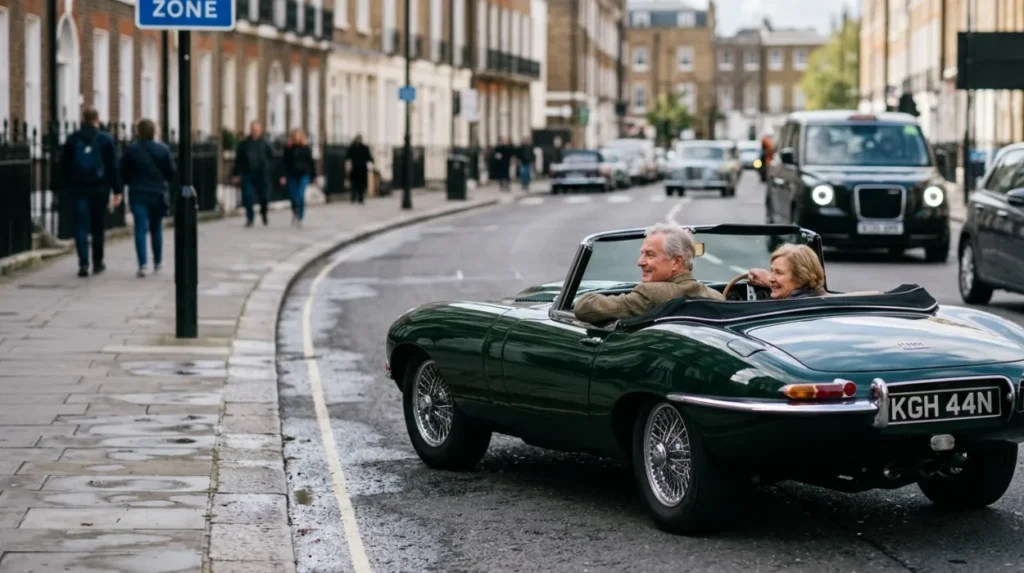
Vehicles registered under the DVLA historic vehicle tax class are entirely exempt from the daily ULEZ charge under a rolling forty-year rule. This exception protects preserved cultural heritage assets and classic cars from standard urban emission penalties.
The regulatory framework incorporates specific exemptions designed to protect historical transport artifacts, classic cars, and specialized vehicle classes from the daily operational fees. The primary exemption relies upon a rolling forty-year rule aligned with the national criteria for historic vehicle tax status.
Vehicles manufactured before January 1, 1973, receive total exemption from the system, irrespective of whether they are operated for private transport or commercial enterprise. For vehicles built after this date, a forty-year rolling window applies. For example, a vehicle must have a validated construction date prior to the current rolling forty-year horizon to qualify for the historic tax class classification. Once the owner updates the vehicle registration status with the DVLA to the historic vehicle class, the Transport for London database excludes the vehicle from automated billing cycles, provided it remains in non-commercial use.
Additional statutory exemptions and temporary transition windows include:
- London Licensed Taxis: Purpose-built black cabs are exempt from the standard ULEZ framework, though they remain subject to separate age-limit mandates controlled by separate licensing rules.
- Disabled Passenger Vehicles: Specialist transport units modified for wheelchair accessibility or registered under the distinct DVLA disabled tax class maintain temporary grace periods extending until late October 2027.
- Specialist Heavy Machinery: Agricultural tractors, mobile cranes, and military vehicles are excluded based on industrial classification definitions.
What Is The Socio-Political And Economic Impact Of Modern Clean Air Regulations On London Communities?
The expansion of emission boundaries has generated significant public debate, balancing documented air quality improvements against increased financial burdens on low-income commuters. Economic adjustments include shifts in the used automobile market and accelerated corporate fleet modernization.
The implementation of broad emission boundaries has altered the socio-political and economic landscape of the metropolitan area. Public health data published by academic institutions and municipal health registries indicate a clear reduction in traffic-related air pollutants. Nitrogen dioxide concentrations within inner London dropped by over twenty percent following initial policy adjustments, reducing childhood asthma hospital admissions across several central medical facilities.
Conversely, the policy has encountered resistance from outer London communities, local heritage preservationists, and small business operators. Critics argue the daily twelve pound fifty charge acts as a regressive tax, disproportionately penalising low-income workers, mobile tradespeople, and healthcare staff who rely on older utility vehicles for nighttime shifts when public transport options are reduced.
The structural economic impacts manifest across three distinct areas:
- Used Car Market Distortion: The market value of pre-2015 diesel automobiles and pre-2006 petrol vehicles collapsed within the home counties, while compliant low-emission vehicles experienced corresponding price inflation.
- Corporate Supply Chain Adaptation: Logistics firms, delivery operators, and service industries accelerated capital investment to modernise commercial fleets, shifting rapidly toward fully electric vans or Euro 6 compliant heavy goods vehicles.
- Scrappage Scheme Interventions: The municipal government allocated over one hundred million pounds to targeted vehicle scrappage grants, subsidising low-income residents and registered charities transitioning away from non-compliant transport options.
How Will Future Urban Planning Frameworks Redefine The Historical Preservation Of London Transportation?
Future urban strategies point toward a gradual transition from emission-based charging zones toward comprehensive smart road-user pricing networks. This evolution forces museums and preservation societies to adapt how physical transport heritage is conserved and displayed.
As London moves beyond static emission zones, the long-term trajectory of urban planning points toward a transition into smart road-user pricing. Advances in geospatial tracking and cloud-based computing allow municipal planners to model frameworks that replace the flat-rate Congestion Charge and ULEZ fees with a singular, dynamic tariff. This system calculates real-time fees based on precise distance travelled, exact time of day, and localized congestion density.
This modernization introduces operational challenges for institutions dedicated to preserving the material culture of British motoring. Transport museums, local historical registries, and private heritage networks must navigate increasingly restrictive urban sectors to exhibit operational machinery. The preservation of internal combustion engine vehicles is shifting from a hobby practiced on public thoroughfares into a highly regulated activity confined to private venues, static museum galleries, or specialized transport festivals.
The long-term legacy of these clean air initiatives will be the structural division of London’s transport history into two distinct epochs: the unregulated era of fossil-fuel combustion that defined the twentieth century, and the highly monitored, low-emission, automated urban landscapes of the twenty-first century.
What is the Ultra Low Emission Zone (ULEZ)?
ULEZ is an air quality scheme operating across all London boroughs that charges drivers of non-compliant vehicles to help reduce pollution levels.