The system of private parking enforcement on private land in London operates under a distinct legal framework from council-issued fines. Drivers who park on private land—such as retail parks, residential developments, or private hospital grounds—do not receive statutory penalties. Instead, they receive a Parking Charge Notice (PCN), which is technically an invoice alleging a breach of a private contract. Challenging these private parking fines requires a systematic approach rooted in contract law, the Protection of Freedoms Act 2012, and the codes of practice established by accredited parking associations.
- What Is A Private Parking Charge Notice In London?
- What Is The Legal Framework For Private Parking Enforcement?
- How Do I Gather Evidence To Appeal A Private Parking Fine?
- What Is The Step-By-Step Process For Internal Appeals?
- How Do I Escalate An Appeal To Independent Tribunals?
- What Happens If A Private Parking Company Takes Me To Court?
- How Do Debt Collection Agencies Enforce Private Parking Charges?
- What Are Common Regulatory Loopholes and Technical Defenses?
What Is A Private Parking Charge Notice In London?
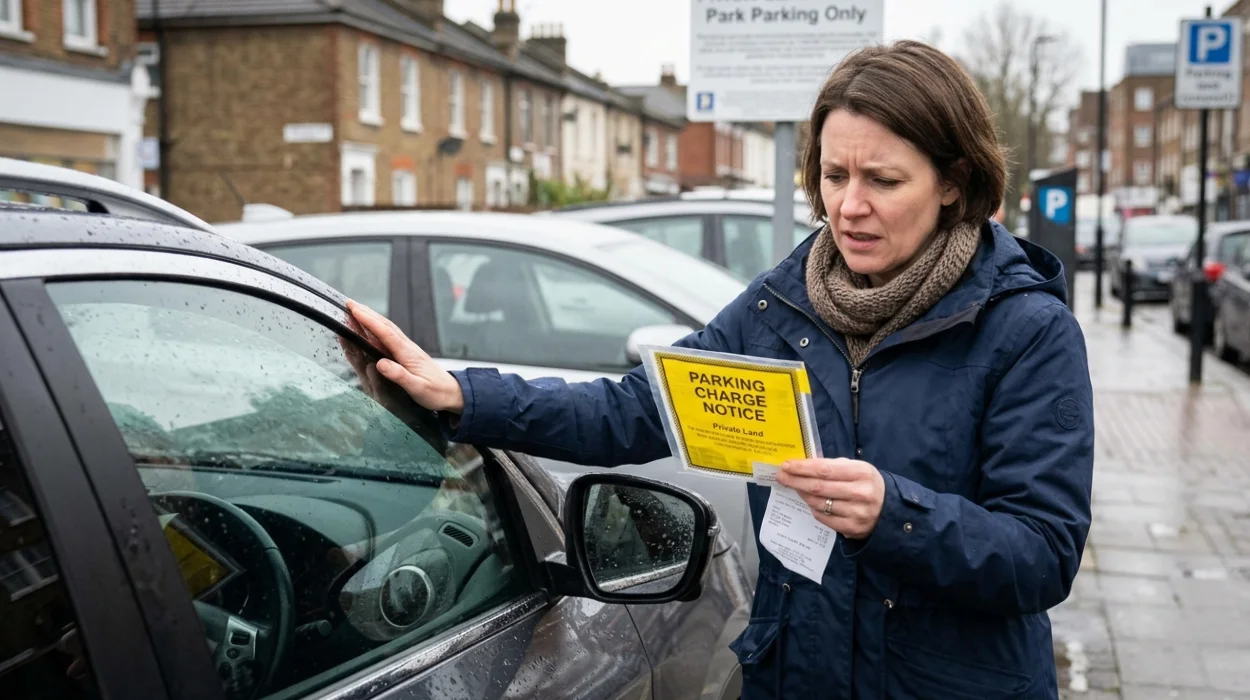
A private Parking Charge Notice (PCN) in London is an invoice issued by a private landowner or parking operator alleging a breach of contract. It is a civil matter governed by contract law, not a criminal fine or a statutory council penalty.
Private parking operators manage parking spaces on behalf of landowners to prevent unauthorized usage and ensure space availability. When a driver enters a private parking area, the terms and conditions displayed on the signage form a unilateral contract between the driver and the operator. If the driver violates these terms—such as overstaying a free period, parking outside designated bays, or failing to display a permit—the operator issues a PCN.
Unlike Penalty Charge Notices issued by London borough councils or Transport for London (TfL) under public law, private parking charges are civil disputes. The operator cannot issue criminal sanctions, point deductions on driving licences, or clamp vehicles on private land. Clamping and towing on private land were made illegal across England and Wales under Section 54 of the Protection of Freedoms Act 2012, except in specific statutory circumstances such as railway bylaws.
The authority of private operators to demand payment relies entirely on proving that a valid contract existed, that the terms were breached, and that the charge is legally enforceable. To locate the vehicle owner, private parking operators must request the registered keeper’s details from the Driver and Vehicle Licensing Agency (DVLA). Only operators who are members of an Accredited Trade Association (ATA)—such as the British Parking Association (BPA) or the International Parking Community (IPC)—can access this database.
What Is The Legal Framework For Private Parking Enforcement?
The legal framework for private parking enforcement relies on contract law and the Protection of Freedoms Act 2012. These laws dictate how contracts are formed via signage and when a registered keeper becomes liable for a driver’s alleged breach.
Contractual formation on private land depends on the visibility and clarity of the signage. Under the principles of contract law, the signs must be prominent, legible, and placed at the entrance and throughout the site. If the signage is obscured, poorly lit, or uses micro-print, the courts hold that no contract was formed because the driver could not have given informed consent to the terms.
The Protection of Freedoms Act 2012 (PoFA), specifically Schedule 4, introduced a critical mechanism known as keeper liability. Prior to 2012, parking operators could only recover unpaid charges from the individual who was driving the vehicle at the time of the alleged breach. Because keepers were under no legal obligation to identify the driver, many private charges were unenforceable.
Schedule 4 of PoFA changed this by allowing operators to hold the registered keeper liable if the driver’s identity remains unknown, provided the operator strictly adheres to mandatory statutory timelines.
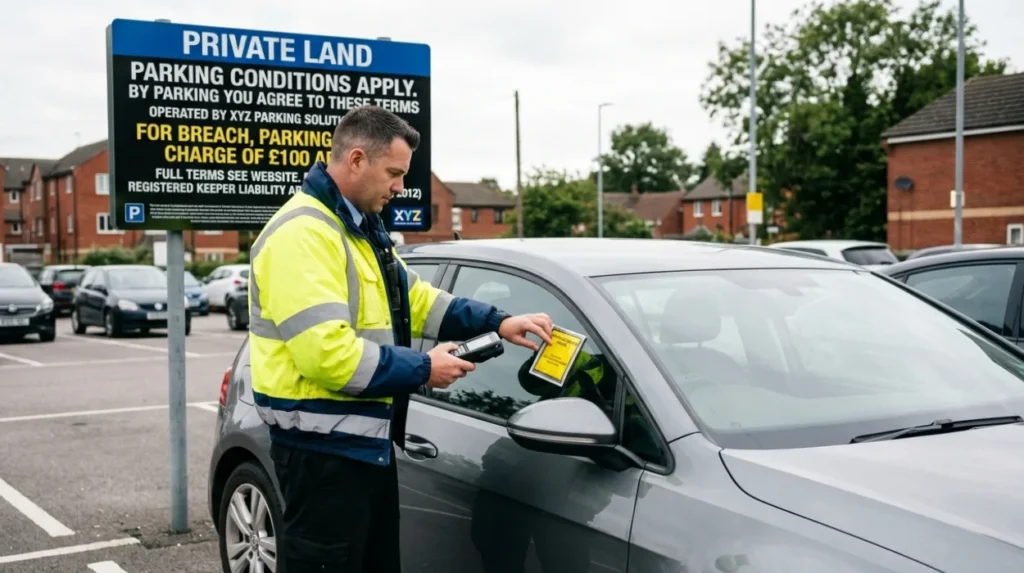
- Notice to Driver: If a ticket is affixed to the windscreen, the operator must wait 28 days but issue a follow-up Notice to Keeper within 56 days.
- Notice to Keeper (ANPR): If the breach is detected via Automatic Number Plate Recognition (ANPR) cameras, the Notice to Keeper must arrive at the registered address within 14 days of the parking event.
If an operator fails to meet these exact windows by even a single day, they lose the right to pursue the registered keeper under PoFA. They can then only pursue the driver, meaning the keeper is under no legal obligation to pay or name the driver.
Furthermore, the landmark UK Supreme Court ruling in ParkingEye Ltd v Beavis [2015] established that private parking charges are not automatically void as unenforceable penalties. The court ruled that a charge of £85 was justifiable because the operator had a legitimate commercial interest in managing the space, provided the amount was not extravagant or unconscionable. This set the standard ceiling for private parking charges, which typically range between £60 and £100 across London.
How Do I Gather Evidence To Appeal A Private Parking Fine?
Gathering evidence to appeal a private parking fine requires documenting the physical state of the parking site, collecting financial receipts, and securing timestamped photographs. This evidence forms the factual basis for disputing the private operator’s contractual claim.
The success of an appeal against a private PCN depends almost entirely on the quality of the evidence presented. Drivers should return to the site or use contemporary records to gather photographic proof immediately after receiving a notice. Photographs must show the vehicle’s position, the layout of the car park, and the specific signs containing the terms and conditions. If a sign is hidden behind tree branches, positioned too high, or unlit at night, detailed close-up photographs and wide-angle contextual shots must be captured to demonstrate these deficiencies.
Financial documentation serves as conclusive proof of compliance or mitigating factors. If a driver paid for parking but received a PCN due to a typographical error when entering their vehicle registration mark (VRM) into a machine, the original physical ticket or digital app receipt must be preserved. The BPA and IPC codes of practice require operators to cancel or reduce charges to a nominal fee for minor keying errors.
If the vehicle experienced a mechanical failure, a copy of the roadside assistance report from an official recovery service—such as the AA or RAC—must be obtained. For medical emergencies occurring on private hospital grounds, timestamped admission logs or a letter from medical staff provide the necessary validation to challenge the ticket on the grounds of frustration of contract, a legal concept where unforeseen events render the performance of a contract impossible.
What Is The Step-By-Step Process For Internal Appeals?
1.Do Not Pay the Charge Prematurely:Immediate Action.
Paying the private parking charge notice closes the case automatically. Payment is legally treated as an admission of liability, which terminates the internal dispute mechanism and revokes the right to appeal further.
2.Identify the Accredited Trade Association (ATA):Within 14 Days.
Examine the reverse side of the paper notice or digital portal to determine if the parking operator belongs to the British Parking Association (BPA) or the International Parking Community (IPC). This identity dictates the subsequent independent appeals route.
3.Draft the Formal Written Appeal:Within 28 Days.
Submit a formal challenge via the operator’s designated online portal or via recorded postal delivery. State the factual grounds clearly, append all supporting evidence, and explicitly highlight any procedural failures under the Protection of Freedoms Act 2012.
4.Await the Operator’s Formal Response:Up to 35 Days.
The operator must acknowledge or decide on the appeal within 35 days under industry codes. If they reject the appeal, they are legally mandated to provide a unique reference code for the relevant independent external appeals service.
Explore More Public Services
New NHS Primary Care Mental Health Support Services Available Across London
Historical Evolution Of TfL Tube Delay Compensation Rights In London
How Do I Escalate An Appeal To Independent Tribunals?
Escalating an appeal to independent tribunals requires submitting a formal dispute to POPLA for BPA members, or the IAS for IPC members. These bodies review the evidence objectively to determine if the charge is legally sound.
When an internal appeal is rejected, the operator must provide a unique 10-digit verification code if they are regulated by the BPA, allowing the driver to access Parking on Private Land Appeals (POPLA). If the operator belongs to the IPC, the appeal scales to the Independent Appeals Service (IAS). Drivers have 28 days from the date of the internal rejection to lodge their case with these independent bodies. During this tribunal process, the parking charge is frozen, meaning the operator cannot instruct debt collection agencies or escalate fees.
The independent tribunal does not look at mitigating circumstances, such as being late for an appointment; it assesses purely whether the parking charge is legally enforceable.
When writing a POPLA or IAS submission, the appellant should structure their arguments around clear legal points:
- Non-compliant Signage: Demonstrating that the font size, contrast, or placement violated the ATA’s specific Code of Practice.
- No Landowner Authority: Challenging the operator to prove they possess a valid, written contract with the actual landowner authorizing them to issue charges and pursue legal action.
- Incorrect Notice to Keeper: Citing specific instances where the operator failed to deliver notices within the strict timelines defined by Schedule 4 of the Protection of Freedoms Act 2012.
POPLA decisions are entirely binding on the parking operator but non-binding on the driver. If POPLA rules in favor of the driver, the operator must cancel the charge immediately. If POPLA rules against the driver, the driver can still refuse to pay, forcing the operator to decide whether to drop the matter or pursue it through the County Court system. The IAS process operates similarly, though its historical ruling metrics skew more heavily in favor of operators due to differing evidentiary standards.
To contextually bridge the history of these spaces to modern navigation, drivers traversing the capital should note that parking rules vary considerably near public parks and cultural zones. To experience historic landmarks in central London in person today, consult our comprehensive [London transport guide for tourists and historic itineraries] for parking structures, public transit connections, and visiting parameters.
What Happens If A Private Parking Company Takes Me To Court?
If a private parking company initiates civil court action, they file a claim in the County Court Small Claims Track. The driver must respond with a formal defense to prevent a default judgment from being issued.
Private parking operators have a statutory period of six years from the date of the parking event to launch civil legal proceedings under the Limitation Act 1980. If an operator decides to pursue a claim, they will first issue a formal “Letter Before Claim” or “Letter Before Action.” This document gives the driver 30 days to settle the debt or seek independent legal advice, complying with the Pre-Action Protocol for Debt Claims. Ignoring this letter often results in the immediate issuance of a County Court claim form.
Receiving a County Court claim form does not constitute a criminal record or an immediate impact on a credit score. The driver has 14 days from the date of service to acknowledge the claim, which can be extended to 28 days by filing an Acknowledgement of Service online via the Money Claim Online (MCOL) system.
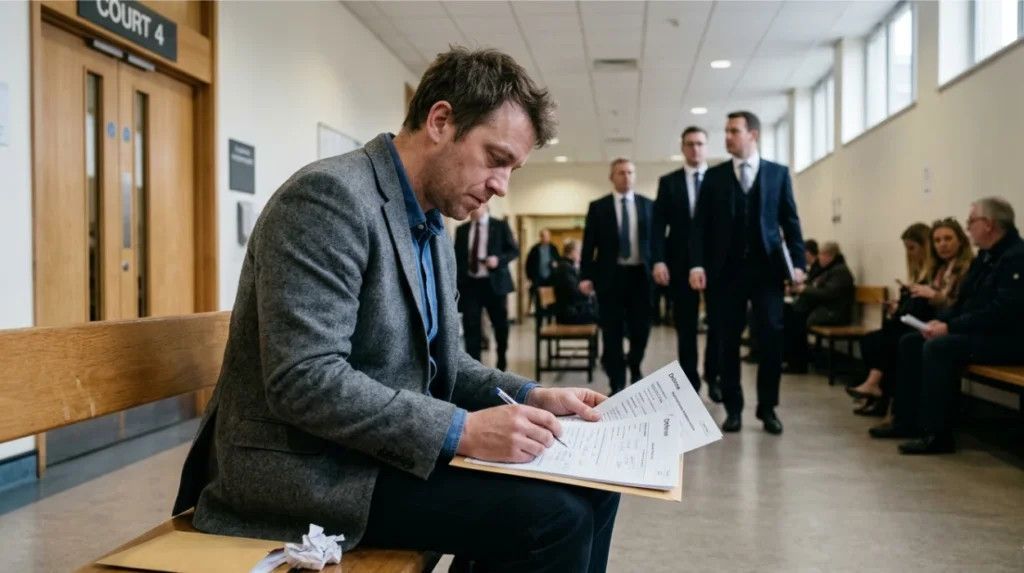
The defense document must systematically refute every point raised in the claimant’s Particulars of Claim. The driver must re-assert their evidence regarding defective signage, lack of contractual standing, or non-compliance with the Protection of Freedoms Act 2012.
If the judge finds in favor of the parking operator, the driver is ordered to pay the original fine plus limited court fees, usually totaling between £150 and £250. If the driver pays the court-ordered amount within 30 days of the judgment, the case is fully cleared, and no County Court Judgment (CCJ) appears on their credit file. A CCJ only registers and damages a individual’s credit rating if they fail to pay the court order within that 30-day window.
How Do Debt Collection Agencies Enforce Private Parking Charges?
Debt collection agencies enforce private parking charges solely through written correspondence and phone calls demanding payment. They possess no legal powers to seize property, enter homes, or issue bailiff warrants without a court order.
When a private parking charge remains unpaid and independent appeals are exhausted or bypassed, operators frequently pass the file to third-party debt collection agencies. These agencies add administrative fees, often ranging from £60 to £70, to the original charge. These extra fees are frequently challenged in court as unlawful double recovery under the Consumer Rights Act 2015, as the Supreme Court’s Beavis judgment indicated that the standard charge should already cover administrative overheads.
It is critical to distinguish between a private debt collection agent and a court-appointed bailiff (Certificated Enforcement Agent). Debt collectors are private citizens working for commercial businesses; they have zero legal authority to clamp vehicles, garnish wages, or cross a threshold into a home. Their letters are designed using urgent and severe language to compel payment, but they cannot take direct enforcement action themselves.
An agency can only return the file to the parking operator with a recommendation to initiate a county court claim. If a driver receives correspondence from a debt collector, they should respond in writing stating that the debt is formally denied and that all further communication must go through the parking operator or be escalated directly to the courts. This formal notification obliges reputable agencies to suspend active phone collections under the Financial Conduct Authority (FCA) guidelines on harassment and debt collection practices.
What Are Common Regulatory Loopholes and Technical Defenses?
Common regulatory loopholes and technical defenses include identifying ANPR errors, validating grace periods, and checking for missing landowner authorization contracts. These technicalities invalidate the legal basis of the operator’s claim.
One of the most reliable technical defenses involves the mandatory grace periods established by the Accredited Trade Associations. The British Parking Association Code of Practice, specifically Section 13, mandates that parking operators must provide a minimum 10-minute grace period at the end of a parking stay before a PCN can be issued. If a driver enters a car park, pays for exactly one hour, and exits 8 minutes after their ticket expires, any PCN issued is a direct violation of the regulatory code and must be dismissed on appeal. There is also a consideration for consideration periods, which give drivers 5 to 10 minutes to enter a site, read the signs, and decide to leave without entering into a contract.
Automatic Number Plate Recognition (ANPR) systems are also prone to specific technical faults, most notably the “double dip” error. This occurs when a vehicle enters a private car park twice in a single day—for instance, once in the morning to drop off a passenger and once in the evening to pick them up. If the ANPR camera system fails to record the first exit and the second entry, the computer algorithm calculates a single, continuous, long stay. Drivers can disprove these errors by producing smartphone location histories, dashcam footage, or workplace clock-in logs that verify the vehicle was elsewhere during the intervening hours.
Finally, the defense of “lack of standing” requires the parking operator to prove their structural authority. Private operators rarely own the land they manage; they operate under commercial services agreements with supermarkets, retail trusts, or developers. If the contract between the landowner and the parking operator has expired, contains flaws, or lacks explicit authorization for the operator to initiate legal claims in their own name, the operator cannot establish a lawful cause of action in a UK court. Demanding a redacted copy of the actual contemporaneous landowner agreement during the initial appeal phase frequently forces operators to cancel charges when their documentation is incomplete or out of date.