Key Points
- Unprecedented Heat Levels: The United Kingdom is experiencing potentially historic temperatures, with forecasts indicating peaks between 38°C and 40°C that threaten to shatter the previous June record of 35.6°C.
- Red Extreme Heat Warning Active: The Met Office has activated a rare Red Extreme Heat warning covering London, Birmingham, southern Wales, and large swathes of central and southern England from Wednesday through Thursday night.
- Widespread Institutional Disruption: Hundreds of schools across southern England and Wales have fully or partially shut down, hospital appointments have been cancelled, and a “do not travel” advisory has been issued across key rail networks due to buckling risks.
- High Humidity and “Tropical Nights”: Meteorologists have warned that the current heatwave is compounded by elevated moisture levels and high overnight temperatures exceeding 20°C, severely limiting the human body’s capacity to cool down.
- Climate Change Links Clarified: Top atmospheric researchers and the United Nations have explicitly tied the event to human-induced global warming, noting that the UK’s aging infrastructure remains fundamentally unprepared for the accelerating climate crisis.
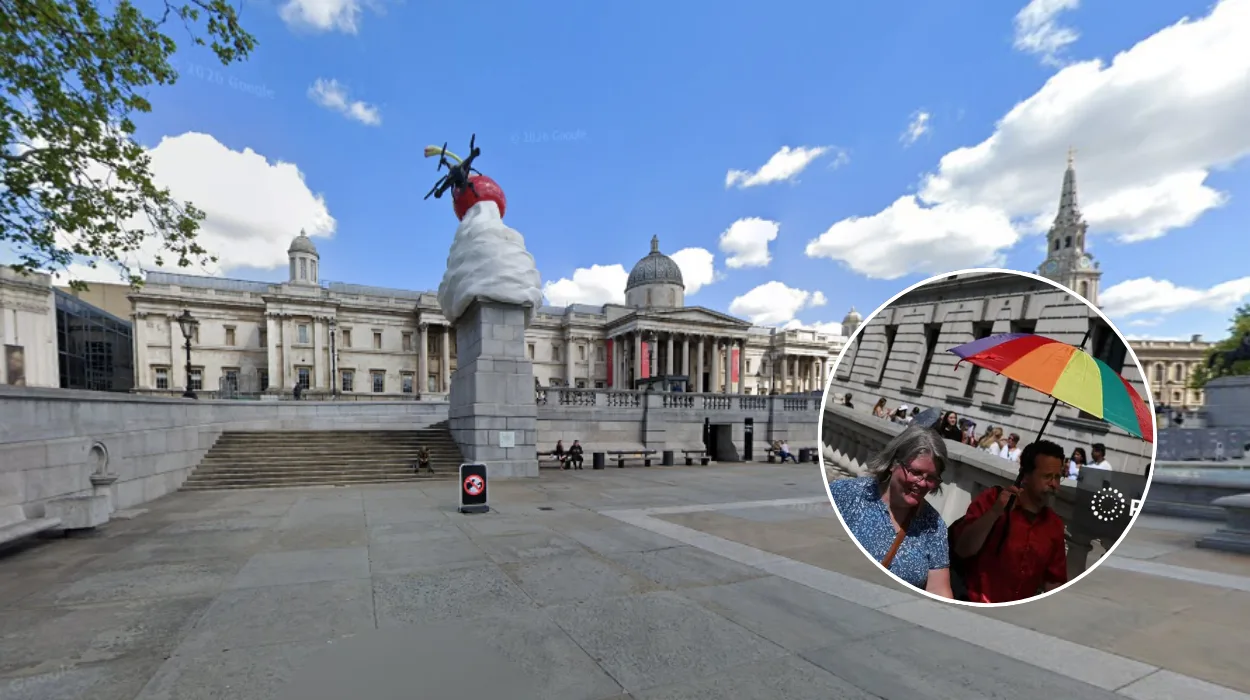
London (The Londoner News) June 24, 2026 – An extraordinary, record-shattering heatwave has brought the United Kingdom to a virtual standstill today, forcing hundreds of school closures, severe disruptions across national rail networks, and emergency measures across the healthcare sector as temperatures surge toward an unprecedented 40°C. The Met Office officially enacted a rare Red Extreme Heat warning at 09:00 BST this morning, marking only the second time in British history that such an alert has been triggered. Commuters at major transit hubs, including London’s Waterloo Station, were observed utilizing umbrellas and parasols to shield themselves from an oppressive combination of intense solar radiation and stifling humidity. Public health agencies have upgraded safety alerts to their maximum levels, warning that the intense atmospheric conditions present an active risk to life for vulnerable populations and healthy individuals alike.
- What Is Causing the Current Record-Breaking UK Heatwave?
- How High Are the Temperatures Expected to Climb?
- Why Is This June Heatwave Considered Exceptionally Dangerous?
- What Impact Is the Extreme Heat Having on Infrastructure and Transport?
- How Are Schools and Hospitals Responding to the Crisis?
- How is the Global Community Reacting, and What is the Connection to Climate Change?
What Is Causing the Current Record-Breaking UK Heatwave?
As reported by the meteorological editorial desk of Netweather, the immediate driving force behind this historic weather event is an expansive “heat dome” parked directly over the United Kingdom and Western Europe. This massive system of high pressure functions as an atmospheric lid, effectively trapping hot air beneath it, suppressing cloud development, and allowing relentless solar energy to bake the ground day after day. The situation is further aggravated by a powerful high-pressure system extending northward from continental Europe, which is actively drawing exceptionally warm, moisture-laden air across the English Channel and pushing it deep into the British mainland.
The complexity of this specific meteorological pattern has drawn significant concern from academic experts. In an official public release distributed by the University of Reading, Dr Akshay Deoras, a prominent climate scientist, stated that:
“This is not just a heatwave, it is a heat-dome driven furnace that will grip most of southern UK and push temperatures into truly exceptional territory. Long-standing June temperature records are set to be shattered, potentially by a significant margin, and with temperatures edging dangerously close to levels previously thought almost unimaginable in the UK.”
Dr Deoras further explained that the air sinking beneath the immense high-pressure system compresses and heats up rapidly, replicating the mechanics of air warming inside a bicycle pump when squeezed.
How High Are the Temperatures Expected to Climb?
According to data validated by the Met Office and compiled in an analytical report by the London Daily News Editor, temperatures are widely expected to exceed 30°C across the vast majority of England and Wales mid-week. The peak of the extreme heat is forecast to manifest on Wednesday and Thursday, with localized mercury readings poised to hit 38°C or 39°C, and potentially climbing to a maximum of 40°C in select metropolitan areas.
These figures stand to completely obliterate the long-standing national June temperature benchmark of 35.6°C, a record initially established at Camden Square, North London, on June 29, 1957, and later matched in Southampton during the infamous summer heatwave of 1976.
Current and Projected Regional Maximums
- Southern England (Including Surrey and London): Reached a preliminary high of 34.6°C at Wisley in Surrey on Tuesday, with expectations to push past 38°C by Thursday afternoon.
- South Wales (Including Bristol border regions): Forecasted to hit an alarming 39°C, threatening the historical Welsh June record of 33.7°C.
- Scotland and Northern Ireland: Experiencing uncharacteristic highs of 29°C and 27°C respectively, with a moderate probability of eclipsing Scotland’s all-time June record of 32.3°C.
As outlined by Met Office Chief Forecaster Matthew Lehnert, the geographic concentration of the warning zones remains dynamic. In an official statement published by the Met Office Media Centre, Lehnert clarified:
“This is exceptional heat for June with temperature records expected to be broken this week. Red warnings are reserved for the most severe events and we’re expecting significant impacts from this heatwave, with health issues likely, even beyond those who are more vulnerable to the heat. High humidity is an additional factor for this heatwave which will mean the heat will feel much more potent for many.”
Why Is This June Heatwave Considered Exceptionally Dangerous?
The primary concern keeping public health officials on high alert is the phenomenon of “tropical nights” combined with elevated humidity. Unlike historical dry heat events, the June 2026 heatwave features significant residual moisture left on the ground from preceding thunderstorms. This prevents the human body from efficiently utilizing its primary cooling mechanism—sweat evaporation.
Writing for the University of Reading’s climate research unit, Professor Richard Allan stated:
“A heatwave in June is par for the course, but temperatures nudging toward 40°C were unprecedented for the UK up until 2022. Whilst May brought record dry heat, this week will see a more muggy heatwave that makes it difficult to stay cool and critical for those with underlying health conditions.”
Furthermore, as noted in the operational brief issued by the UK Health Security Agency (UKHSA), overnight minimum temperatures are projected to stay well above 20°C in major urban centers such as London, Birmingham, and Manchester. These elevated nocturnal baselines mean that residential brick dwellings and infrastructure cannot shed heat overnight, depriving citizens of the physiological rest and recovery window required to stave off heat exhaustion and heatstroke.
What Impact Is the Extreme Heat Having on Infrastructure and Transport?
The domestic transport infrastructure of the United Kingdom has experienced significant operational degradation under the weight of the climate conditions. As reported in a comprehensive dispatch by the Agence France-Presse (AFP) and carried by international outlets including The Straits Times, Network Rail has officially instructed passengers across the country to “only travel if absolutely necessary.”
The steel tracks utilized across the British rail grid are designed to function within long-term seasonal norms; under direct, prolonged sunlight, rail temperatures can easily exceed air temperatures by 20°C, creating a critical risk of track buckling. To counteract this physical hazard, rail operators implemented sweeping speed restrictions, which immediately resulted in widespread cancellations and severe delays across major transit arteries. Furthermore, the primary rail operator linking London to the north-east of England went a step further, issuing an explicit “do not travel” advisory for the duration of the Red warning period.
Simultaneously, utility companies in the south-east of England have initiated emergency hosepipe bans to safeguard municipal water reserves against an unprecedented spike in residential and commercial demand.
Explore more Local London News:
Prince William Joins Earthshot Prize Climate Assembly in London 2026
Fulham Pier Debuts Premier League Recovery Tech: West London 2026
How Are Schools and Hospitals Responding to the Crisis?
The education sector has taken unprecedented preventative steps to protect children. According to data tracked via a nationwide school-monitoring census compiled by the British Broadcasting Corporation (BBC), at least 300 schools across southern England and Wales enacted complete or partial closures.
As highlighted in a global economic analysis by technology reporter Tom Chivers of Semafor, the closures have triggered an intense logistics scramble:
“Schools are closing early and parents are buying air conditioning units for classrooms as the UK faces another record-breaking heatwave… But UK housing stock — Europe’s oldest — and infrastructure is built for a cooler climate.”
In the healthcare sector, the UKHSA’s escalation to maximum Amber and Red health alerts has forced regional National Health Service (NHS) trusts to cancel non-urgent outpatient appointments. This strategic reallocation of medical staff was deemed necessary to accommodate a projected surge in emergency admissions linked to acute respiratory failure, heat stroke, and cardiovascular distress among the elderly.
How is the Global Community Reacting, and What is the Connection to Climate Change?
The scale of the domestic emergency has drawn direct commentary from the international community, framing the British weather patterns within the wider reality of global climate breakdown. Speaking at a high-level assembly during London Climate Action Week, United Nations Secretary-General António Guterres delivered a stark assessment of the situation. As documented by environment correspondents writing for The Guardian, Guterres remarked that the capital city was effectively “cooking.”
In his formal address, Secretary-General Guterres stated:
“Here in London, the city of Dickens, it is clear our world is facing a tale of two crises: a climate crisis pushing us deeper toward higher temperature and closer to catastrophic tipping points, and an energy crisis exposing the folly of a world hooked on hydrocarbons.”
The structural mismatch between modern weather realities and the built environment was further underscored by Dr Fredi Otto, a world-renowned Professor of Climate Science at Imperial College London. In a press briefing documented by AFP, Dr Otto explained:
“Our homes, infrastructure, and economy are not built to cope with these conditions. The UK has been built for a climate that just doesn’t exist. Temperatures above 35 degrees used to be extremely rare in the UK. They have now occurred in seven out of the last 12 years.”
This professional consensus is supported by rapid historical data tracking. Environmental reports published by The Guardian confirm that human-induced climate change has amplified the baseline intensity of the current heatwave by an estimated 2°C to 4°C. The current spell follows an unseasonably hot spring in late May that broke historical monthly benchmarks by a clear 2°C, emphasizing a broader, systemic warming trend.
Looking ahead, long-range predictive models released by the Met Office present a sober warning for mid-century planning. In its latest environmental outlook, the agency projected that by the 2050s, the UK could routinely experience 14-day extreme heat events where temperatures consistently exceed 40°C for nine consecutive days, eventually peaking at an unprecedented 45°C in England.